TRANSVERSO

- A culture magazine reaching terminal verbosity -

EXCLUSIVE PREMIERE: Victor Perry Guides Us to New Sounds On "Lighthouse"

Exclusive Premiere, New MusicJordan OvertonComment

The grounds of Atlanta's Morehouse College are full of musicians; to rap or sing R&B is the living and breathing culture that dwells within the gates of this institution, but hearing an artist that stands out with a rhythm different from the rest can be rare. 

Victor Perry, an emerging artist with a vocal range that surpasses that of many of his peers, is one such voice. His second single “Lighthouse,” a pop ballad, shows exactly what kind of artist he is: one without limits and always looking for a different sound. He paints an eloquent picture of what it means to have a relationship in turmoil, and what it’s like to feel the struggle of finding the path to stability, trust, and loyalty as he declares, “I’ll steer her to grace.”

Perry uses mid-tempo snare beats and a soothing piano and guitar intertwinement to supplement his image of a man desperately treading above the waves in a futile attempt to save a love, telling Transverso, “It’s not always about calling out their mistakes, it’s about being there to support them.”

With an EP titled 4 A.M. Nostalgia slated for release in the near future, "Lighthouse" is just a beacon of what's still to come. Stream it below, and buy it here.

Delivered by a voice with harmonic lyrical phrasing and contemporary crooning, Perry’s lyrical capabilities range from metaphoric calls for love and poetic searches of self-expression. His newest single, “Lighthouse,” off his upcoming EP – 4 A.M. Nostalgia, establishes a narrative that reveals a delicate perspective on the complicated nature of both being in love and what love is in itself.  In what seems to be a display of vulnerability to some, his music reiterates the timeless battle between love’s beauty and toxicity.

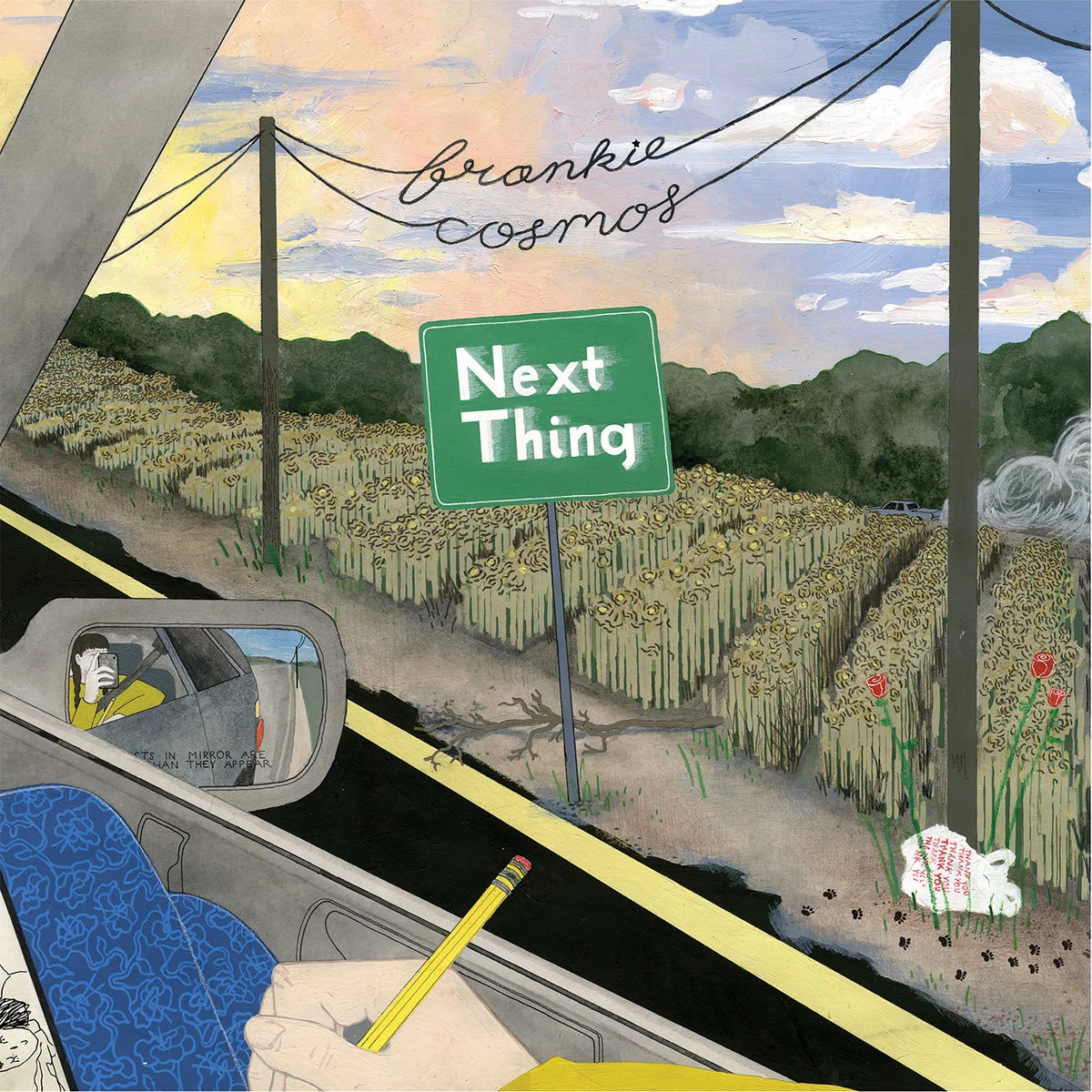
Frankie Cosmos Embraces Her Youthful Past for a Thoughtful Future on 'Next Thing'

Music ReviewCamilla GraysonComment

“Everybody understands me / But I wish no one understood me,” coos Frankie Cosmos mastermind Greta Kline on Next Thing. Through the swift but profound 28 minute runtime of her newest album she intimately sings of her relationship with others, her age, and herself, opening up her inner thoughts to the world. Generally, with songwriting this personal, artists risk their own vulnerability and judgment from listeners, but with Next Thing Kline manages to ride the line between private song making and a greater summation of the coming-of-age experience. Her poetic lyrics, although subjective and intimate, still carry some universal effect, and her simplicity evokes powerful empathy from the listener.

After a staggering catalogue of over 40 albums and EPs released on Bandcamp, Frankie Cosmos was finally thrown into success after her highly praised first official album, Zentropy. Leading lady Kline has always been the brains behind the operation - with her boyfriend Aaron Maine of Porches on drums - as she uses a natural inclination towards empathy to achieve painstaking emotional rawness. This ability to tap into subtle emotions could come from being raised by two actors, Phoebe Cates and Kevin Kline; her innocent introspection is ironic and humorous, but maintains a serious relatability. Inspired by poet Frank O'Hara, Kline uses everyday phrases that could be straight out of her diary to create minimal pop goodness, and her anti-folk writing that emphasizes lyricism over instrumental polish is original enough to conjure up nostalgia and emotion from the listener as her everyday experiences convey a pure honesty that, when attempted by other songwriters, can end up muddled.

Next Thing is aptly named; while 2014’s Zentropy focused more on playful, nostalgic musings of growing up, Next Thing has a heavier feel of more mature, intricate emotion that comes with shedding the “teen” at the end of your age. Kline is now 22 years old, and her new music shows it. Sure, this recent album still has the same pairing of upbeat, pleasing electric guitar and tinny percussion, but it takes on a whole new range of emotions that Kline might not have possessed at 19. Zentropy had ironically emphasized sadness from her cliched declaration that she was, “The kind of girl that buses splash with rain,” or the line, “I am so clumsy / I think how repulsive I am to you.” It was fun and light-hearted, but often over-exaggerated her self-deprecating nature, while Next Thing’s emotional sentiments are more varied. Tracks like “Self Doubt” and “Too Dark” are still laced with youthful insecurity, but the album’s overarching tone of sadness contributes an increased depth. This new form of melancholy plays with concepts that feel a lot more like 22; confusion about the future and its expectations that come with age, insecurity about being a fulfilling friend or lover, and realizing that sadness isn’t necessarily a bad thing. Three years after Zentropy, Kline still has feelings, but those feelings are finally felt confidently as she moves on to the next thing: self-assurance.

With poeticism that evokes rich imagery and a voice that meanders along the anchoring crispness of her instrumentation, Kline manages to differentiate herself from the hoards of lo-fi indie-pop artists of today’s scene. In the sharp album opener, “Floated In,” she uses her liquid vocals to captivate the listener, emphasizing the question, “What are you doing?” coupling it with echoing keyboard synths that balance her low melodramatic voice to create an overall gauzy melody.

“Fool” has timed crescendos that frame Kline’s wooziness in between contrastingly precise snare drum. “I’m 20” holds contrasting staccato picked guitar with floating background "Oo"s. “What If” has driving bass that keeps it upbeat, while “Interlude” and the album closer “O Dreaded C Town” have synths reminiscent of other bedroom pop artist, Florist, who she nods to in “Embody,” as Frankie Cosmos’s instrumentation continues to compliment the simplicity of her message.

“On the Lips” details watching David Blaine, when really it’s a song about falling in love with the idea of someone, while “I'm 20” sings, “I’d sell my soul for a free pen / On it the name of your corporation,” summarizing the overwhelming temptation to just sell out. “Embody” then offers sweet shoutouts to friends (including Eskimeaux’s Gabby Smith and Florist’s Emily Sprague) that represent the sweetness of friendship in your 20s, the type of friendship where you can see the “grace and lightness” of others, but recognize the personal goal to grow into and recognize yourself independently. Because of this it sometimes feels as if the listener is eavesdropping on a piece Kline wrote for herself and her close friends rather than an audience. She is quoted in Pitchfork as saying, “I’m gonna make [Next Thing] the most me thing ever, and scare off anyone who isn’t gonna like that. It was an exercise in staying true to myself," and she followed through, creating what is essentially is an intimate letter to herself with private meaning and inside jokes. Although the songs clock in at under two minutes, they each take on a presence of their own, making quite an impact with so little words in such little time.

The personal touches make this album Kline’s original narrative, but that does not prevent the listener from applying their own experiences to her music. In fact, hearing such personal experiences offers an insight into the tumult of someone else’s life, which, in a way, helps to reconcile the tumult of your own. She beautifully articulates the discomfort and newfound independence that lies in the transition between teenagedom and adulthood. These personable experiences of personal development are present throughout the album, and these bittersweet coming-of-age realizations only exemplify the widespread connection Kline feels towards her outside world.

In relation to Kline’s large portfolio of released work, Next Thing has a more direct and thought out message about what it means to be a young person. Even the seemingly unfinished lyrics of “Outside with the Cuties” was a conscious, matured decision by Kline. Her emotions face towards the future, and although she wishes that nobody understood her, she creates music that is universally relatable.

Wild Child on How Songs Evolve over Time, Hometown South by Southwests

Music InterviewRemedy GaudinoComment

Since their debut in 2011, Wild Child has become a staple in the Austin, Texas indie scene, but stolen hearts around the world with their endearing ukulele melodies, honest lyrics, and charming live performances. Sweeping the festival circuit this upcoming summer to perform their latest effort, Fools, the folksy six piece is continuously on the rise. 

Before performing their first of three hometown South by Southwest showcases, founding duo of Kelsey Wilson and Alexander Beggins (who may or may not be newly engaged) sat down with Transverso at local favorite, Swan Dive, for a chat about their latest album, touring, and the inspiration behind it all.

Director: Christian Sorensen Hansen Artist: Wild Child Album: The Runaround (2013) Label: The Noise Company Purchase on iTunes: https://itunes.apple.com/us/album/the-runaround/id689505418 New album 'Fools' out now.


TRANSVERSO: Fools came out in October, how’s that been going?

KELSEY WILSON: It’s going great, we have a lot of really good festivals lined up because of it.

I’ve heard third installments of anything, whether it’s an album, TV series, book, is typically harder to write. Was this true for Fools?

WILSON: Writing has never been an issue for us, that’s something that has always been there. With the first record we did it all ourselves. We rented equipment and figured it out. For the second record we did it professionally in a studio with a producer, like a nine-to-five kind of thing. This last record we found our favorite parts of both of those and just used them. We were in a studio but we could be there all night and we were just with homie producers, so at 2 AM if I was like, “I wanna do vocals right now!” I could.

How has Fools changed your live show?

ALEXANDER BEGGINS: Well, it’s kind of a curse because we just want to play all the new songs we just wrote, but we have to play a back catalog, but it’s been good and I think we’ve written a lot for our live show in mind. There are bigger songs, some more crowd friendly foot-stomping tunes. It’s weird how your live shows can dictate what you write.

What inspires Wild Child as creative individuals? 

WILSON: Other people. It’s always about experiences we’ve had with other people, we can only write about exactly what’s happening. It’s always straight from the journal, which makes it kind of hard because it’s extremely personal and really honest but we cant write something that we don’t agree with entirely and feel entirely. So, yeah it’s always just exactly what’s happening which is funny because then you sing about those tiny ass moments for the next two years every day and it’s like, "I’m still talking about that?"

You’re forced in to remembering those small moments repeatedly.

WILSON: And you have to get right back in that headspace every time you sing it, and Fools is pretty extreme.

Wild Child came together as a band from writing about break ups and situations like that, so is it hard to perform those songs over and over again even after those feelings have passed?

WILSON: After awhile they start to mean different things. You can attach songs that we wrote four years ago to different people. We wrote a song four years ago and still to this day we’ll be playing it live and be like, “That’s what I meant - that’s what that means - I get it now.” So they’re constantly evolving the more we experience and the more that we play them.  It’s not actually always the same, which is cool.

It makes the meaning change over time, so it gives it a whole new feeling towards it. 

WILSON: And you get to celebrate these experiences through meeting other people who’ve had them and connected to the song, so the songs stop meaning a song about a bad thing that happened and now it’s a song that connects you to thousands of strangers you don’t know. 

So how does it feel playing SXSW as a band from Austin?

BEGGINS: It’s really comfortable, this is like in our backyard and we actually only play Austin like once a year, so it's fun for us to get to play. But it feels like no pressure at all we already have everything we need, so it’s not like we’re trying to find this, we need this, this guys gonna be here. We’re just here and lets play some songs. It doesn’t really feel like a festival to me. 

WILSON: Yeah it’s just that one time that our city gets trashed and super crowded.

Back in Chicago we have Lollapalooza, but it's more contained. 

WILSON: We’re going to Lollapalooza for the first time this year.

BEGGINS: We’re stoked; really excited about that.

Are there any cities you are especially excited to go to for this upcoming tour?

WILSON: We have our favorites, I think we’ve played everywhere now so it’s kind of like what friends we have that are living there that we haven’t seen in awhile. It’s always nice to go to New York, LA, Chicago. Chicago has always been really good to us. Always.

BEGGINS: We’re doing a lot of stuff in Canada this year, too. Vancouver for the first time will be really exciting.

Wild Child has a sort of grassroots fan following. How do you think that will develop or evolve as you continue to grow as a band?

BEGGINS: I think that we have this secret weapon. We’ve developed this fan base that I think is going to be with us for a long time. It’s not this overnight success; all of the fans have grown with us for the past five years.

WILSON: It’s been a slow and steady build. For the past five years every single time we go through a city the crowd is 30% bigger, so it feels sustainable and real.

BEGGINS: I think that’s the way to do it these days. I mean, we would take overnight success if it came to us, but it's nice to know you can handle what’s coming at you. 

WILSON: And with overnight success - how do you keep that up? You can’t, no one does. But it’s like we can keep this up all damn day.

How do you keep it up? Last year you were out on tour for about nine months, plus writing and recording a record.

WILSON: We’ll schedule. If we don’t have to leave the hotel room until 2 PM, we’ll wake up early and do some writing. We went to Savannah, Georgia to record Fools. It’s beautiful and we just needed to go somewhere where we didn’t know anyone except for the producer and the studio, so it was like, that’s our option. We rented a house and it was like summer camp. 

BEGGINS: Our whole life is pretty much on a calendar. 

WILSON: It’s in 48-hour sections. I know what we’re doing today and I know what we have to do tomorrow. At all times.


Fools is out now. You can buy it here.

From Airheads to The Grammys, DIY Duo White Mystery is ‘Outta Control’

Music Interview, New MusicWeston PaganoComment

Rare are the bands blessed with the full package of a naturally iconic appearance, instantly classic backstory, and genuine DIY earnestness all at once, yet that’s exactly what Chicago-based brother-sister duo White Mystery have always had in spades. 

The radiance of Miss Alex and Francis Scott Key White’s shocks of ginger hair somehow personify their fuzzy rock riffs better than you would’ve imagined possible, and backed by their appropriately Orange brand amps even a cursory glance tips you off to something special. But below the Iron Maiden t-shirts, denim, and lo-fi jams is a frontwoman who can shred with the best of them – when she’s not singlehandedly filling the roles of the band’s record label, PR, booking, management, and merch production all at once.

On top of being a completely self-sufficient music industry microcosm, White Mystery manages to churn out a full new album (or, in the case of last year, an entire feature-length film) like clockwork on the 4/20 date of each and every year, while Alex also daylights as the Vice President of The Grammy’s Chicago Chapter, leading one to wonder just how many different hats she can wear over her fiery locks.

To announce their forthcoming LP Outta Control, the raucous redheads took over Last Call with Carson Daly last night to debut singles "Sweet Relief" and "Best Friend," the latter a sunny, Jefferson Airplane-esque track that tells the tale of camaraderie and is stop-motion animated as an adorable canine dive bar to raise awareness of adoptable rescue dogs in a music video released today.

Transverso spoke with Miss Alex White about White Mystery's origins, Airheads, and how their next release is on a mission to make pop music good again.

Pre-order on iTunes NOW: http://apple.co/1RByTFR


How was performing on Last Call with Carson Daly?

[It went] really well! White Mystery flew out to LA and played this legendary club called The Troubadour in Hollywood where Janis Joplin, The Doors, Guns ‘n’ Roses, even Cheech & Chong got discovered, and we played a full concert, and Carson Daly’s current NBC late night show recorded us and it air[ed yesterday.]  We’ve been on TV and we’ve been in movies, but this is our first time on network late night television.

You mentioned Cheech & Chong, are they an influence of yours?

[Laughs] Well Cheech & Chong definitely inspired the White Mystery movie That Was Awesome, which is a stoner film that came out last year on 4/20, and Cheech & Chong reviewed our album and helped premiere the trailer when it came out last year, so yeah, it was cool. Of course I love Guns ‘n’ Roses and Janis Joplin and all that stuff too.

What’s it like having an annual release date of 4/20 that coincides with the stoner holiday and is usually near Record Store Day as well? How much of that was planned?

That’s a great question. When we first started the band Record Store Day did not exist yet. So we really lucked out when two years later or so the record holiday came about and happened to always be within three to four days of our annual record release. So it really benefits our CDs and albums going into record stores around the world, and we do release it early to record stores depending on when the record store day is, so if it’s on the 15th the new White Mystery release will be in stores already.

What originally inspired setting that date?

Well it’s funny because Francis and I – my brother that’s the drummer – we had both been in a lot of different bands separately but also together with other band members. I traveled the world with my old band Miss Alex White and the Red Orchestra, [and it’d] be like, “Okay, bye Francis, see you later!” and [I] kind of left him at home and would be on my merry way with my bandmates, and when I graduated college and moved out of my childhood home here in Rogers Park in Chicago we started missing each other. We almost started hanging out more when I moved out then when I lived at home, and we started jamming and developing new songs. Myspace was available and Garage Band had become a program that allowed musicians for the first time to record a song and put it up on the internet immediately, and that really changed the environment for musicians, so here we were experimenting with Garage Band and that kind of thing, and we were like, “Wow, let’s start a band!” and we did. And we looked back at our Myspace and were like, “Oh, we started it on 4/20, I guess that’s our band anniversary!” and you know, ever since then we’ve used that date as an annual, cyclical milestone that makes sure we stay on track and are always producing new music and pushing boundaries for creativity in the music industry.

What can you tell us about this year's 4/20 release that will happen later this month?

It’s one of those things where everyone knows we put a new album out every year and have been since we started as a band, but it still surprises them somehow. It’s our best work yet, and we want to drop it like a big bomb. So basically the new White Mystery album - which is to be released on April 20th and the single [today] along with the stop motion animation music video - is called Outta Control which is inspired by White Mystery Airheads, which we had based the name of our band on back maybe 20 years ago when we got an Airhead taffy candy that said "White Mystery Outta Control" on the wrapper. [That candy’s wrapper] no longer [says that today], but that’s what inspired the name of our band [and] album. It’s really important to us to stick to our original vision. So anyway, it’s our 5th album; it is our pop masterpiece that we spent a lot of brain hours on developing it into the best possible album ever, where in previous years we did not have the luxury of time that we did for Outta Control. For instance, our third album Telepathic we recorded in two days while we were on tour in Oakland, [and] we recorded Dubble Dragon our double album at a live show in one take at a studio, so for this album we were like, “Okay, let’s take some time and really dial this album into a masterpiece.” It covers a lot of mood, but it definitely has the kind of dark witching vibes of a lot of White Mystery albums, but it has a lot of really great upbeat pop songs.

Outta Control cover art

Outta Control cover art

As someone with a DIY rock background what is the ideal pop song vibe to you?

A pop vibe is sort of ironic because while the album is called Outta Control it’s probably our most controlled work yet, which is how you create pop music. For instance, a lot of times when we made albums the drumming and guitars are just everywhere, you know, it’s like exploring over here and exploring over there and just like wailing and shredding and pounding, but in order to create pop music like every single stroke and note needs to be very methodical, and once you listen back if it’s not something that sounds absolutely perfect you have to actually revisit it until it is. So that’s what we did with the new album, we tried to make it [a] perfect masterpiece and that was a very fun challenge for me, you know? I love The Monkees, I love The Rolling Stones, I love Patti Smith, and I listened to a lot of their seminal records and it also really inspired me to try to make the cleanest album possible. When you listen to record like modern garage records I like Ty Segall, for instance. A lot of times the producer will put a lot of fuzz or a lot of reverb on the record to give it this kind of lo-fi sound, but we actually wanted this record to be more of a hi-fi sound that, for instance, could be on the radio and perhaps expand our audience more so.

You seem very connected to your DIY Chicago identity and have a sort of a cult fan group. When you say you’re looking to expand what are the boundaries or lack thereof you’re looking to transcend? 

Well we’ve traveled worldwide to Hiroshima in Japan and Karlsruhe, Germany or Queenland, Ohio, you know, we’ve played a lot of pretty obscure cities on Planet Earth, and there will always be an audience of people who have seen White Mystery, and in some cases multiple times. We’ve been a band for 8 years and we’re extremely grateful for our fans because they are the backbone of what we’ve been able to achieve all these years, and what we’d like to do is make mainstream music better. So right now when you go to the Grammy’s or watch the Grammy’s it’s honestly a lot of very contrived sort of tame pop music, and a lot of times I kind of envy my parent’s generation when bands like The Who and The Rolling Stones and Deep Purple were actually popular and on the radio, and I think that the White Mystery mission would be to try to make pop music good again with this new album.

You're also the Vice President of the Grammy’s Chicago Chapter, do you often feel like you’re one of the craziest, rawest, indie-est people in that circle? How do you reconcile those two worlds, are you trying to change the system from the inside out?

Well I’m not sure how much I can actually really comment about it but I would say that the Chicago Chapter is full of amazing working class professional musicians who are on a mission to basically help musicians make a living in a world or industry that has changed a lot in the last 20 years. You know we’re in the streaming age now and people used to make money off of album sales. It’s a diverse group of people and I wouldn’t really consider myself… they’re all unique individuals and we’re all working towards shared goals of advancing music in the Midwest.

whitemysteryband.com

whitemysteryband.com

To go back to your origin story, you have a photo of you at an Airheads factory. How did that come about?

Yeeeahhh! So basically - and that was years ago too - we received an email from the marketing department of [Perfetti Van Minelle] - which makes Airheads and Mentos - that said, “We’ve been watching you for a long time and we saw that you’re playing Cincinnati which is just right over the river from our factory where we make Airheads in Erlanger, Kentucky. We would be honored to have you visit our factory and we will make sure that we are producing White Mystery [Airheads] that day.” So we went and we put on our little Laverne and Shirley cloak and toured the factory and they gave us tons of free candy and it was one of the best days of my life.

If you order vinyl from Polyvinyl they include Airheads in with the package; have you ever considered including White Mystery Airheads in with yours?

Yeah we have done [that], and we’ve passed them out at shows, and you’ll see there’s even a picture of us in a giant bathtub full of Airheads and we passed those out at Halloween. I like Polyvinyl and they’re in Champaign, Illinois which is kind of funny, but I think that the thing they and we have in common is that Airheads are kind of the unofficial candy of record stores. When I was a teenager and I worked at Laurie’s Planet of Sound in Lincoln Square, [Chicago] Airheads [were] the only candy we sold ‘cause it’s not like chocolate where it goes bad or melts or gets gross, it’s taffy so it just sits there and it’s kind of, you know, like a Twinkie where you could eat it today or in five years and it’s gonna taste the same. So a lot of record stores would sell these Airheads and that’s partly why we really love them and why Polyvinyl love them too; they don’t go bad, they’re flat and they ship without getting smooshed or broken, and if you ship a Snickers bar it’s gonna be, like, melty or fall apart or get smashed, where an Airhead is [a] flat sugar, non-expiration kind of candy. And they’re cheap, they were like 20 cents when I was a teenager, so it’s like you could literally have 50 cents and still get change back after you got candy, you know, so I think that [since] they’re so inexpensive and made in the USA they have the feel. Made in America, baby! And I think that that’s partly why we love ‘em so much too, that’s the secret. [Editor's Note: I had to eat an Airhead while transcribing this, and though I didn't have White Mystery on hand, the cherry red flavor I did have was probably the next most appropriate option.]

It seems throughout your career you tend to end up in duos: The Red Lights, Miss Alex White & Chris Playboy, and White Mystery. What is it about this dynamic you like best in music? Do you not like the idea of too many cooks?

Well I guess a lot of the time I would want to start a band with whoever was my best friend at the time, and, you know, it was just easy. So if there was someone else out there who’s your best buddy, who you hang out with all the time, then you start a band together; one of you plays drums and the other one plays guitar. So it just kinda worked out that way. And with The Red Lights, Elisa was my really good friend in high school and she had passed away at a really young age, and then Chris Playboy who replaced her also passed away, and Eddie [Altesleben] who was the drummer of The Red Orchestra who was a four piece band, he passed away as well, so it’s like even when you’re super heartbroken from the passing of your friends when your passion is music it helps you get through rough patches. So I like playing in two pieces ‘cause there’s just a really special dynamic that happens between two people and it allows you to be creative and collaborative, and then you never need to buy a van, you can always tour in a car.

Will White Mystery ever be solved?

[Laughs] Well back on 4/20/2008 Francis and I agreed we would do the band for exactly 10 years, so technically the riddle will be solved 4/20/2018.


You can preorder a physical copy of Outta Control here or a digital copy here.

Yeasayer Transcends Time and Space on 'Amen & Goodbye'

Music ReviewWeston PaganoComment

There are few bands that can evolve as effortlessly as trio of art rock Brooklynites, Yeasayer. On their fourth LP, Amen & Goodbye, they don’t just reconcile the worldbeat freak rock of All Hour Cymbals, psychedelic pop of Odd Blood, and brooding, dark electronica of Fragrant World, but manage to transcend time and space itself with a mélange of biblical allusions, futuristic sound, and countless other seemingly disparate stylistic and thematic juxtapositions.

Switching from their one figure per album cover tradition to a Sgt. Pepper’s-esque tableau immediately visualizes this idea of there being many influences (A&G is also, appropriately, the first time they enlisted an outside producer), but while The Beatles used their identity experiment to sever themselves from their past, in a way Yeasayer solidifies and combines theirs. Both groups took the chance to evolve, though, and Yeasayer evolve forwards, backwards, and sideways across boundaries in all directions simultaneously, exhibited especially in the interludes that punctuate A&G with a sort of time-traveled erraticism across “Computer Canticle 1”’s tech hymn of tribal space noise and “Child Prodigy”’s baroque celebration.

The recording process too felt an odd situational paradox - recording live as a band for the first time in the wilderness of upstate New York, Yeasayer had to battle the audible hum of a nearby electric fence or wrangle escaped goats if they turned it off. With normally only about two and a half year breaks in between full-lengths, A&G required an atypically long four to procure, explained at least in part by a rainstorm leak damaging much of their tapes (such are the dangers of analogue recording). Not all was lost, however, with that same precipitation providing the rainfall background to “Gerson’s Whistle,” which appropriately concludes, “Troublemakers make the world go round.” 

It’s no mistake Yeasayer both references the similarly wet Genesis tale of the Great Deluge in album opener “Daughters of Cain” and shows a rotting, severed Trump dictator head in “I Am Chemistry”’s faux-claymation post-apocalyptic hellscape of a music video, saying, “Living in America, you're faced with presidential candidates talking about the end times, and everything is so God-laden. It became a theme for us when we were thinking about lyrics, reflecting on our culture and these big questions about religion." (Political forays are nothing new to the band after the stygian pulse of Fragrant World’s “Reagan’s Skeleton.”)

'I Am Chemistry' taken from the forthcoming Yeasayer album 'Amen & Goodbye' which will be released April Fools' Day, 2016. Directed by New Media Limited.

The track “I Am Chemistry” is a clever litany of poisonous substances set to a glorious, undulating synth rapture and Suzzy of The Roches adding vocal depth with a curious choral contribution. It’s quickly followed by the second official single and most unabashedly pop offering since Odd Blood, “Silly Me,” which opens with choppy acoustic stabs before sharply transforming into a full blown dance lament with the infectious refrain, “Silly me / Where’s my head / I can’t believe now it’s over / She would be here if it wasn’t for silly me.” With glittering admissions like "With crystal ball I now can see / That I'm a man of low degree," it's surely one of the most cheerfully upbeat confessions of guilt you'll ever have the pleasure of hearing.

“Half Asleep" pairs the gospel mantra of “Deliver me from evil” with Middle Eastern sitar-like tones before “Dead Sea Scrolls” breathes energetic groove into the ancient religious manuscripts that lend it their name, until climaxing and convulsing with a frantic primal scream of avant-garde robotic sax that I haven’t once been able to avoid turning up the volume for yet. It speaks to your primitive mind, but your primitive mind has long since been encased in a synthetic shell. With subsequent “Prophecy Gun” we get a gently frenetic beat and ominous bassline layered with vocals almost reminiscent of Paul Simon at his most soothing.

An ode to co-frontman Anand Wilder's daughter (whose birth, incidentally, postponed at last minute a Yeasayer gig I had crossed state lines to attend back in 2012), “Uma" provides their best slow dance since 2010's underrated “I Remember.” Complete with an instantly whistlable, quivering theremin melody played on a digital heartstring and heavy love letter lines of, “And in our overlapping lives / 30 years on either side / Never thought I’d be surprised that I’m alive when you’re alive,” and, “Hope I still can make you smile / When I get to be senile,” it's a piercing highlight that shows even adoration itself is firmly welded to the concept of time.

Amen & Goodbye is Yeasayer’s most heterogeneous body of work, both in terms of the patchwork of its sonic and textural peaks and valleys but also its blending of classic motifs with newly formed bizzarities in a way that never feels heavy handed or campy. Its mysticism and mythological character is scattered but strong like the fable of a universe that doesn’t exist yet, though the personal, poignant closer “Cold Night” grounds the LP with an honest attempt to come to terms with the loss of a close friend: “It’s been one year since you turned yourself back into dust / I guess this is life / You perish or you survive.” Some things never change no matter the context, chronology, or instrument used; life is finite whether ended in a biblical flood or fascist regime. “Was there something I could've told you?” Maybe not. Or maybe this is it exactly. Amen & Goodbye indeed.

'Batman v Superman: Dawn of Justice' Is a Disasterpiece of Epic Proportions

TV/Film ReviewEthan WilliamsComment

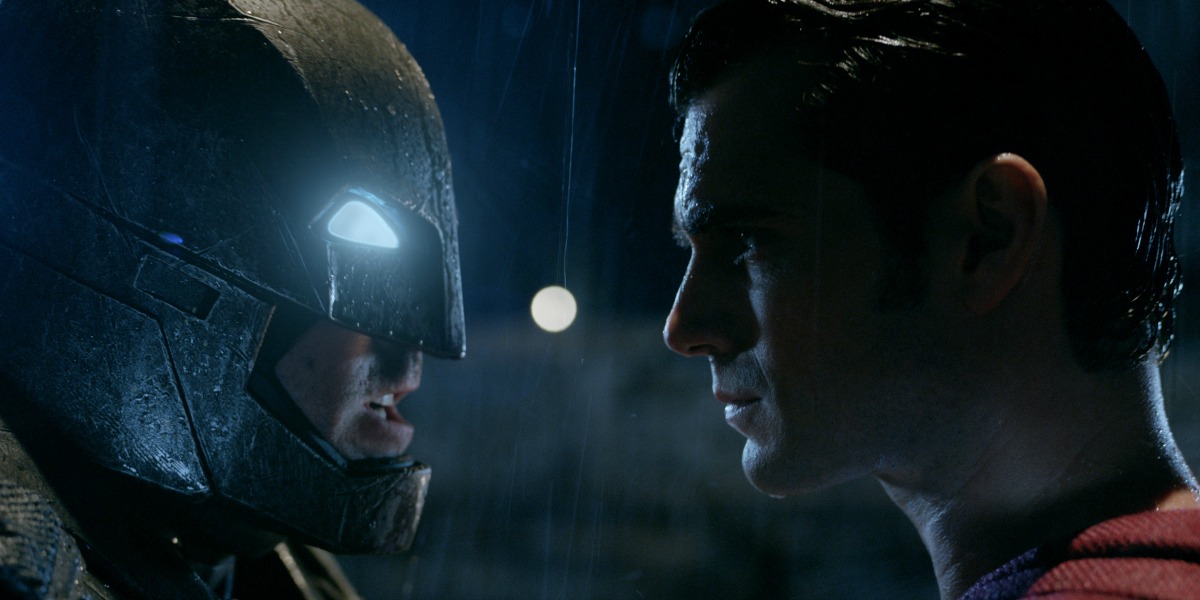
Batman v Superman: Dawn of Justice is a film done half by committee and half by a hack filmmaker, resulting in one of the most baffling tentpole blockbusters in recent memory. 

For all of Man of Steel's issues, there was at least a semblance of hope that dealing with the fallout of Superman's destructive battle in Metropolis would provide an interesting crux for a showdown between comics' two most iconic heroes. Instead Warner Bros. and Zack Snyder don't really shoot themselves in the foot so much as they take a shotgun blast to both kneecaps before this franchise has even truly begun.

To every comic fan out there, these characters probably couldn't be less recognizable, which ends up feeling like a huge miscalculation. And while making such darker and grittier choices when it comes to our titular heroes isn't necessarily a death sentence for a franchise, failing to make an interesting or coherent story certainly should be. For all of the promise that a clash between these two titans should entail, the conflict disappointingly takes a back seat to a mishmash of setups for future movies while failing to have a compelling story or characters of its own.

Even at two and a half plus hours, DC's obsessive desire to catch up with the world-building of Marvel's Avengers means BvS ends up more bloated than a dead whale, covered in pustules meant to tease (or threaten) even more of this tripe. Not to mention it manages to both cram in and bungle some of DC's most iconic comic book runs before we've even had a chance to know or come to like these characters at all.

Everything leading up to the promised battle is..."experimental" editing, we'll call it... where any vestige of film logic simply evaporates almost as soon as it appears. Scenes with virtually no relation appear in sequence with no rhyme or reason (or establishing shots) and it makes following the plot or grasping the buildup towards the climax a Superman-sized feat. And when the two finally do come to blows and the movie starts flailing towards something interesting, the tension is deflated like a sad sigh escaping a wet balloon, which then devolves even further into CGI mayhem and one of the most dramatically underwhelming attempts at emotion in a comic book film to date.

But it would truly take a Herculean effort to reconcile the giant misstep that has been Henry Cavill's Superman. Instead of giving Cavill a single chance to make himself likable after a muted showing in Man of Steel, screenwriters Chris Terrio and David S. Goyer instead double down on the hemming and hawing that is Superman's Christ complex, refusing to give him a single moment of likability or humanity. His laughably unearned relationship with Amy Adams' Lois Lane is still utterly uncompelling and Lois once again never rises above a plot device when their relationship ought to be the warm heart of the film. 

And if Cavill's Superman hits a bum note, his supposed foil is an absolute flatline. Even if Jesse Eisenberg's Lex Luthor was just a more neurotic and eccentric mad scientist than his shrewd businessman counterpart in the comics, it still wouldn't excuse this film's muddled attempt at a motivation for his evil machinations. Luthor's reasoning for pitting the heroes against each other flabbergastingly changes or simply isn't explained and every one of Eisenberg's fidgety attempts to get something meaningful out of the material does not click whatsoever. 

If any character makes it relatively unscathed after this movie's thrashing it's Ben Affleck's Batman, even if he’s transformed from a principled vigilante with a code into a murderous, grim old bastard who doesn’t mind branding his victims so they’ll be viciously killed in prison (seriously). While certainly landing amongst the better film portrayals of the Caped Crusader, it's an unfortunate fact that most of the Batman material here is a less interesting retread of what has come so many times before. For all of Snyder and crew's ass-kissing of Frank Miller's classic The Dark Knight Returns, it would've been nice to use that grizzled incarnation of Batman to explore events in his past never portrayed before onscreen. There's only so many times you can feel something as Thomas and Martha Wayne are gunned down in the street and BvS hardly does anything different in the Bat's backstory (are we 100% sure the scene where young Bruce falls in a well isn't the exact same footage from Batman Begins?). Even Batman's most interesting action sequence where he chases down an armored truck is cheapened when the realization sets in that Christopher Nolan did this so much better barely even eight years ago. 

As for Gal Gadot's Wonder Woman... she's there. She fights. She does some fairly inconsequential Justice League exposition... wait, why was she here again? To just remind us she has a moving coming out next year? Is this whole movie just a DC infomercial?

There's a fascinatingly great superhero tale buried within Batman fighting Superman that should truly stimulate our superhero consciousness, and Batman v Superman: Dawn of Justice has the unfortunate task of having to balance that interesting story with building an entire cinematic universe over the course of a few hours. For those fleeting moments where our heroes do trade blows there's a spark of movie magic that no hack or studio exec could ever screw up, but it's buried under a two hour mess that tries to cram "DC's Greatest Hits" into a dour, colorless romp of unlikable characters. Not all superhero movies have to be colorful or funny, but at least give us a dramatically satisfying story if we're to hop onboard another extended universe.

Batman vs Superman Dawn of Justice Official Trailer #3 US | Subscribe: http://bit.ly/1O5lo1q | Offizieller German / Deutsch Kinostart: 24 März 2016 Zack Snyder's BATMAN V SUPERMAN: DAWN OF JUSTICE is in theaters March 25, 2016.

SBTRKT Steps Out of Familiar Sound On "SAVE YOURSELF"

Music ReviewSean McHughComment

If we’re still looking for nicknames to describe the musical year that’s been in 2016, might I suggest “The Year of the Surprise Release”? Granted, two of those “surprise” releases were at the hands of Doug from TIDAL (The Watch plug - hello Andy Greenwald and Chris Ryan), in which Rihanna and Kanye worked to assert their social over financial currency preferences. Then we saw Kendrick release untitled unmastered., a left field release that somehow operates on the level of To Pimp a Butterfly and somewhat dethroned Kanye from his throne atop the musical zeitgeist. Obviously, there’s a common denominator amongst all three of these giant releases (no, its not that they were all featured on The Life of Pablo, thought you’re headed in the right direction) – they’re all hip-hop based albums, even with Kanye’s constant assertions of TLOP being a gospel record.

Don’t worry, that’s all the Kanye talk this review has in store, but long-winded intro aside, there’s something to be said for hip-hop lending itself to being a disruptive force that would benefit from guerrilla style releases rather than the usual promotional cycle. Keeping with the recent slew of first quarter surprise releases, collaborator/producer extraordinaire SBTRKT has added his name to the heavy hitting list.

SBTRKT is a producer that I’ve come to become increasingly fond of with each subsequent release – not necessarily for his musical handiwork (though I do enjoy it), but rather his ability to get such fantastic features on his records. Early SBTRKT featured Jessie Ware, Little Dragon, and other releases included Raury and Ezra Koenig, making each of his records a stimulating exploration in collaborative coordination and SBTRKT’s understanding of musical cohesion.

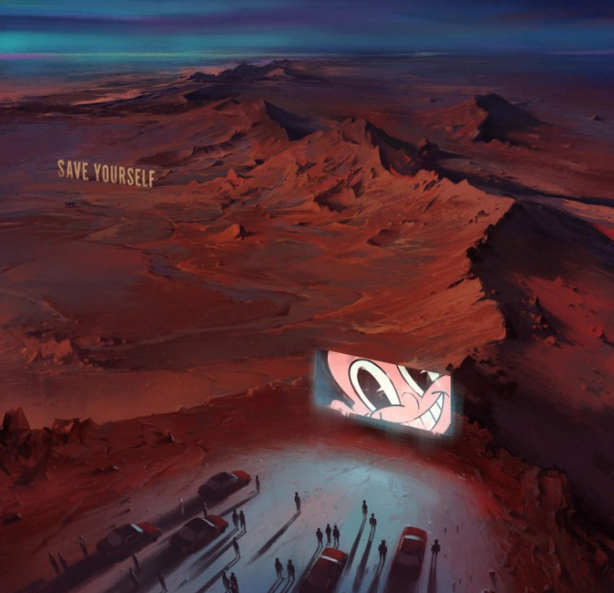
Newest release to date, SAVE YOURSELF, is also his most cohesive – continuing the trend of steady and substantial maturity as a producer and creative mind. Outside of the aged development of the record, SAVE YOURSELF also touts itself as the most intrepid release by SBTRKT, with effectively one week’s worth of promotion leading up to the surprise release of the album.

Most of SBTRKT’s albums are at least ten tracks deep – the longest of his long-play efforts, Wonder Where We Land, featured a tracklist twenty-two songs long. SAVE YOURSELF is an interesting diversion from SBTRKT’s prior releases, as the record only contains nine tracks – making SAVE YOURSELF some strange convergence between an EP and LP. Furthermore, the production on SAVE YOURSELF is an interesting departure from the heavy-jungle rhythms of past – SAVE YOURSELF sounds like a heavy mixture of Chrome Sparks meets Madeon style house music. There are still the apparent hip-hop, R&B, and funk amalgamation that’s considered a SBTRKT touchstone, but SAVE YOURSELF also features more adventurous studies into trap music, as well.  

In terms of the house vs. trap music contention present in SAVE YOURSELF, the record opens with the aforementioned Madeon-esque bright beat driven opener “GEMINI,” reminiscent of a hopeful space odyssey as synth drive the song along with twinkling piano and tones with little to no percussion at all before fading into the album’s truly introductory track, “GOOD MORNING.” As mentioned before, SBTRKT is an artist/producer who is largely defined by those he collaborates with, and in terms of past collaborations, his collaboration with The-Dream on “GOOD MORNING” is arguably one of his best to date. The song focuses largely on celebrating the commitment to remaining steadfast in love; exploring marriage, child rearing ("Here’s to the baby that you’re going to carry”) and loyalty. It’s a stunningly mature and specific track for a SBTRKT song considering most of his songs in the past have focused largely on vague interactions or allegorical scenarios. The lyrical focus should be credited to The-Dream, who has found second life as a songwriter after his brief stint as a solo artist in the early to mid 2000s.

SAVE YOURSELF is SBTRKT’s best long-play release by a long shot – for starting out as a self-taught producer, the growth over three album’s time makes for an impressive coming of age record on SAVE YOURSELF. It also features SBTRKT’s finest collaboration with frequent collaborator, Sampha, on “TBD.” The track opens with 808 beats eerily reminiscent of Chrome Sparks as ominous guttural noises layered over chimey hits before Sampha begins to wail over the track at its first break. Having followed SBTRKT’s journey since his first EP, its safe to say that “TBD” sees SBTRKT and Sampha connecting in such a collaborative manner that the shifts from house to soul to trap in a single song issues no obstacle for the two.

Following Wonder Where We Land, it started to appear as though SBTRKT was an A&R gem that had begun to run out of creative juice, and a follow-up to the robust sophomore effort would need to see some substantial changes made, or at the least explored. SBTRKT had become an artist who needed to show some growth, with self-taught production only extended so far on the A&R plane. Luckily, SAVE YOURSELF allows SBTRKT to really grow and live within some unchartered territory that is so considerably divergent, its hard not to be impressed that such a gamble would be made in the first place. It almost feels as if SAVE YOURSELF was a representative manifesto of SBTRKT’s mindset in regard to continuing his young and verdant career.

Hear Peter Bjorn and John Reach "Breakin' Point" on New Single

New MusicWeston PaganoComment

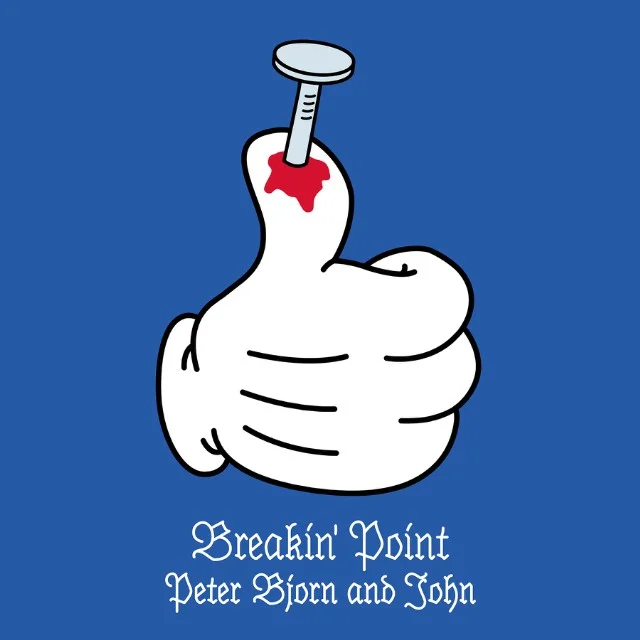
It may feel hard to believe it was a full 10 years ago now that "Young Folks" whistled Peter Bjorn and John into our ears and hearts, especially with how similarly the new title track from the band's forthcoming LP Breakin' Point starts out.

Originally debuted on NPR in a broadcast from as far back as last July, the single joins "Do Si Do" and "What You Talking About?" as our first glimpses of PB&J's comeback record slated for release on 6/10 via the trio's own label, INGRID. Still thumbs-upping since 2011's Gimme Some, the cheerful Swedes add an impassioned chorus and gently raining piano to the whistles, explaining to Stereogum:

It’s about waiting for new things coming ahead that will leave the past in the dust or at least make it look very different. About mental and physical adjustment. About kids becoming parents and maybe about growing up. About perspective, balance and seeing things for what they might actually be and not blown up to grotesque proportions. It features great production from Emile Haynie and whistling (may seem like bigger news than it is, hey its only whistling) and its the title track from our new album and we’re very proud of it!

Buy our new single 'Breakin' Point' on iTunes here: http://smarturl.it/pbjbreakingpointdl Stream our new single 'Breakin' Point' on Spotify here: http://smarturl.it/pbjbreakingpointsp Follow Peter Bjorn and John: Facebook - http://smarturl.it/pbjfacebook Twitter - http://smarturl.it/pbjtwitter Spotify - http://smarturl.it/pbjspotify Instagram - http://smarturl.it/pbjinstagram www.peterbjornandjohn.com/ This is the Official Youtube Channel of Peter, Bjorn and John.

Margo Price Catalyzes the Country Renaissance on 'Midwestern Farmer's Daughter'

Music ReviewSean McHughComment

If you don’t live in Nashville, then you may or may not be privy to the country music “resurgence” happening within the city. The critically condemned bro-country supposedly (I only say this because it's not like bro-country has been eradicated) has met its match at the hands of “throwback” country artists like Christ Stapleton, Sturgill Simpson, and for some reason, Jason Isbell - whose Americana stylings are lazily thrown into the mix.

That being said, there’s nothing wrong with bro-country if you enjoy a little dirt road chilling or whatever, that’s cool - sure, Florida Georgia Line sucks, but Luke Bryan seems like a pretty nice guy, and Sam Hunt is doing some cool stuff. Granted, I am grateful for some much-needed country-western escapism in music, but there in lies the problem – non-country connoisseurs consider it as nothing more than deft escapism that is slowly building into a trend.

While the emergence of Stapleton – a man who spent over a decade as the songwriting king of Nashville – and his recent run of headlining festival announcements has helped provide a more substantial stage for country artists of all creeds, there’s still a substantial underrepresentation of the number of exceptional female “throwback” country artists such as Kacey Musgraves, Nikki Lane, and Aubrie Sellers. Now, some of these kick-ass country queens have gotten their just share of media coverage – namely Musgraves – but their records still go largely unnoticed by the masses. I understand that music is a largely subjective field, and it would be unfair to try and shove artists down listeners’ throats, but artists like Musgraves and the criminally underrated Lane deserve to be heard.

My best guess as to why the new-school of old-school female country artists have yet to get their due recognition is the awful taste of country Taylor Swift and Big Machine left in the mouths, eyes, ears, and minds of listeners. We grew rightfully sick of her calculated precociousness, but an unfortunate casualty in the annoying nature of T-Swift’s modus operandi were the real women of country music. After years of genuinely talented artists being largely underappreciated, old school country music may have finally found its queen to properly rule along Stapleton –the hard-drinking, heavy-living country balladeer turned Jack White protégé – Ms. Margo Price.

Price is the first country artist signed to Jack White’s Third Man Records label, and such an ascription might finally be the big name endorsement necessary for a country artist to be taken seriously by the non-country masses. Chris Stapleton is a certainly a self-made man who has had his fair share of help along the way, but he received a “legitimizing” bump from his and Justin Timberlake’s duet performance of his song “Tennessee Whiskey” at the 2015 CMA Awards. Jack White is of course one of those musical entities that has achieved demigod status – a la JT – that offers a “can do no wrong” standing amongst many music aficionados and casuals alike.  It’s an unfortunate reality within country music – the political style endorsement needed to validate an artist’s cultural relevance – but such is the nature of those who are afraid to venture into new sonic realms (listeners, that is, not Stapleton or Price).

Order the "Hurtin' (On The Bottle)" 7" single with non-album B-Side "Desperate and Depressed" from Third Man Records HERE: http://thirdmanstore.com/margo-price-hurtin-on-the-bottle-7-vinyl "Hurtin' (on the Bottle)" is the first single from Margo Price & The Pricetags upcoming record MIDWEST FARMER'S DAUGHTER, coming March 2016 on Third Man Records.

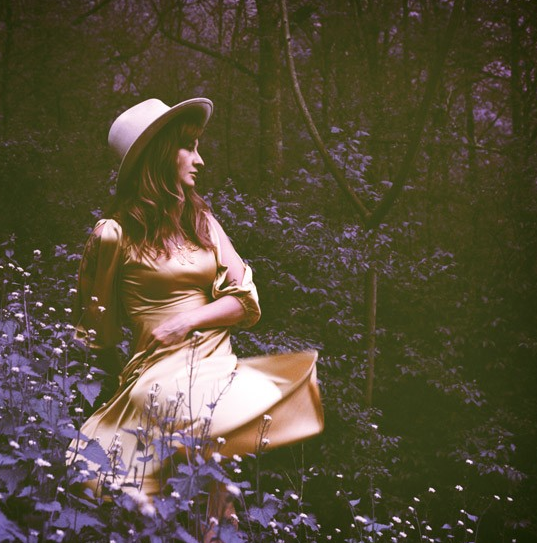
Price has been picking up some considerable steam in relation to the release of her debut record, Midwestern Farmer’s Daughter, thanks in large part to a stellar SXSW run and a slew of fantastic television appearances – peek her killer Colbert debut – that have manifested into a fever pitch of anticipation for a consummate country record. In short, Midwestern Farmer’s Daughter is a country record through and through, but it features some new age sensibilities in regard to its lyricism and occasional non-country tonalities.

Midwestern Farmer’s Daughter opens with “Hands of Time,” a title that might possibly imply the much-ballyhooed nature of Price’s overall “sound,” a little bit Dolly Parton meets clichéd fictionalism, as the fun country sentiments of yesteryear – prosaic references of working hard at a young age, wanting to do right by her parents, busting her ass, etc. It seems a little too purposeful with its sentiments, almost as if to sucker in nostalgia addicts who bought into the heavy “throwback” country hype. It’s a lovely song, as a steady stream of percussive string hits and meandering banjo and steel guitar present a set lovely (but underutilized) scene.

Second track and one of two singles, “About to Find Out,” is a highlight. Price opines new age feminism through the lens of Southern cynicism, with some fantastic breaks for her stellar backing band to hit hard on licks and drive the unapologetic country girl vibe home. It's a sort of testosterone ridden woman’s rally cry to warn any man that might cross her. “Tennessee Song” feels like an obligatory addition to Midwestern Farmer’s Daughter - as she references both I-65 and 440 West – familiar country motifs that feel more like placeholders than personal signifiers. The chorus of “Let’s go back to Tennessee” feels like another latitudinarian sentiment that becomes a recurrent theme on the album; on one song Price might be a hard-nosed, kick-ass woman (when she’s at her best), while on the next song she’s love-addled and pining for her man (not quite her best).

Cleanup track “Since You Put Me Down” acts as an open letter to a former lover that left Price – or her unnamed narrator for the record, its never quite clear – wilting and dejected, as she “been trying to turn [her] broken heart to stone.” It’s a fun song that echoes the classic sentiments of Dolly or Emmylou Harris doing their damndest to stand upright while expressing petty sentiments with little remorse. “Since You Put Me Down,” is one of the smoothest tracks from a musical standpoint, as well, as the cool ballad turns into an ambling country manifesto for Price’s steel guitar player to display his immeasurable chops. Now that we’ve hit the meat of Midwestern Farmer’s Daughter, it seems fitting that Price would throw a curve ball in the form of “Four Years of Chances,” that resembles the strange country/disco era, as Price reminds the anonymous recipient of her ire that he’s been given more than enough time to atone for his shortcomings. Once again, the lyrics leave a little to be desired – mostly in regard to the modern woman with old school influences versus the modern woman trying to capitalize on nostalgia for a certain sound – which effectively means there’s not much lyrical depth, but damn does her band sound good. Like really good.

We pass the halfway mark of the record and we finally get our first taste of Price’s Nashville story – or at least a story revolving around Nashville – “This Town Gets Around.” Judging from the song title, one might assume that the title personification might provide an allegorical subtext for the track, but not quite. That being said, it’s one of Price’s best tracks in terms of tongue in cheek word play like “Well as the saying goes / It's not who you know / But it's who you blow that’ll put you in the show.” It's by far and away the most endearing track, mostly for the smack-you-in-the-ass-then-give-you-a-wink writing paired with a classic country swing.

The next few tracks are more or less familiar reimagining’s of earlier tracks – highlights being the preeminent country western swing sound of “Weekender,” a habitual drunk tanker’s manifesto which leads into the track that started the Margo-mania, “Hurtin’ On the Bottle,” an early favorite for best song title of 2016 – but also begins to highlight one of the troubling realities of Margo Price: a far too familiar sound that’s more reminiscent than fresh. It almost feels like country music as desperate for their Chris Stapleton female analogue, and Kacey Musgraves and Nikki Lane were far too well established to shoulder the burden, so the onus was ascribed to Price. Its an interesting consideration when you consider that Price and Stapleton’s stories are somewhat parallel – Stapleton spent years as a member of The Steeldrivers, a formidable, but middling country group; in congruence, Price fronted Buffalo Clover, but took off once she went solo.

Midwestern Farmer’s Daughter goes out with a whimper, which isn’t necessarily a bad thing – “World’s Greatest Lover” is a well meaning ballad that expresses the sweetest country love sentiments, but its all too formulaic to invigorate the records grand finale, “Desperate and Depressed.” A song title that might elicit an eye roll from those who are familiar with the most recurrent country motifs, but “Desperate and Depressed,” actually works as a serviceable sendoff of Price’s first record. Midwestern Farmer’s Daughter is a damn good debut record, but a so-so country record – it doesn’t quite reach Kacey Musgraves’ Pageant Material and pales in comparison to Stapleton’s opus, Traveller, but it makes for an interesting experiment. Stapleton and Musgraves benefit from major label backing, while Price works independently, either as the pioneer of indie-country, or the eventual martyr who never quite found her “own” sound. Price means well on Midwestern Farmer’s Daughter - and she hits a lot of great notes - which certainly point to a tenured and exceptional career, but a part of me fears that she could end up falling victim to a recent nostalgia trend. She’s the type of girl to go her own way, and hopefully in the future, she begins to carve a more substantial path that builds upon Midwestern Farmer’s Daughter.