TRANSVERSO

- A culture magazine reaching terminal verbosity -

Blood Orange Explores Ancestry, Christianity, and Black Identity on 'Freetown Sound'

Music ReviewAndrew MeriwetherComment

Freetown, Sierra Leone was established by British abolitionists and freed slaves from North America back in 1792. The idea was to provide African Americans the chance at new life after bondage enacted through the tenants of the Christian faith, but like many idyllic propositions, its enactment and history is more complicated. Over the course of its life it was destroyed by local inhabitants and rebuilt, eventually colonized—rather ironically—by the British, withstood invasions from the French, declared independence in 1961, and faced civil war in the 90s. Besides being the home city of Dev Hynes’ father, Freetown is also an ideal metaphor and backdrop to Blood Orange’s third studio album.

Spanning 17 songs, Freetown Sound is Hynes’ exploration of a cornucopia of themes including—but certainly not limited to—Christianity, false promises of faith, Black identity, Feminism, sexuality, and police brutality. While being an overtly political album, Hynes never loses himself in abstraction, remaining intensely personal and feeling. After setting the political tone of the album with a sample from a spoken word piece by Ashlee Haze, Hynes moves into one of the “singles” (if there are any singles) "Augustine."

“My father was a young man / My mother off the boat / My eyes were fresh at 21 / Bruised but still afloat.” Here, Hynes directly references his own parents, who immigrated to London in their early 20s, his mother from Guyana and his father from Sierra Leone. The song then shifts to towards St. Augustine, the prolific theologian who spent a great deal of his life in Western Africa. Augustine is an interesting choice; during his young life he struggled greatly with his own sexuality. Using quotations from Augustine’s writing in the chorus, Hynes recontextualizes the bishop in order to reveal the contemporary black, queer experience. Augustine also famously condemned slavery as sin, and encouraged his followers to abandon the horrific practice. Augustine’s Catholicism thus represents the possibility of Christianity to be a liberating force for Blacks, Hynes knows that other followers of the faith were responsible for the mass enslavement of Africans and killing of young black men like Trayvon Martin and Eric Garner, demonstrating the paradoxical conundrum of a being a black Christian. 

This complex examination of personal and cultural history and religion characterizes this album as a whole. The sheer volume of tracks and layers of instrumentation and samples can at times make this album dizzying, and perhaps even a bit disorienting; this is not an album you can get a handle on after the first listen. Nonetheless, Hynes successfully draws the listener in, and will have you leaning forward listening intently to the movement of each song.

Sonically, Freetown Sound is a masterpiece. In an interview with V Magazine, Hynes compares the album’s overall feel to the Beastie Boys’ Paul’s Boutique, in that it plays like “a long mix tape.” While aspects of this album do resemble the aesthetic quality of the mix tape, it could be more accurately characterized as the stream of consciousness of a young man grappling with the realities of being black in the United States. The sudden cuts from a lecture by Ta-Nehisi Coates or the streets of Freetown, mixed with turntable scratches, and the musical interpretation of the ideas contained in those samples, makes one feel as if they are quite literally inside the mind of Hynes.

While still drawing from the 80s soul and R&B to create that hazy, thick, and ethereal sound that has come to characterize Blood Orange, Hynes also expands his musical palate here. There are instances of funk, 808s and hip-hop, and jazz scattered throughout the record, demonstrating Hynes’ virtuosity and understanding of genre. It’s refreshing to hear Hynes utilize new instruments like the saxophone, xylophone, conga, and djembe, and mix his steam-filled-room pop with cleaner instrumentation that provide the tracks a greater vibrancy. Following similar choices from Cupid DeluxeFreetown Sound contains a number of fantastic guest vocalists, including: Empress Of, Ava Raiin, Carley Rae Jepsen, and others. Hadron Collider, for instance, features a gorgeous performance by Nelly Furtado, whose voice absolutely soars alongside Hynes.

Though the sequencing of Freetown Sound can feel messy, this choice seems intentional. Hynes creates a milieu of ideas and feelings that are deconstructed and expanded through sound and verse, letting the listener marinate in its complexity. The result is powerful and moving composition that new and old Blood Orange fans alike will appreciate.  

The Staves Discuss the Transience of 'Sleeping In A Car' and Loving Eaux Claires

Music InterviewSean McHughComment

The life of a touring musician is one such existence that has been prophesied and romanticized in every which way, but the one prevailing commonality amongst touring musicians remains the mode in which a transient life can impact one's purview on music and life as a whole. Touring can perturb and intimidate, but for others like English sister trio, The Staves, a life of transience marked by fleeting moments while in constant motion can be irresistible. Having spent the better part of two years on support of their 2015 full-length If I Was and their most recent EP release, Sleeping In A Car, it would be fair to assume that the road has come to mold The Staves' approach to their acoustic folk music immeasurably, along with producing lifelong creative partnerships with the likes of Justin Vernon.

Transverso spoke with the eldest of the three, Emily Staveley-Taylor, to find out more about their view of life on the road and its impact on their career to date. 

'Sleeping In A Car' EP Available Now iTunes http://smarturl.it/SleepingInACar.iT Spotify http://hyperurl.co/SIACSpot Subscribe to The Staves: http://goo.gl/Mn5ER9 Directed and Edited by The Staves ------------ Follow The Staves http://thestaves.com http://facebook.com/thestaves http://twitter.com/thestaves http://soundcloud.com/the-staves


TRANSVERSO: You’re pretty close to the end of your tour. How have things been playing out thus far?

Its been so much fun. It's been like really, really great. We’ve just been so amazed by the people that have come to see us, and it's just been a riot – I’d forgotten how much fun it is touring in the States. So fun.

You've been touring in support of If I Was for the better part of a year and a half now, is that correct?

Yes, I guess so. A year and half, I believe.

And it looks like the touring has been pretty extensive – has the reception for the record been what you anticipated, or did you have any expectation at all?

No, I don’t think we had any expectations. I mean, you never know, really. For us, it's always about just kind of playing new music, and we just love it. And we love traveling around, and we’ve just been really lucky that people have been into it. That’s really a great bonus.

How has the transient lifestyle lent itself to an EP like Sleeping In A Car?

I think the more you do it, the more you realize what sort of a strange life choice it is. Yeah, I guess our songs have sort of started to reflect our lives when you are kind of displaced, I suppose; when you’re far away from your friends and your family and your grounding, your home where you’re kind of familiar. So yeah, things kind of become stranger and slightly more surreal, and slightly harder to retain a sense of normality. So I guess that’s what we’ve been exploring in certainly this last EP and probably parts of the last album as well. So it feels kind of quite fitting to play those songs on the road.

So did you spend a lot of time writing Sleeping In A Car on the road as well?

No, we don’t really write on the road; generally there’s never really any time. So we try and write when we have breaks from touring.

How long of a break did you have to write the EP? Was it all in one moment, or was it split up?

The title track was actually demoed almost a year before. It's really kind of a different process for each of the songs – some of the songs have been kicking around for a long time, and sometimes a song comes to fruition in the space of a few days. And this EP was a little bit of all of those things, so yeah. The recording and coming together of all three tracks was really done in a week.

I read that you recorded the EP in both London and Eau Claire – at Urchin Studios and April Base respectively – how does that happen? Does that effect the recording process at all?

Well, we recorded 90% of the EP at April Base Studios and then it was time for us to come home – our flight was booked – but we hadn’t quite finished it yet and Matt [Ingram] has a great studio in London [Urchin], and we were able to book in a couple of days there, so we went in and just finished it. It was stuff like all we needed to do was change the drums on the second verse of this that and the other, add a harmony line to this thing. So it was really kind of the finishing touches, but we had all the basic from April Base; it was kind of just finishing the decorating.

Sleeping In A Car's transient lifestyle “tone” – being an “outlaw,” stolen phone in the night, etc. – almost feels like you’re creating a “runaway” mentality. Is that a fair way to interpret it?

Yeah, I guess so. I think it feels like that sometimes – you’re living outside of any rules of normality that [it] seems like most other people live by. Its kind of disorienting, but also really liberating, and even kind of exciting. Yeah, it's kind of all of those things at the same time, and its kind of a bit dangerous if you don’t try really hard, you can lose your head. It also makes you feel really alive. Its great. Sometimes you do certainly feel like you are kind of an outlaw, just operating on the periphery.

So in a way, does the EP act as a coping mechanism for extended periods of time spent on the road?

I think that music is a coping mechanism for life, really, genuinely. I think it’s a place where you get to explore what you’re thinking and feeling about what’s been going on in your life. It’s a place where you get to try and make sense of it, or try to understand it better. Its almost like a form of therapy – putting it into a piece of art, to study it in a way – to kind of take yourself away from it for a bit, and you can see it more clearly. I think that we’ve been finding that more and more, as we’ve been writing more and more. We really, really felt it with the last album, and I think it continued with the EP with that vibe. Sometimes its only when you finish making the music that you actually realize what has been going on for you, like "Oh yeah, its there. I finally see it.” Its like this mirror that I finally see clearly through – that’s how we feel about it anyway.

Has your time spent on the road had any sort of impact on your approach to performing the songs live as well?

I guess so. I think really – in all honesty – money has a large impact on all of that stuff. If you’re playing some kind of show and they have a big budget then you can do something really kind of outrageous and have extra players with you, and you can try all the stage, and all sorts of lights and everything. It can be a wonderful thing to do. We actually did that recently in London - it was great – we had three brass players, two string players, and there were loads of us, and it was great fun, but when you don’t have much money, you kind of have to do more yourself. At first that’s frustrating, but actually, it's been really, really fun. We’ve been playing instruments that we’ve never played before – Camilla’s playing bass, I’m playing a lot with synths, Jess has got a keyboard – it's just a different set up now for us, and I think its really breathed some new life into a lot of older songs, certainly. We’re just really enjoying feeling more like a band than we ever had done, rather than us just singing together. Its really exciting, its really fun being on the road with this set-up.

Now that things are winding down on the tour do your live sets feel more nebulous or are things becoming more and more familiar?

Well, not really; the tour is coming to an end, but we have festivals in the States right through to the end of August – some of them we’re writing special pieces for, so there’s lots of writing, rehearsing, and traveling around for that. And then we’re kind of staying out in the States until Christmas time – we don’t know where we’re going to living, or what we’re going to be doing - we just kind of decided to hang out on this side of the pond for a while. So we feel kind of ungrounded and unsure of what the future holds. [Laughs]

I would imagine that’s the beauty of the situation that you’re in.

Yeah, it is. And its also one of the great things about being in this situation with my sisters – that there’s always a large piece of home with me wherever I go – so that really helps.

Does that help out in maintaining your proverbial “sanity” while touring so extensively? You all seem to be pretty clever, and I would imagine that humor plays a nice role in easing the strain of touring.

I think that’s true. I think that humor plays a great role in everything, for everyone, and we’d go mad without it.

Most people are pretty familiar with The Staves’ association to Justin Vernon, but I saw that you guys played Sydney Opera House in a sort of “in-the-round” set-up. What was that like?

Oh, it was really exciting. I mean Justin and everyone in that band and crew just have a very, very exciting way of thinking about music and about art and about performance and its really an inspiration to just be around it. And to tailor a show to a building like Sydney Opera house, where it really plays to the room was wonderful to watch that kind of evolve. Its just great fun to be a part of – we love the music – its really interesting for us to sing in that band, because we get to use our voices kind of more as instruments – we’ve kind of been singing the horn parts or the string section – it's kind of a way that we’re not used to. I kind of think that’s informing some of the stuff that we’re writing right now, it gives a lot to think about in terms what we do vocally. It's great. [Laughs] I mean, who gets to go and perform at Sydney Opera House? It's wild.

It seemed like it would be phenomenal. On that same note, I saw you at Eaux Claires last summer, so I wanted to get your take on what it was like for you, to be an artist performing at such a unique festival.

Oh no way! Well I think that one of the amazing things about that festival was that the artists really had a similar experience to the viewers and everyone just got really excited, and felt really lucky to be there. All the artists were watching the other artists, everyone was just hanging out, and everyone was just excited to be a part of it, and everyone really was a part of it. It was successful because the vibe that all the people brought to it. We’re really excited to be playing it [again] this year. We’re actually doing a special piece with yMusic. Do you know them? It’s a sextet of chamber music.

Right! Rob Moose is a part of yMusic, right?

That’s right, yeah. All of those guys! So we’re going to be writing something together just especially for the festival. Its just a joy. The people that were there, the people that went to the festival were there to really enjoy the music. A lot of other festivals have become corporate, or commercial, or become more about getting wasted in a field, and taking Instagram photos, where Eaux Claires was just about the music. It was so refreshing, and so magical, and its kind of why I love the Midwest so much. [Laughs]

Still Whistling Through the Darkness: Peter Bjorn and John On Reaching 'Breakin' Point'

Music InterviewWeston PaganoComment

Bands are often boxed into having narrow calling cards despite their best efforts, whether it be a niche genre or a particular magnum opus from 2006 unfairly labeled as a one-hit wonder. But five years after their last LP, Gimme Some, gave us 300% of a normal thumbs up in the form of guitar-driven power pop, and a full decade after their ubiquitous hit, "Young Folks," whistled its way into hearts and sync licenses everywhere, Peter Bjorn and John's seventh album, Breakin' Point, offers something altogether different.

Their first full-length released on the band's own label, INGRID, but polished by a veritable all-star team of outside producers, it's a pure pop collection of 12 singles that simultaneously signifies both increasing independence and their most controlled and collaborative effort to date. It's 41 minutes of danceable relief from some of the negative themes lyricized - such as dealing with The Man and modern music industry woe - made all the more special considering its creators only had two hours of sunlight back home in which to play it.

On a recent warm summer night, Peter Bjorn and John continued the first steps of an American tour in support of Breakin' Point as the headlining act at a modest food festival in the streets of Chicago's West Loop neighborhood. Several delays (the preceding band's grand piano didn't exit the stage without an apparent fight, nor did the Swedes' monitors play nicely) and a hard curfew saw the easy-going trio abruptly cut off after 40 minutes, leaving throwback set closer "Objects Of My Affection" sadly unperformed, but even that did little to mar what was a classically exuberant PB&J show now also aided by new touring members and that special kind of excitement that can only come after a hiatus as long as theirs.

Transverso sat down with guitarist and lead vocalist, Peter Morén, and percussionist, John Eriksson, following their set to discuss Breakin' Point, illegitimate sons, and why they keep on whistling even after all these years.


TRANSVERSO: So tell us about this Breakin’ Point tour.

JOHN ERIKSSON: This specific tour is the first feeling of how the songs are taken by the audience [that] has heard the whole album, and it’s very different from all other tours because we’re bringing all our families in a hippie bus. There’s one family bus and one crew bus; I think the family bus, that’s where the party is! [Laughs]

How has bringing your families along affected tour life?

PETER MORÉN: We just started, so we’ll see. All day is gonna be taking care of kids.

How has leaving your old label and releasing Breakin’ Point on your own startup, INGRID, changed your process? Do you feel you have more freedom now?

MORÉN: Not really. We didn’t know it was going to be on INGRID, really, but we started the label in between the records so it felt pretty natural eventually, but I don’t think it affected the record.

ERIKSSON: Pontus [Winnberg] from Miike Snow - they are also in the INGRID label - actually co-produced two of the songs. I think that might not have happened if we didn’t have that label with [them]. We worked in the INGRID studios in Stockholm for a week and the week after Miike Snow did their new album, so meeting Pontus was a natural thing to collaborate. We might play on their record and Pontus worked with us, so that’s the good thing about INGRID: collaborations and stuff.

And it wasn’t just Pontus; you enlisted a lot of outside producers for this album including Paul Epworth (Paul McCartney, U2, Florence And The Machine) and Patrick Berger (Robyn, Icona Pop), which you don’t normally do. Has that outside influence in the studio made it more difficult for you to translate the record to your live show?

ERIKSSON: No.

MORÉN: It was hard doing the record. It took a long time, but when we finally got the record done and started rehearsing live it felt pretty natural to do the arrangements. That’s partly why we wrote in those [new touring members]. We usually only play the three of us so this is like an upgrading or something. [Laughs]

ERIKSSON: Its PB&J Big Band... PB&J Plus Two.

I was thinking, because of your band name you can’t ever really change members.

MORÉN: [Laughs] It would have to be the same name.

How many bassists are there named Björn?

ERIKSSON: There was a guitar player named Björn Ulvaeus in ABBA, the old Swedish band. He played the bass too. Yeah, we met [him] at the airport a couple of weeks ago. He didn’t say so much, but he might be able to fill in. [Laughs]

I read that ABBA’s been such a huge influence on you you once jokingly claimed to be their illegitimate sons.

ERIKSSON: [Laughs] Oh yeah!

You’ve been around a while now yourselves, is there another band you’ve influenced that could be your illegitimate sons?

MORÉN: [Laughs] Ooh, good question…

ERIKSSON: There was a Swedish guy [Peter] actually did some work with, I thought he was your son, he seemed to like the same stuff you did. He was a Swedish hairdresser, that guy.

MORÉN: [Laughs] What? A Hairdresser?

ERIKSSON: Yeah! His name was Mikael… Mike? Mikey? Michael? I don’t know. [Laughs]

MORÉN: Someone I played with?

ERIKSSON: Yeah!

I know Paul McCartney is another big influence of yours, and it was his birthday yesterday. I know it's kind of an impossible question, but I was curious if you might have a favorite song of his.

MORÉN: Ooh, that’s interesting. It’s funny, because yesterday we were playing Nashville and Ringo Starr was playing [there too] on Paul’s birthday. It’s kind of hard, I’ve almost heard them all. Let me think… I actually did a Spotify playlist with 150 Paul McCartney songs, it’s actually pretty good.

ERIKSSON: [Laughs] For who?

MORÉN: For anyone who wants it! [Laughs] And I didn’t even count the classical records or experimental electronic records, I just did the pop records. But that’s a good playlist actually, I recommend it, I’ll send it to you! [Laughs] There’s a pretty little song I’ll pick today called “I’m Carrying.” It’s on the London Town record. That’s George Harrison’s favorite Paul McCartney song, so I pick that today, and tomorrow it’ll be something else.

ERIKSSON: You’ll have to update your website.

Pick up the NEW ALBUM Breakin' Point from our store here: http://smarturl.it/BuyBreakinPoint The new album Breakin' Point is OUT NOW! Check it out on Spotify here: http://smarturl.it/BreakinPointSpotify "Our first new rock video is here! Check out the awesome video makers from ANIED and their playful adaptation of the lyrics in "What you talking about?"

You critique the music industry in “Pretty Dumb Pretty Lame,” specifically the entitlement of some artists. Is there anything specific that inspired that subject?

MORÉN: It began with this thing where artists moan about how hard it is being an artist. Like, okay, skip it then! [Laughs] I don’t get [it], like things should be great if people come and see you play, otherwise you should skip it. I don’t see the point in being an artist if you don’t enjoy it, because no one forced you to be come an artist. There's a lot of shit in this industry for sure, it’s kind of quite fucked up, so there's a lot to critique. [Laughs]

You're successful artists who seem to enjoy what you do now, but I know Peter was studying to be a librarian before the band took off. That made me wonder: if you weren’t Peter Bjorn and John, what would you be doing instead?

MORÉN: I had some [jobs] before: I did some teaching, I worked in a bookshop. It would always be jobs because you had to pay rent, it wouldn’t be passion. I enjoy studying film, so I don’t know, it’s hard to say. Maybe I would write something like music reviews, that’s fun.

ERIKSSON: Luckily I had an old music career - I don’t want to call it career because it’s a hobby still, music - but I played classical percussion in a classical ensemble, so if PB&J hadn't happened I would still be doing that, I think. I’m happy I was drawn out of that because I did it for a long time, but now if I could choose I wouldn’t go back to that. I’ve been thinking about that… as Peter said I like movies too, but you know how hard it is to make an album, then to make a movie it’s like 20x the troubles with every detail, so I wouldn’t go into film. So same as Peter; just writing words. That would be fun because then it’s quiet and you can do it anywhere. That must be a very good job to be a writer, I must say, as you are. If Björn was here he would answer he wants to be a tennis pro, I’m sure.

In the past you’ve discussed the juxtaposition of light and dark present in both Swedish culture and the pop genre. Can you elaborate on how that inspires your creative vision?

MORÉN: It’s not something we discuss or decide about, it’s just something that happens quite naturally. It’s been like that on almost all the records, but I realized there are some very positive songs as well here and there. But if you take like a whole catalog and divide it down theres a lot of more depressed lyrics or slightly negative. I like that juxtaposition, but, for me anyway, it’s not planned like I think I should write negative lyrics to positive music.

ERIKSSON: It’s a natural Swedish melancholy always in every laughter. [Laughs]

MORÉN: [Laughs] It’s a long tradition in pop music. It’s quite common actually even in stuff you don’t think about, like even early Beatles songs that are happy are like, “I’m a loser,” “Help!” It’s all shit. Lyrics are really depressing.

ERIKSSON: It’s dark; during winter season where we come from up north it’s like two hours a day you might see the sun. Apart from that it’s just total darkness. So maybe that should affect you in some way, but also it might be a reason why there are so many musicians; you have to be indoors when it’s too cold to be outside [so] you either become a hockey player or a musician. If you live in Brazil you can be outside all day, you can be good at football.

MORÉN: For us at least, and a lot of Swedes, I think, the way we were brought up in really small villages [in] the middle of nowhere there wasn’t a lot to do. There were a lot of people doing sports and [we weren’t] into that, so when I got into music I did a lot of it myself. I learned to play guitar by myself and just listened to records and write songs to keep myself amused. Then of course when you grow up and move to Stockholm there are a lot of things happening, but I think sometimes you try to get back to that vibe of being bored to be able to create music. [Laughs]

ERIKSSON: All our friends, all my classmates were playing hockey except me. I found music, and same for Peter and Björn too. So it’s interesting that we three met [because we] started off not finding any bandmates because we lived in this small city up in the north of Sweden. But then you end up in Stockholm and you form a band that’s now playing in Chicago! It’s pretty weird and amazing. [Laughs] 

Breakin’ Point features a decent amount of whistling, but in the press release you made a point to say it shouldn’t be seen as a big deal. Have you felt pressured or hesitant about including whistling in your songs since “Young Folks”?

MORÉN: Yeah, I guess. I don’t know if it was discussed on any previous records but there was some whistling on the instrumental record called Seaside Rock, but no one noticed. There is whistling on [Writer’s Block track “Amsterdam”], too.

ERIKSSON: And on “Objects Of My Affection” and the B-side “Ancient Curse.” We whistled the whole summer.

MORÉN: And on this record we whistled on “Nostalgic Intellect” as well, but it’s together with the organs so it doesn’t sound as much. I think even on this new one we were kind of hesitating, which is why I said it wasn’t a big thing. It is something you do naturally; I always see people [doing it]. You just whistle stuff, you know? So on that song “Breakin’ Point” we had the piano melody already recorded, but then I was recording my voice and I started whistling, and someone said we should keep that and turn it up. But we were hesitating, actually. [Laughs]

ERIKSSON: Yeah, it’s like you did a magic trick at a party; you can’t do it at the next party or people with think you're cheesy or something. [Laughs] Peter had a supergroup called Tutankamon for a while, and you did a song with whistling and it was kind of not so far from “Young Folks.” You played it in a jeans store and did that whistling and I thought, for me, it didn’t fit. Like, Peter shouldn’t whistle, that felt bad.

You can't whistle with other bands!

ERIKSSON: Yeah, I felt betrayed actually! [Laughs]


Read our review of Breakin' Point here.

The Party Playlist as a Moral Obligation

EditorialAndrew MeriwetherComment

Image: Spotify

It’s 11 PM, and I’m at a party in a small apartment in Newport Beach, California. So far, the night is perfectly enjoyable: everyone has become socially lubricated, jokes are being cracked, the shindig is progressing without a hitch. That is, until I begin to hear what I am sure is the same song that played not 20 minutes ago. At first, I wasn’t sure if this had been intentional. Maybe someone felt the need to hear the track one more time because “This is my jam!” or just for good measure. This seemed unlikely, however, seeing as music was being streamed from a phone, which remained in the host’s pocket. More likely, he had put on Pandora or some Spotify playlist on shuffle and was letting it play, inevitably leading to repetition. Whatever the case, it was clear that this host had not and was not selecting the music.

What song I cannot for the life of me remember (the details of the night are a bit hazy). What I do remember is turning to my girlfriend and remarking “This song was played twice,” expecting some form of concurring nod or at least look in her eyes that said “I know, darling, what philistines.” Instead, she gave me that blank stare I often receive when I’m perturbed about something that no one else seems give a damn about in the slightest.

Luckily, I had the social sense not to make a big deal about it at the party. Nonetheless, this incident, along with a few similar musical faux pas, compelled me to type a few lines in promotion of the self-curated playlist.

Why does the party playlist matter?

When you’re getting ready for a party, what do you do? Assuming the people coming over are people you care about, you probably clean the apartment, empty the dish rack, and dust (if you’re like me, for the first time in months). Maybe you do some decorating — hang some old christmas lights or whatever. You think about food choices: is this a snack affair or a dinner party? Will we be making late night spaghetti? Will there be guac (that's rhetorical, obviously there should always be guac).

Why do you do these things? Well, because they set the stage for the party. You’re creating a space, hopefully, that is conducive to an enjoyable night. For me personally, the musical ambience of a party is perhaps the most critical aspect of any rendezvous. Music sets the tone and guides the trajectory the mood. It’s like the rudder of a skiff: you may not be explicitly aware of it, but it is always steering you one way or another.

Whether you are having club banger or dinner and game night, what music is underwriting the evening will nearly always be a significant factor in the success of the party. You have to get people moving, spark conversation, bring out nostalgia, etc. Anyone who has been to a party without a background music playlist, or worse yet, a terrible one, knows that it’s an awkward and unpleasant experience. The conversation dulls, people begin to look into their phones, it’s like a sail boat without wind — dead in the water (last nautical metaphor, I promise). You need music in order to demonstrate how people should feel and what they should do.

Sure, but does that mean I need to curate the playlist myself?

“Curated Playlists” are all the buzz right now. Spotify, Apple Music, 8Tracks all these services offer playlists to meet any number of situations or moods: “Pre-Party R&B Jams,” “Magical Wanderlust,” and, my personal favorite, “i don’t even know anymore” (yes, the “i” was intentionally done that way), just to name just a few. One wonders if we will ever have to pick another song ourselves again.

This is not the beginning of a rant about Spotify playlists. I listen to them all the time and have discovered lots of wonderful music through them (and we at Transverso even occasionally offer up our own). Instead, the point is that settling for one of those playlists for a party is low-hanging fruit. You can do better.

When you are going to have people over to your home, you ought to take the time to craft your musical ambience.
The reason is one of identity and investment. Whether you like it or not, your music choices represent who you are. This may seem like a rather grandiose statement, but I mean it with complete sincerity. Your music choices matter because they are representative of your taste, and in turn, your character. When I hear a playlist that someone has made, I feel like I’m gaining insight into who they are. They’re showing me what they like and what moves them, and you can’t really get more personal then that.

More importantly, curating your own playlist shows your investment in your friends. Selecting songs for a playlist takes immense love and care. You must studiously assess the goals for the evening (cerebral discourse, sloppy dance floor make-outs, spirit animal discovery, etc.) and the company who will be attending (e.g. can you get away with a deep cut from The Books or will that make everyone uncomfortable in a bad way?). When you hand select your songs, you’re doing it for the benefit of your friends. It shows that you understand them, that you remember what it is they like, and that you care about their happiness. It also gives you the opportunity to share a part yourself with your friends through the music you’ve been listening to. The playlist is an unspoken conversation between you and your guests. Make it articulate. Make it authentic.

This may feel like a lot of hard work and pressure to be putting one aspect of the evening, but your effort will always payoff. Trust me, there is nothing quite as satisfying as noticing one of your party guests looking over toward the speakers, tuning-in, and wandering over to the laptop to discover whose playing.

Should I feel bad about myself now?

Look, we’ve all been in a pinch where people are coming over unexpectedly and we need something quick. I’m as guilty as anyone. You shouldn’t feel like plebeian because you didn’t self-curate the playlist. My argument is simply that spending time self-selecting songs, especially in a culture where more and more is curated for us, can mean a great deal. So when you decide to throw a party in advance, invest the time to pick and sequence your songs. Your party and its guests will thank you for it.

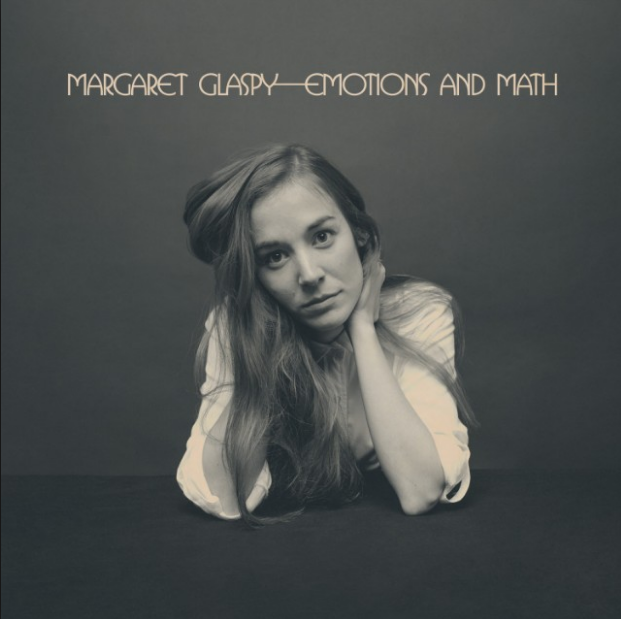
Margaret Glaspy Gets Straight to the Point on 'Emotions and Math'

Music ReviewSean McHughComment

Whatever your opinion of Bonnaroo 2016’s headlining lineup may be, you would be hard-pressed to find another festival that managed to book a stronger mid-level and breaking artists tier (the last breath of Superfly before Live Nation twisted its heel into Superfly’s throat), at least when considering other festivals of similar ilk. Without getting caught up in the divisive Live Nation booking practices, seeing bands like Whitney, Sunflower Bean, Luke Bell, Sun Club, Hinds, Bully, and Vulfpeck command (and steal) their respective Bonnaroo stages made for many a watershed moment in each band’s career.

While the aforementioned bands were formidable (and even exceptional) in their sets, there was one such set that had a particularly monumental moment, and that was Margaret Glaspy’s Saturday showing on the Who Stage.

For whatever (unfair) reason people want to place Margaret Glaspy’s music into the “folk-rocker” chick channel - as if such an unintelligible blanket statement equates for due diligence – because she’s seemingly unassuming when not on stage or whatever other closed minded pigeon-holed logic might arise. But that’s simply not the case, as exhibited on her debut LP, Emotions and Math, Glaspy’s cerebral songwriting and meditative-yet-managed stage presence place her in a channel that’s wonderfully indeterminate and unfettered, apart from the increasingly tired roots-revival tropism ascribed to any young woman that happens to play guitar.

Emotions and Math is an excellent debut for any artist, but through the lens of Glaspy, it exemplifies her intercourse between personal discourse and a wellspring of feeling and intuition; there are no wax poetic musings to be found on Emotions and Math. The eponymous album opener recalls associative assurance from a former lover of some sort. In a sense, it explores the periodic moments of borderline co-dependency within a relationship. It features feminist idealism while highlighting incongruous feelings of relational dependence.

One of the early points of contention featured in the record is misunderstanding, a common talking point in most indie-music, sure, but Glaspy manages to provide an aggressive and dismissive demeanor on tracks like “Situation” stating “Call me a rebel / Call me a renegade / Whatever fits the mould you’ve made,” while her guitar work bares tonal depth in creating an air confused tension. Admittedly, it's tough to immediately compare Glaspy’s “sound” and spirit to any other established artist – which is something to aspire toward as an artist, in my opinion – though songs like “Somebody to Anybody” and “Memory Street” recall occasional cadences of Cat Power and bellowing labelmates Alabama Shakes' guitar tones. She’s in good company, but it isn’t a total reverential imitation of influences, a practice that seems to be more and more common amongst the “indie” star(let) crowd.

There are tracks like “Pins and Needles” that manage to meld both Glaspy’s blues and rock opining sensibilities with the existential and relational crises of indie-music – “I don’t want to be on pins and needles around you of all people” – simultaneously developing a unique sense of Glaspy-ness. Then you have songs like “Anthony” that feel like a hardened Regina Spektor track (I realize this could be argued as a contradiction in the previous paragraph, but allow me to explain further) – it narrates an absent reciprocation from the aforementioned “Anthony” as Glaspy prays for the admiration and love of Anthony, only to come up short. It’s a theme all too common amongst many a finicky couple – continuing to stay together when feelings and compassion have so obviously run their respective courses. It's almost like Glaspy’s version of Kanye’s Amber Rose call-out on The Life of Pablo – “She said I took the best years of her life.”

Emotions and Math closes with a decidedly brooding tonality that acts as a slight divergence from the light(ish) feel of the rest of the record. “Love Like This” is arguably the strongest track on the record, examining a former romance that was unceremoniously tossed to the wayside, leaving Glaspy left to her own devices, while her guitar work is at its strongest, with a dark tango feel that flirts with positivity, but almost always maintaining a perpetual sense of “Saudade.” Emotions and Math’s closer is the record’s bluesiest track on the record – which seems fitting for a song titled “Black and Blue” – that highlights a slight sense of narrative neuroticism brought about lifelong misconceptions (aka “black is blue”), thus cementing a full-circle moment in Glaspy’s early career – the thought that a seemingly quiet artist could bring about such unabashed and insightful commentary on typical narrative tomes. With a strong full-length debut like Glaspy’s, it will be likely that her presence will quickly shift from the close-mindedness of those expecting a soft-cooing songstress into the proper ascription worthy of Glaspy’s ability.


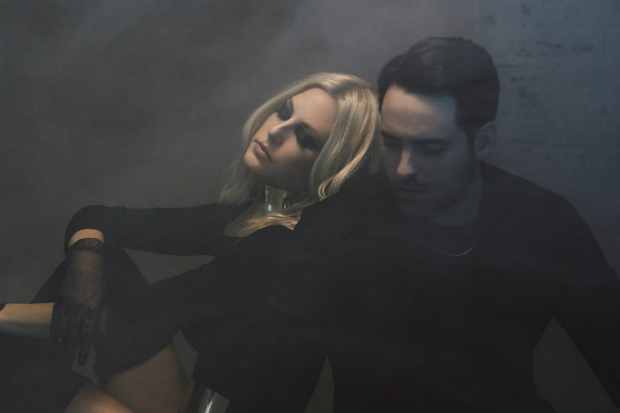
Phantogram Announce Third LP, 'Three,' Drop Single "You Don't Get Me High Anymore"

New Music, Music NewsWeston PaganoComment

Amidst their #FestivalKillers summer circuit with Big Boi, Phantogram have dropped some much-hinted-at music of their own. Following 2014's fantastic Voices and last year's self-titled EP as Big Grams, the upstate New Yorkers have released "You Don't Get Me High Anymore," the lead single from their forthcoming third LP due out this September, Three.

Sarah Barthel's breathless vocals dance over Josh Carter's heavy, fuzzed-out beats in a way that implants the flashing lights of their live show directly into your head at first listen alone. As Barthel told PitchforkThree's conception was steeped in loss, from that of Bowie to Prince, and even her own sister who tragically passed in January, and the lyrics reflect that through restless angst: "Walk with me to the end / Stare with me into the abyss / Do you feel like letting go? / I wonder how far down it is."

Check out the track and tour dates below, and revisit our review of Big Grams EP here.

http://www.youdontgetmehigh.com 6.16.16 #III See all Phantogram tour dates at: http://republicrec.co/PhantogramTour Follow Phantogram on: Facebook: http://bit.ly/PhantoFacebook Twitter: http://bit.ly/PhantoTwitter Instagram: http://bit.ly/PhantoInstagram Spotify: http://bit.ly/PhantoSpotify YouTube: http://bit.ly/PhantoYouTube SoundCloud: http://bit.ly/PhantoSoundcloud Tumblr: http://bit.ly/PhantoTumblr

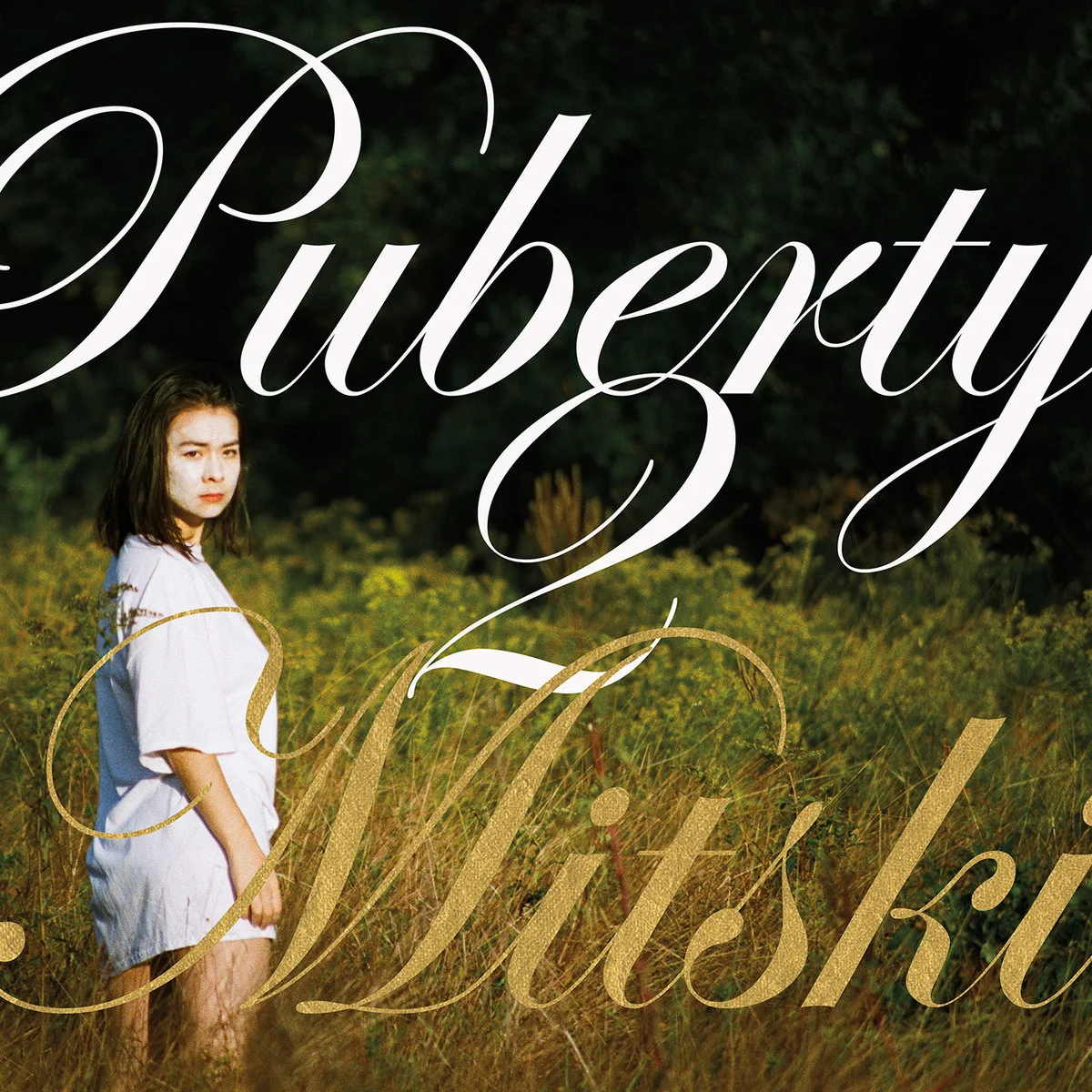
Mitski Comes Into Her Own On 'Puberty 2'

Music ReviewJulian AxelrodComment

Maturity is a tricky concept. We talk about it as if it’s some elusive nirvana attainable only through a vague combination of time and experience, but in reality the path to maturity is a long, twisted clusterfuck that you don’t even realize you’ve been following until you look at where you were the year before and realize how much you’ve changed… or how much you haven’t. As New York singer-songwriter Mitski Miwayaki puts it in her song "Crack Baby," it’s “a long, hard 20-year summer vacation.”

In this sense, Mitski’s fourth album Puberty 2 is her most “mature” to date – not an Ariana-in-leather-bunny-ears declaration of adulthood, but rather a weary demonstration of the hard-earned emotional clarity that comes from years of trying and failing to Figure It Out. She has channeled the raw emotional overload of her modern classic Bury Me At Makeout Creek into a more lush, expansive sound without losing an ounce of its gut-punch intensity.

Puberty 2 covers a broad emotional spectrum, but it is primarily defined by a longing for recognition and acceptance, even as it understands how fleeting these may be. “Dan the Dancer” and “Your Best American Girl” tell two very different stories of outsiders yearning to be understood, while “Fireworks” finds Mitski struggling to reconcile grief within her daily routine: “I will go jogging routinely, calmly and rhythmically run / And when I find that a knife’s sticking out of my side / I’ll pull it out without questioning why.” Intense blasts of emotion arrive unexpectedly – deep infatuation on “A Loving Feeling,” detached disappointment on “A Burning Hill,” and high anxiety on the contained punk rager “My Body’s Made Of Crushed Little Stars,” which sprints through Mitski’s inner monologue as she fantasizes about blowing a job interview and plotting her own disappearance. But these songs are over before you can begin to make sense of them, creating an experience as unpredictable as our own emotional cycle.

While Mitski’s expertly crafted lyrics masterfully reflect our own fickle feelings, her compositions are more confident than ever. The SUNY Purchase-trained composer and her co-producer Patrick Hyland find the perfect middle ground between the elaborate arrangements of her first two albums and the urgent garage frenzy of Bury Me At Makeout Creek. The panic-attack guitars on “My Body’s Made…” bleed into the dreamy synth globs of “Thursday Girl,” while the industrial clatter of “Happy” simultaneously recalls St. Vincent and political punks Downtown Boys.

Yet it’s impossible to listen to Puberty 2 and hear it as anything but a product of Mitski’s singular vision. Her turns of phrase provide a connective tissue for its disparate themes, and her affecting voice adapts to every new sound. She has come into her own as a writer, producer and performer, with a presence so commanding it sells every line like a short story. The genius of Puberty 2 lies in Mitski’s ability to turn this emotional whirlwind into a personal, cohesive statement. After all, there’s nothing more mature than knowing yourself.

EXCLUSIVE PREMIERE: TÂNZI Create "Imaginary Sounds" on Debut Single

Exclusive Premiere, New MusicWeston PaganoComment

Feeling restrained by the traditional rock band setup, Los Angeles natives Hypnotic Hyena (Samuel Duffey) and Chris Jaxon (Chris Jackson) joined forces to start a project where they have total control. Named after Jaxon’s sister’s first name and his mother’s maiden name, TÂNZI has become a pop rock duo with heavy electronic influence, and Transverso is proud to debut their first single, "Imaginary Sounds."

A steadily marching dance beat transforms into some sunny guitar work as the track opens with, "My love for you is driving on the freeway," a fitting metaphor for what undoubtedly makes a great summer driving song. Complete with an informational voice sample appropriately reminiscent of the secretary at the end of Pink Floyd's "Young Lust," "Imaginary Sounds" tells the story of an unsuccessful sexual encounter.

Jaxon tells Transverso, "'Imaginary Sounds' symbolizes our first step as true pop artists. It's the first thing we have written that we believe can be played on the radio, and that is something we are really proud of."

Check out "Imaginary Sounds below," and catch TÂNZI at LOVEFEST this August 5-7.

Peter Bjorn and John Reach Peak Pop Polish on 'Breakin' Point'

Music ReviewWeston PaganoComment

The wait for this one was so long we're not young folks anymore. Everyone’s favorite Swedish indie pop trio, Peter Bjorn and John, had been taunting fans with #PBJ7 social posts for much of the five years since Gimme Some gave us 300% of a normal thumbs-up in 2011, before finally releasing their 7th LP, Breakin’ Point, today. Delayed by growing families and a label shift as the band left Sony imprint Startime for their own Stockholm startup, INGRID, the wait has turned out, of course, to be worth it.

Breakin’ Point launches straight into things; you can already picture audiences clapping along as disco-tinged lament of working for The Man, ”Dominos,” sets off the "chain reaction" that launches into 12 tightly-packed tracks, all clocking in at 3:something or less (even “A Long Goodbye" doesn't reach four minutes) as if the triple-headed hammer on the cover itself cranked them out.

“It says, ‘We’re back! We’re smashing it!’” bassist Björn Yttling explains of the album art, which consists of, per tradition, three parts - one for each member. It's the affable Swedes’ most cartoonish and playful offering yet, which says a lot for the trio that gave us the undeniable whistler “Young Folks" among others, but their pop sensitivities, as radio-ready as they increasingly are for better or worse, lose little in the ways of heart. It needs to be “like ABBA,” Yttling says, and it’s clear they take the inspiration of their compatriots seriously; PB&J recorded Breakin’ Point in studios formerly used by ABBA, and have even jokingly claimed to be the classic group’s illegitimate sons.

PB&J first explored using outside producers on Gimme Some, but they’ve enlisted an entire star-studded roster of them this time around, including Paul Epworth (Paul McCartney, U2, Florence And The Machine), Patrick Berger (Robyn, Icona Pop), Greg Kurstin (Adele, Sia), Emile Haynie (Kanye West, FKA Twigs), Pontus Winnberg (Miike Snow) and Thom Monahan (Wild Nothing, Devendra Banhart). The band explored several evolutions following their well-deserved Writer’s Block breakthrough from Seaside Rock’s instrumentals, Living Thing’s minimalist electro-funk, and Gimme Some’s amped up guitar-driven power dynamics, and the newfound influence of big pop producers doesn’t go unfelt here as Breakin’ Point instead reaches for peak accessibility and polish.

Pre-order the new album "Breakin' Point" here: http://smarturl.it/BuyBreakinPoint or on iTunes here: http://smarturl.it/PBJDominosiTunes "Our first new rock video is here! Check out the awesome video makers from ANIED and their playful adaptation of the lyrics in "What you talking about?" Love Peter Bjorn and John 'What You Talking About?'

Long-term fans will attest it was PB&J’s endearing quirks that kept them around after some fantastic sync licensing first propelled their 2006 ubiquitous flagship tune to the world stage, however - the beautifully poignant epic of “Up Against The Wall,” the captivatingly juxtaposed aggression of “Lay It Down," the viciously enthralling hook of ”Amsterdam” (which has been this author’s ringtone for as long as he can remember) - and Breakin’ Point lacks any adventurous, next-level standout in that way, resulting in their most consistently medium tempo, homogenous effort in years.

That being said, PB&J do however succeed at what they (safely) do attempt; the frantic skitter and plink of “What You Talking About?” proves they still know exactly what they’re saying, and they're slick while they do it. Their iconic, cheerful whistling notably returns in the title track and “Nostalgic Intellect,” (which “may seem like bigger news than it is, hey its only whistling,” the press release notes), with the former bolstering Peter Morén’s soaring vocals as they present a vulnerably honest attempt at finding courage for newfound fatherhood: “I saw it in Jesus / Saw it in Superman / Got it from whiskey / Like any loser can.”

Do Si Do” drops a Beatles reference on its way to the dancefloor, while “Between The Lines” aptly concludes “It's hard to sing if your hearts not there.” The punchy cowbell in album highlight and closer “Pretty Dumb Pretty Lame” is far from either of those things as PB&J address the triviality and tension found in their own profession: “Well you complain in the press / You’ve been under a stress / Well every nine-to-fiver is stressed out for less / If you enjoy what you do / Don’t let it ruin you.” These glimpses of true self-awareness are a precious commodity in today’s pop, and it’s exactly that and their genuinely disarming disposition that has always set them apart from their pop rock peers, even at their most formulaic.

“There are very few songs in our collection that are positive. I can’t think of one,” Yttling admits, which may surprise casual listeners. “It's always been about the blues. Life is shit, but tonight is nice – that’s what pop is, especially the songs that we love. You wanna have some darkness to be able to see the light. That’s how we do it up here in Sweden! It’s like a black and white movie if you look out: snow and a black mass of darkness.” It’s may not always reach the depth of past works, but Breaking’ Point does its part to make that darkness abate, even if for only 41 minutes.


Read our full-length interview with Peter Bjorn and John here.

Robert Ellis Gets Surreal on Self-Titled Third LP, 'Robert Ellis'

Music ReviewSean McHughComment

June 3, 2016 is one of the year’s most saturated release dates so far; a conflicting conundrum for those who look to listen to any of the exceptional (and not so - sorry Train) releases: Paul Simon, The Strokes, Whitney, Michael Kiwanuka, Tegan and Sara, The Kills, William Tyler all on the same day. One such artist whose newest release deserves the attention and praise his excellent album would garner on any less release-heavy date is none other than Brooklyn-by-Nashville-by-Austin songwriter Robert Ellis.

Much like his revolving door of homesteads, Ellis is not confined by a singular genre – though it could be argued all roads lead back to country music in one way or another – as he mixes strains of jazz, pop, and western music into dulcet guitar sounds layered over his wavering country timbre that resembles a surrealist Willie Nelson. Despite the country tonalities in his music, Ellis’ third full-length record, Robert Ellis, explores musical avenues that past efforts Photographs (2011) and The Light From the Chemical Plant (2014) chose not to venture upon.

His newest, eponymous effort opens with “Perfect Strangers,” a song exploring the inter-relational dynamics (or lack there of) of busy New York City sidewalks and subways, inevitably influence by Ellis’ fairly recent move to Gotham. The song features playful pop piano (a far cry from the saloon style player pianos of The Light From the Chemical Plant), which coincides wonderfully with Ellis’ cheeky lyrical observations – “On a crowded city sidewalk buying hotdogs / Standing awkwardly together” and “Because everything looks better in low lighting” – with the occasional country slide guitar creeping into the song.   

Not to undermine the emotional depth of Ellis’ previous two full length releases, but there’s an intelligible sense of remorse and yearning on Robert Ellis that feels considerably more connective than on The Lights from the Chemical Plant (let’s take a moment to appreciate just how excellent that album title is). “How I Love You” and “California” explore two opposite ends of the relational spectrum – “How I Love You” acting as the vibrant ode to a lover, and “California” chronicling an underappreciated lover tempted to trek to the west coast. The composition on “California” is an interesting combination of Ellis’ excellent jazz guitar work melded with sentimental lounge keyboards with intermittent hyper-produced tones and 808s – a new territory for Ellis that ultimately makes “California” one of his largest and most evocative tracks to date.

There’s a dichotomy between “California” and it succeeding track, “Amanda Jane,” a story of commitment built over a country-tango, and all of a sudden, we’re in “classic” Robert Ellis territory. The narrative of multiple men trying to “fix” the mysterious Amanda Jane combined with the nylon string meandering and lush slide guitar licks make “Amanda Jane” an early favorite on Robert Ellis. The next few tracks on the album return to Ellis’ Nashville-by-Austin roots with the classic country honky-tonk beat of the apathetic anthem “Drivin,’” into the western ballad that is “The High Road” – a falsetto laden lament of indifference and morality (and my personal favorite), featuring heavy orchestral composition that packs a fun wallop of self-loathing - before jumping into “Elephant,” an allegorical parallel to isolationism that revolves around the popular (and tired) Pachyderm turn of phrase. Despite the initially cliché lyrical basis, Ellis manages to present the idea in a tone that is wholly more intelligent than most. Then there’s the fact that Ellis’ finger picking is second to none on all three tracks – Ellis is often left out of most modern guitarist debates, which is more than a crying shame – which is Ellis’ strongest security blanket while exploring different lyrical approaches and unfamiliar tonalities.

In Ellis’ quest to find different sounds on Robert Ellis, “You’re Not the One” serves as his rock orchestra, with abounding strings integrated with the country-fantasm keys and guitar. In certain portions, the emotional emphasis gets a little muddled – is Ellis letting go of a current lover or opining on a former lover whose memory persists – either way, the robust composition makes “You’re Not the One” Ellis’ most inspired effort on his eponymous record. All that to be said, “You’re Not the One’s” intrepid approach is almost subverted by the totally departure from anything expected from Ellis’ catalog, as “Screw” sees Ellis go sans-vocals in order to create a Sufjan-meets-Reznor soundscape of pensive and conflicting guitar tones that warp and entangle an emotionally vibrant record.

Following the equally confusing and exciting “Screw,” Ellis returns to the same playful nature that he began to establish in the early third of the album on “Couples Skate” – a silly setting for an endearing narrative of love and relational engagement – it’s a little cheesy, but clever enough to be the perfect “first date” montage song for any rom-com or three camera sitcom you can think of.

Robert Ellis closes with “It’s Not Ok,” the album’s longest and most speculative and demure track, as Ellis reiterates and extends the ideals presented in “The High Road” and “You’re Not the One” but are entirely more visceral when you realize Ellis is putting none other than himself on blast – “It's not ok that I hide in the words of a song.” It’s the final stoic anthem of a mysterious and alluring personality in music, as Robert Ellis manages to take an artist many had pegged as a “new school of old school country” a la Sturgill Simpson, Margo Price, or Nikki Lane and fully turn such a notion upon its head. While Ellis doesn’t necessarily establish a fully realized narrative or sonic heading on Robert Ellis, he does manage to extend his staying power as a musically mercurial artist with a definitive approach and sensibility. Where many would likely prefer for Ellis to try and solidify his standing as a stalwart of “new” country, you can’t help but admire the strong work Ellis puts forward on Robert Ellis to maintain his own surreal path, away from whatever is considered “en vogue.”