TRANSVERSO

- A culture magazine reaching terminal verbosity -

Whitney Shuns Buzz Band Banality on 'Light Upon the Lake'

Music ReviewSean McHughComment

No band in the history of everything has managed to avoid “death” in the sense that all bands – from The Beatles to your favorite local proto-punk-neo-folk-soul group – break up for one reason or another, with varying degrees of adversity and dramaticism. Obviously, The Beatles disbanded in 1970, but weren’t “definitively” broken up until Mark David Chapman read Catcher in the Rye in December of 1980, and as far your favorite local proto-punk-neo-folk-soul group is concerned, their drummer Keith was promoted to the late shift manager at Starbucks, so he won’t be able to practice most evenings, and proto-punk-neo-folk-soul drummers are at a premium in Des Moines. But silly comparisons aside, band breakups are rarely ever a joyous occurrence – tensions run high, bridges are burned, and once-hopeful fans are left with a finite discography.

So, when a particularly “buzzy” band such as Smith Westerns calls it a quits, the resulting career uncertainty for the former members can become increasingly unsettling to the devout follower. Fortunately, the legacy that follows Smith Westerns’ end looks to be far more promising than whatever outlook the original group may have had. Former front-man Cullen Omori made his way over to Sub Pop and released his solid solo debut with New Misery in March, and now, former Smith Westerns drummer Julien Ehrlich (who also had a stint in Unknown Mortal Orchestra) and guitarist Max Kackacek have banded together to form Whitney, and release a wonderfully jangly 70s-revival debut record, Light Upon the Lake.

Light Upon the Lake begins with a stellar album opener in “No Woman,” a seemingly mawkish entrance that meanders aimlessly as Ehrlich’s soft-cooing vocals opine about waking up in Los Angeles and experiencing an indefinite and tiresome change. Kackacek’s deceptively smooth '70s Martin-esque riffs eventually lead the track in a decidedly more confident direction, with a cacophony of horns closing out the introductory track. The succeeding tracks on Light Upon the Lake see an uptick in tone and vibrancy as “The Falls” feels like a mix of Vulfpeck percussive piano playful nudging Ehrlich’s lyrical musings on losing control, leading into “Golden Days,” the wax poetic (and indie rock right of passage) chronicling of some relationship passed (can’t help but think there might be some Smith Westerns undertones) – “It’s a shame we can’t get it together now.”

Where many might try and incorporate aspects of past projects into their current one, Whitney does a fantastic of presenting a definite tone and substantive grip of who Whitney is, namely in the band’s consistent use of horns, bouncing piano, and clean Martin riffs deftly maneuvered by Kackacek – especially on the album’s eponymous standout, “Light Upon the Lake.” The overall feel of Light Upon the Lake could be likened to The Band meets UMO with flecks of Vulfpeck and Blake Mills – in short, its wholly unique. The album features a number of punk sensibilities when it comes to lyrical verisimilitude and general brevity – the three song stretch of “No Matter Where I Go,” “On My Own,” and “Red Moon” runs a whopping 5:38 – with “On My Own” into “Red Moon” being the most impressive track pairing of the bunch, primarily for the excellent showcasing of horns mixed with Kackacek’s ever-tasteful licks. All in all, the two strongest aspects of Light Upon the Lake are Kackacek’s guitar expertise and the incorporation of harmonious brass work – making the record distinctly modern but also managing to hearken back to a softer time in rock music.

Light On the Lake closes out as sweetly and satisfyingly as it opened, with the uber-funk fuzz of “Polly” marking it as best track on the album, a soft cooing-ballad that has features undertones of disenchanted realism under the guise of happy rhythms and horns. The album closes with “Follow” - the sonic sibling of “Polly” – setting Light On the Lake’s with as positive an outlook as any debut featuring lyrics like “I know I’ll hear the call any time…” that lend credence to the visionary nature of Light On the Lake as a whole. “Follow” allows the record to help establish Whitney as more than just another buzz band, but rather a supremely melancholic (but not miserable) introduction steeped with perspective that maintains an ultimately warm purview of the band’s future. Expect to see Light Upon the Lake on many a "year end" list, including Transverso's, as the record exemplifies the ideal dulcet tones of an indie band debut.  

The Avalanches Announce New Album, Release First Track in 16 Years, "Frankie Sinatra"

Music News, New MusicAndy TabelingComment

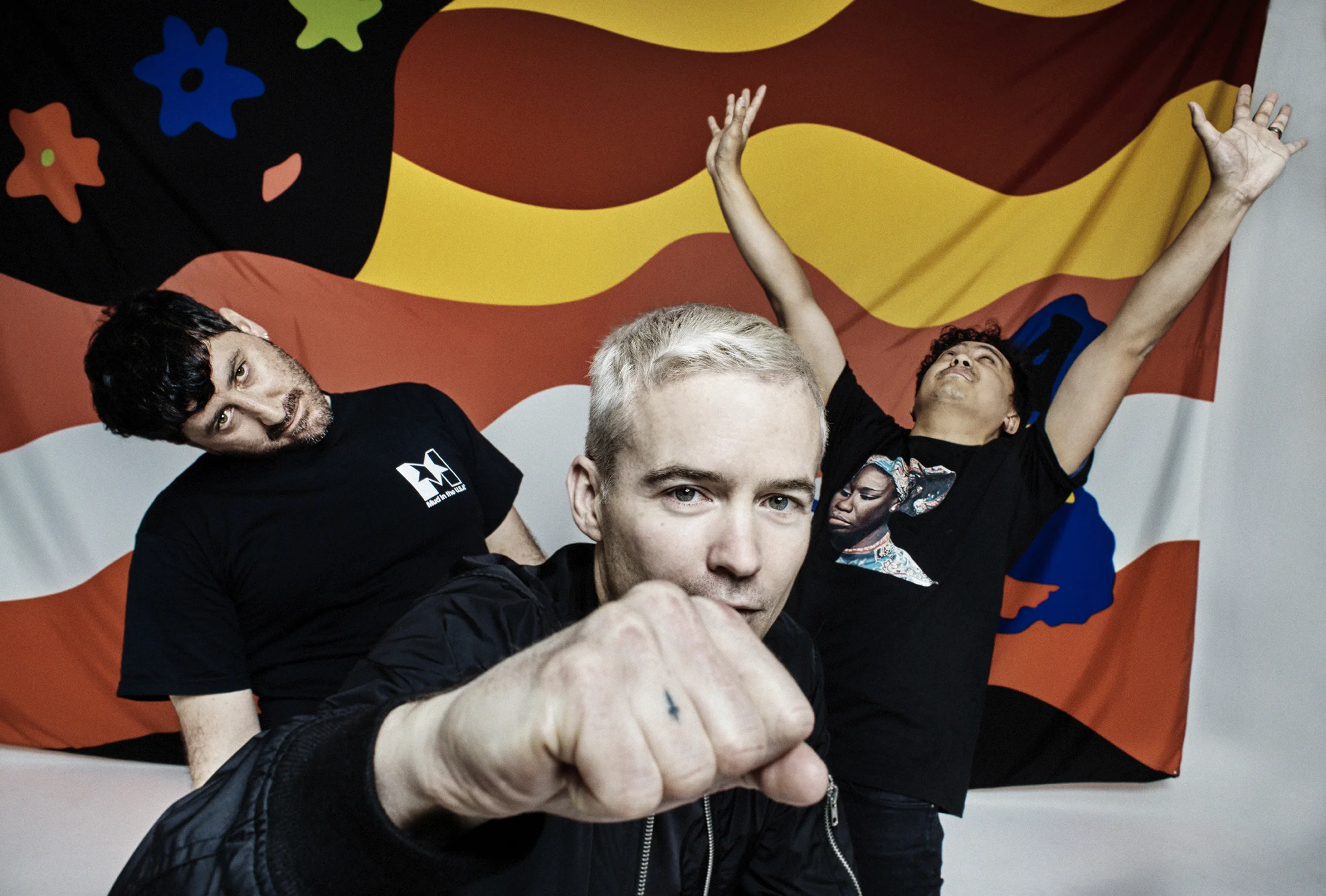
As we approach the 16th anniversary of The Avalanches’ classic debut Since I Left You, the Australian group has finally announced the release date of their impending second album, Wildflower, on Zane Lowe’s Beats 1 show. The record will be released on July 8 via XL Recordings and features a slew of collaborators including Father John Misty, Toro y Moi and Biz Markie. Along with the announcement and the group’s first major interview since falling off the map after Since I Left You’s release, the group also dropped the first single, the delightful “Frankie Sinatra,” complete with a hallucinogenic music video.  

The track, built around a sample from Wilmoth Houdini's “Bobby Sox Idol,” is a bit less dense and layered than some of the debut records’ more famous jams. Instead, the focus is put on the two featured MCs: Danny Brown and MF Doom. Brown especially delivers two spirited, humorous verses that flows effortlessly over the quirky, strange beat. If this first sample is an indication of the group’s direction on Wildflower, we’re in for a treat.

of Montreal Announce New Album 'Innocence Reaches,' Hear First Single "it's different for girls"

Music News, New MusicWeston PaganoComment

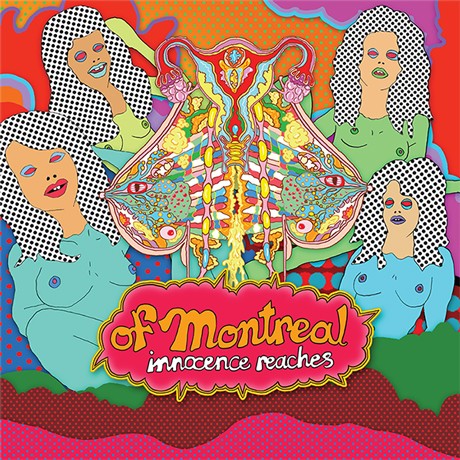
of Montreal has debuted new single "it's different for girls" on Zane Lowe’s Beats 1 show and announced new album Innocence Reaches will follow-up last year's Aureate Gloom on August 12 via Polyvinyl.

Right off the bat it's clear the (American) Athenian psychedelic darlings have re-enlisted frontman Kevin Barnes' brother David for the art direction, with this newest kaleidoscopic offering exploring the “wonderment for the female anatomy." The track itself also harkens back to a more pre-Lousy With Sylvianbriar glittery sound and bears at least a passing resemblance to label-mates STRFKR.

According to Kevin, the forthcoming tunes are indeed more inspired by his contemporary peers than past work,

Forever I’ve been detached from current music. I got into this bubble of only being in some other time period. I came up picking apart the Beach Boys, the Beatles, and symphonic pieces. But last year, I was hearing Jack Ü, Chairlift, Arca, and others, thinking about low end and sound collage. It was an extra layer to geek out on.

At least one other song from Innocence Reaches has been performed live already as well. Listen to "it's different for girls" and check out the full album art and (all lowercase) tracklist below.

"it's different for girls" appears on of Montreal's full-length album, Innocence Reaches, available August 12, 2016. Pre-order 2xLP/CD/cassette/digital: http://plyvnyl.co/innocencereaches

Innocence Reaches

  1. let’s relate
  2. it’s different for girls
  3. gratuitous abysses
  4. my fair lady
  5. les chants de maldoror
  6. a sport and a pastime
  7. ambassador bridge
  8. def pacts
  9. chaos arpeggiating
  10. nursing slopes
  11. trashed exes
  12. chap pilot

Read our in-depth interview with of Montreal here.

“Captain Fantastic” is a Moving Story About the World’s Not So Greatest Dad

TV/Film ReviewPatricia TancrediComment

As Matt Ross’s touching sophomore film “Captain Fantastic” makes its rounds through the festival circuit it continues to garner more and more positive buzz. And “Captain Fantastic” lives up to its name as Ross tells the story of a family living to the beat of their own drum and drags you across each end of the spectrum of human emotion with a dramatized and idealistic portrayal of what it means to be a good parent.

In the opening scene, Bodevan (George MacKay), the eldest son of the six children of the Cash family, slays a deer and then takes a bite of its heart as part of a coming-of-age ritual that sets the engaging pace for the film. This world set deep in the forest of the Pacific Northwest feels so separate from the world we know, we instantly believe living in the wilderness is the only way to live. The Cashs' daily rituals include hunting, martial arts, and knife training all necessary for surviving in the isolated land. Their self-sustaining lifestyle is mixed with bits of singing and dancing around fires and homeschooling with topics including Marxist theory and critically analyzing Lolita.

Their life is turned upside down with the news of the suicide of the matriarch, Leslie Cash (Trin Miller), who had been hospitalized by her parents to treat her bipolar disorder. It is not until Ben Cash (Viggo Mortensen), the patriarch of the family, visits the local town and receives the news on his outdated cell phone that we see how removed his family is from civilization. Ben returns to his yurt-like home and shares the news with his kids with a frankness and maturity usually reserved for adults.

The death of Leslie and her upcoming funeral act as forced motivations for Ben to expose his kids from what he has protected them their entire life. The disconnect in socialization, however, is apparent through the kids’ interactions with strangers, and it is especially noticeable any time that Bodevan interacts with the opposite sex. On their road trip to New Mexico for Leslie Cash’s funeral, Ben’s parenting strategies and lifestyle are questioned as the kids attempt to reintegrate into society. Throughout the film the characters, and the audience, struggle to understand and accept different parenting styles and question what it means to be a family.

Ross’s background in acting shows in his directorial style as he is able to elicit captivating performances from even his youngest cast. Charlie Shotwell and Shree Crooks, Nai and Zaja respectively, steal the show as the littlest of the Cash clan. Their characters, wise beyond their years while maintaining their youthful curiosity, add a much needed balance to Ben’s often arrogant and controlling persona. Frankly, each actor shines in their roles gaining extreme levels of empathy from the audience. Nicholas Hamilton’s performance as the middle child Rellian provokes audible sneers and tears as he rejects his father’s lifestyle in favor of his conservative grandfather Jack’s (Frank Langella), and Mortesen’s counter as Ben, the charismatic and caring yet pushy and impatient father, creates an equally heartbreaking and heartwarming dynamic. Also, George MacKay does an incredible job revealing Bodevan’s internal struggle between his devotion for his father and his desire to attend university and assimilate with his peers.

Hidden underneath the main theme of the film, Ross subtly inserts commentary on different social, economic, and political issues including economic inequality, obesity, religion, and the American education system. All mentions of these issues feel organic and add depth and insight into the characters, their actions, and their dialogue. Each situation is carefully chosen and each conversation is profoundly significant allowing the characters and the scenes to develop naturally.

The ethereal score feels as if it were taken directly from the Jonsí discography. The transcendental quality of the music matches perfectly with the aesthetics of a film filled with rays of soft sunlight, striking shots of nature, and hippie décor. Each frame on the road feels postcard worthy and leaves you ready for adventure. With production design capturing the same adventurous spirit of Wes Anderson’s Moonrise Kingdom, the highly romanticized outdoor experiences strongly parallel the idealistic counter-culture lifestyle the Cash’s live.

During its premier in Cannes’s Un Certain Regard category, two hours of smiling, sniffling, and laughing were followed by a well deserved, boisterous standing ovation that lasted through the credits. Ross somehow succeeds in creating a feel good family drama that avoids standard road trip clichés and leaves you with a feeling of elation.

Subscribe to INDIE & FILM FESTIVALS: http://bit.ly/1wbkfYg Subscribe to TRAILERS: http://bit.ly/sxaw6h Subscribe to COMING SOON: http://bit.ly/H2vZUn Like us on FACEBOOK: http://bit.ly/1QyRMsE Follow us on TWITTER: http://bit.ly/1ghOWmt Captain Fantastic Official Trailer 1 (2016) - Viggo Mortensen, Frank Langella Movie HD In the forests of the Pacific Northwest, a father devoted to raising his six kids with a rigorous physical and intellectual education is forced to leave his paradise and enter the world, challenging his idea of what it means to be a parent.

Man Man's Honus Honus Releases Self-Directed Music Video for Solo Debut, "Heavy Jesus"

New MusicWeston PaganoComment

They say God works in mysterious ways, but Jesus himself appearing to an unwilling heavy metal disciple via a late night quesadilla is certainly a new one. And that's exactly what happens in Man Man and Mister Heavenly master Honus Honus' self-directed music video for his first official solo track, "Heavy Jesus," the lead single off his forthcoming self-released debut, Use Your Delusion, due out in September. The album features ex-Modest Mouse and current Cold War Kids duo Joe Plummer and Dann Gallucci as mixer and drummer, respectively.

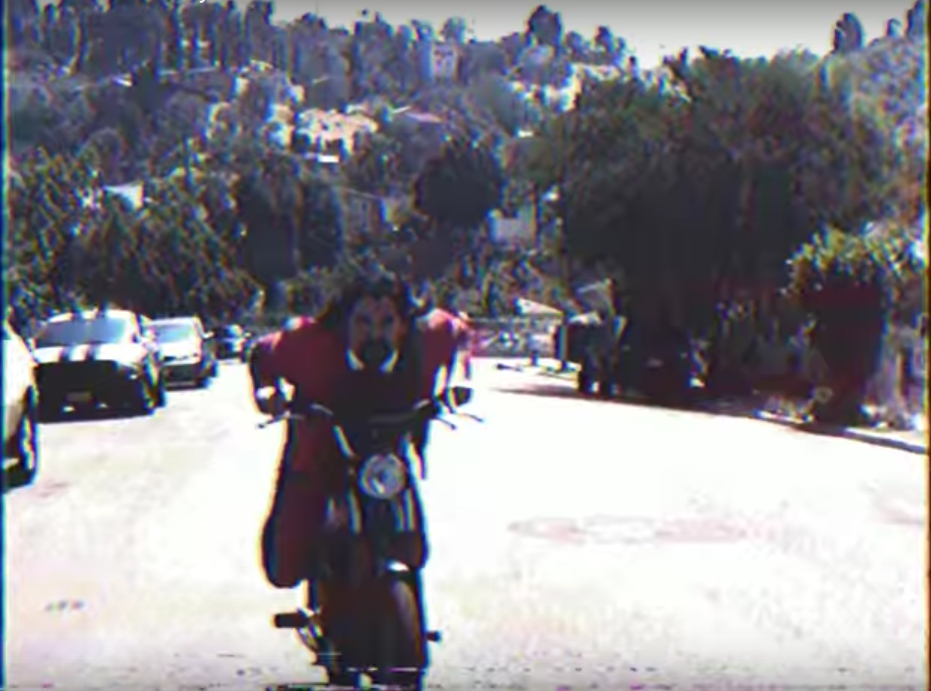
Opening with Honus himself cruising down the street on a bike in a way reminiscent of the trouble-making kids in "Piranhas Club," the unlikely tale of nonconsensual divine intervention sizzles with that classic VCR home video feel. The self-described “apocalyptic LA pop” vibe is indeed more on the "croon-y and singing-y" side of his vocal range as Honus told Transverso it would be back in October, but that doesn't keep the sunny song from being paired with a comparatively dark Ozzy-inspired dove-decapitating bite.

You can get "Heavy Jesus" along with four other B-sides/covers if you preorder Use Your Delusion through the Pledge Music campaign, which recently surpassed its goal with still over 100 days remaining (sadly the $666 denim vests are now sold out). Honus has also announced a tour opening for Mister Heavenly bandmate Nick Thorburn's Islands, the dates for which are listed below the video.

Tour:

6/1 - Sacramento, CA @ Harlow's
6/3 - Seattle, WA @ Tractor Tavern
6/4 - Vancouver, BC @ Biltmore Cabaret
6/5 - Portland, OR @ Mississippi Studios
6/7 - San Francisco, CA @ Great American Music Hall
6/9 - Los Angeles, CA @ The Teragram Ballroom
6/10 - San Diego, CA @ Casbah
6/11 - Las Vegas, NV @ Bunkhouse Saloon

Read our full interview with Honus here.

Wild Beasts Announce 5th LP, 'Boy King,' Drop Lead Single "Get My Bang" Music Video

New Music, Music NewsWeston PaganoComment

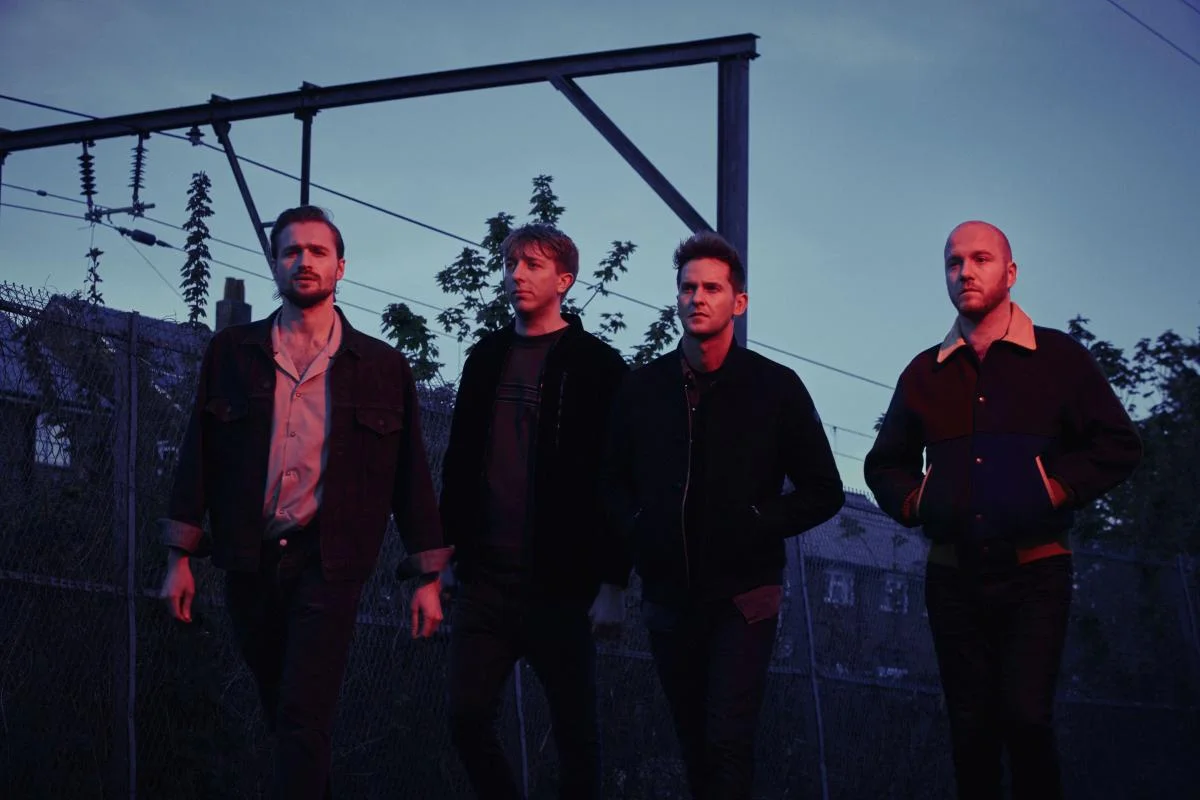
Enthralling experimentalists Wild Beasts have announced their forthcoming 5th LP, Boy King, due out August 5 via Domino with the release of lead single and video, "Get My Bang" and a host of European tour dates.

Wild Beasts have never been afraid to evolve across albums, and this first taste of Boy King - leather jackets, immensely '80s cover art, and all - is no exception. More straightforward than previous works, a linear drum base and unabashedly direct lyrics shed much of the painstakingly clever wordplay and dynamic brooding that set apart their past discography as "Get My Bang" reignites much of their signature libidinous themes but with an altogether different sort of polished package. "No getting it right / No getting it wrong / Just getting it on," indeed.

Co-frontman Hayden Thorpe explains,

After five records there had to be an element of ‘what the fuck?’ It became apparent that that guitar almost became the character within the songs, that phallic character, the all-conquering male. I’m letting my inner Byron fully out, I thought I’d tucked him away, but he came screaming back like the Incredible Hulk. I think ‘Boy King’ is an apocalyptic record. It’s about swimming in the abyss. When you think about sex, you’ve got to think about death, they’re one and the same.

Boy King was recorded in Dallas, enlisting producer John Congleton (St. Vincent, The War on Drugs), while the accompanying visual was shot in Belgrade and directed by Olivier Groulx (Arcade Fire, alt-J). Check out the video, tracklist, and tour dates below.

Wild Beasts - Get My Bang (Official Video) from 'Boy King' - the new album out 5th August 2016 Pre-order digital: http://po.st/BoyKingDL Pre-order CD/LP/LPX: http://po.st/BoyKingStore Listen to Wild Beasts on Spotify: http://po.st/WildBeastsSP http://po.st/MyBangStream Directed by Olivier Groulx The video for 'Get My Bang' was shot in Belgrade and directed by Olivier Groulx (Arcade Fire, alt-J, Scott Walker) featuring vocalist Hayden Thorpe's twisted routine of Justin Timberlake-meets-Trent Reznor choreography.

Boy King

  1. Big Cat
  2. Tough Guy
  3. Alpha Female
  4. Get My Bang
  5. Celestial Creatures
  6. 2BU
  7. He The Colossus
  8. Ponytail
  9. Eat Your Heart Out Adonis
  10. Dreamliner

Tour:

6/18 – Madrid, ES @ MadCool Festival
7/26-27 – Leeds, UK @ Brudenell Social Club
7/28-29 – Brighton, UK @ Hove Old Market
8/18 – Brecon Beacons, UK @ Green Man Festival
8/26 – Dumfries, UK @ Electric Fields
8/27 – Helsinki, FI @ Modern Sky Festival
9/02 – Vlieland, NL @ Into the Great Wide Open
9/04 – Laois, IE @ Electric Picnic
9/24 – Hamburg, DE @ Reeperbahn Festival
9/28 – Bristol, UK @ Motion
9/29 – Oxford, UK @ O2 Academy
9/30 – Margate, UK @ By the Sea Festival
10/01 – Sheffield, UK @ The Foundry
10/03 – Cambridge, UK @ The Junction
10/04 – London, UK @ The Roundhouse
10/07 – Newcastle, UK @ Northumbria Uni
10/08 – Glasgow, UK @ QMU
10/09 – Manchester, UK @ Academy
10/12 – Belgium, BE @ Botanique Orangeries
10/13 – Paris, FR @ La Gaite Lyrique
10/14 – Tourcoing, FR @ Le Grand Mix
10/15 – Strasbourg, FR @ La Laiterie
10/16 – Cologne, DE @ Luxor
10/18 – Copenhagen, DK @ Pumpehuset
10/20 – Berlin, DE @ Kesselhaus
10/21 – Prague, CZ @ Lucerna Music Bar
10/23 – Zurich, CH @ Rote Fabrik
10/25 – Milan, IT @ Magnolia
10/26 – Lyon, FR @ Epicure Moderne
10/29 – Bilbao, ES @ BIME


'American Honey' is a Sweet Antidote for the Failing American Dream

TV/Film ReviewPatricia TancrediComment

British director Andrea Arnold left her home country for the United States for her first feature film set and shot outside of the United Kingdom, using her working class background to expose the life of a young American Honey and her desires for something greater. The Instagram-documentary-like film establishes a modern take on the pursuit of happiness with visuals and audio that invite you on the journey.

American Honey follows the life of Star (Sascha Lane), an 18 year-old girl stuck in a hopeless life assuming more responsibilities than she should, opening with her dumpster diving for food and attempting to hitchhike with two kids that aren't her own. Upon seeing a white van filled with a rambunctious crowd, she allows her curiosity to take over and follows them into a Walmart-esque store. There she meets Jake (Shia LaBeouf) with whom she is immediately hypnotized. Jake breaks out in to dance with his squad as “We Found Love” by Rihanna plays over the speakers before inviting her to join his comrades selling magazines door-to-door across the Midwest. After the minute of spontaneous excitement from meeting Jake, Star rushes home and returns the kids to their biological mother and drops her suffocating life, beginning to pursue her own adventure by joining the ragtag team of semi-delinquents to start an exhilarating life on the open road. Star finds her escape traveling cross-country working during the day and staying in motels and partying by night.

In several interviews the cast explains that Arnold and her casting directors traveled across America in search of their perfect characters. Sasha Lane, who plays the main character Star, was scouted on her spring break in Panama City Beach. With relatively little experience, she gives an exceptionally captivating performance as a tortured girl full of idealism and hopefulness for her modest future. Most of the cast was scouted in the same way. This type of casting allows the actors to be extremely genuine within their characters, which shows in the film from beginning to end. Two actors, however, already had extensive experience under their belt. Shia LaBeouf’s performance as the rat-tail wearing, slightly erratic Jake is one of his best performances in the last decade and one of the best at the Cannes Film Festival. The character Jake is so in tune with LaBeouf’s celebrity persona one can hardly tell the difference. Another stand out performance includes Riley Keough’s portrayal of the ruthless ringleader Krystal who embodies the phrase “if looks could kill.” The performances combined with the cinematography allow the audience to experience the world through Star’s eyes, getting to know best the characters she knows best.

The cast and crew travelled over 10,000 miles shooting on location collecting hours of road trip footage. Stand out Irish cinematographer Robbie Ryan closely captures intimate moments on the road and highlights the off-beat characters without inducing claustrophobia. With a 1:37:1 aspect ratio, the nearly square screen gives a home-movie feel pushing the story forward through snapshots of experiences rather than a traditional plot arc. Images of twisting hair, beautiful landscapes, and candid moments flood the screen for an over all feel good sensation, but the film tackles serious issues such as domestic abuse, morality, and income inequality to represent a world as dynamic and fascinating as the real one.

The “American Honey” soundtrack acts more as a mix tape rather than background noise; I found myself singing and dancing along in my movie theater seat wishing I was jamming out with the windows down. Arnold avoids an instrumental score and goes for a fantastic combination of recognizable tracks each song better than the next. Arnold incorporates a variety of genres including rap, hip-hop, country, and electronic, and by the end of the film we hear a repeat of Rihanna’s “We Found Love,” the group’s favorite, which could not have been a more perfect fit for the film. Hats off to the music supervisor. 

With a practically unrecognizable cast, a non-story plot, and a run time of 162 minutes, the success of Andrea Arnold’s fourth feature film American Honey seemed unlikely, but the Cannes Jury Prize winner immerses you deeply within the lives of the nomadic runaways leaving you wanting to feel the wind in your hair as you explore new lands.

Interview AMERICAN HONEY : Andrea Arnold, Shia Labeouf, Sasha Lane Riley Keough Subscribe to the Festival de Cannes channel: http://bit.ly/FestivaldeCannes-YouTube Our official website: http://www.festival-cannes.com Twitter : https://twitter.com/Festival_Cannes Facebook : https://www.facebook.com/pages/Festival-de-Cannes-Page-Officielle/197710070249937 Instagram: https://instagram.com/festivaldecannes Tumblr: http://festivaldecannesofficiel.tumblr.com/ ******************************************************** Abonnez-nous à la chaîne du Festival de Cannes pour ne rien rater de la Compétition: http://bit.ly/FestivaldeCannes-YouTube Le site officiel du festival de Cannes: http://www.festival-cannes.fr/ Twitter : https://twitter.com/Festival_Cannes Facebook : https://www.facebook.com/pages/Festival-de-Cannes-Page-Officielle/197710070249937 Instagram: https://instagram.com/festivaldecannes Tumblr: http://festivaldecannesofficiel.tumblr.com/

Car Seat Headrest Finds Magic in Monotony on 'Teens of Denial'

Music ReviewJulian AxelrodComment

Youth has always been a prized commodity in popular music. Whether they’re celebrating it before they lose it or looking back fondly after it’s gone, songwriters hold youth in such high regard that they lose sight of a simple, universal truth: Being young is the worst.

No one understands this better than Will Toledo, the 23-year-old mastermind behind Car Seat Headrest. Toledo has had an exciting trajectory over the past few years, as his bedroom-pop solo project evolved into a full band and signed with indie mainstay Matador Records. After last year’s acclaimed retrospective Teens of Style established CSH as a major force in the indie rock scene, Teens of Denial could have served as a victory lap; now that Toledo has made it to the big leagues, there’s nowhere to go but up.

But Teens of Denial is not a triumphant album. Success has not changed CSH’s songs, some of which have been in the works since 2013; if anything, this record sounds even more defeated than its predecessors. This is a virtue, as it allows Toledo to display his nearly unparalleled knack for humorously articulating the tiny chaos of being lost and bored in your early 20s. “It’s more than what you bargained for / But it’s a little less than what you paid for,” Toledo sings on “Destroyed By Hippie Powers,” a line that serves as the M.O. for the entire album. Confusion and guilt and anger permeate the lyrics, but Toledo imbues them with a wry levity and an offhand smirk that mask their bleak sentiment. Verses play out like shouted arguments between a parent and teen through a recently slammed bedroom door, as on opener “Fill in the Blank” when Toledo yells, “You have no right to be depressed / Haven’t seen enough of this world yet / But it hurts, it hurts, it hurts”.

But more often, that anger is directed inwards, as Toledo details the countless failed schemes and personal flaws that keep him from rising above the banality of his small town. Take “(Joe Gets Kicked Out of School for Using) Drugs With Friends (But Says This Isn’t a Problem)”, an exhausted (and exhaustingly titled) ode to our inability to curb our own self-destructive tendencies that features the indelible line “Last Friday I took acid and mushrooms / I did not transcend / I felt like a walking piece of shit in a stupid-looking jacket.” In the world of Car Seat Headrest, even psychedelics are just a different way to feel miserable.

As stunted and ineffective as the narrator comes across, Teens of Denial is CSH’s most sonically mature effort to date. The lo-fi trappings of Toledo’s Bandcamp days have been updated with a professional studio sheen that highlights the lyrics without sacrificing their urgency or impact. The hooks are stronger and more streamlined, with anthemic riffs and harmonies that glow like the sun through your window after you’ve slept til noon. The record hums with a spirit of experimentation, as if Toledo is thrilled to try out the opportunities afforded by a professional studio setting. His oddly affecting falsetto and a beautiful synth arrangement elevate the stellar “Drunk Drivers/Killer Whales,” while the 11-minute epic “The Ballad of the Costa Concordia” crescendos into an existential power ballad as Toledo rattles off a laundry list of lessons he never knew he was supposed to learn before adulthood. The song culminates in a cathartic chorus of “I GIVE UP” screamed over and over again, like an invocation chanted to keep his responsibilities at bay.

His efforts are unsuccessful; by the next song, our hero is back to complaining about how he’ll never get a job. But coming at the end of such an accomplished work, it’s a little hard to believe him. In Teens of Denial, Toledo has created a supremely confident album about crippling self-doubt. The job market may be dire, but at least Toledo has a fallback gig as the reluctant voice of a generation.

Cullen Omori Talks 'New Misery,' Tour Cancellation, and Life After Smith Westerns

Music InterviewSean McHughComment

If you’re an indie buzz band aficionado of the early twenty-teens, you likely touted Smith Westerns as one of the preeminent “buzz bands” in their class. As it seems is the natural course of most relationships, endeavors, and bands started in high school, the members of Smith Westerns began to develop divergent views when it came to their future direction, and subsequently disbanded.

Since the dismemberment of the band, former frontman and Chicago native, Cullen Omori, set out to grasp the realities of embarking on a solo journey, making demos initially intended as post-band-breakup coping mechanisms, that after some extended basement sessions, materialized into Omori’s sublime Sub Pop debut, New Misery.

In the midst of a cross-country move, Transverso spoke with Cullen over the Bluetooth speaker system of his Fiat rental as he combed the Hollywood Hills in search of his future Los Angeles homestead.

"Cinnamon" off the March 18, 2016 Cullen Omori album New Misery Order New Misery: http://u.subpop.com/1T4Nwo9 Cullen Omori Twitter https://twitter.com/CullenOmorii Facebook https://www.facebook.com/CullenOmoriMusic/ Instagram https://www.instagram.com/cullenomori Sub Pop https://www.subpop.com/artists/cullen_omori Sub Pop Records http://www.subpop.com Twitter https://twitter.com/subpop Facebook https://www.facebook.com/subpoprecords SoundCloud http://soundcloud.com/subpop MegaMart https://megamart.subpop.com/ VIDEO CREDITS   Director:  Abigail Briley Bean www.abigailbrileybean.com  Video Production House: Mitra


CULLEN OMORI: Let me just jump in my car real quick, it's air conditioned in there. So anyway… Alright. I’ve got like this crazy rental car… and it's like a Fiat. The little tiny Fiat thing, so it’s a super… it's got like a computer thing in it that I can use as a Bluetooth so I can talk to you over the car.

TRANSVERSO: Cool.

So what’s up? Lets talk. Fire away.

Alright. I guess I’ll start out with something general: How do you feel having New Misery out for a while now? How do you think people have interpreted it? Are you pleased, or are you kind of bummed out?

You know, it’s a mixed bag. I spent so much time making the record and, I mean, the record was done and mastered last August, but it took six months to come out and that was kind of annoying, and to have my “maiden” tour blow up the way it did with my van breaking down and the rental van that we got just to go back to the airport got broken into and my clothes got stolen.

That must have been rough.

I mean, it’s a story for sure, and it’s a crazy story, but it's like those things were all kind of real big bummers. I don’t know, I think right now, I’ve always been… with Smith Westerns, I’ve always had really good reviews and this time around its been mixed. I think a lot of people in the US haven’t been getting it in the same that all my European or UK reviews have all been like super super good. You know? Its kind of like people have been missing the point and, I don’t know, that’s kind of annoying. But I’m not trying to write for like critics. Usually, it just so happens that critical people tend to like my music a lot more than like a general audience. This time around it’s a little different, but at the same time… I don’t know. I guess I do. I’m a little annoyed because I feel like I made a record that sonically is really different, but still has a lot of complex, deeper things that people kind of take at face value. Kind of like, “Oh these are songs that some Millennial would write about,” like “Losing the indie spotlight” or “Falling out of some popular band,” when it wasn’t that. It was that was part of it, but there were so many other kind of themes of coming out a self-destructive thing and being so fucked up all the time on drugs, and just not knowing kind of what I was going to do next. And kind of just working through that and while working through that I wrote this album, and that was more what it was about, more so than like “Oh, I’m bummed that I’m not in Smith Westerns any more.” I could give two shits about being in Smith Westerns right now, and I also really hate that I’m getting pegged where people are kind of like “Oh yeah, this is like Smith Westerns,” and it's comparing it to it, and people will send me messages that are like “Can you make a song that’s like this Smith Westerns’ song?” and it's like “Shut the fuck up.”

Absolutely. That has to be irritating.

Yeah. So I guess it's mixed about how its been received.

Sure. I figured that’s probably the downside of once being involved in the “indie darling” or “buzzband” cycle. It seems like it might create this sort of undue expectation of anything that might come after whatever the initial entity was, and that sounds like something that you’re dealing with right now.

Yeah. Well the thing is Smith Westerns wasn’t Coldplay – we weren’t this huge thing – and I like to think of it as I can go on and have a life after Smith Westerns and it doesn’t have to be held up to it. You know? I feel like as the frontman of the band, I’m kind of unfairly labeled as whatever I make, when really it was this whole process of me and Max writing the songs. It wasn’t just me doing everything. So yeah. Also, coming out of a bad situation, Smith Westerns kind of just gelled together and all of us sort of were doing well, and the path was obvious that we would keep making music with it. But after I left, there was no path. It wasn’t like “Oh, I should go and write another record,” and one of the cool things in writing this record was that it was an exercise in letting myself know that for me personally that I can sit down and write an album start to finish all by myself. I could do all the parts that otherwise, Smith Westerns were too afraid to try, or they thought were going to be bad, or whatever.

So it's like an exercise in songwriting for me, and so I still like the record. It's not like anything has turned me off to how I feel about it. I still feel strong about it, I support it, I think they’re good songs that are smart. I think that unfortunately, it's not a record that people… well, you know, I feel like right now with indie music, if you play guitar, you go two ways with it – you can go shoegaze-y or you can go with this '70s light rock shit. Its like jingle rock, and I really wanted to make something different, so I thought at the time a year and a half ago “I wasn’t going to be playing jingle rock doing the '70s stuff,” you know? Everyone has been doing rip-off Todd Rundgren or rip-off Canned Heat or whatever, so I was like “Well, I’ll try something different.” I wanted to make a song with synth. I wanted to try something that has soundscapes that were these songs that could technically be, you know from the '70s or '80s. And I also really wanted to move away from the revivalist idea – I didn’t want to make something where you could be like “Oh, these guys are trying to hearken back to like some era of guitar rock” or whatever. You know? I wanted to make something that was more kind of “my sound,” and I felt like it was appropriate being twenty-something, well when I wrote this album I was 24-25 and I thought it was appropriate. Also, it was my fourth record, so I could really start trying to move away from my influences and starting to really do it kind of “off the cuff.” I thought there was something that – I’m not going to say its my “sound” now – but it was more kind of less leaning on a certain genre, or a certain sound, or a certain band to make it sound right. It was a different experience too, not working with a band; that’s always weird. You know, with Smith Westerns, you could split work together – me and Max would work a lot – having a sounding board to bounce ideas off and change things, which was great, but at the same time, it would become limiting when Max and I had different ideas of where the music should go, and what we should be sounding like and stuff like that.

Right. You mentioned there was a “weird” trend in “revivalist” sensibilities in indie rock and what not – at this point, would still consider it to be “revivalist” or would you just consider it to be “en vogue” or something to that effect?

I mean… I think its very much a trend right now. I think that there are always bands, for as long as I’ve played music, and for as long as I’ve been recording music and can remember – there’s band that will go off of a certain vibe, or a certain genre or whatever. I think that now, however, the attention those bands are getting is huge, and its just part of how things go. It's circular, you know?

Sure, most things are.

And for now, its going to work for people, but I feel like I made a record that kind of was three years too early or three years too late or something, you know? It was probably two year too early, because its not any of those things. And that’s the other thing, too – even if I fail at something I don’t want it to be something where people can be like “Oh, he’s ripping off that band.” I think I did a pretty good jobbing of taking all my influences and melding them into this record. You can’t be like “That’s the Elton John song,” or “That’s the Flaming Lips song” or shit, I don’t know. Its all kind of spread out.

Well what comparisons have you seen people try to ascribe?

The only comparison I’ve ever read about is when people say something like Tame Impala, but I don’t even listen to Tame Impala to be honest. I was singing in a John Lennon-y kind of voice in 2010, so it's not like any of my music is a reaction to current music. That’s not how it works for me.

Its stylized in a manner of which is unique only to you, but do you feel like people take the stylization too seriously? Like with the US audience, you said it doesn’t quite “mesh.” Do you feel that people are taking you having been in a band like Smith Westerns too seriously to be willing to open up to Cullen Omori?

That could be a possibility. I feel that when I was with Smith Westerns, I didn’t feel like I was this huge public figure or anything like that. So, I didn’t feel like if I was, it ever benefitted me. I don’t think I get a huge benefit from being the front man of Smith Westerns. If there are any connotations connected to me being in the Smith Westerns, they’re negative – things that I did when I was twenty years old. They think that I’m like bratty or I’m pretentious, but people forget that there were two other dudes in the band – my brother and Max – who were equally as bratty and pretentious as I was. I didn’t use my name because I wanted to go solo. People weren’t like “Oh yeah, Cullen Omori, check it out.” I used my name because we were mastering the record and they needed to have a name and I couldn’t come up with one that I didn’t hate, you know? So I just used my name. Its one of those things where there might be some bloated takedown when they can’t accept something like when someone [else] has a “clean slate” would - like a musician that they wouldn’t know anything about other than the music. I feel like people also form their own narrative about who I am, and what my music is about, and that’s literally formed people’s ideas – word of mouth – that’s formed people’s ideas of me on some things. It's still all over the place, but I feel like people are building their own narratives for me, and it's not a good one. Unfortunately, that’s how it goes, but I think in Europe or the UK, they don’t have that the same way here. I guess I just pissed off the wrong people when I was in Smith Westerns.

Why do you think that is?

Because at the same time, when you look back at music history or whatever, you these “coffee” guys or like the type of guy that only writes music because they couldn’t find the music they liked to listen to, because “everything sucked” and so they made their music or whatever, and people celebrate that. But I think now, with the internet, Twitter, and the press in general, there’ll never be a next level rock star, because they’re constantly tearing them down. The persona has to be this guy that’s always humble and they can be like “Oh, I want to get a beer with that guy.” There’s no longer the idea of being this presence on stage that’s larger than life. Its like this “cool” real vicious energy and people don’t want that – it makes them uncomfortable and they want to tear it down. And I don’t think that that’s how I am, but I think being a front man and having it all kind of be about me, I think that feeds into the concept that people have this idea of me being a pretentious asshole guy, and that couldn’t be further from the truth. I’m making music that I want to hear, I love performing, I love the aesthetic. My favorite part of this album that you make, you have to create this interview around it, you know? You have your album artwork, you have your videos, and that’s something that I take a lot of pride in doing; I’m a part of that from beginning to the end. I don’t want to say I’m not getting a fair shake or try and complain about it or anything, but I feel like my past isn’t there to help me, it's only there to hurt me. For whatever reason its stuck to me more than anyone else, you know? Like I read about the dudes in Whitney, or whatever.

It sounds like you’re almost just experience this curse of being the frontman despite your main intent to just make music you want to make, as opposed to appealing to a larger mass that may have listened to something you made in the past.

Well, I mean the idea… the narrative that I had was “I want to make pop music,” I think that people go and see that I went away from a band to being a solo artist that wants to make pop music, they think that I’m trying to capitalize on something, or it’s a money grab. That’s not true at all. When I say “pop music,” I mean that I still make music that isn’t dead to a lot of music history, and people that know music know good bands, everyone from the '60s to now; it's all in there, its all in my music. Its not like I’m trying to become Selena Gomez, or anything like that. Its just that I can appreciate something that’s melodic and immediate and trying to work something that is so over the top – like when you think of pop at the top, you think that it's grasping to be as marketable as possible – and try and take that and warp it, like I do with all music that I’m interested in. Its kind of real representation for myself, and its something that isn’t selling out; it’s a cool thing. I think there’s something to be said about making music that a fucking six year-old girl can get into, as well as a seventy year old man, you know?

But [I'm] staying true to my principles, and not selling out in a musical sense, and I think that often goes with not trying to play into that retro-revivalist seventies shit that’s kind of being accepted into the “indie spirit.” I’m just going to do my own thing and play around with what works. Right now, I’ve just been listening to nothing but Ministry, and I want to go really heavy for the next record. I just want to play around do whatever the fuck I want to do. Luckily, I’m in a position with Sub Pop that I can do whatever I want – they are so behind me in every way – even when my van broke down, I went to their office and just hung out for two days, Jonathan Poeman drove me to the airport and made sure I had everything – that I had a hotel and everything after my shit got stolen – that’s something I’ve never had before with a record label. I’ve never had that kind of acceptance and kind of support. It's cool and it makes me want to create, and I kind of feel like this maiden tour that I did that ended up blowing up is just part of my story now. Nothing I’m going to do now is easy – its not like coming out of the Smith Westerns, make this record and coming out at a different place. That’s that. I think part of it not being easy, and part of it being bad luck hanging over me… when I’m backed into corner I think is when I’m at my best, its when I’m my most creative. I have the kind of ability to draw upon whatever kind of emotion or anxiety to really crush whatever comes next, so that’s kind of how I approach it. I kind of let it rip me apart, and that’s where I got New Misery, I was slowly in self destructive mode, and I did not care what was going to happen to me. For a while I realized that the only thing I’m even halfway decent at is making music; everything else, I suck at. Everything else, I am less that amateur at. The only thing I know how to do is put together some chords and write lyrics that people can relate to, and that’s a cool talent to have. Its something I didn’t really appreciate until now, until I made New Misery.

It sounds like you’re trying to maintain a positive yet stubborn rationale even despite your string of bad luck, did that reenergize you at all when it came to working on your demos?

Yeah, it took me a second. During New Misery I felt bad for myself for a lot of the time, I did for a second when all that stuff fell apart on that tour, and I had to clean house a little bit with different people that were working with me and try to really figure out how to do it again. I mean, I’ve being doing it now for seven years – being in the music industry – and I know that I fuck up. You know you’re going to mess up. Its like, what am I supposed to do.

[Cullen calls out “What are you doing?” to a passerby while driving.]

Hey, sorry there’s a guy in a wheelchair being a dickhead. Anyway… It does make me create but it also kind of… what’s the word? I don’t know, I’m a very pragmatic person – like while on tour, that’s why I bought a van rather than rent - but the one thing that doesn’t makes sense is that for me, is that its all stress. Not with the writing part, but everything else that goes into making an album happen. And touring, there’s so much stress, and there’s no guarantee that I’ll ever not be kind of looking at anything other than the next year, you know? I don’t really think any further than that, I still want to do it, but there’s a part of me that kind of just defies the logic of “should I take it easy?” but I say no, I’m just going to keep on doing it. That may sound kind of emotional, like… what’s the word? Like a fucking… motivational speaker, or something like that.

I think that’s conceivably the best attitude you can have facing the stuff that you’ve experienced. In a way, you’re maintaining an indomitable spirit about the whole thing – you’re not feeling sorry for yourself, but at the same time you’re not saying you’re going to go conquer the world in a day. There’s a realist approach to it.

That’s how I do it, and that’s how I’ve been doing it. Its stressful or whatever, but at the same time, I wouldn’t have it any other way. I’ve grown into this role; I’ve grown up doing music my entire life. There’s no formula to follow – everything’s different. There’s no right way to get somewhere, but there’s a lot of ways to have missteps doing it. But I don’t know, I guess right now its like, that toured got fucked in the US, I’m going to Europe to play some shows, and then I’m going to come back to do some more tours. I also really want to start supporting some bigger bands – I think that I’ve been out of the music scene for so long, but back in the day, I had really good relationships with different bands. But now its kind of a different scene – Chicago only has a handful of different bands: Orwells, Whitney, me, and a couple of smaller bands. There’s not much of a scene. What I want to do with music is – I’m not sure what I’m going to do for the next record – but what I want to attempt is really go outside something totally different, you know? Like not have it be '70s guitar riffs and love song lyrics. I mean my mind is constantly going. I’m like manically going and so hopefully something will click and work. I think this record is good, I think New Misery is really good. Its like, I don’t know if the singles were the best representation of what the album was, but I think that for me, everyone that I showed it to at Sub Pop, everyone has a different favorite song on the record. There was no go-to “This is the single of the record,” everyone was willing to give an idea on what they think about it, and that’s awesome, because that means that the record is chalk full of real songs, and that’s something that doesn’t necessarily happen with other bands. But at the same time, I don’t exactly know what people like, there’s no formula. If there was, I would experiment and try to fuck it up.

You mentioned you’ve been listening to a lot of Ministry as of late – have you been leaning toward a certain album more than others?

I like kind of like With Sympathy. I like the stuff where they’re kind of new wave-y. I’ve been reading the Al Joregeson autobiography and its amazing – its so good. Its like he’s this out of control junkie, he’s crazy. I don’t know, that was a part of music I just kind of stopped listening to - something really heavy, like super heavy, trashy. But I’m starting to get back into Ministry, especially the stuff where it was kind of still super poppy, like the new wave stuff was really interesting. Its kind of like the category of music that I’ve been making. I’m a pretty anxious and angry person, and I don’t really present it in my music – my music is more cathartic than it is straight up in your face progressive, and I think that the next thing I want to get away from is how dreamy everything is and how smooth most of the songs are, to get [to a point] that makes it a little bit harder. I grew up around punk bands, and Smith Westerns was very much like a shitty punk garage band, and I feel like that would be a really cool thing to do.

Have you ever leaned over into any RevCo stuff yet?

I’ve listened to a few things, but I haven’t really gotten into. The autobiography is so good - if you haven’t read it, you’ve got to read it – all his stories are so fucking funny.

I’ll have to check it out.

I’ve always been like “Oh, I should read it,” but I wasn’t going out of my way to get it, and then one day I just walked into a place and it was there. One of the stories that he tells is every single time they played a show on tour as Ministry, I think there was a limit to anything over 90 decibels, and they would never do it, they would always play above it. They would get fined every night, and it was like a  $20,000 fine every night. And the label said they won’t pay, they wouldn’t do the tour support, so I guess Al jerked off into a Ziploc bag and sent it to the A&R guy and then the guy calls him and says “Did you send me drugs, what is that? That stuff smells like shit!” and he was like “No! That’s my fucking cum, if you don’t pay us, everyone on the crew will start sending you our cum,” and they got the tour support.

That’s insane.

I know! It was so good, it was so funny. 

“It’s Only the End of the World” Makes You Wish the World Would End

TV/Film ReviewPatricia TancrediComment

Despite his past success at Cannes, 27 year-old director Xavier Dolan's sixth feature film premiere at the festival, It’s Only the End of the World fails astronomically. Shockingly, Dolan shared at a press conference Thursday that he considered it his best yet, though Dolan drowns the film’s potential in melodramatic theatrics, heavy-handed metaphors, and insufferable characters.

It’s Only the End of the World - adapted from Jean-Luc Lagarce’s 1990 play - introduces Louis (Gaspard Ullile), a gay playwright returning with an undetermined terminal illness to visit his family for the first time in 12 years. Through voice over, he explains in the most minimal detail his family history and his desire to maintain control of his life despite his insurmountable obstacle. Louis is received by his mother, Martine (Nathalie Baye), overbearing and decorated in matching bright cobalt blue eye shadow and nail polish, his youngest sister, Suzanne (Léa Seydoux), who just cries, his hot-tempered brother, Antoine (Vincent Cassel), who yells at everyone to shut up while only screaming himself, and Antoine’s irritatingly timid wife, Catherine (Marion Cotillard), who stutters through her lines.

The rest of the film is spent between screaming matches filled with useless dialogue and winded monologues and extremely close-up shots. Each character, obviously, lives within their own drama and anxieties, but the excessive shooting style overkills the message. So much of the film is in your face rather than subtly stated and interpreted losing its intrigue. The heated rows serve as the only conflict in the entire film, and the lack of character backstory or development leaves the audience questioning whether the “tension” presented is worthy of the intense hatred and immaturity.

The film takes place almost entirely in one location over the course of one day, which paired with its excessive dramatic dialogue and over the top characters, the film never separates from its stage play feel. Also, Dolan’s focus on the cuckoo clock as a metaphor for Louis’s time running out comes off painfully amateur and poorly executed. The theatrics of it all feel oppressive, forced, and unnecessary.

It's disappointing to see such a gifted cast of renowned actors wasted on a film that offers no depth or attention to its characters. Each performance feels stifled, only acting within the tight parameters of their characters. Cotillard as Catherine stutters as her lines get lost in translation, Seydoux as Suzanne breaks out in tears every scene despite the over emphasis on the lack of relationship between her character and Louis, Baye as Martine hovers and attempts to ignore the palpable tension, and Cassel as Antoine is unbearable as the explosive older brother. Cotillard, Seydoux, Baye and Cassel have all reached international acclaim and prove themselves time and time again, but they are robbed of an opportunity to shine in It’s Only the End of the World.  

Gaspard Ullile, who also stars in another Cannes film, The Dancer, remains tight-lipped and relatively reserved except for the two instances we tap into Louis’s building nostalgia as he trudges closer and closer to death. The two dream-like and romanticized flashbacks paired with booming pop music create a slight depth to the complexity of the psychological effect the disease has on him. Their infrequency, however, makes it feel as if they were an after thought. This is unfortunate as they are the only redeeming parts of the film. The jumbled cinematographic details and flip flopping soundtrack seem erratic and unfocused as if Dolan was on crack during production and post-poduction (as he directed and edited the film) and decided to change aesthetic decisions every three minutes.

The dismissal of any and all homosexual themes from the original play weaken the films perspective. The play is written by a man who lived during the AIDS epidemic and later died of the disease himself in 1995. In Dolan’s film version, we get only brief moments of Louis’s former boyfriend, Pierre, once in a flashback and once more with the mention of his death later in the film. Dolan never alludes to the possibility of AIDS as the disease leading Louis to his death, a detail that would garner more sympathy from the audience. This blatant disregard for the play’s themes leaves the film’s focus simplistically placed only on a white man dealing with his dysfunctional family. How original.

After years of back to back successes at such an impressive age, Dolan finally fails. Now with a flop behind him, we can hope his next film, already in pre-production, won’t be as painful to sit through.