
TRANSVERSO

- A culture magazine reaching terminal verbosity -

Witness Låpsley's Impassioned Debut 'Long Way Home'

Music ReviewSean McHughComment

Debuts in music can be daunting and altogether treacherous endeavors. Artist development requires a deft touch – some artists succeed and capitalize fully on their first foray (see - Courtney Barnett), others simply burn out (see - JEFF the Brotherhood), or even worse, sometimes extensive anticipation can remove a promising artist from the public consciousness altogether (see – Sampha). Nevertheless, the point of the matter in debuting an artist consists of concerted effort and at times, unadulterated luck; all that to be said, of the handful of hotly anticipated debutants (Shura, Kehlani, Conrad Sewell) in 2016, few have summited the mountain of hype coinciding with their respective debuts as gracefully as XL gem, Låpsley.

At 19, Holly Lapsley Fletcher emanates a wizened perspective in her music that feels most akin to being the secret love child of Adele and James Blake. Since 2013, under the name Låpsley, she has been putting out dreamy minimalist electro pop – Monday EP independently and Understudy EP through XL – that connects with the listener in a visceral manner that’s its almost bewildering to consider the creator’s age. Her breakout track in 2014 (and third track on her debut), “Falling Short” is an austere song filled with tasteful production and self-aware lyrics – “Its been a long time coming, but I’m falling short” – that imbues a feeling of Låpsley’s jilted perspective in regard to a relationship long gone, or considering her age, maybe recent.

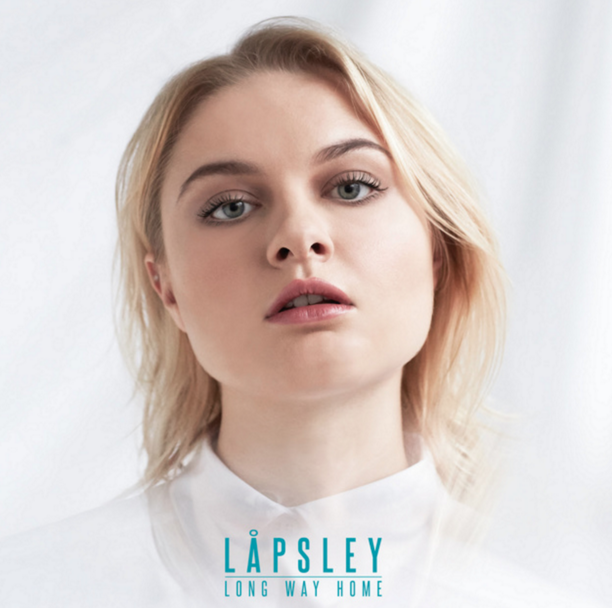
Låpsley’s debut album, Long Way Home, extends the mature tones present in her EPs to fully introduce a rare occurrence amongst debuting artist – full faith that she will not fall short of expectation. Opening track “Heartless” is one of the record’s fuller tracks – the slightest of departures from the minimal approach of prior Låpsley efforts – but it only enhances Låpsley’s prospects. Rather than stick to creating analogues of tracks that garnered her early notoriety, she expands her sonic spectrum with a single track on her debut.

A former single, “Hurt Me,” follows “Heartless,” and it once again showcases Låpsley’s versatility within her musical realm. The track is effectively the album’s outright anthem – coming to grips with a relationship gone awry – with Låpsley’s voice effortlessly shifting from soft murmurs into lung filled crescendos. All the while, the production is bigger, more vibrant than the tasteful minimalism of a “Falling Short,” but all the while feels unique to Låpsley.

Two more pre-release singles follow “Hurt Me;” “Falling Short” and “Cliff.” Of the first half of the album, “Cliff” is by far and away the strongest track. It runs the gauntlet of Låpsley’s sonic spectrum – echoing backing vocals, observational lyricism, minimalist production that explodes in a Jamie xx-esque club beat. The accompanying video for “Cliff” even fits the uniform mold of Låpsley minimalism; with Låpsley standing in the snow and simple camera zooms in and out on her face.

Where “Cliff” is the all around best track on Long Way Home, subsequent “Operator (He Doesn’t Call Me)” is the most empowered. With a sample at the onset, and a disco heavy beat to follow, the track also exhibits some of Låpsley’s strongest vocal work, with bellowing “My baby doesn’t call me / So tell me shit I needed to,” that give water to the occasional Adele comparisons.

The next four offerings on Long Way Home – “Painter,” “Tell Me The Truth,” “Station,” “Love Is Blind” – are more lyrically driven tracks that explore more of Låpsley’s perspectives of love, attraction, and relationships. Granted, some tracks are centered on less than fresh concepts – “love is blind with the lights out” – but others (“Station”) reveal seasoned perspectives of a skillful written voice – “Two for the taking, you can have it all at once if it makes you sane” – that’s unafraid to speak from personal experience.

The closing fourth of Long Way Home is comprised of “Silverlake,” an all-knowing narrative journey of a jaded perspective of a relationship somehow associated with the Los Angeles neighborhood of the same name – “Beautiful now, but soon you’ll be gone / By Silverlake I left a stake in the sun.” Closer, “Seven Months,” seems to be the most offertory – “Seven months I gave myself / Every night I’d say how I had my doubt” – and rounds out as one of the most finessed tracks on the record, blending Låpsley’s familiar minimalist sound with a meandering melody. Arguably the most amorphic of tracks on Long Way Home, it offers a glimpse into the future bevy of avenues Låpsley could choose to take on LP #2.

Long Way Home is altogether a triumphant introduction to an artist whose potential exceeds that of most acts in similar points of their careers. She approaches her production with a deft touch that seamlessly engages the listener with each facet of the music. Her lyricism is strong, but at times can leave more to be desired, but that’s almost certainly because of her age. As far as debuts are concerned, Låpsley’s is arguably the best this year to date, and is undoubtedly the first of many exceptional future records to come.  


Now We Are Alone: Majical Cloudz Is Disbanding

Music NewsWeston PaganoComment

Sadly, it seems like the majic is ending.

Only a month after former tour-mates Youth Lagoon did the sameMajical Cloudz has announced through social media today that they are breaking up. Including their most recent release, the Wait & See extended play, and last year's phenomenal full length Are You Alone? (which was Transverso's #2 album of 2015), the dreamy duo graced us with two LPs, two EPs, and a handful of one-off singles in the short four years since their first performance in March, 2012. Their final show is in Montreal this Thursday, March 10.

Devon Welsh and Matthew Otto combined to create some of the most sharply evocative music of our generation. A visceral series of confessions shrouded in the most soothing of soundscapes, it cut deep to the simple core and personified it in plain sight: a synthesizer, a microphone, a white shirt, an unwavering gaze.

I remember listening to Impersonator at my mother's house when it first came out. "Are you depressed or something?" she asked, and I laughed. Despite the undoubtedly melancholy outward appearance of Majical Cloudz, it was never an inherently negative emotional experience; even at their darkest points their songs are paradoxically uplifting upon the same waves of the flood that drowns you down, as ethereal melodies lift you over brooding, coursing vocals. It's a uniquely comforting closure. It's one we need now more than ever.

All along Welsh seemed to prepare us for the end. "If you won't be seen again / I hope you know you were my friend / And in my head the world will never hurt you," he offers in Are You Alone?'s aptly titled opener, "Disappeared." It's truly not easy news to swallow, but if we've learned anything from Majical Cloudz it's how to properly eulogize:

"He was obsessed, and it was okay."

Spend Some Time on Dear Blanca's 'I Don't Mean to Dwell'

Music ReviewOwen HuntComment

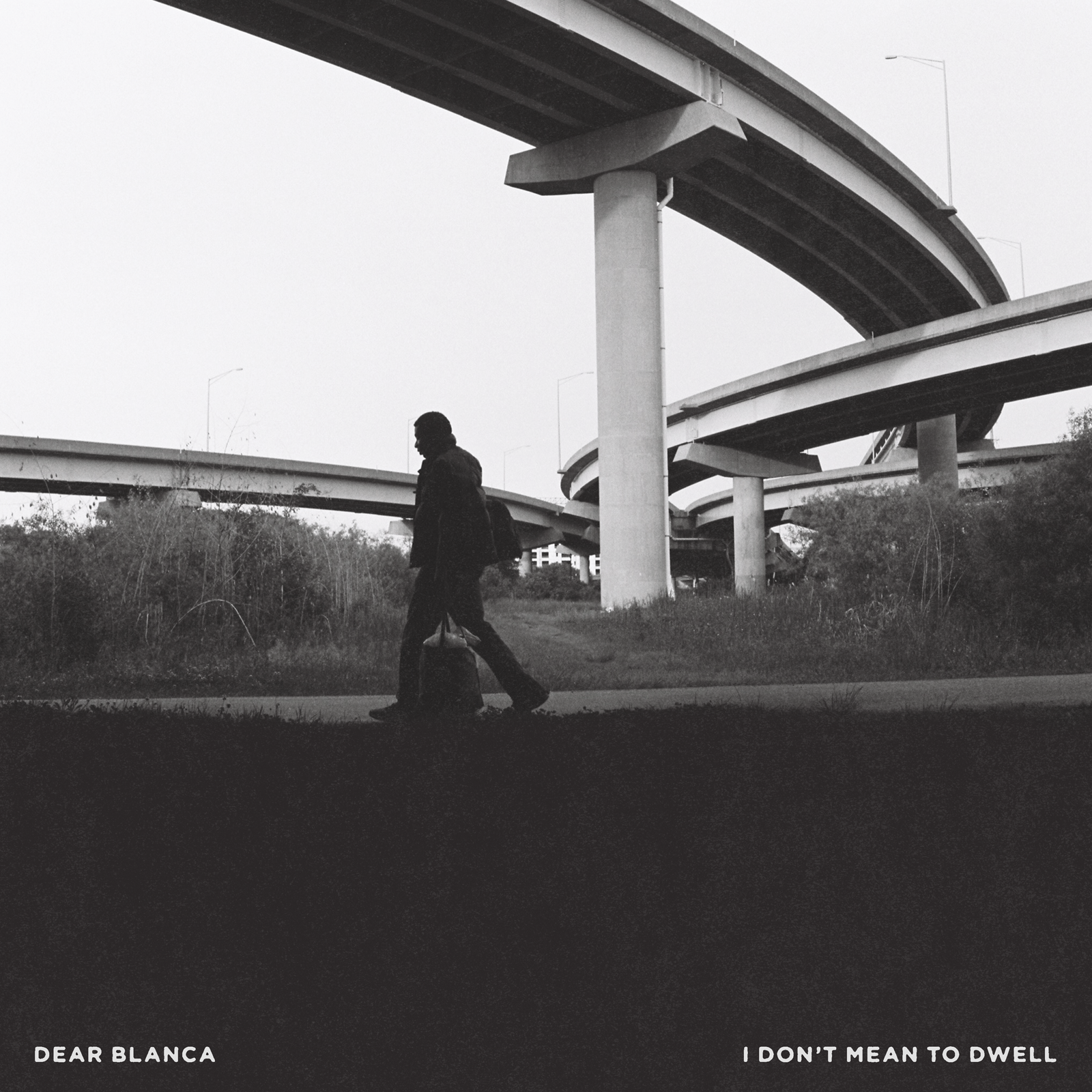
Hailing from Columbia, South Carolina, Dear Blanca is of a much different yolk than Post-Echo labelmates Gláss and Art Contest; on their new EP I Don’t Mean To Dwell, the trio swings through barreling passages that are at once steady and coherent bursts of energy very reminiscent of Springsteen yet still in its own way.  

Dylan Dickerson's raspy and emotive vocals are both sardonic and somber in character, which makes for a good dichotomy considering the range of dynamics on the album.  Songs like “Joint Effort” have lines as funny as “Look at me I’m demanding your attention,” but at the same time there is a sense of deep sadness and existential crisis. On “Temporary Solution,” the vocals take on a slightly less jagged quality, but still resound with a deep sense of longing.

Dear Blanca's sound is deeply tied to classic rock, but does so much on its own terms. I Don't Mean to Dwell brings a fervent energy to this somewhat overwrought style as they manage to make it their own with what seems to be surprising ease and finesse, putting forward yet another solid release of their own blissfully potent brand of rock.  

Dear Blanca I Don't Mean to Dwell (03/04/2016) http://Post-Echo.com http://DearBlanca.com Available to purchase via: iTunes - http://apple.co/1QvCaaG Bandcamp - http://bit.ly/1nfZFsD Post-Echo Music Store - http://bit.ly/1ZJvM06 Find Dear Blanca on Facebook - on.fb.me/1Pgyb1n Spotify - http://bit.ly/21btwj7

Yeasayer Drops New Single "Silly Me," Announces Tour

New Music, Music NewsWeston PaganoComment

Following music videos for "I Am Chemistry" and "Prophecy Gun" Yeasayer have continued their Amen & Goodbye rollout with new single "Silly Me" and a bevy of tour dates.

With the first two tastes being "long and linear," the new offering is "something from a different spectrum," according to the band's Twitter. Opening with choppy acoustic stabs the track sharply transforms into a full blown dance lament with sparkling synth and an instantly infectious refrain of “Silly me / Where’s my head / I can’t believe now it’s over / She would be here if it wasn’t for silly me / Silly me.”

With glittering lines like "With crystal ball I now can see / That I'm a man of low degree," it's surely one of the most cheerfully upbeat confessions of guilt you'll ever have the pleasure of hearing.

Amen & Goodbye is due out 4/1 via Mute, and can be preordered here. Check out the song and schedule below.

'Silly Me' taken from the upcoming Yeasayer album 'Amen & Goodbye' which will be released April Fools' Day, 2016.

Mount Moriah Pays Homage to Home on 'How to Dance'

Music ReviewSean McHughComment

Mount Moriah has all the trappings of a band that should be more popular than it is – an unapologetic front woman with lyrical chops that would make Bob Dylan blush, and a combination jazz/country/soul that’s remarkably smooth – but somehow, the North Carolina trio has yet to receive proper recognition. Despite such career hurdles, the band has remained indomitable, tirelessly touring in support of their critically acclaimed second record, Miracle Temple for the better part of a three year span.

Even with the rave reviews that coincided with the promotion of Miracle Temple, Front woman Heather McEntire struggled with the depressive sophomore slump that seems to inevitably strike artists as their careers begin to take form. Career existentialism has been known to derail promising young act like Mount Moriah before ever reaching the zeitgeist, but the Merge signees remained ever vigilant, eventually reconvening to start LP 3.

Mount Moriah’s perseverance grew a head of steam, building momentum that swelled into a sumptuous collection of alt-country rock tracks worthy of the utmost praise. Where Mount Moriah’s prior discography tended to meander every which way sonically, their third record, How to Dance, has an invigorated sense that felt unwittingly absent in their previous efforts.

How to Dance opens smoothly with “Calvander,” a narrative ballad of sweet Southern wanderlust, presumably set in the eponymous town – Jenks’ boogie guitar sounds ambling along as McEntire waveringly asserts her feminine independence, “I swear to God, tonight those Jackson boys ain’t gonna find sweet company.” Follow-up track, “Precita,” continues McEntire’s narrative rambles, as the album begins to take a more autobiographical form - apocryphal or not. The track chugs along, as McEntire builds a lush lyrical landscape with her voice serving as a vocal analog to Dolly Parton or Stevie Nicks.

Sonically, How to Dance serves as Mount Moriah’s most precise album to date, with unfettered Southern twang help the album maintain its purposefully aimless wandering, illuminating key North Carolina motifs that Mount Moriah have grown so proud to champion. “Baby Blue,” feels particularly keen on uplifting the band’s civic pride (for those who aren’t familiar, the University of North Carolina – Chapel Hill’s primary color is baby blue), creating a wonderfully idiomatic love ballad thanks in large part to McEntire’s lyrics – “Bright eyes at sunrise/It’s a haunting privilege”– and soft loping percussion.

One of the defining features of How to Dance is the record’s earnest devotion to true country, all the while expressing the collective genre appreciation in the most modern way possible without going full “throwback” (think Margo Price, Nikki Lane). Granted, that’s not a knock against Price or Lane, but How to Dance feels like an album you could play to anybody with Antebellum sensibilities and not complain about direct imitation or “watering down” of the country genre. It’s a clever angle on a genre whose most innovative successes of the past decade have come in the form of iconoclasts (once more, not a knock; Chris Stapleton and Sturgill Simpson are true deserving of their praise). Some tracks deviate ever so slightly from the genre– take “Fox in the City,” is a new-age country ballad that celebrates the same ethereal mysticism of the South, but feels more like a blues-y The Verve track, with McEntire’s vocals layered on top of each other while strings occupy the bridge.

The album as a whole acts as an innocuously unapologetic anthology of Mount Moriah’s allegorical association with their native North Carolina and the South in general. It asserts a sort of indignance that assures the listener that having some less than flattering things in one’s past don’t necessarily mean a connection should be totally eliminated. Instead, the album is a confirmation that associating with a place is more than just atoning for a checkered past, rather focusing on the personal connection within oneself.


The Top 15 Films of 2015: Transverso's 2016 Oscars Best Picture Picks

TV/Film ListEthan WilliamsComment

With the Oscars finally arriving tonight, it’s time to take a look back at the incredible year of film that was 2015. For every superhero sequel there were plenty of indie smashes, and it was easy to find art at the multiplex as easily as it was in your local arthouse cinema. So let’s look back at the movies that will shape the film world for the next few years.


15. Phoenix


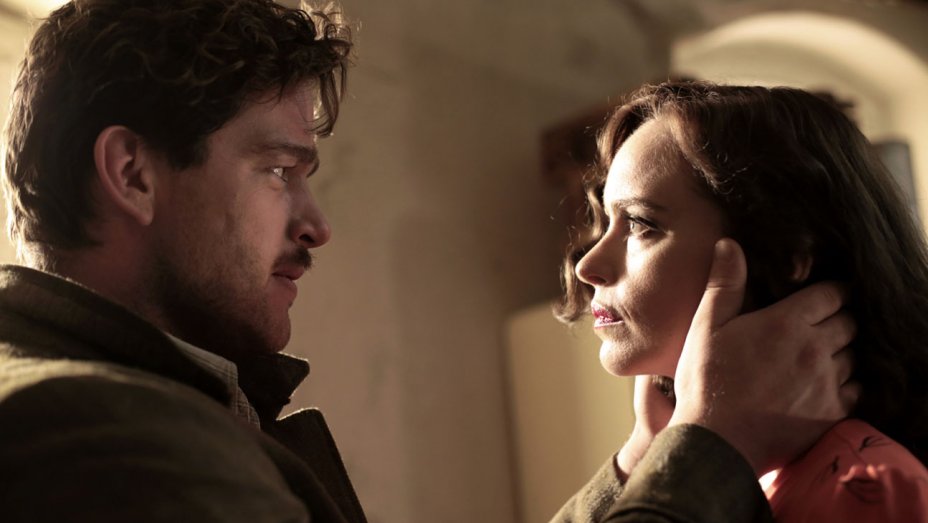
A riveting psychological thriller set in the ruins of postwar Germany, Phoenix is a hypnotic slow-burn that builds its tension deliberately and devastatingly. Nelly is a Holocaust survivor who had her face disfigured in a concentration camp and when she returns to her hometown to find her lost love, she finds he may nothing may ever be the same. It takes cues from Rainer Fassbinder and Alfred Hitchcock, but manages to morph into its own cerebral mystery that results in an absolutely stunning final scene that’s among the year’s best.

14. Bridge of Spies

Steven Spielberg may be the closest thing our generation has to Frank Capra, a filmmaker who tries to unearth what it really means to be an American while not shying away from the darker underbelly of our culture. So while it might be interpreted at first as simplistic or unsubtle, Bridge of Spies is an intricate deconstruction of the peril that Cold War attitudes placed our world into. Given a biting wit by writers Joel and Ethan Coen, Spielberg uses America’s sweetheart Tom Hanks to craft a beautiful slice of Americana, bolstered by his confident direction and an excellent and understated Mark Rylance performance.

13. Sicario

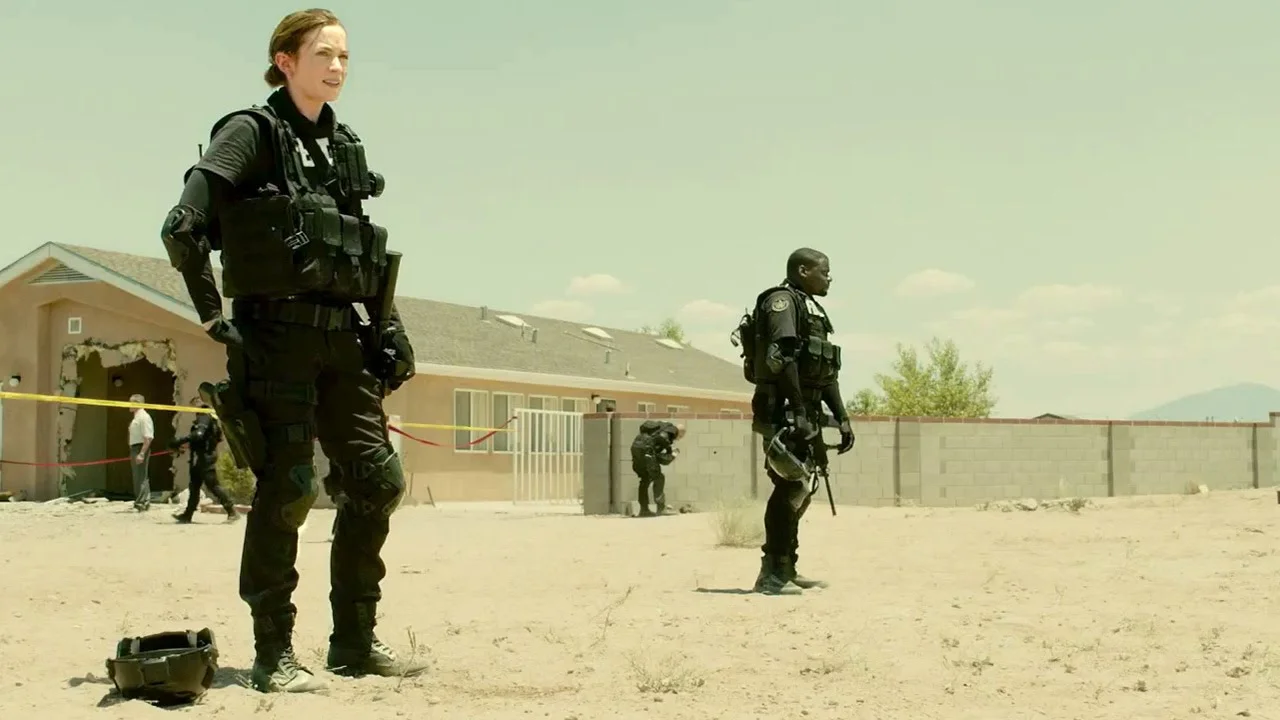
Timely, nail-biting and cerebral, Sicario is yet another masterpiece of unbridled, heart-stopping tension from director Denis Villeneuve (Prisoners, Enemy). An unflinching look into the heart of darkness at the center of the Mexican drug war, Sicario keeps the audience in the dark just long enough until its razor wire tension explodes in a third-act confrontation that will leave your jaw on the floor. The Oscars should be ashamed for not nominating Brolin or Blunt but especially Benicio del Toro in one of the highlights of his career.

12. The Big Short

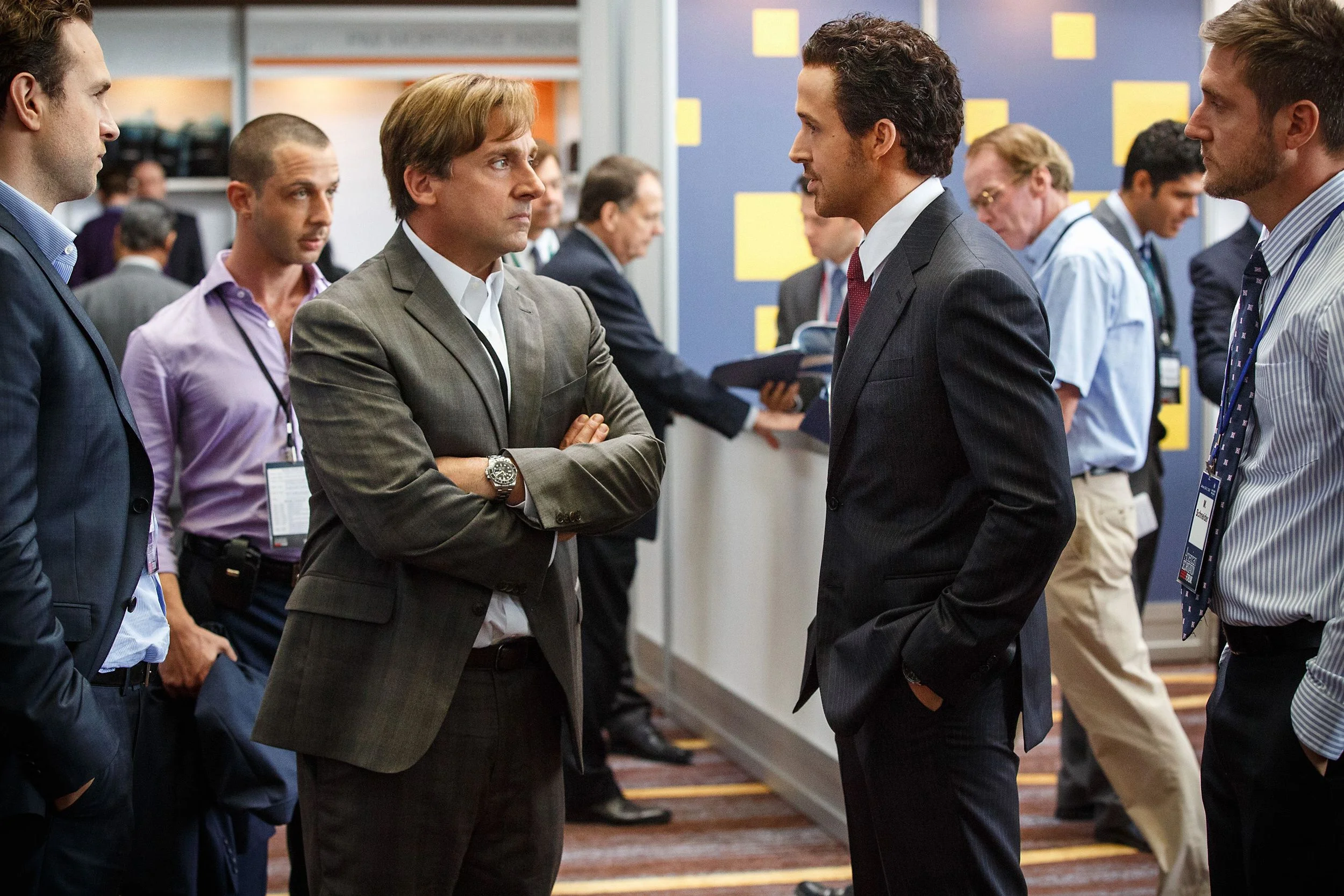
Propelled by one of this year’s sharpest and most inventive screenplays, The Big Short proves director Adam McKay’s talents lie beyond just Will Ferrell vehicles like Anchorman. The financial collapse of 2008 is a subject of fascination for McKay (touched upon in his underrated The Other Guys) and takes full advantage of the big budget and star-studded cast of The Big Short to tell this story in its entire tragic fullness. While some of the explanation may feel like condescension, the directorial flair that McKay presents his story with keeps things fresh and funny but with the dramatic weight the subject deserves.

11. Tangerine

As much as Tangerine could’ve just been “the movie shot on an iPhone,” it manages to transcend and become so much more. It’s an epic exploration of the Los Angeles underbelly on Christmas Eve, told through the eyes of two lovably rambunctious transgender prostitutes. The iPhone cinematography gives it a wonderful kineticism of life and verve, but its two leads give it a warm heart at the center. It’s hilariously madcap with just a hint of melancholy about finding your place in this world, but Tangerine is a sweet portrait of an unusual friendship told with some awesome filmmaking technique.

10. Love & Mercy

One of the best biopics in recent memory, Love & Mercy is a stunning recreation of the dizzying highs of creating one of pop music’s greatest records ever in Pet Sounds and the soul-crushing lows of Brian Wilson’s subsequent mental dissolution. By intertwining the two award-caliber performances of Paul Dano and John Cusack as two eras of Wilson, Love & Mercy crafts a heartbreaking arc of redemption through the power of love and music. recording sequences alone are worth the price of admission (supplanted by a great electronic Atticus Ross score) and it’s a career high for every actor involved, especially Dano and Cusack.

9. Crimson Peak

All of director Guillermo del Toro’s finest films are about the relationship of innocence vs. brutality, and Crimson Peak is indeed another visual masterpiece from one of the few living visionaries left in genre filmmaking. Moreso a Victorian melodrama than a straightforward horror film, Crimson Peak is a testament to Del Toro’s intricate craft, building another terrifying world within Allerdale Hall, full of shadows and ghosts. It's an old school kind of horror told with unapologetic camp and nobody is better at crafting atmosphere or creatures than Del Toro. Hail to the king, baby.

8. Mission: Impossible - Rogue Nation

While it may have been impossible to top the heights of the Burj Khalifa from Ghost Protocol, Mission: Impossible - Rogue Nation is a roundly satisfying addition to one of the greatest modern action franchises. Mission Impossible is a series that understands scale more than any other and once again crafts some of the year’s most awe-inspiring action setpieces that simply suck the breath right out of you. Tom Cruise once again throws himself in the jaws of death for our amusement and Rogue Nation takes the best elements from all four of its previous installments to form a supremely entertaining summer blockbuster and one of the year’s best action films.

7. Inside Out

Just when it seemed PIXAR might be in a creative lull, a film as fresh, funny and inventive as Inside Out comes along. The concept of one’s emotions personified as little people inside your head is already quite a clever idea, but Inside Out’s screenplay grows this concept into one of PIXAR’s funniest and most moving films ever. It never offers easy answers to some of life’s toughest problems but is still a valuable portrait of how to deal with the combating emotions within ourselves. And with a cast this perfect, it’s no wonder it brings you to tears of both laughter and sadness.

6. Star Wars: The Force Awakens

It is a small miracle that The Force Awakens manages to feel so organic, natural and so thoroughly a part of the Star Wars canon so instantly. Yes it’s great to see more practical effects, location shooting and overall more competent direction, but the characters are what make us truly love Star Wars and The Force Awakens creates them with marvelous aplomb. It’s the most solid foundation fans could’ve hoped for and a cast and crew of marvelous talent did what most thought was impossible: make the entire world love Star Wars again.

5. The Hateful Eight

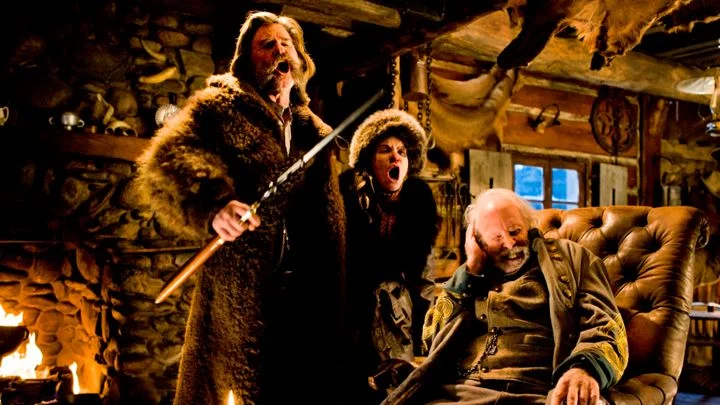
After a few false starts and script leaks, it seemed unlikely that Quentin Tarantino was ever going to get around to making his next Western, but somehow it arrived and was bigger and badder than anything we could’ve hoped for. Shot “In GLORIOUS 70mm” as the posters loved to proclaim, The Hateful Eight was incredibly heartening to see so many turn out for the roadshow 70mm film screenings, a cinematic event unlike anything seen in America for the last 40 years. Not to mention that the film itself is one of the director’s finest, assembling some familiar faces from the Tarantino oeuvre and shoving them in a snowbound cabin as their wits slowly whittle into blasts of blood-soaked brutality. Beautifully shot by Robert Richardson and given the year’s best score by the maestro Ennio Morricone, the elegance is contrasted by one of Tarantino’s screenplay, one of his most black-hearted treatises on the nature of humans. Three hours simply whizz by and we’re left with a landmark for Westerns, Tarantino and the medium of film itself.

4. The Look of Silence

Documentarian Joshua Oppenheimer’s follow-up to 2012’s groundbreaking The Act of Killing, The Look of Silence somehow manages to eclipse and become an even more important piece of cinema than its predecessor. The Act of Killing was a sickening snapshot of how people who committed some unforgivable atrocities manage to live with themselves, but The Look of Silence manages to make that pain even more immediate and disturbing by having a survivor of the massacre face his persecutors in front of the cameras. The interviews are pulse-pounding, cringe-inducing, absolutely revelatory bits of cinema and once again Oppenheimer has crafted a gorgeous, gut-wrenching document that is both important and artful. If you only watch one documentary from last year, make it this one.

3. Carol

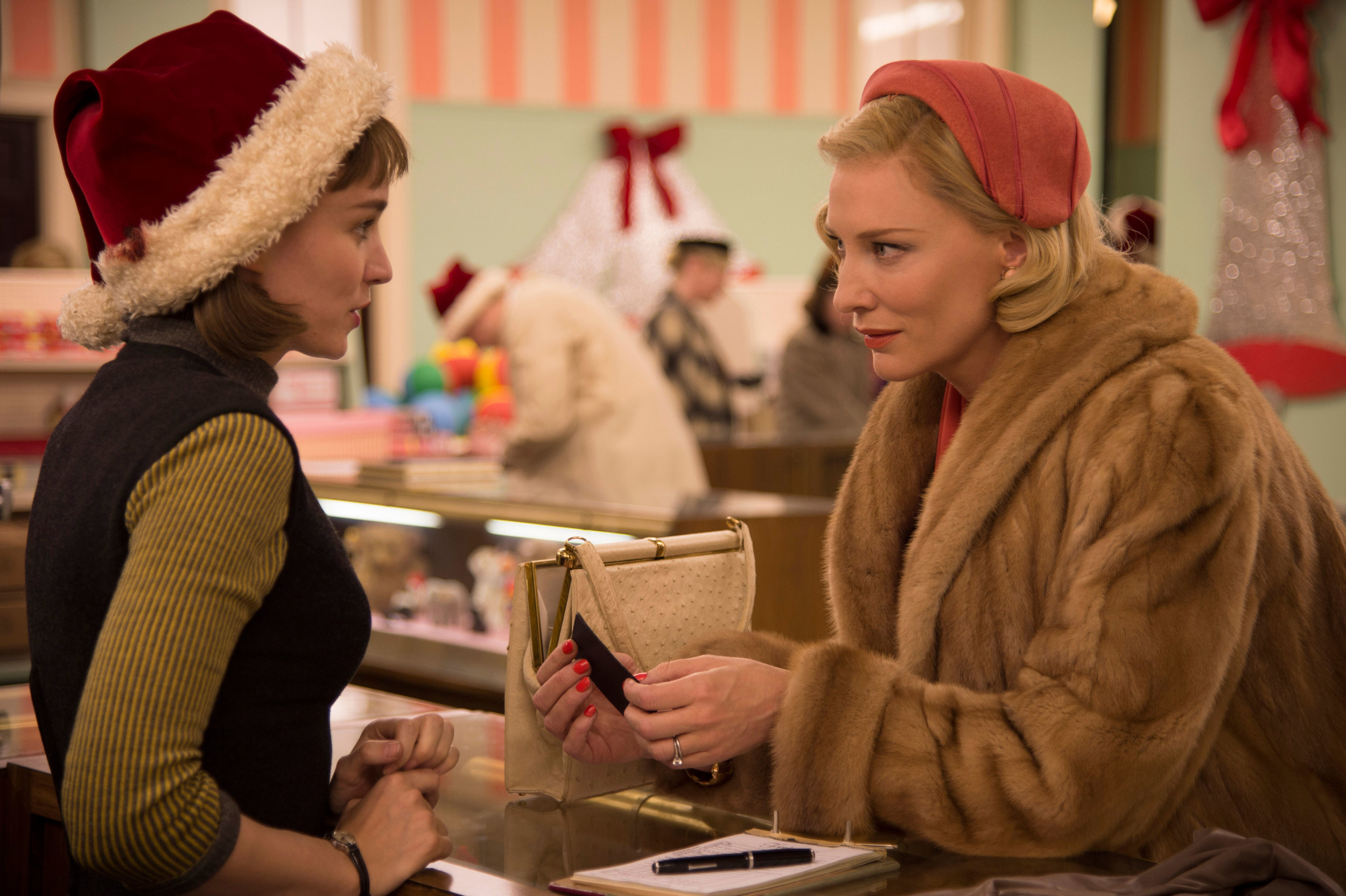
Few movies are ever as gorgeously photographed as Carol but even fewer manage to pack such a devastating emotional punch. The forbideen romance between Therese (Rooney Mara) and Carol (Cate Blanchett) sounds like the stuff of pure melodrama, but becomes the most purely affecting relationship depicted onscreen this year. The breathtakingly composed shots are given the dreamlike qualities of memory, as if groggily recalling the nostalgic minutia of romance: the lingering gaze of a lover, the offhand smile, the squeeze of a shoulder. Not since Her has a film managed to capture the thrill of falling in love but also the heartbreak of separation. It's a gorgeously orchestrated piece of filmmaking, one that plants a tender ache in the heart that doesn't fade quickly.

2. Ex Machina

With all of the recent success of sci-fi on the blockbuster scale, Ex Machina is a refreshing reminder that the best science fiction stories are based in exploring big ideas and not necessarily on visual spectacle. First time director Alex Garland, screenwriter of such recent sci-fi classics as Sunshine, Dredd, and 28 Days Later, is certainly no slouch in the visual department, but Ex Machina is more interested in exploring the dynamics between its three main characters. It’s an absolute delight to watch its intricate plot unfold, throwing twist after turn up to one of the year’s most shocking endings. It’s heady science fiction at its finest and it rewards rewatch after rewatch. Drop everything and watch it as soon as possible.

1. Mad Max: Fury Road

Mad Max: Fury Road is a once in a generation event. A movie so pure in its unbridled creativity and filmmaking boldness deserves every amount of praise one can muster. At its core just a chase film with a feminist bent, it manages to transcend and become so much more. Director George Miller takes his incredible apocalyptic fairy tale begun over thirty years ago and creates even more dazzling mythmaking out of the nuclear wasteland. Visual storytelling is rarely this simple and coherent in a modern action film, but it’s also hardly ever this fun. No film was as viscerally exciting, visually bold and unabashedly badass as Mad Max: Fury Road.  It set the film world on fire and will probably dominate the conversation on action cinema for decades to come. Perfectly paced, perfectly shot, perfectly edited and bathed in sound and fury, Mad Max: Fury Road is one of this decade’s absolute finest.


Honorable Mentions:

Steve Jobs

The Martian

Spotlight

Amy

The Wolfpack

Bone Tomahawk

Krampus

The Assassin

World of Tomorrow

The End of the Tour

The Magnetic North Release Dreamy 'Prospect of Skelmersdale' Single "A Death in the Woods"

New MusicSean McHughComment
Screen Shot 2016-02-22 at 8.49.35 PM.png

“A Death in the Woods” is the lead single from British rock symphony outfit The Magnetic North’s forthcoming album Prospect of Skelmersdale, the second full-length installment from the Erland Cooper led trio - featuring Simon Tong (The Verve, Blur, Gorillaz, The Good, the Bad & the Queen) and orchestral arranger Hannah Peel. Prospect of Skelmersdale continues the band’s series of musical vignettes drawing from its eponymous village.

A mecca of the Transcendental Meditation movement, Skelmersdale, Lancashire was a haven for families to settle and continue their lives enlightenment and mediation. Included amongst these families was The Magnetic North’s own Tong, whose experience undoubtedly provided a wellspring of inspiration as the band worked to inhabit the spirit of Skelmersdale.

“A Death in the Woods” acts as the introduction to the overall motif for both the album and Skelmersdale. The video opens with bright flutes and twinkling guitar bouncing along as we’re introduced to a collection of Super 8 clips of what can be assumed as the titular town itself.

The lyrics feel like a sort of archival account of the initial pitch used to bring people to Skelmersdale way back in the 1960s, as Erland Cooper maintains a soothing timbre over the dream-like melodies. Ambient guitars drift and meander as Erland croons “The New World’s round the corner / They found a new world order,” and the track continues to slowly build sonically with each subsequent verse. The video exudes a sort of utopian uneasiness that comes to a head as the footage shifts its focus on the children from the Skelmersdale community, and suddenly breaks into the mellowest of electronic rampages until the song and video come to a close.

Prospect of Skelmersdale is out 3/18 via Full Time Hobby


Future Islands Side-Project The Snails Makes Playfulness Cool Again on 'Songs From the Shoebox'

Music ReviewWeston PaganoComment

Though formed as early as 2008, Future Islands side project The Snails had graced us with little more than 2013’s killer Worth The Wait EP before their full-length debut dropped ahead of schedule this week. (Even if you had never heard of them until recently, you may be familiar with the mollusk motif from the adorable smiling snails adorning the envelopes from past ticket giveaways.) Initially tracked back in 2013, Songs from the Shoebox was slowly overdubbed and mixed over the years in between their main band’s tours since.

This slimy supergroup brings members of Future Islands, Lower Dens, Wume, Small Sur, Wing Dam, Nuclear Power Pants, and Showbiz all together within one shell, and is led largely by the FI duo as Snailliam (William Cashion)’s signature rumbling bass grooves lend pulse and platform to Sammy Snail (Samuel Herring)’s delightfully raucous howls as per usual.

For the most, Herring tends to leave his dripping, guttural growls behind for a full showcase of his upper registers with uplifting roars of positivity on “The Tight Side of Life” and beyond, and his ability to shift between brooding poignance to unabashed fun deftly displays the emotional and modal versatility of a man who also doubles as an occasional rapper.

Opening with the sound of a balloon blowing up, Songs from the Shoebox has all the playfulness of the class projects we built in those same containers as we first learned to appreciate the fun of art all those years ago. The energetic collaboration brings the best side projects have to offer with that added bit of flair such freedom allows, as the Baltimore post-punk rockers swap their sultry synth for sweet, sweet sax.

Appropriately decreeing “We’re gonna take it slow / Real slow / Real slow” in the first track, they then transition into the whimsical "Barnacle on a Surfboard (Barnacle Boogie)" that ends with impressively committed snail sound effects, before "Shoebox" opens up cheerfully with the curious “It's a brand new day / Bring me my socks / I want to show you how I play.”

It’s the sign of a truly great musician when each and every song they put forth is of undeniable quality, no matter how obscure it may be (give Future Islands’s loose collection of non-album deep cuts a visit sometime if you haven’t already, and you’ll discover lesser known tunes that pack more punch than many indie staples’ peak singles), and even at their most casual they prove to make no exception, never skimping on earnest heart and movability no matter how silly the vessel for that drive may be.

Ending with the previously-released highlight "Snails Christmas (I Want a New Shell)" we find ourselves with an offering infinitely better than the half-assed holiday repeat covers we’re normally subjected to each winter, however strange it may sound in mid February. It’s also, notably, the first time the words “caviar” and “Roomba” have ever been sung in the same sentence, at least to my knowledge.

For a man usually known for physically beating himself as he figuratively (and through miming, literally) tears his heart out onstage, it’s especially nice that Herring of all people can remind us to sometimes take a step back and just enjoy the music.

Check out where The Snails will be leaving trails during their tour:

  • 3/4 - Philadelphia, PA @ Kungfu Necktie
  • 3/5 - Burlington, VA @ Signal Kitchen
  • 3/6 - Portland, ME @ Space
  • 3/8 - Providence, RI @ AS220
  • 3/9 - Brooklyn, NY @ Baby's All Right
  • 3/10 - New York, NY @ Mercury Lounge
  • 3/11 - Washington, DC @ Comet Pizza and Ping Pong
  • 3/12 - Richmond, VA @ Strange Matter
  • 3/13 - Asheville, NC @ The Mothlight
  • 3/15 - Athens, GA @ Caledonia Lounge
  • 3/16 - Charleston, SC @ Tin Roof
  • 3/17 - Wilmington, NC @ Reggie's 42nd Street Tavern
  • 3/18 - Raleigh, NC @ Kings
  • 3/19 - Baltimore, MD @ The Ottobar

Closing Remarks of a Reformed Kanye Apologist

EditorialSean McHughComment

I have been an ardent Kanye apologist for quite some time.

I would assert that Kanye’s production prowess transcended the confines of genre – from the formative days of College Dropout to the unmercifully avant-garde Yeezus  - in absolute awe of Kanye’s “scorched earth” approach to his craft.

I maintained Kanye’s status as the All-Father of modern hip-hop, his discography a compendium of templates to guide those who choose to emulate the various iterations of Kanye’s career.

I blindly ascribed the successes of Chance the Rapper, Drake, Kendrick Lamar, Danny Brown, Kid Cudi, A$AP Rocky, Childish Gambino, J. Cole, Travi$ Scott, Lupe Fiasco, Tyler, the Creator, Earl Sweatshirt, Frank Ocean, Big Sean, and Mr. Hudson to the omnipresent influence of Kanye West.

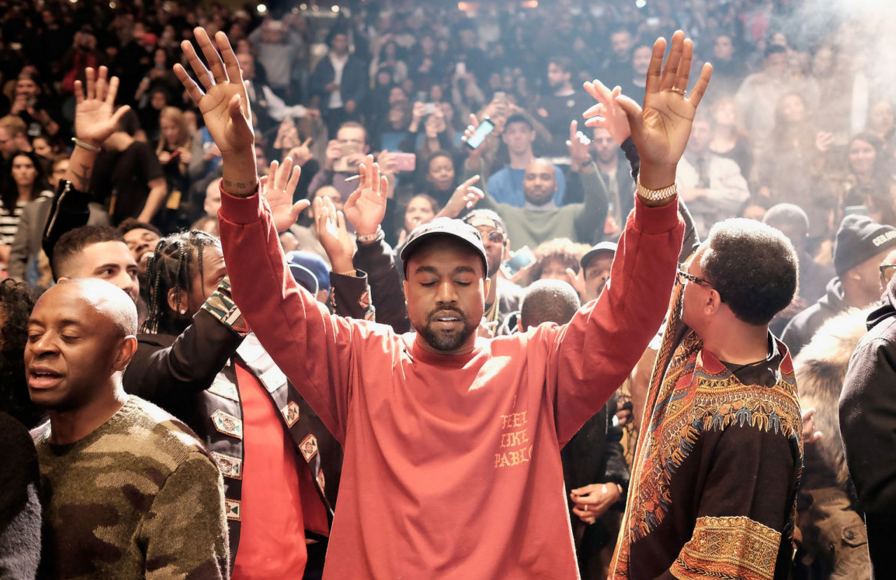
885.80 miles of America lie between Nashville and New York City, but I still managed to witness the live simulcast premiere of “Yeezy Season 3” at Madison Square Garden.

I considered him an indomitable ideologue that had eclipsed culture. While I have never even remotely considered purchasing any of the exorbitant pieces from his “Yeezy Season” trilogy (not out of sartorial revulsion, but out of financial prudence), I couldn’t help but applaud Kanye’s penchant for minimalism.

I was moonstruck by the impromptu nature of Kanye’s combination fashion show/album listening party for The Life of Pablo, and admired the magnanimous charity of Kanye whilst “passing the aux” to the likes of Young Thug and Vic Mensa in front of 20 million people.

I had unwavering faith that the release of The Life of Pablo would see Kanye silence his most ferocious critics, all the while summiting the zenith of the zeitgeist as the greatest popular artist of the new millennium.

I would treat Kanye’s exploits as supreme acts of a self-aware caricature; a master class so inscrutable, even the most astute of human behavior experts would remain confounded.

I was confident that upon the inevitable disclosure that Kanye’s much-maligned escapades were nothing more than performance art, his histrionics would become a bastion of artistic sovereignty

I was under the impression that those who bemoaned Kanye’s musings were simply out of touch and unfit for such brilliant satire.

It is because of the aforementioned defenses of Kanye that I write this article with a heavy heart, having come to terms with an objectionable truth – I must relinquish my title as a Kanye apologist.

The past month and a half of Kanye’s ubiquity has withered me to a troubling perspective of self-examination. The events surrounding The Life of Pablo have been an all-out media onslaught so pervasive that it has led me to falter in my continued support of Kanye.

I do my best to remain objective in most matters – maintaining an emphasis on universal understanding rather than blind faith – but Kanye’s recent behavior has led me to a fan’s introspective crises as opposed the usual eye roll and “I’m sure Kanye knows what he’s doing,” when he interrupts someone to perform a soliloquy at the VMAs, or when confronted with the realities of whom he chooses to share him name.

Now don't get me wrong, I am most certainly not about to come the defense of Taylor Swift or Kim Kardashian – I am of the opinion that Taylor Swift has a scandal lying dormant to the public eye capable of reaching Peyton Manning-sized proportions; and Kim, well, I couldn’t tell you much about her, but neither could she – but what many consider to be two more incendiary moments in Kanye’s career, I merely regard as mischievous self-expression, along with most other dubious actions throughout the years.

Kanye was nothing more than the occasional superstar scamp in my mind, so I continued to defend his behavior, chastised for such a decision on only a handful of occasions.

Somewhere down the line, however – sometime around the beginning of 2016 -, my spirited Kanye fandom became combative amongst some of my contemporaries. Where my delight in all things Kanye had once been nothing more than an exercise of personal taste, it had suddenly become an affront to other people’s existence; as if to insinuate I share the same outlooks as a mercurial music superstar. Kanye had suddenly become a combative subject, even if the discourse was purely superficial. But nonetheless, groups of people inherently abhorred anyone who even remotely enjoyed any aspect of Kanye.

And it was in that moment I realized just how silly all of the controversy of Kanye really was. Granted, there were technical aspects surrounding The Life of Pablo that were less than stellar (looking at you, Tidal), but getting caught up in who Kanye thinks owes him their career?

Who cares?

It’s a song for crying out loud.

If there are songs on The Life of Pablo some might find detestable, then those who have such an inclination would be best served not listening. Why look for something to gripe about when we’re all better off focusing on things that have more personal appeal?

If Kanye’s behavior places such displeasure in your life, why bother spewing vitriolic epithets and the like when its so much easier to place your focus on someone or something else?

Ultimately, the World of Kanye is an exercise in futlity - whether you’re an avid disciple (such as myself) or one of his biggest detractors. Kanye is going to do what Kanye wants to do, and there’s no way around it. He is a self-fulfilling prophecy that continues to adapt and create, providing some with great joy, and others great irritation.

Its for these exact reasons that I rest my final defense of Kanye, and relegate myself from Kanye apologist to Kanye aficionado. 

But before I go, I just wanted people to recognize that Beyonce really did have the one of the best music videos of all time.


You can read our full The Life of Pablo album review here and "Kanye's Original The Life of Pablo Tracklist Analyzed in Three Acts by @NathanZed & @jonnysun" here.

Basia Bulat Makes Star Turn on 'Good Advice'

Music ReviewSean McHughComment

Imagine if Emma Stone was a good singer – more honey lined than husky – with the slightest of Irish sean-nos virbatto, as well as a proclivity for musical styling amalgam of Florence Welch and Natalie Merchant – or better yet, just listen to Basia Bulat. Questionable musical juxtaposition aside, Basia Bulat possesses a voice totally devoid of any real affectation, with the exception of an occasional emotional waver that’s reminiscent of a female Michael Stipe.

Part of a generational sundry of criminally underrated Canadian folk-singers, the Montreal-based Toronto native opted for a total overhaul of her usual bare bones, folk sound on her fourth full-length record, Good Advice. For someone who has spent 75% of her musical career working within the relatively restricting folk genre, Bulat has managed to incrementally progress the musicality of each subsequent release – though her narrative writing prowess remains her principal asset.

While carving out a unique role in an already over saturated market is admirable, there seemed to be an acknowledgement on Bulat’s third record, Tall Tall Shadow, that something more dynamic needed to happen.

Enlisting the direction of My Morning Jacket maestro Jim James, Bulat spent the better part of her recording time in Louisville, Kentucky; a far cry from her culturally urbane base in Montreal. Superficial metropolitan analysis notwithstanding, the change of scenery was a musically transcendent choice for Bulat.    

Good Advice continues the general trend of growth in Bulat, but with the assistance of James’ production finesse, the musical dynamism ushers in a new and exciting avenue for her to lay claim to.  The LP opens with the singular synth accordion heavy “La La Lie,” reminiscent of the opening of the Beach Boys’ opus, “God Only Knows,” only to break into a percussive drive as Bulat opines with great ambiguity, a hallmark of Bulat’s writing. Bulat’s lyrical preference is to skirt the line of desperation, hope, and despondence, shifting hook perspectives like “I la la lie, la la lie, keep lying to myself / While you la la lie, keep lying to yourself.” There’s an acknowledgement of apparent differences between the two protagonists within the song, with Bulat left to navigate the outcome on her terms.

“La La Lie” and its subsequent track, “Long Goodbye” are relatively similar in tone and pace. Both are slightly more developed than prior Bulat incarnations, her voice (both narrative and singing) is considerably more confident, asserting an understanding of expiring relationships. “ Furthermore, both exercise a fuller, more energetic sound, with heavy drums and synth work replacing the spacious folk sounds Bulat cut her teeth with.

Third track, “Let Me In,” steers Good Advice into more empowered territory, even despite the song’s theme of detachment. "Are you ever going to let me in without asking?" extends the sense of understanding that Bulat makes apparent in the first half of the album – coming to grips with that which is out of Bulat’s hands. “In The Name Of” is a search for purpose, an attempt to discern what influences one to continue moving forward instead of returning to what’s familiar and most comfortable.

James’ production is apparent throughout, but no more so than on the album’s strongest (and eponymous) track, “Good Advice.” James’ deft preference for glowing synth and strings sounds, building steadily on a singular bass tone while Bulat opines about her search for answers in terms of a relationship. The constant build is as constant and adroit, the eventual crescendo is almost instantaneous. The third verse is perhaps the most inventive moment in Bulat’s career musically, with her vocals not only leading the track, layering a response echo once unconsidered.

Following an almost incomprehensibly good track like “Good Advice,” it would be easy to place a less intrepid track in order to allow the listener to recover, but as this sentence conspicuously suggests, Bulat and James opted for the album’s single, “Infamous,” to follow. Placing a single in the seventh slot of a ten track record is certainly bold, but it fits the plucky, new demeanor of Bulat’s career trajectory. “Infamous” proclaims Bulat’s demands for a lover – current or past – to fully commit to coming back to her, though Bulat’s newfound confidence maintains she is not begging, stating "Don’t waste my time pretending love is somewhere else."

Through further examination, it becomes apparent that Good Advice is in fact a break-up album, though its arguably one of the most proudly valiant form of a tired concept. Lyrically, its quite apparent that there has been some degree of heartbreak, but the combination of Bulat’s inspired delivery of the lyrics and James’ impregnable production, it turns the form on its head. As an artist who has been criminally overlooked, Bulat has made a concerted effort to not only garner but also maintain the attention of many of new listener on one of the best albums released in 2016.