TRANSVERSO

- A culture magazine reaching terminal verbosity -

DIIV Reaches New Depths in Emotion and Complexity on 'Is the Is Are'

Music ReviewEzra CarpenterComment

The mosh pits ignited at DIIV shows have always been enigmatic, yet oddly fulfilling, phenomena – out of place for a shoegaze concert, but inherently necessary. There are few better ways than a mosh to enjoy DIIV’s music. The dream-inducing guitars, best described as the sound of chasing life, obtain a near outer-body texture when you close your eyes, and so it is without effort that audiences lose control of their senses at DIIV performances.

On their debut Oshin they communicated emotions through guitar melodies in ways that were impossible for Zachary Cole Smith’s lyrics, which were drenched in reverb and delay to the point of incoherence. But where Smith’s lyrics could not be accessed, his band’s shimmering guitars provided clarity through the invocation of a simple thought: “Yes, this is a sound for this specific emotion and this is how I feel when I listen to this music.” 

Three and a half years after Oshin, DIIV’s material has now been complicated by clearly perceptible dilemmas informed by Smith’s past drug ordeals and by the artistic development that has made the band’s sophomore album Is the Is Are more accessible and stimulating than their debut. It is simultaneously the old DIIV and a newly complex DIIV. Signature guitars have not been lost where vocal reverb has been expended and Smith’s musings on love and sobriety substantiate a message that is disarmingly transparent and purposeful. 

Rarely does a lead single truly stand as an album’s most emotional moment, yet Smith’s depiction of helplessness and futility on “Dopamine” gives us a harrowing sense of mortality. “Would you give your 84th year / For a glimpse of heaven, now and here?” Smith asks, then reissuing the question in decreasing increments until the unimpressionable age of thirty-four seems sacred. With clearer vocals, we are now vulnerable to the dismantling effects of the honesty in Smith’s songwriting. Here and elsewhere, he deals with the loss of function and identity resulting from addiction in a manner that would be cliché outside the context of DIIV’s sound. Yet the authenticity of these sentiments, qualified by personal experience and those of characters to which certain songs are dedicated, adds credibility to his unglamorous portrayal of drug use. “Got so high I finally felt like myself,” he sings.

Is the Is Are is markedly more explorative than Oshin, crossing post-punk terrain and even emo on “Healthy Moon,” which sounds as if it has a place on the American Football LP. Smith drew inspiration from Sonic Youth’s Bad Moon Rising, telling the Urban Outfitters Blog: “I really wanted to capture the mood or ambiance that they were able to get. It's an insane-sounding record, and it sounds really dark. So that was a record that I wanted to – not replicate – but work in that same idiom.” Is the Is Are is replete with semblances to Bad Moon Rising, the most obvious being Sky Ferreira’s Kim Gordon-esque non-vocalist contribution on “Blue Boredom.” 

The desired darkness that Smith has accomplished on Is the Is Are is achieved by its vivid depiction of inner turmoil and then realized by discordant feedback. The integration of bleaker sounds and images into DIIV’s bright and vigorous acoustic palate makes the album a more emotive experience. The energy of the album varies in tempo, but each song determinedly driven and forceful, sometimes dream-like, and other times nightmarish. 

DIIV broke free from the Brooklyn DIY scene with their debut on Captured Tracks, but their sophomore effort bears less definitive implications for just how big this band can become. While considerations of Cole Smith and his girlfriend Sky Ferreira becoming the new Kurt Cobain and Courtney Love are as laughable as they are irrelevant, there is credence to be found in one aspect of the comparison. Is the Is Are demonstrates a progression from Oshin that is arguably as impressive as the difference between Nirvana’s Bleach and Nevermind.

Aofie O'Donovan Stirs the Soul on 'In the Magic Hour'

Music ReviewSean McHughComment
12583951_10205336920892747_544476619_n.jpg

Being that we’ve reached the year 2016 in one piece (albeit if Trump has any say in the matter, things will surely crumble), it may be safe to take a brief, retrospective look at which genres were resuscitated into prominence and which ones fell from popular grace. The twenty-teens saw alternative folk enter into the zeitgeist, with Bon Iver, Mumford and Sons, and Fleet Foxes riding the wave early, before either adapting masterfully (Bon Iver), shifting genre (Mumford), or going on extended hiatus (Fleet Foxes).

Due in large part to the aforementioned bands, alternative folk opened the door for all iterations of folk music to be explored freely, a la the days of Nick Drake, Joan Baez, and Gordon Lightfoot. While genre expansions such as freak folk were fun, they came and passed with relative brevity, but as more pop and rock leaning folk emphases became passé, real roots revival folk continued to strengthen its base.

Today’s purer forms of folk are preserved by the likes of Ryley Walker, Punch Brothers, and Glen Hansard; all receiving credit where its due, but they’re obviously an all male contingency. Folk music has been a fascinating field of unidentified female talent quietly building their repertoire, with many getting the occasional glance here and there, but nowhere near the measure of fanfare a Taylor Swift or Ariana Grande may receive.

Enter Aofie O’Donovan, the Massaschusetts born folk singer formerly of Crooked Still – a pensive and familiar voice that recalls the days of yore, who ascends into contemporary folk prominence on her recently released, In the Magic Hour.

The sophomore full length release on O’Donovan’s solo discography, In the Magic Hour is equal parts quiet wretchedness and subtle charm; an overall reflection on the transcendence of time. Opener “Stanley Park” wastes no time establishing the somber nature of the record as a whole, with its idiomatic lines such as – “songbirds fly and dead is falling / I sleep to the beating of their wings” – that paint a bleak pastoral picture.

In the Magic Hour was written on the tail end of extensive touring for O’Donovan’s debut album, Fossils, in which she spent the majority of her time on the road alone, which allowed for deep introspection of lyrics. Unfortunately, the writing period for the album coincided with the death of O’Donovan’s grandfather, the Irish family patriarch, whose home in Clonakilty, Ireland became a harbor of untroubled merriment.

Following the death of O’Donovan’s grandfather, who the singer references directly in “Magic Hour,” the deep solitude that enveloped O’Donovan’s writing became the cornerstone for the album. That being said, In the Magic Hour is a disparate vehicle of coping – while the subject matter can be mostly pastoral and personal, songs are hopeful, such as “Porch Light,” or “Magpie,” with its solitary journey of reflection – the song was written about her deceased grandfather.

Folk music is bound to shift and fall victim to various trends in music, but despite whatever there is that is “en vogue,” Aofie O’Donovan will surely remain a pillar of classic folk sensibilities. In the Magic Hour is effectively a combination of O’Donovan’s penchant for seclusion and her brief moments of hopeful certainty. O’Donovan’s music searches for something of stirring substance, and in doing so, solidifies herself as a durable and formidable chieftain of folk music.   

Hear Courtney Barnett's New Track "Three Packs A Day"

New MusicEllen WilsonComment

Before the Melbourne artist rose to critical acclaim, Courtney Barnett used money she borrowed from her grandmother to start her own record label, Milk! Records, on which she released her first two EPs, I've Got A Friends Called Emily Farris and How to Carve A Carrot Into a Rose, long before they were later were repackaged as The Double EP: A Sea of Split Peas via Mom & Pop Music.  

Next month Milk! Records will return, releasing their second compilation following 2014’s A Pair Of Pears (With Shadows), Good For You. It was recorded over a single weekend in September 2015, and includes an original from Barnett called “Three Packs A Day", which you can listen to below.

Good For You also features new material from Jen Cloher, Fraser A. Gorman, and the East Brunswick All Girls Choir, and can be preordered here

Iñárritu Stakes Another Claim for Best Director with 'The Revenant'

TV/Film ReviewEzra CarpenterComment

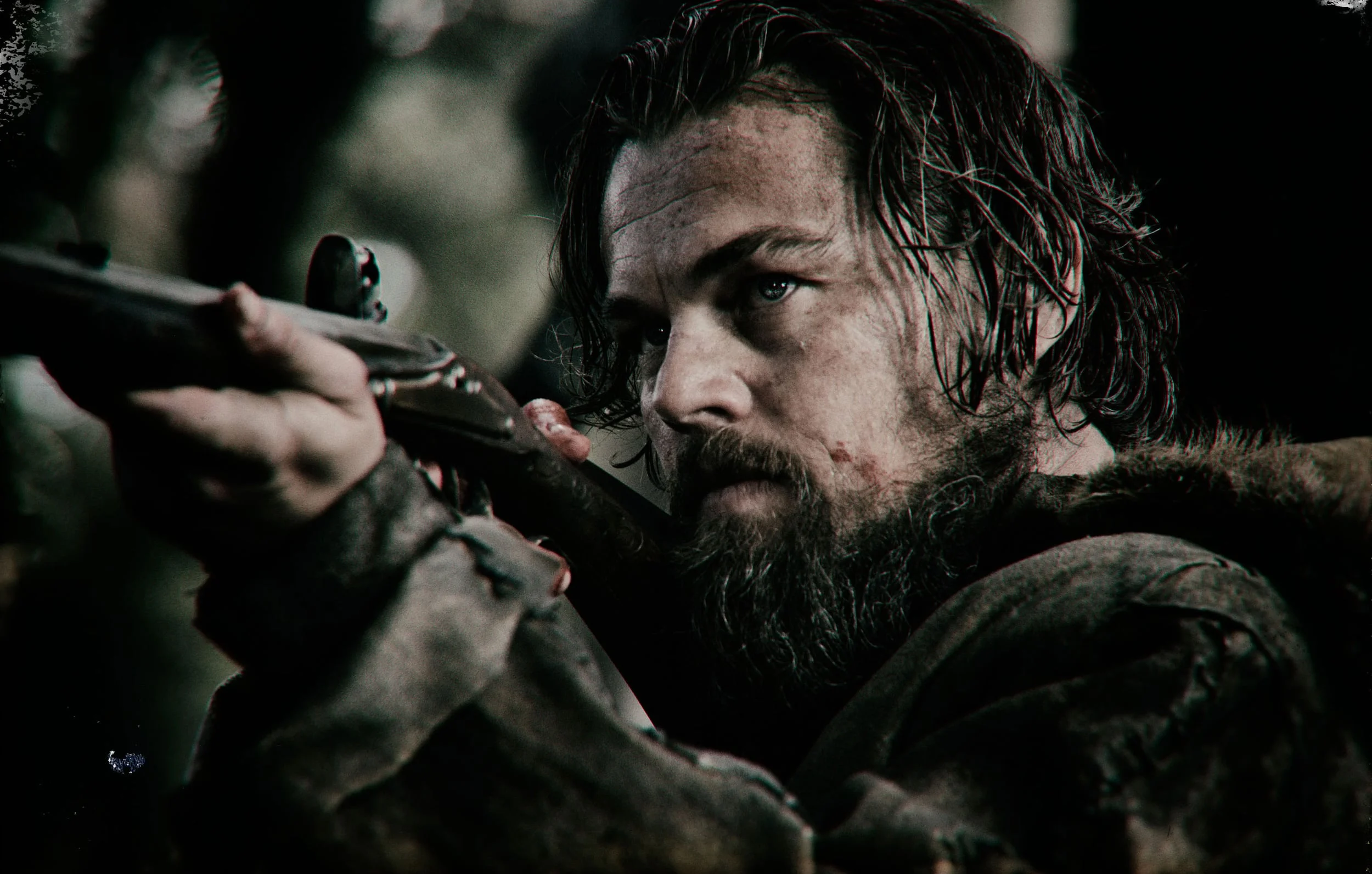
The latest film from Alejandro G. Iñárritu is a deeply immersive experience realized by its various conflicts and their depiction through Emmanuel Lubezki’s cinematography. Though The Revenant is set in the early 19th century frontier, the dilemmas faced by both the local Native American tribes and the fur trappers exploiting their land resonate with fundamental conflicts of modern survival. Iñárritu has produced a commentary on the ethics of surviving off the land and amongst other people, examining the right to live for both humans and non-humans, and the power struggle between societies of opposite interests. 

From its earliest opportunity onward, The Revenant establishes a kinship between its audience and nature through beautifully serene landscapes that make us cognizant of how superior the natural world is to our mortal selves. Varying between rising embers of a campfire, snow thawing on pine, and wilting reeds in heavy winter, they serve as indications of the action to come and the conditions of central characters while communicating an array of emotions. 

When trapper and regional expert Hugh Glass (Leonardo DiCaprio) is viciously attacked by a grizzly bear, we gain a sense that nature has been avenged by injuries done to a fur trader. However, Glass seeks his own vengeance as he is left for dead and his son is murdered by fellow trapper John Fitzgerald (Tom Hardy). The film’s leading men are stunning as protagonist and antagonist. DiCaprio impresses with convincing delivery of the Pawnee dialect and Hardy realizes Fitzgerald’s character through calculated deviousness and volatile aggression. 

While The Revenant does not retain the “single-cut” aesthetic which made Birdman a cinematic wonder, Lubezki reemploys long and continuous shots to develop a realistically linear narrative that is sparsely interrupted. Close camerawork accentuates the unpredictability of fight scenes making an unforeseen stab of a knife particularly thrilling. Iñárritu’s foray into filming combat is marked by graphic imagery – cheek bones collapse upon impacts with rifles while arrows penetrate throats and eyes with quicksilver speed. The aforementioned approaches work in tandem to make the scene in which Glass is attacked by a grizzly terrifyingly inescapable and gruesome.

The Revenant maps a frontier of its own through the many directions it pulls its audience, traversing territory between a father’s devotion to his son and the utter helplessness of being at nature’s mercy. Iñárritu capitalizes upon the affinity the audience develops for Glass’s survival, simultaneously questioning our motivations for violence, the imperialist agenda, and our appraisal of life and the world at our disposal.

Gláss Stays Darkly Translucent on Second 'Accent' Single "You're Not Real"

New MusicSebastian MarquezComment

Following lead single "Glass(-accent)", post-punk upstarts Gláss have allowed a second track titled "You’re Not Real" to ascend from the murky depths of their upcoming full length album, Accent.

Immediately apparent from the beginning of "You're Not Real" is a certain sense that something, however undefined, is coming. Like a sunset seen through the thickest smog, or a pulse of light coming from the remnants of a dead star, a certain sense of hopelessness and disquietude oozes from every part of the song, from the way the crystalline yet dissonant guitars dig into themselves, the sprightly yet lumbering drums, and the cold, disaffected vocal delivery repeat “you’re not real in any way”.

The ghost of Joy Division hangs heavy here, but Gláss manage to, in spite of everything, instill a certain youthful vigor into their songs and a certain mischievousness in the face of bleak despair. If Gláss has anything to prove, they’re doing a hell of a job.

Gláss "You're Not Real" Accent (02/05/2016) http://Post-Echo.com Find Gláss on Facebook- on.fb.me/1QHk02U Bandcamp- bit.ly/1FtcRmo

Quentin Tarantino Titillates With Bloodiest Title to Date, 'The Hateful Eight'

TV/Film ReviewSean McHughComment
hateful eight tarantino.jpg

Grandmaster of cinephilia, ultra-violence, and all around cinematic agent provocateur, Quentin Tarantino is one of Hollywood’s most befuddling entities. Regardless of one’s personal view on Tarantino’s oeuvre to date, it is downright damning to argue that Tarantino’s body of work does not, at the very least, pique the general movie-goers’ interest.

Tarantino’s eighth addendum to his bloodlust anthology is The Hateful Eight, presented in resplendent, wide-screen 70-millimeter Panovision. While such a detail may not have been a pertinent morsel of information to most movie goers, one Mr. Tarantino felt it was vital to the film’s release.

The screenplay The Hateful Eight followed a treacherous pathway into becoming a film. Tarantino admitted his first draft of what would eventually become The Hateful Eight had originally been intended as a sequel to his 2013 release, Django Unchained, this time in novel form, called Django in White Hell. Upon deciding the character of Django would not fit in such a story, Tarantino reworked the story into a script that would eventually become the film’s first draft.

Unfortunately, the script for The Hateful Eight leaked shortly after the film’s announcement in January of 2014, and Tarantino threatened to cancel the project altogether. Following a Los Angeles live reading of the leaked script, which featured a number of the finished film’s cast (Samuel L. Jackson, Kurt Russell, Walton Goggins, James Parks, Zoe Bell) in April of 2014, Tarantino announced he was working on two separate drafts with alternate endings.

Fast forward to around the film’s official release, the 70-millimeter “Roadshow” version set to premiere at select theaters (ones that had the proper setup to run 70 mm film) on December 8th, 2015. Sadly, as had become the motif throughout the journey of The Hateful Eight, the film itself was leaked by Hive-CM8, an internet group with a dubious goal of leaking “40 films.”

Despite being torrented on a number platforms and thousands of people, the film finally made its way to its select theater and eventual wide release on Christmas Day with plenty of steam, even with the leak. Tarantino’s preference for shooting in 70 mm cinemascope surely enticed enough cinephiles to see the film in theaters.

The Hateful Eight is a three-hour master class in Tarantino-isms – a film clocking in at a hair over three hours, a magnificent Ennio Morricone score, gratuitous violence, and dark comedic relief that leaves viewers painfully aware of the irony of their own existence.

In short, The Hateful Eight is a post-Civil War character study set in a sequestered haberdashery somewhere amongst the Rockies, following the trials and tribulations surrounding a vicious blizzard, a motley crew of despicable bounty hunters, and conspicuous developments throughout the film.

The Hateful Eight is divided into five chapters, each respective scene being set by Tarantino’s narration. The film opens in the midst of a mountain passage, a stagecoach plowing through the ivory snowdrift. Shortly thereafter, we’re introduced to whom we’re led to believe as the film’s protagonist, one Mr. John “The Hangman” Ruth (Kurt Russell), and his bounty Debbie Domergue (Jennifer Jason Leigh) as they reach an impasse on their journey to Red Rock. The aforementioned impasse would be none other than Civil War-hero-turned-bounty hunter, Marquis Warren (Samuel L. Jackson), who also happened to be in close correspondence with President Abraham Lincoln, proved by the letter kept in his pocket, which becomes an integral aspect of the film.

Warren and Ruth make a pact to give Warren and his slew of bounties transport to Red Rock, but after stopping at Minnie’s Haberdashery a little ways outside of the town of Red Rock. Along the ride, some expository dialogue is exchanged between Warren and Ruth, mostly admiring and sympathetic as Ruth badgers Warren to share his Lincoln letter. Jason-Leigh’s Domergue reveals her truly despicable nature while throwing epithets at Warren and eventually spitting on his Lincoln letter, to which Warren promptly punches her out of the stagecoach. In true Tarantino fashion, the characters in The Hateful Eight are not spared in the slightest when it comes to receiving punishment.

The film spends two whole acts before it reaches Minnie’s Haberdashery, the film’s primary setting. Following their dustup in the stagecoach, driven by the trusty O.B. (James Parks), Ruth, Warren, and Domergue come across a former Confederate sympathizer, Chris Mannix (Walton Goggins), who is coincidentally headed to Red Rock to (supposedly) become the town’s newest sheriff. Ruth is skeptical of the all too convenient run in of two well-known bounty hunters en route to hanging Domergue, but nonetheless allows Mannix to join. The remaining journey to Minnie’s Haberdashery is poignantly filled with deft dialogue on racial inequality and indignation of failing institutions, under the guise of fresh wounds from the Civil War.

When the blizzard beaten travelers finally arrive at Minnie’s Haberdashery, they’re met by the likes of Oswaldo Mobray (Tim Roth) aka “The Little Man,” Bob (Demian Bichir) aka “The Mexican,” Joe Gage aka “The Cow Puncher,” and General Sanford “Sandy” Smithers (Bruce Dern). From the travelers’ arrival at Minnie’s Haberdashery, R-rated hi-jinks ensue, and in the most classic of Tarantino fashion, an all out salvo of verbiage and bloodshed, all within the confines of a singular setting, making The Hateful Eight one of, if not the most violent Tarantino film to date.

Rather than delve into further details surrounding the film’s unique perversions and ultimate outcome, it may be best to give the film one final aerial view. Tarantino manages to combine vengeance, sympathy, pure evil, and cumbersome characters into powerful character study that is at times convoluted, but all in all entertaining. There are powerful performances from Tarantino mainstays (Jackson) and pleasing debuts from first time Tarantino collaborators (Goggins), who manage to survive the film’s pitfalls of elaborate bigotry under the guise of period epithets, and at times unimaginative (albeit amusingly graphic) violence.

The Hateful Eight is certainly one of Tarantino’s best, an exceptional addition to his catalog, but just like the other films in Tarantino’s collection, the film itself is not for the soft minded or the conflict averse. All in all, The Hateful Eight is Tarantino’s most stylized and hellacious effort to date, that not only degrades the characters within the film, but will surely test the tolerance of those who go to see it just the same.

David Bowie Avoids Complacency, Continues to Push Boundaries on Bizarre '★' ('Blackstar')

Music ReviewSean McHughComment
a rating.png

The concept of fluidity is not necessarily a notion an artist would aim to procure, much less at the risk of their own legacy. However, if there ever was an artist so poised, so precise, and so deft to continually morph and adapt with a sort of genre androgyny, it would certainly be David Bowie. Each release throughout Ziggy Stardust’s career is uniformly unique - each record adopting aspects of various influences throughout, most of which are equally ambitious and ambiguous, but always maintaining Bowie’s mystical hallmarks. 

Bowie’s newest addition to his compendium is  (stylized, but technically Blackstar, which is what the writer shall reference for the rest of the article), an ambitious collection of jazz leaning tracks that continue Bowie’s half century long career of genre fluidity that continues his status as one of the true icons of rock music, not necessarily for a “classic” rock sound, but rather the intrepidity to stretch the confines and concepts that rock music once resided within. On Blackstar, Bowie continues to explore new sonic landscapes, but this time, rather than challenging conceptions of rock, Bowie virtually spurns what we know of rock music altogether.

Released three years after 2013’s The Next Day, which followed an unsettlingly long period of Bowie-less music, Blackstar enlists New York jazz musician Donny McCaslin and his group of acclaimed players (Ben Monder, Jason Linder, Tim Lefebvre, and Mark Guiliana) to create one of the most unnerving Bowie albums to date. Blackstar’s incorporation of dark jazz flair with undertones of death, savagery, and detachment is more defined than past efforts.

Bowie being who he is, a number of devout fans have spent considerable time trying to uncover the cryptic themes within the tracks, with most being no closer to meaning than before, but others are quite apparent and only further confused by those closest to Bowie.

The title track, “Blackstar” seems like a direct reference to the rise of ISIS and is supported by Donny McCaslin, with the continual allusion to a “solitary candle.” Such a subject matter would not be out of the realm of possibility for Bowie, who has seemed to have a morbid fascination with despicable characters, a la Big Brother, President Joe and his murderous Saviour Machine, and Thomas Newton on previous projects. Another interesting aspect of “Blackstar” is track’s run time, which stands at nine minutes and fifty-eight seconds; it had been even longer, but when Bowie and his cohorts found out that iTunes did not place songs longer than ten minutes up for individual sale, they shaved time with two seconds to spare.

Despite Blackstar’s considerably darker themes, it also shares an air of more lyrical playfulness from Bowie. Second track, “Tis a Pity She Was a Whore,” in name alone is playful and about as “out there” as any in recent memory. The track opens with a heavy drum and bass lead and horns whirling every which way, before Bowie opens with the delightful “Man, she punched me like a dude / Hold your mad hands / I cried,” setting a disparate scene for Bowie’s narrative. The track moves at a rattling pace, leaving an unstable scene of uncertainty whether or not the narrator had been robbed by the titular “whore” or not. Bowie certainly spares every outside detail in order to enhance the strange nature of the song.

Lazarus” is the second Blackstar single, as well as the eponymous title of Bowie’s recent Off-Broadway hit, starring Michael C. Hall of Dexter television fame. “Lazarus” unsettles throughout, never quite reaching a point of comfort for the listener or the track’s protagonist, who had experienced ascension into “king-like” living in New York, but ultimately yearns for freedom from the confines of the life being presently led. The track was performed by Michael C. Hall on The Late Show with Stephen Colbert, in which Hall sang Bowie’s lyrics “nothing left to lose,” which undoubtedly doubled the meaning, with Bowie’s notable absence and acknowledgement that being a 69 year old pop-icon, there was hardly any way his legacy could be sullied.

Overall, Blackstar is one of Bowie’s most audacious of undertakings, an effort that could potentially be with great consequence, but because of such risks being as they are; Bowie only elevates and exceeds expectation to meet the task at hand. But then again, anyone ever really doubted any aspect of Bowie’s work? “I Can’t Give Everything Away,” is a haunting admission that Bowie is aware that his time is reaching an end, and rather than being a single voice from one point in time, he has become a voice that spans multiple generations. Bowie is aware of his deity status in the world of music, and no matter what new direction he takes his music, the masses will not doubt it. He's virtually untouchable, unassailable entity, but not above admitting imperfection in being so.

Yeasayer Announce New LP 'Amen & Goodbye', Release First Single and Video "I Am Chemistry"

New Music, Music NewsWeston PaganoComment

Yeasayer are officially following up 2012's fantastic Fragrant World with their 4th full length record, Amen & Goodbye, via Mute on 4/1. The Brooklyn band have been teasing quite thoroughly with several small snippets being sprinkled around the internet in past days, but have now revealed the first full taste with a music video for leading single "I Am Chemistry."

Featuring an unholy marriage of sci-fi and psychedelia, "I Am Chemistry" appears to be a faux-claymation computer animated hellscape in line with the captivatingly bizarre digital aesthetic first introduced circa Odd Blood. Deformed incarnations of the trio dance among undulating orchids to the sound of freak synth grooves and a curious choral interlude. 

The post-apocalyptic foreign world depicted even seems to contain a severed Trump dictator statue head rotting in the background at the 1:12 and 1:35 marks, which would be their first political foray since "Reagan's Skeleton."

EDIT: Yeasayer has confirmed:

A press release describes the forthcoming release as “a collection of strange fables from the Bible of a universe that does not yet exist," which, after viewing the tracklist, seems to be the only possible explanation.

Amen & Goodbye

  1. Daughters Of Cain
  2. I Am Chemistry
  3. Silly Me
  4. Half Asleep
  5. Dead Sea Scrolls
  6. Prophecy Gun
  7. Computer Canticle 1
  8. Divine Simulacrum
  9. Child Prodigy
  10. Gerson’s Whistle
  11. Uma
  12. Cold Night
  13. Amen & Goodbye
Amen & Goodbye

Amen & Goodbye

You can preorder Amen & Goodbye here.