TRANSVERSO

- A culture magazine reaching terminal verbosity -

No Signs Of "Trouble" With Cage the Elephant's Second 'Tell Me I'm Pretty' Single

New MusicWeston PaganoComment

We've already heard "Mess Around," the first single from Cage the Elephant's forthcoming fourth LP Tell Me I'm Pretty, and now the Grammy-nominated rockers have graced us with the second.

"Trouble" is a deceptively wistful tale of woe spun over breezy woos just begging to be sung along to, complete with a lyrical nod to their magnum opus with "You know what they say / Yeah the wicked get no rest."

An immediately catchy tune, there seem to be no signs of trouble for the listeners, at least. All signs point to Tell Me I'm Pretty being Cage's most polished effort yet, but you can't deny they're wearing it well.

Tell Me I'm Pretty is out 12/18 via RCA

David Bowie Reveals Bizarre ★ ('Blackstar') Title Track and Short Film

New MusicWeston PaganoComment

David Bowie's forthcoming record ★ (pronounced Blackstar) has been shrouded in mystery for some time now. Its title track and the Johan Renck-directed short film accompanying it were released today, but the mystery remains.

The 10 minute video opens with a long deceased astronaut having his bejeweled skull stolen by a tailed woman for ritualistic worship under the gaze of a massive eclipse. One can't help but wonder if they've just witnessed the fate of Major Tom himself in what would be one of the single most brilliant full-circle moments in music history.

Bowie himself seems to stand as a sort of cult leader presiding, Blackstar bible in hand, over some possessed individuals convulsing along with the stuttering percussion and avante-garde jazz saxophone.

It's clear the fairly straightforward and cheerful days of "Let's Dance" are long gone as the eerie single continues to meander through several ambient highs and lows guided by incantations of "I'm a Blackstar" over visuals of scarecrows wracked by haunted gyrations and a looming, otherworldly fortification that evokes a certain classic Labyrinth shot.

"Take your passport and shoes and your sedatives, boo," Bowie snidely requests. It's not quite clear where we're going yet, but we can't wait to find out.

★ will be released via Columbia Records on David Bowie's 69th birthday, January 8, and you can preorder it here.

Aziz Ansari's Sharp 'Master of None' Tactfully Fills Culture Gap

TV/Film ReviewEzra CarpenterComment

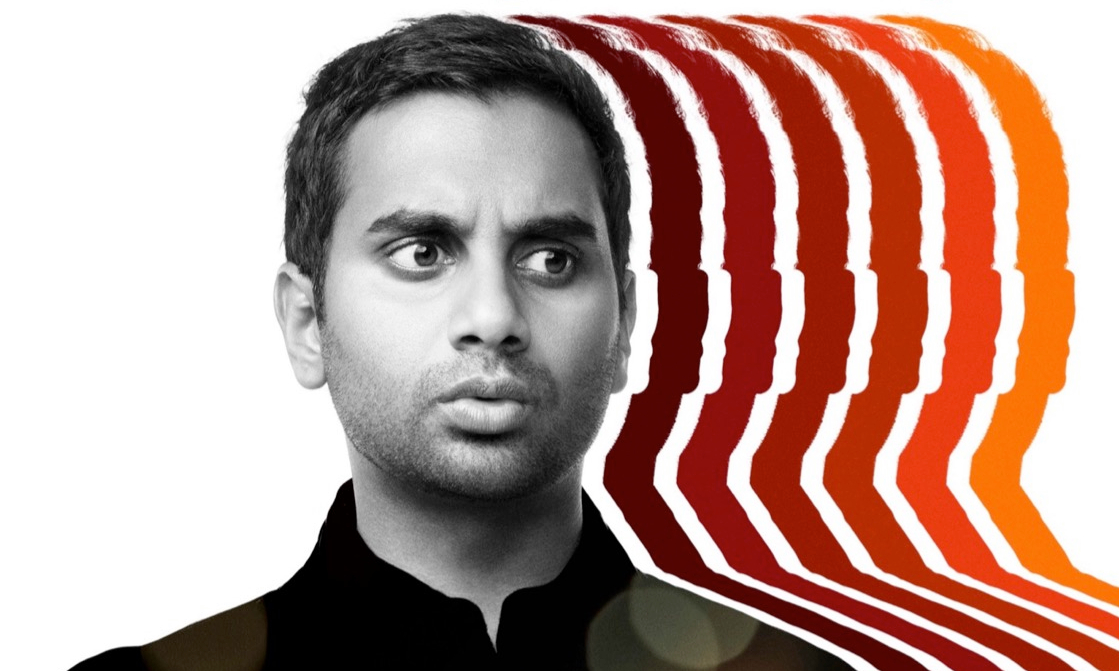
Aziz Ansari’s Netflix original series Master of None is an urban romantic comedy in the mode of an early-thirties, American-Indian actor’s exploration of what it takes to satisfy a young man in twenty-first century New York City. Ansari shines in his leading role as Dev, navigating bad dates, workplace disappointments, and a progressing relationship with his signature enthusiasm and sharp humor throughout the first 10 episodes. 

We learn about Dev through dialogue comprised mostly of questions he poses to his friends Denise (Lena Waithe) – the voice of reason, Arnold (Eric Wareheim) – the quirk, and Brian (Kelvin Yu) – Dev’s fellow first-gen American. Each presents his and herself as an expert on the topic of inquiry, giving Dev unique answers that speak to their personalities. While Dev’s friendships set up the show’s most interesting narratives, much of the show’s appeal is owed to Dev’s relationship with Rachel (Noël Wells). 

Though Rachel’s introduction is ambiguous and awkward, chemistry builds quickly between her and Dev. Ansari and Wells are natural complements to each other on screen, authenticating their characters’ playful humor. We are made to believe that these two were made to laugh together. Their jokes, while obviously methodical, are so intimate and endearing that we elevate their comedic interplay to an ideal. We aspire to their shared laughs and imagine ourselves within their vibrant and seamless relationship. 

Master of None engages itself in contemporary arguments regarding underrepresentation (typecasting in particular), feminism, and the generational culture gap between immigrant parents and their American-born children. The series is not condemning in presenting its case, but makes its point through instances of absurdist humor that offer poignant criticisms from minority perspectives. The gravity and relevance of the topics Ansari and co-creator Alan Yang have chosen to take on seem to have overshadowed the show’s merits in early reviews, but Master of None is undeniably tactful in how it addresses these issues and revolutionary in how it combats the discriminatory practices addressed in the show by how it conducts business in real life.  

Where the show does seem to falter is in its transitions between the aforementioned absurdist humor and its more realistic humor founded in common experience. There is no middle-ground comedy bridging the downturn of Dev’s romantic endeavors with a pitch to rebrand the Washington Redskins as “the Washington Breadsticks.” Like Ansari’s stand-up material, the show can sometimes be overly dependent on its battle-tested humor (racial jokes, Ansari’s mannerisms), but each cast member brings a personalized comedic sensibility that resonates with its audience by nature of its distinctiveness. 

Master of None's debut season features full-bodied storylines whose humor is at all times conscious of what has already happened. Case in point: “You cut in line in front of me at the ice cream store.” “So you fucked my wife?” The narratives demonstrate equal retrospective reach. Interlocking themes reappear five episodes later, developing Dev and Rachel’s relationship as fully as the brevity of ten episodes allows and making the show perfect for the binge-watching exploits of both religious and casual fans to romantic sit-coms. An impressive first production by Ansari, Master of None walks you through the cultural moment with insightful humor and criticism that only its dynamic multicultural cast can provide.

'Steve Jobs' Is Dynamic Fire-Cracker of a Biopic

TV/Film ReviewEthan WilliamsComment

Earlier this year I had the pleasure of reading Walter Isaacson's incredible portrait of the tech icon Steve Jobs in preparation for this very movie and I found myself simply unable to put it down. I had always been fascinated by Jobs as a CEO unlike any other, a man I saw as responsible for products that completely revolutionized how I viewed computers, telephones and music.

But Isaacson's book also helped me grasp Jobs' incredibly difficult nature. He was one of the most stubborn and irritable people to work with and often had fractured relationships with many people due to his arrogant and driven nature. But as insufferable as he was, Jobs was wholly dedicated to creating some of the world's greatest ever products. Jobs didn't believe that art and products has to be independent of each other and in fact considered himself an artist above all, just as his idol Bob Dylan whose music is accurately prominent in this latest attempt to capture Jobs onscreen.

Isaacson's biography is an intricate and intimate examination of a very complex individual and probably comes as close as we'll ever get to knowing everything there was to know about the complicated visionary and the demons that drove him.

So of course something is immediately lost in the translation to the screen as the level of detail that is compiled in such a comprehensive overview of Jobs' life would be impossible. And instead of even attempting to cover such an eventful life in just two hours, screenwriter Aaron Sorkin chooses to focus on three of the most important product launches in Jobs' life: the unveiling of the Macintosh, his NeXT cube after he left Apple, and culminating with the launch of the iMac.

This is certainly a clever idea because if there was anything Steve Jobs’ life revolved around it was the launch of his products, but the fact that Sorkin now must pack in all the drama and relationships formed over a person’s life into three very specific events does get a bit maddening at times. Steve Jobs certainly didn’t have three life-defining conversations with CEO John Sculley, marketing director Joanna Hoffman, co-founder Steve Wozniak, and his estranged daughter Lisa Brennan at each of them, but I can understand why they were all included. This is a biopic after all, and Sorkin needs some human drama at the center of these tech talks. So while the bold new format to this biopic is certainly novel, it does require a bit of truth-stretching.

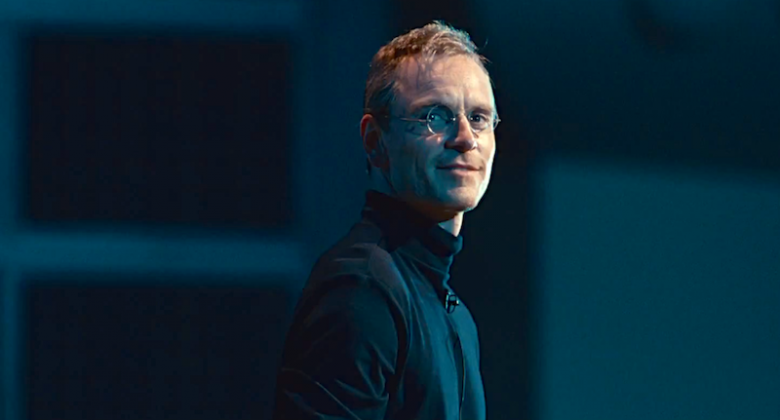
Luckily though, Steve Jobs is helped massively by scene after scene of predictably zippy and clever dialogue from Aaron Sorkin, all delivered by a massively talented cast. Michael Fassbender proves once again he is arguably the best actor working today, imitating Jobs’ high-pitched nasal voice but still managing to fully inhabit Jobs’ arrogant and calculating nature. Jeff Daniels is also an excellent casting as tepid CEO John Sculley, Jobs’ reluctant father figure in his turbulent time at Apple, and Seth Rogen is surprisingly confident as Apple co-founder Steve Wozniak.

And while the film wants to explore Jobs’ up-and-down relationships with Sculley and Wozniak among others, ultimately this attempt to capture Jobs onscreen is about his fractured relationship with his illegitimate daughter Lisa, whom Jobs famously denied ever fathering for a number of years. It’s a relationship that is of course rife with potential for human drama, and Sorkin chooses to explore it as the biggest contradiction of Jobs’ life: that he himself likely felt rejected by his birth parents, but ultimately it took him a very long time to grasp that he was rejecting his own daughter in a similar way. It’s certainly the script’s most compelling element, even if I personally would’ve liked to see Jobs’ ultimately more important relationships with his wife and other children explored at least to a certain degree.

For such a dialogue-heavy film, Steve Jobs certainly needed some solid direction and Danny Boyle absolutely excels. Though its events take place entirely before the year 2000, Boyle's sensibilities lie fully in the 21st century, full of color and life that give so many scenes of backstage exchanges between two characters a crackling dynamism. Beautifully photographed by Boyle’s former Sunshine collaborator Alwin H. Küchler, Boyle’s direction gives Sorkin’s script the zip that it needs to separate itself from the pack. His use of frame inserts to invoke flashbacks, the brisk but clever transitions between all three acts, and his use of visuals to both convey information and illustrate Sorkin’s dialogue all turn what would’ve essentially been a well-acted stage play into something that’s gripping and totally cinematic.

I recommend that if you want the more real and nuanced portrait of the enigma that was Steve Jobs, pick up Walter Isaacson's excellent biography upon which this movie is supposedly based. But Steve Jobs the film is a vibrant fire-cracker take on the Hollywood biopic. Decidedly brisk but somehow managing to pack in a compelling amount of human drama into product launches, it's easily the most worthy portrayal of Jobs yet and probably the best we're going to get committed to screen. Confident direction from Boyle combined with a sizzling Sorkin script allows sparks to fly, even if some parts fizz out instead.

'Teens of Style' Is Rebirth of Car Seat Headrest's Furtive Journey

Music ReviewSean McHughComment

Is there such thing as an overqualified musician? Does releasing eleven albums without any label backing constitute a titan of recording? What the hell does Car Seat Headrest even mean?

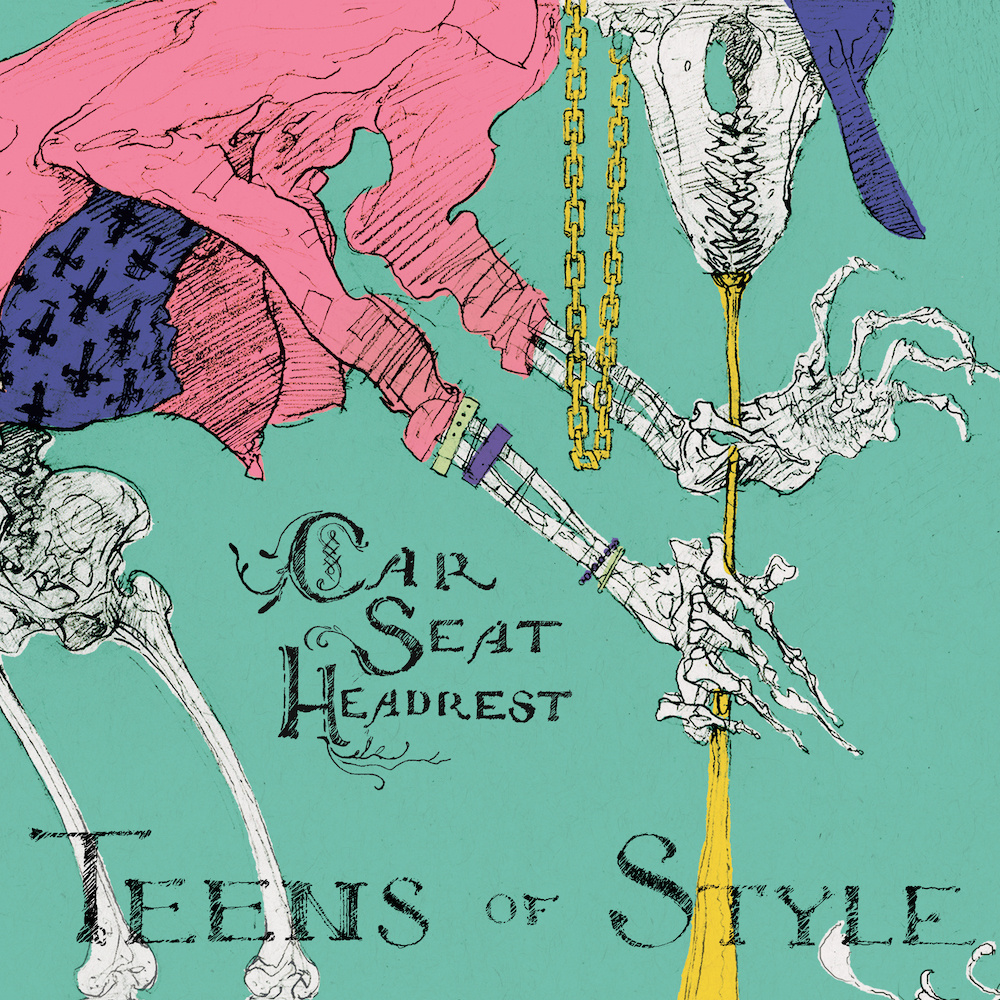
Rhetoric aside, Will Toledo is a millennial marvel - the twenty three year old man behind the automotive-comfort nom de plume Car Seat Headrest has recorded and released eleven albums since 2010. October 30th will mark Toledo’s first album released with a label, Teens of Style. Out on Matador Records, TOS is a refurbishing of some of Toledo’s more prominent tracks from his extensive pre-existing discography.

Perhaps the preeminent bedroom-based producer of the Twenty Teens, Toledo’s work as Car Seat Headrest runs the gamut of musical inspirations. With songs reminiscent of Weezer, Brian Wilson, Daniel Johnston, and Beck, TOS acts as a proper retrospective of Toledo’s growth as a writer and performer. Songs that had once been released under the pretense of personal amusement and catharsis from life in Leesburg, Virginia have been repurposed as a formal introduction of Car Seat Headrest to the indie masses.  

TOS opens with “Sunburned Shirts,” an ambient psych rock track that first appeared on Toledo’s 2013 release My Back Is Killing Me Baby, is retooled as an aloof and apologetic narrative that blows itself up halfway through, becoming a raucous convulsion of surf guitar and filtered vocals.

“The Drum” (My Back Is Killing Me Baby, 2013) ushers in the Matador era of Car Seat Headrest angst, having abandoned his moniker-earning recording practices (recording in the back of his family car) and traded them for full-fledged production that asserts Toledo’s truest feelings of boredom and self-awareness.

Many songs on TOS exhibit Toledo’s distinct perspective of detachment from certain banalities of life, such as “Something Soon” (My Back Is Killing Me Baby, 2013), with its Brian Wilson-esque harmonies that veil indefinite boredom with lines like, “I want to sing this song like I’m dying.” Or “No Passion” in which Toledo remarks on trite millennial discontent, remarking, “Still alive / No perspective / Album is over / Go to bed sober.”

Other songs on TOS offer bleak insight into Toledo’s heightened self-awareness. “Time to Die” (Monomania, 2012) is an offertory of alienation and frustration with the divergence taken early on in others’ lives – “All of my friends are getting married / All my friends are right with God.” The sole new song for TOS, “Bad Role Models, Old Idols Exhumed ("Psst, teenagers / Put your clothes back on"), extends these emotions that Toledo has undoubtedly run into with his increasing acclaim, indicating passive aggressive tendencies like “I’m going to delete you,” as a means of escape.

Toledo’s solitary and honest dissemination of his inner-workings, up to this point, have been undoubtedly impressive, with Teens of Style acting as the punctuating mark on Car Seat Headrest’s furtive journey. In his typically prolific style, Toledo has already announced Car Seat Headrest’s next Matador release Teens of Denial which will feature all new material, but for now, Teens of Style will surely be an introduction and continuation of a budding indie luminary.

Cage the Elephant Don't "Mess Around" on First 'Tell Me I'm Pretty' Single

Music News, New MusicWeston PaganoComment

Everyone's favorite crowd-surfing Kentuckians have returned with "Mess Around," the first single from forthcoming record and Melophobia follow-up, Tell Me I'm Pretty, which is due out December 18 via RCA.

Launching off with a fuzzy riff paired with an instantly infectious hook, "Mess Around" perfectly wraps up the band's dirtier feel in a tight 3 minute package, and is sure to masterfully continue their appeal on both sides of the alternative / mainstream border.

Produced by The Black Keys' Dan Auerbach, the track sounds heavily influenced by the blues rocker, particularly in the chorus, with Auerbach even contributing the guitar solo. According to an interview with Consequence of Sound, "Mess Around" was also inspired by OutKast's melodic deliveries.

The music video is a curious collage of French illusionist Georges Méliès's films, and you can watch it below.

Preorder Tell Me I'm Pretty and other exclusive merch in their PledgeMusic campaign here.

Chance the Rapper Reconciles Heaven and Hell on “Angels”

New MusicJulian AxelrodComment

Chance the Rapper might have the least fitting moniker in hip hop. It’s not that Chicago’s Chancelor Bennett isn’t a rapper; as his new single attests, he can rap his ass off, packing complicated rhyme schemes with references and wordplay in a voice both urgent and effortless. But Chance the Rapper does so much more than his name implies, and “Angels” manages to pack it all into one song.

Chance premiered the single in an incredible The Late Show with Stephen Colbert performance that might be the best late night showing since Future Islands took Letterman by storm in 2014. It’s yet another accomplishment for Chance in a year that’s already seen him tour the country, release an album with his band Donnie Trumpet & The Social Experiment, and become a father. “Angels” finds Chance assessing his responsibilities in the aftermath of his success, touching on his roles as an independent rapper (“Only ever sold merch”), a father (“Clean up the streets so my daughter can have somewhere to play”), and a community figurehead. In fact, his hometown’s DNA is a crucial element of the song’s alchemy, from Chicago rapper Saba’s regional slang on the hook to Chance’s heartbreaking cry, “There’s too many young angels on the South side.”

“Angels” is the rare song that mixes joy and devastation, pride and disappointment, Steve Jobs and Chief Keef, boiling it all down into an infectious footwork banger. And Chance the Rapper is the rare artist who can pull it off.

'Crimson Peak' Proves a Delightful House of Horrors

TV/Film ReviewEthan WilliamsComment

The creak of a wooden stair. The bump in the night. The chill on the back of your neck. As cliche as it sounds, these are the tiny but powerfully unsettling things that master director Guillermo del Toro seeks to turn into your worst nightmare. The most terrifying parts of Crimson Peak are in its eerie silence and candlelit amblings down decrepit hallways, when you never know quite what is lurking around the corner.

Although the fantastic Crimson Peak is being marketed as a straightforward horror film (and it certainly has its scares), Del Toro himself correctly pointed out that this is far more of a love letter to Victorian romance stories and Gothic horror than it is a ghost story.

Mia Wasikowska stars as Edith, an impressionable young American swept off her feet by the dashing Sir Thomas Sharpe (Tom Hiddleston) after the mysterious death of her entrepreneur father. Whisking her away to his family's estate across the pond where he lives with his colder-than-ice sister Lucille, the ghostly warnings Edith has been receiving all her life begin to come to fruition as she learns to truly "Beware of Crimson Peak."

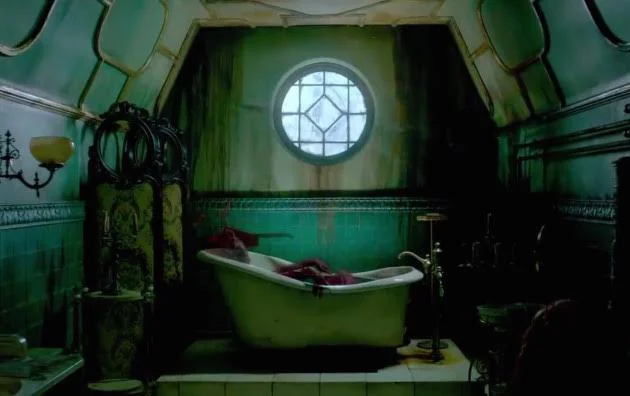
There are truly very few horror filmmakers out there who can still craft a truly incredible sense of atmosphere, and Guillermo del Toro is one of the absolute greats. His unique style of production design is perfectly suited for a Victorian fairy tale and the incredible set of Allerdale Hall just allows Del Toro's imagination to run wild. Applying his signature creature design to these horrific specters, their bones crack and creak as they loom through the dark hallways and it's simply awe-inspiring.

As A-list a cast as Del Toro recruits here, their commitment to an old-school kind of campiness in their delivery is admirable. Some of what the script gives them could be considered groaners but Hiddleston, Chastain and Wasikowka's delivery is excellent as they are fully committed to the kind of story Del Toro wanted to tell. Particularly excellent is Jessica Chastain as the menacing sister Lucille, perfecting the chill in that deep-seated evil that boils under the surface, and absolutely reveling in the madness that's revealed as the plot unfolds.

In any other director's hands a lot of Crimson Peak probably would've fallen flat, but Del Toro's strength is that he plays all of it completely straight. He fully believes in the power of atmosphere and his attention to detail in his craft helps to fully immerse the audience in some truly fantastic tales. His penchant for gore is certainly still on display, and the fact that Del Toro carefully chooses when to unleash the brutality only makes these moments more powerful, especially in the requisite bloodbath finale

It's an old school kind of horror told with unapologetic camp, and aside from some faulty pacing in the end, it is without a doubt one of the best theatrical experiences of the year, one of Del Toro's finest films, and a highly recommended Halloween treat.

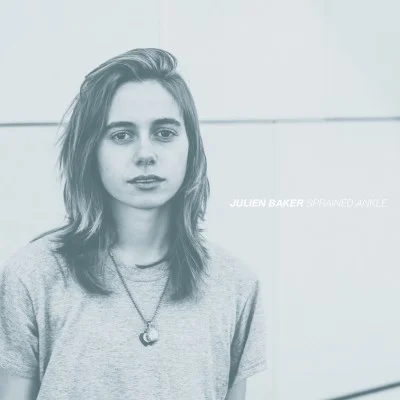
Julien Baker's Debut 'Sprained Ankle' Is Painfully Good

Music ReviewSean McHughComment

The world of music adores artists that are seemingly beyond their years – Låpsley, SOAK, Lorde – each has their own unique appeal. But none of those artists have managed to create intimately visceral narratives to the point of worry that Julien Baker has crafted on Sprained Ankle.

Sprained Ankle marks Baker’s official debut release on 6131 Records, an effort that reveals the nineteen year-old Memphis native’s matter of fact assertions of wishing “I could write songs about anything other than death.” A slightly alarming statement coming from someone of her age, Baker weaves private thoughts into vividly bleak accounts of nurses administering sedatives and awaiting the subsequent unconsciousness on “Brittle Bones.” Including lines like “I’m so good at hurting myself,” it begins to paint a perspective of Baker’s intense awareness of the frailty of life.

Tender and inward, Baker’s earnest soprano floats above guitar loops that at certain points actually resemble heartbeats over a rhythm base. Songs like “Good News” really start to give the most barren look into Baker’s psyche: “I know its not important / But it is to me / And I’m only ever screaming at myself in public.” She offers up her startling self-awareness in a poignant manner, and while for others such honesty might be be exultant, for Baker it's unexpected to the point it could frighten some. But that’s the beauty of this record; such fragile narratives offered up by someone so unassuming allows her lyricism to cut to the marrow of anyone listening.

Sprained Ankle ends on a somber note, with a song about addiction (of whose its hard to tell) in “Rejoice,” that offers thinly veiled anger like “Call the blue lights / Curse your name,” and uncertainty, “I think there’s a god / I think he hears either way.” Baker’s detached vocals create an intense empathetic aspect to the track and album as a whole. The album ends with the aptly named “Go Home,” which presents Baker at her least self-conscious yet most apologetic with “Burned out on the edge of the highway / I’m sorry for asking please come take me home.” Being so young and so incredibly mindful of the personal nature of the album, “Go Home” acts as a firm completion of this harrowing announcement of her existence, an end to the first installment of Baker’s emotional outpouring, and a return to solace until the next cathartic release.

Baker’s songwriting is peculiar in the fact that it acts as a sort of a misdirect. Without taking much consideration of the songs, one might assume Baker has an oddly morose outlook on life, with so much focus on the desolate motifs and dying nature of life, however, it should be argued, it actually acts as a foil to that thought. Sprained Ankle presents the unnerving realities of life in an ambient sense, as a sort of celebration of living and having the awareness of knowing this could be the only chance to do so. In turn, it creates one of the most powerful debut records of 2015, and likely the inception of a more fertile and durable career than that of Baker’s counterparts.

EXCLUSIVE PREMIERE: Explore the Dark Side of Veneto in Zebra's "Blanco" Video

Exclusive Premiere, New MusicWeston PaganoComment

Venice-based trio Zebra have premiered a beautiful new music video to accompany "Blanco," the single from their debut EP Homo Habilis released late last year.

Opening with a steady firecracker of driving percussion the track then layers on some gentle harmonizations before delving into crunching guitar jabs as the lens flares over an odd dream sequence of events shot across Italy's Veneto region. Flirting with some math rock and grunge elements, Zebra prove sometimes the most dynamic developments in independent music don't always come from the most predictable of places.

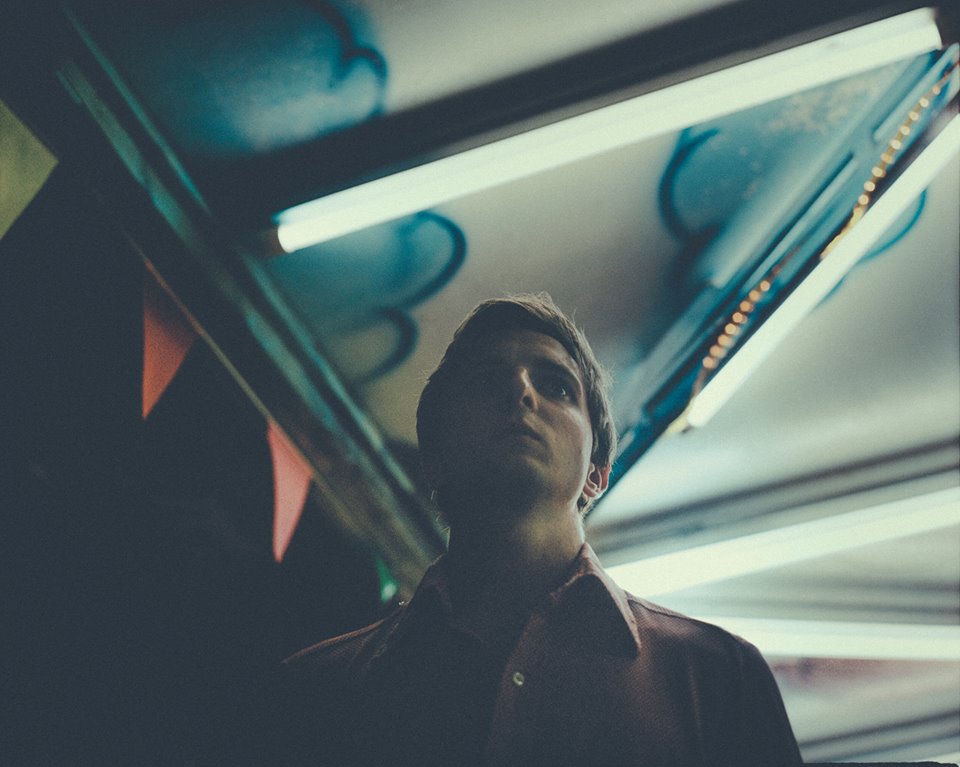
The video itself, directed by Italian cinematographer Andrea Calvetti, was shot entirely on 16mm film with only available light and two neon bars. Combining a series of seemingly disjointed experiences from a lonely fairground jaunt to an eerie cave with strange inhabitants, the visuals form a captivating story companion to frontman Luca Zambelli's longing to "Turn this gray into gold."

Zambelli told Transverso,

The video portrays our character as artists, emptied from creativity and lost in a world where time has no dimensionality, a world of passion and art, but also futility and melancholy.

Check it out below.

You can buy Homo Habilis here.