TRANSVERSO

- A culture magazine reaching terminal verbosity -

Man Man's Honus Honus Talks Mister Heavenly, Solo Record, and Writing Lyrics on the Walls

Music InterviewWeston PaganoComment

When I met him, Philadelphia-bred creative and Man Man frontman Honus Honus was wearing a denim vest with "Born Alone, Die Alone, No Tomorrow" emblazoned within the patchwork on the back. He tells me it's a quote from Mad Men, which is incidentally the name many people mishear his own group's to be; a commanding grunt in sharp contrast to the eloquence of his pen. It's easy to remember, he tells me.

An enigmatic bard spinning grandiose tales of doom and hope and everything in between, Honus is firmly cemented in a category of his own. Though not as severe as Samuel Herring or as psychedelic as Kevin Barnes, the many-costumed troubadour is as uniquely kinetic as the best of them, springing off of his seat almost as often as his fingers meet the keys.

You would be forgiven for thinking his personality might echo that of his music, though despite the off-kilter aggression of much of his repertoire, it's clear from the start of any live show he's more affable than most. It's not rare to hear a chuckle sneak its way into his growls, mirrored by a wry smile similarly peaking out from his mess of dark whiskers. And whether it be with Man Man or his supergroup sideproject Mister Heavenly, his songs are just the same: a menagerie maybe not for the masses, but a wild concoction of equal parts carnival and heart. 

Transverso Media sat down with Honus ahead of Man Man's show at Atlanta's Aisle 5, perched atop a crumbling block of graffiti behind the venue in the waning summer air.

TRANSVERSO: So traditionally bands will tour to support an album, but with the way the industry has been shifting a lot of people have been putting out albums to support the tour as their main source of income. On Oni Pond came out two years ago this week and you’re still on the road; is it safe to say you’ve felt that shift as well?

HONUS HONUS: Oh definitely. I mean we try out new stuff on the road, that’s why were touring right now, to road test some new songs and see how they feel live and just feed off the energy of a crowd and then adjust if we need to, but the last record we didn’t get to road test any of the songs which was fine. It’s the story of the record but we’re just trying to do it the way that we usually do it. 

How’s the new material coming along?

Slow and steady. Yeah, we’re taking our time with it. [The new songs] are different. I mean it’s a natural progression from our last record, but I don’t know.

One of the things that I noticed with On Oni Pond is that it was more accessible than some prior works like Six Demon Bag. Do you see yourself moving in that direction, have you maybe mellowed with age? 

Mellowed with age, yeah, it’s like when you have a fine wine and you keep it for a long time and you’re like, oh, this will be great in 30 years, and you crack it open and it tastes like vinegar. That’s how we’re mellowing with age! [Laughs] As a creative person you don’t want to keep trying to repeat yourself, so we just tried to make something that’s true to where we are in our lives at the time, and that’s kind of how every records been, you know? I don’t want to keep making Six Demon Bag. I’m very proud of it, but I’m not the same person. I mean, that record will be out 10 years next year, which is pretty crazy. We might do a tour of just that record, we’re discussing that right now.

Start to finish?

Yeah, start to finish. It’ll be interesting. But yeah, you know you just have to try to evolve or it just gets boring. There’s a line on the last record on “End Boss” where, what is the line, “If you don’t reinvent yourself / You cant circumvent yourself,” and I think that’s true, you have to keep on challenging yourself. That’s my answer. [Laughs]

I’ve heard you discuss how hard it is being in a band, whether it be financial difficulties or housing issues. With Mister Heavenly, what made you want to do it all over again? Is it less pressure being in a side project or is it twice as much work?

It was just fun. I mean, it was just the time and place was right for Nick [Thorburn (Islands, The Unicorns)] and I to collaborate on that, and then Joe [Plummer (Modest Mouse, The Shins, Cold War Kids)] was free so he was able to be pulled into the fold. When you make stuff everything kind of has its own pacing, and we’ve spent the life of Man Man thus far hustling to make another record, hustling to make another record, because we’re a cult band, that’s how we [work. We] haven’t really been able to break out of that. 

So you feel hindered by the cult band label?

Well I think it’s a strange thing, I feel like we got tagged as just a weird band early on and I think it might have kept people away. I mean sure we do some different things but I think its just off-kilter pop music. I mean, that’s how I see it, but you know as long as new people keep leaking in we’re lucky.

You know, full disclosure, unfortunately I’m not finding the cure for cancer. I’m lucky I get to write songs and people come out and can enjoy them and I enjoy playing them, so I’m very fortunate. We’d like to have more people come to our shows, we’re very fortunate people come to our shows and we’re psyched about it, but it’s a constant hustle because if you don’t have a new record you can’t tour and yadda yadda yadda.

So we’re just trying to let this next record evolve as it evolves without feeling the need to just crush it immediately [and] put something out, you know? We don’t want to do a disservice to the songs we’ve been working on. I mean, I wrote a solo record. I just finished that, I’ve been working on that all year, so.

Is your creative process different between those three outlets? If you think of a new melody or lyric how do you know which project you want to slot that into?

Well I never wanted to make a solo record, it seemed like a good time to just try it. My process of writing’s not any different than writing for Man Man. Mister Heavenly its easier because there’s another songwriter there with me, you know? If I hit a wall lyrically Nick can pick up the slack and vice versa. In Man Man if I hit a wall lyrically I gotta pick up the slack [laughs] and it becomes a little bit more arduous. It’s one of those things where I don’t feel like I’m unique in this, but after I finish a record I forget how to write songs and then it’s a process of relearning how to write songs, and then the double-edged nature of that is relearning to write songs but trying not to rewrite the same songs you’ve already written. I would think it would get easier as I get older but it just gets harder.

What can you tell us about the solo record? How does it differ from Man Man?

Well I’ve been living in LA now for a couple years so that definitely seeps in. Wherever I live and what’s going on in my life always filters its way somehow into the music so it’s definitely an LA-vibing record.

Any idea of a release date?

No, I just finished recording it so now its getting mixed and my buddy Cyrus produced it and it sounds amazing. I’m psyched about it but now I have to go through the whole rigmarole of do I find a label, does a label even give a shit, do kids give a shit, do I self release it, does it even matter anymore, you know? Gotta put together a band for it, so we’ll see.

Will there be a tour for that?

Oh yeah, [but] I wouldn’t play those songs with Man Man.

So no Six Demon Bag / solo tour?

No, fuck that! [Laughs] I wouldn’t be able to speak ever again, it’s hard enough singing Man Man songs! 

Yeah I noticed you have that in your Twitter bio, “Destroying my Throat One Album at a Time.” Is that a real concern? 

Well, I mean the first two Man Man records I didn’t know how to sing at all. I didn’t think there would be more than one or two records, so all the songs I wrote on those albums are just pipe shredders, so it destroyed my range and those songs are the hardest to sing as I got older with a band, you know? Your body starts to figure out how not to do it so the songs from, like, Rabbit Habits-on are just more catered to not destroying your voice.

I understand you started out as a screenwriter. Would you ever consider scoring film?

Yeah, I’ve scored films. I scored a feature a couple of summers ago with Joe from Mister Heavenly. My buddy just hooked me up and I’ve been scoring plays now. I scored a play a great play by this British playwright named Suzanne Heathcote called “I Saw My Neighbor on the Train and I Didn’t Even Smile." and that premiered in July; I just wrote pretty piano music. I’m scoring another play off Broadway, I start this November, and that play’s called “Avalanche,” and that’s my buddy Cyrus who produced my solo record, he and I have to write basically an album for this play – it’s not a musical either. I got back into screenwriting too, I wrote a feature last summer. I’m trying to do something with it and I’m working on a couple other projects; Cyrus – he’s like my writing foil in LA - we wrote a fucked up kids’ record last winter and we’re trying to do something with that. We teamed up with a really talented illustrator and director and we’re trying to put that together.

What kind of kids’ music?

It’s like if Ween made a kids’ record [laughs], so it’s not educational. I never in a million years wanted to write a fucking kids’ record, it was just a writing exercise. Cyrus and I justified it to ourselves; if we had to listen to a fucking kids’ record everyday when we drove our kids to school or something (neither one of us have kids by the way, but hypothetically) what would I not mind listening to and not get tired listening to? So that’s what we wrote. 

So if you’re called Honus Honus, what would your kid be called?

Oh god, what would my son be called? “Good luck!” [Laughs] “Mad Max!” So in conclusion, I’m working on a lot of other shit other than Man Man and music. You gotta stay busy or you go crazy. You gotta have outlets. 

Is being prolific the secret to not losing your mind?

Yeah, [but] I don’t know, I don’t even feel that prolific. Nick from Mister Heavenly, that motherfucker’s prolific. Joe too. You just gotta stay busy and creative.

Tell us a favorite backstory behind a song that most people wouldn’t know.

So I wrote “Shameless” for this girl I fell head-over-heels in love with and it didn’t really work, but I felt like I still needed to write her a song, which I’m sure she hates. When I was working on that song I was subletting in Philly and was being audited. The room I was subletting in was on a slant, which I didn’t realize, so if you laid a ball on the floor it would roll all the way to the other side of the room. I’m pretty sure that fucks up your equilibrium.

So all that was in the room was an Ikea mattress that I bought, all this tax paperwork everywhere, all these bottles of Wild Turkey because for some reason I started drinking Wild Turkey, I don’t know why, I had like this Wurlitzer piano that I was writing everything on, and I was just like writing all the lyrics on the walls. An electrician came over to check out the electricity in that room and I was downstairs and he walked from my room back down the stairs with, like, a ghosted look on his face, and I go back up in the room and I saw clearly for the first time how insane it looked! [Laughs] It looked like a crazy person lived there, there are lyrics on the wall, mattress on the floor, only thing there is piano mattress, booze bottles, papers, and lyrics scrawled on the walls. So I was like, oh, maybe this isn’t a healthy way to live. So “Shameless” came out of that, I’m very happy with that song.

Speaking of subletting, I’ve read how you had to live out of all these bizarre places like a storage unit. One line of yours that really stands out to me is “Home is where the bullet lands / As it travels through your head,” so I wonder, if you settled down one day what’s one thing that you would really want to have in that house that represents home for you?

Oh god. The internet! A piano. [Laughs] That’s the thing, I grew up and my dad was in the Air Force, so we moved every three years, so I just kind of had this restlessness instilled in me. Even when I move someplace it never feels like there’s permanence. I wish there was, I wish I didn’t have to move all the time, but I like having a piano and the internet [laughs], and the ability to make as much noise as I want. I’m most productive from 6:30 in the morning to about 5:00 in the afternoon. I don’t work at night, but people don’t want to hear people working on songs at 6:30 in the morning.

Is there a memorable time you were practicing and really pissed someone off?

Oh yeah, like my entire life! [Laughs] I mean this is the first place I’ve lived, this house that I moved into in June, where I can just play and it seems okay. I mean, I have a roommate and I’m sure it bums him out but he knew going into this situation what it would be like. [Laughs] I mean, I had this cool practice space that a buddy of mine let me use in LA, but the downside of it was I would go in the mornings because it was all rock bands around us. Most “rock and rollers” don’t start “rocking out” until like 3:00 or 4:00 in the afternoon or even later because they’re like sobering up from their partying, so it was perfect for me because I’m super productive in the morning.

So I go in there and at 7:00 and be out of there by 5:00 and it was cake, the only problem was our room is right next to the bathroom on one side and then right to the other side was some like terrible electronic band that wants to sound like FKA Twigs but they can’t seem to write a fucking song so they just keep looping the same part, and behind us was a band that was just trying to learn Bruce Springsteen covers but were tone deaf. So I was kind of sandwiched between some FKA Twigs knockoff band some really bad cover band and then the bathroom, so I was always constantly aware of working out all the bad ideas. I’d hear, like, shitty rock dudes taking rock dumps all day long all day long and I know when I’m in the bathroom next door that it’s just as loud in there as it is in our practice space, so it was awful.

How did you manage to stay impervious to being influenced by that? 

I would just sing under my breath so they couldn’t hear all my bad ideas, and so consequently the solo record I wrote is a lot more croon-y and singing-y because that’s how the songs got written because I wasn’t really screaming or yelling. So it was influenced by dudes taking rock and roll shits next door. 

Last thing, I noticed you haven’t done one of your #DeadAgain photos in a while. Have you figured out your mortality issue?

No, it’s just like with anything else I just got bored doing it. I was thinking about that today actually, like oh, we haven’t done any #DeadAgains for a while, but I don’t know, just kind of got bored with it.

Do you mind if we take one?

Yeah, we can take one.

Autre Ne Veut Flies Under the Radar With 'Age of Transparency'

Music ReviewSean McHughComment

James Blake, SOHN, Rhye, How To Dress Well, and JMSN serve as the current stalwarts of the nouveau amalgamation genre best known by joke-portmanteau-turned-legitimate-label PBR&B. A relatively young genre in the mainstream, PBR&B’s rise to popularity has left some artists within its classification unjustly understated, and none more so than Arthur Ashin, AKA Autre Ne Veut.

The journey of Autre Ne Veut has not gone totally unrecognized – sophomore record Anxiety enjoyed its fair share of critical success as one of the best albums of 2013, but Autre Ne Veut still couldn’t quite breach the surface of the zeitgeist. Because of his atypical approach to the genre, Ashin’s foray into PBR&B has been a bit of an exercise in futility. With third album, Age of Transparency, the unabashed nature of Ashin’s vocal and musical deconstructions suggests that mainstream success within PBR&B was never his aim.

Opening track, “On and On,” showcases Ashin’s warbling vocals atop airy piano that never quite reaches a true coda, and hysteric percussion that writhes and jolts with the increasing fury his voice. 

Second track, “Panic Room,” corrals itself and sets the tone for what the rest of Age of Transparency will actually turn into. More akin to a light 80s power ballad than PBR&B pillow whispers, Ashin continues to utilize his clamorous vocals to plead “I don’t want to feel like you are not here with me;” setting a more vulnerable lyrical tone, more apparent than earlier Autre Ne Veut endeavors.

The musicality is much more involved in Age of Transparency, with tracks like “Cold Winds” mixing bedroom bass and industrial rock ala Nine Inch Nails, the title track adding a little bit of St. Elmo’s Fire style jazz, and the final two tracks – “Over Now” and “Get Out” – both feature tinges of folk and gospel within their depths.

Ultimately, where Autre Ne Veut’s unorthodox modus operandi has failed to meet mainstream standards of PBR&B, the “mainstays” of the melded genre have failed to develop and come into their own the way that Ashin has. Age of Transparency is a triumph of continued development and understanding of a personal representation that will serve its producer better than any conventional approach possibly could, and its culmination is one of the most underrated albums of 2015.

Age of Transparency available now via Downtown Records.

The Dead Weather Are Resurrected on 'Dodge and Burn'

Music ReviewSean McHughComment

Five years removed from the release of The Dead Weather’s second album, Sea of Cowards, the scrappy indie-supergroup relegated (or elevated, depending on your perspective) to Jack White side project, released their third album, Dodge and Burn.

Following some haphazard research (Google search: “Dead Weather new album promotion”), it has become increasingly apparent that the majority of music/lifestyle blogs and brands covering the Dodge and Burn release are under the impression that The Dead Weather is a project only signified by Jack White's presence and his growing relevance in pop culture.

For the sake of uniqueness, Transverso has elected to avoid diverting the reader with the ongoing and over-saturated melodrama of Jack White vs. Dan Auerbach, Jack White-Hates-Life memes, and the enigma that is TIDAL music streaming, and instead focus solely on his collaborative combination with Alison Mosshart, Dean Fertita, and (the apparently eleven-fingered) “Little” Jack Lawrence.

Dodge and Burn opens with the Zeppelin-leaning “I Feel Love (Every Million Miles),” with Mosshart caterwauling with a warped joy throughout the track. Fertita’s guitar stands out as the song’s flair piece, while White’s drums leads the track every which way, further extending the Bonham-esque nature of the song.

“Buzzkill(er)” and “Let Me Through” follow “I Feel Love” on Dodge and Burn, and both tracks fit the more “classic” Dead Weather sound – sonic allusions to Captain Beefhart, crunchy bass, unkempt drums, and the unhinged pacing. Both are solid tracks, but don’t necessarily offer as playful a tone as “I Feel Love.”

While the second and third tracks on Dodge and Burn maintain what’s familiar, “Three Dollar Hat” heightens the album’s diversity (and overall bad-assery) with a romp of a track. Batting cleanup, the song sounds like Kurt Cobain and The Mad Hatter got together to record an industrial rock track and blow it up one minute in. With only White’s vocals leading the track along, it only helps extend the screwball nature that has become The Dead Weather.

The middle part of Dodge and Burn hearkens back with sounds more reminiscent of Horehound and Sea of Cowards, though “Rough Detective” begins with a brief (but intriguing) sort of skuzzball jazz beat, eventually diving right into the scrappy rock and roll the band cut their teeth with. “Open Up” probably acts as the most archetypal Dead Weather song on the album, with a ravaging opening and the eventual swell into a massive crescendo that lays waste to any expectation of anything else.

Dodge and Burn closes out with a three-track cacophony of rock and roll blitzkrieg – a tight manifesto in “Mile Markers,” a vociferous unraveling with “Cop and Go,” and a triumphant exclamation point in “Too Bad” – and ends with a curious, almost Raconteurs-ish ballad in “Impossible Winner” that acts as a departure from the standoff nature of Dodge and Burn and instead offers the affirmation that The Dead Weather are not just another Jack White side-project, but in fact a full-fledged band that looks to continue for years to come.

'You're The Worst' S02E03 "Born Dead"

TV/Film ReviewHenry SmithComment

It’s your typical “nice guy wears down oblivious girl” story, but “Born Dead” takes it to its logical conclusion as Paul brings his new girlfriend Amy to the party, by actually showing how that goes down in real life. 

Sure, Edgar and Lindsay kiss, but instead of her realizing the right guy was in front of her the whole time and running away into the sunset together, it’s presented here as what it is; a nice guy taking advantage of the vulnerability so very apparent in Lindsay, and the kiss resonates in a bad way. Luckily, Desmin Borges’ earnestness as Edgar means it’s not outright creepy, but had you been abandoned by your parents as a baby and been raised solely by wolves and romantic comedies, this exchange would make you go “Huh?” before you went back to hunting rabbits or something. (If wolves and romantic comedies have, in fact, raised you, thank you very much for reading this review. I’m not sure how you get Internet deep in wolf territory, but kudos to you.) This subversion of romantic tropes is where You’re the Worst really comes into its own, and its effect here is more of a blunt clubbing than a rapier-like evisceration.

On the other side, we see Gretchen’s innate reluctance to grow up, and a stronger insight into what makes Jimmy our surly, cynical protagonist. Jimmy is spurred on by a near crippling sense of loneliness and rejection (that hit ever so slightly close to home) – it’s elaborated on here as he recounts the story of “Shitty Jimmy” to an inexplicably emotional Vernon, and it explains a great deal why it took Becca’s initial rejection to get his creative juices really flowing. What has become apparent, though, is that Sullen-Writer Jimmy is completely at odds with Likeable-Human-Being Jimmy. In the end, it takes the aforementioned quote from Vernon to put him right, but for Gretchen, it takes a reminder of her past to spur her to look toward a future. Her friends show up, all right, but at past 30 years old, they’ve grown up and moved on from her. Except for one, who offers an insight into staying the same all your life. She ends up stealing Gretchen’s stereo, and it should provide the kick Gretchen needs to grow up a little. 

There’s no rush, however – You’re The Worst makes no excuses for any of its four central characters, and their open flaws are part of what makes the show and its comedy work. Part of that is down to Stephen Falk’s fantastic writing, too. What we’re seeing here is hopefully the beginning of the end pertaining to this Edgar and Lindsay storyline (though the kiss at the end makes me doubt it slightly), and the beginning of a development that allows Jimmy and Gretchen to move that much closer to being in an adult relationship with one another. 

Living together is only f*cked up if you stop getting f*cked up. Watch the TRAILER for the all new season of You're The Worst. SUBSCRIBE to FXX https://youtube.com/subscription_center?add_user=FXXNetwork ABOUT YOU'RE THE WORST An original comedy from writer and executive producer Stephen Falk, You're The Worstputs a dark twist on the romantic comedy genre.

'You’re The Worst' S02E02 “Crevasses”

TV/Film ReviewHenry SmithComment

You’re The Worst continues to follow the fallout from the awesome season finale, and we see the first set of consequences from “Fists and Feet and Stuff” in “Crevasses”. Gretchen’s upset that Jimmy doesn’t seem to want to make room for her in their place together, making her live “in the crevasses”, which is where episode two gets its name. They take a trip to the mall, where Gretchen has multiple breakdowns buying basic stuff for her place after it emerges she has the inventory of a 19 year-old university student, culminating in a tirade that starts off as a rant against the patriarchy and the perils of visible panty lines, and ends with the phrase, “I’m an irresponsible monster who burned down her apartment with a vibrator”. 

Jimmy appears to take a backseat in this episode (and in the one after this) but what we’re seeing here is Jimmy and Gretchen in their natural habitats, and a little bit of an insight into why these two are truly considered the “worst”. In episode three, “Born Dead”, Gretchen holds a party to reconnect with her old friends, while Jimmy is forced to hang out with Vernon after an Instagram mishap. Vernon actually gives us our episode’s title, explaining the futility of human life without connection by explaining his still-birth. It’s a harrowing tale, but only the second-most harrowing one of the episode, as Paul describes the death of his friend’s wife in stuttering, visceral (though completely, sadistically hilarious) detail.

He’s explaining it to Edgar, who in these last two episodes has made good on his pursuit of Lindsay. “Crevasses” involves him accompanying Lindsay to a bar, and acting as her wingman as she looks to get back on the saddle after Paul’s departure in episode one. Luckily, he runs into a gay fellow, who seemingly sets him on the right path, by setting him up with the bartender. It works for about half a day, before Lindsay pulls him back in by having him take pictures of her. Racy pictures, with an uncomfortable amount of barbecue sauce in uncomfortable places. 

Living together is only f*cked up if you stop getting f*cked up. Watch the TRAILER for the all new season of You're The Worst. SUBSCRIBE to FXX https://youtube.com/subscription_center?add_user=FXXNetwork ABOUT YOU'RE THE WORST An original comedy from writer and executive producer Stephen Falk, You're The Worstputs a dark twist on the romantic comedy genre.

Black Lips Discuss Being Attacked by Fans, "Freedom Fries," and Labios Negros

Music InterviewEllen WilsonComment

Atlanta garage-rock band Black Lips have been together for 16 years, earning a reputation notorious for provocative and insane stage antics including vomiting, fireworks, electric R.C. car races, chickens, and flaming guitars just to name a few. Black Lips are always ready to having a good time.

Currently picked up by Red Bull to preform a four-city tour, Black Lips stopped by their home-away-from-home, Athens, GA to preform a free show. I sat down with Cole Alexander, one of the founding band members, to talk about touring, their new single "Freedom Fries," and what it’s like to be in a band for so long.


TRANSVERSO MEDIA: So you’re part of Red Bull Sound Select, how did you get involved with them?

BLACK LIPS: We’ve done some events with Red Bull in the past. They kind of regularly do events in Atlanta and I’m sure all over the country but they had good selection of music so we’re down to get involved. Sometimes it’s weird working with a corporation but they’ve been cool with the act they’ve picked. Like we got to play with Juicy J of Three 6 Mafia who is someone we grew up listening to in like the late 90s.  I don’t think we would ever have gotten to play with him if it wasn’t for Red Bull. I think they’re doing a good job picking bands and putting together cool projects that makes the bands want to get involved.

You guys are known for crazy stage antics. I heard last time you guys were [at Athens venue 40 Watt Club] there were fireworks involved?

That was a long time ago! Um, sometimes some crazy things happen and those things get written about. Like, if you look at our Wikipedia it mentions these crazy things that have happened but it’s not like ever night we have this formal [plan]. It’s not indicative of our real band.

What’s the most insane thing that’s happened on stage?

I mean, we have fans attack us and stuff and kind of riot. Throw bottles and stuff. Sometimes crazy stuff happens but people get the wrong idea. We pretty much just play music like other rock bands with a lot of energy. Sometimes things pop off but we never want to do a forced thing. Like every night we are trying to start something, we just let it happen naturally.

Where is your favorite place to tour?

We haven’t really toured Mexico per se, but we’ve played a few cities there and I really like it. We played Mexico City and that was really nice. We played in Istanbul, I like that city a lot. Japan is pretty fun. There are a lot of cool places. There’s something fun about everywhere but those are some of my favorites.

Earlier this week you released a 7” with fellow Atlanta band Coathangers called “Freedom Fries.” What can you tell us about that?

Yeah, Coathangers is like our sister band. They’ve been going for a long time and touring. We’ve done a tour with them but never done some sort of project like that so we deicide to do a split 7” and used a left over song from our last album.

Side A - Black Lips "Freedom Fries" Side AA - The Coathangers "Watch Your Back" Pre-order: http://store.suicidesqueeze.net Release Date: November 13, 2015 Label: Suicide Squeeze Records (Black Lips appear courtesy of Vice Music, Inc.) Black Lips official site: http://black-lips.com/ The Coathangers official site: http://thecoathangers.com/ The Coathangers Instagram: @thecoathangers Suicide Squeeze Instagram: @suicidesqueeze

You guys have been a band since 1999. What would you tell yourself 16 years ago when you were just starting?

I guess, you know tough it out, it’s going to be better. In the beginning the first six years is really hard and it’s discouraging. We were kind of struggling the first six and I was working a day job to make the ends meet in between tours so it was kind of hard. There was a point where I wanted to quit trying to tour so much but they we held on just long enough and then the ball started rolling and we picked up some momentum to do it more comfortably now.

What’s your favorite song to preform on stage?

I don’t know… We were doing soundcheck for this song “Not Go Home” and I like doing that one.

If you weren’t called Black Lips what would you be called?

Labios Negros.

What’s a song you hate?

Um, I don’t like that Macklemore song about the thrift store. But I like talked crap about him in an interview and I felt bad because I heard he’s a really nice guy. I don’t like that song but I’m sure he’s a cool guy.

Since you’ve been a band for so long now, how do you guys stay relevant without losing yourselves?

Sometimes we get a little tired or rusty, but we’ve had some member changes so that helped us sort of reinvent ourselves a little bit. Like, we just got our old guitarist back so that’s brought new energy to the band and new chemistry. Me, Joe the drummer, and Jared the bass player have always been consistent in the band. So, like, the extra guitar has been always a wild card.

Anything else you want to add?

It’s good to be back in Athens. It feels like home-away-from-home because it’s so close to Atlanta and they have a good scene, so its good to be back!

EXCLUSIVE PREMIERE: Austinn Is Calling On "Answer Your Phone"

New Music, Exclusive PremiereTransverso MediaComment

“Answer Your Phone” is Luxembourg pop-rock two piece Austinn’s newest single, following their debut track "Galaxy," produced by Matt Squire (One Direction, All Time Low, Ariana Grande) and directed by Cedric Letsch.

The duo of Jameses, Jimmy Braun and Jim Scheck, explained the backstory behind their curious name to Transverso, saying,

Jimmy bought a leather jacket on Ebay and it came [all the way to Luxembourg] from Austin, Texas. The guy who sold the jacket wrote his address on the package as well, [but] he wrote Austin with two nn’s, [which] makes Austinn. Nobody knows how you can make such a mistake in spelling Austin, but Jimmy had a laugh while reading it and thought it looked pretty cool.

This shiny new music video, reminiscent of The Virgins at their poppiest, comes hot off the heels of multiple sold out European tours and gives a modern take on the classic drama recounted by Blondie back in the day: getting left Hanging On the Telephone. Check it out below:

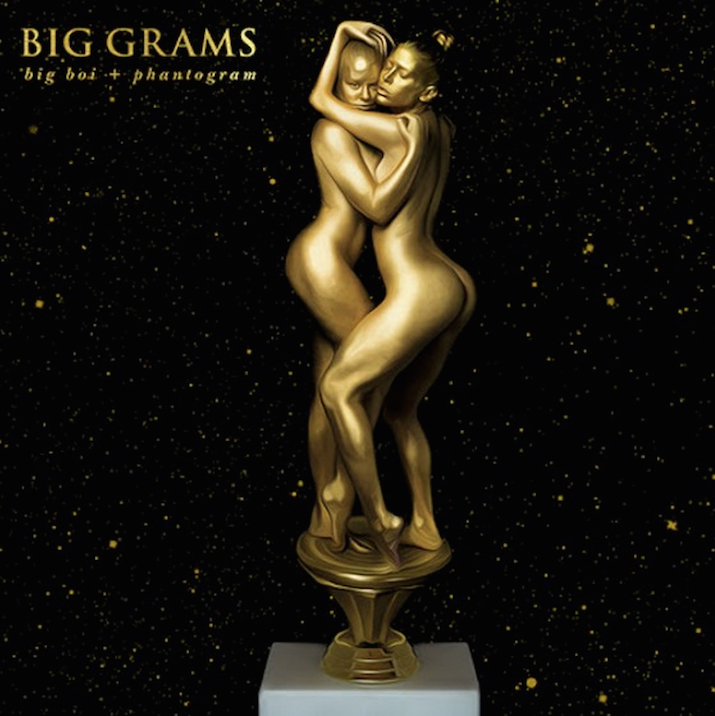
Big Boi and Phantogram Play to Each Other's Strengths on 'Big Grams EP'

Music ReviewJulian AxelrodComment

At this point, collaborations between artists from disparate genres aren’t a new concept. While a rapper remixing an indie band’s hit single used to be cause for confusion or celebration, these days it’s common for, say, Big K.R.I.T. to add a verse to an alt-J single. But these tracks tend to lack a sense of immediacy ­– more often than not, it sounds like the rapper just recorded a verse on the road and emailed it to the band’s manager.

Big Grams – the new collaboration between Atlanta rapper Big Boi of Outkast fame and New York electro-pop duo Phantogram – feels refreshing in comparison. Big Boi discovered Phantogram through a pop-up ad (making Big Grams the most compelling argument against Spotify Premium so far), before the trio tested the waters on three of the standout tracks from Big Boi’s 2012 album Vicious Lies And Dangerous Rumors.

It’s a testament to the versatility of both artists’ sounds that this new, full collaboration covers several different styles, never content to stay in one lane. Opener “Run for Your Life” features Big Boi maneuvering an anxious, clattering beat that feels nearly claustrophobic until Sarah Barthel’s soothing hook emerges like a sunrise on a dark night. Two tracks later, standout single “Fell In The Sun” lays Phantogram’s signature synths and horn samples over skittering hi-hats to produce a warm, exuberant summer jam that sounds like an ice cream truck riding on hydraulics.

Barthel recently told Rolling Stone, “The main focus of wanting to do this project was to do things that we wouldn't normally do anywhere else,” and the EP’s experimental streak extends to its guests: Rap legend 9th Wonder and dubstep wunderkind Skrillex contribute production to “Put It On Her” and “Drum Machine,” respectively, but these tracks don’t feel out of place alongside Josh Carter’s stylistically omnivorous production. Similarly, “Born to Shine” matches the aggressive energy of guests Run the Jewels while still feeling like a Big Grams song. Big Boi’s verse compliments the tone and theme of “Lights On” without feeling superfluous, while his playful sing-rap conversation with Barthel on “Goldmine Junkie” is one of the record’s most thrilling moments.

Not everything works – there are moments where Barthel’s hooks feel like an afterthought, and Big Boi has a tendency to fall back on familiar subject matter (if you don’t want to hear multiple references to Big Boi’s semen, Big Grams EP might not be for you), but the project succeeds overall because both parties understand each other’s styles and what makes them work, allowing them to play to their strengths while simultaneously exploring new, unexpected directions. Over the course of their debut EP, Big Grams prove that cross-genre collaborations are more than just a gimmick – as long as they’re done right.

Youth Lagoon Expands Sound And Soul On 'Savage Hills Ballroom'

Music ReviewSean McHughComment

If ever there were any doubt that Trevor Powers’ efforts as Youth Lagoon presented his own inner-workings in a genuinely vulnerable light, Savage Hills Ballroom acts as a visceral offertory to the remaining doubters.

Powers took up a two-month residency with Bristol, London based producer, Ali Chant (Perfume Genius, She & Him), recording and adapting his solitary narratives into more relatable motifs than albums past. It suggests an emotional actualization brought upon by the drowning of a close friend in Powers’ native Boise, Idaho in 2013. Understandably so, the death had great effect on Powers, propelling him to cancel a string of dates.

Where Youth Lagoon’s first two albums, The Year of Hibernation (2011) and Wondrous Bughouse (2013), played into the solitude of Powers’ being, Savage Hills Ballroom presents a more extrinsic aspect of Powers’ psyche. SHB’s opening track, “Officer Telephone” initially acts as a misdirect for the album’s course. The Wurlitzer-y ambling paired with Powers’ noticeably post-production-less vocals harkens to Youth Lagoon days of old with a slight twist. A minute into the track, however, Powers turns the track on its head in the best of ways with a psych-folk rock breakdown and layered vocals ushering in an irrefutably divergent Youth Lagoon, only marred by an abrupt fadeout come far too soon.

Highway Patrol Stungun” continues the startlingly in-your-face emotionalism that would seem to be the SHB norm. Powers offers unfamiliarly inclusive lines, such as “remember when no one danced the same / we all had a voice/we all had a name.” The composition of the track mimics the expressive lyricism, with less post-production wizardry and more warmth from strings and keys.

Other songs on SHB continue the remarkable deviation from introspective opining to highly associative accounts of what can only be assumed to be aspects of Powers’ emotional navigation since his friend’s passing in 2013. “The Knower” offers particularly familiar tones of sorrow and personal delusion: “oh, everybody wants to think they’re good at heart when they’re full of hate/oh, everybody wants to think their luck will change, when there’s no such thing.” Disconcerting realities of the everyman are prevalent throughout, but none more familiar than the opening line of “Rotten Human”: “How are we supposed to know what’s real?” Whether or not Powers’ intentions for lines such as the one referenced are intended to be highly relatable or not, the motif is beguiling nonetheless.

Appetizing lyrical and composition departures aside, SHB is not without the familiar dream pop musings that garnered Youth Lagoon its praise. Songs like “Doll’s Estate” and album closer “X-Ray” offer highly introspective glimpses into the soul of the album, despite both songs’ lack of lyrics.

Savage Hills Ballroom is an excitable coping mechanism framed with universal themes and existential crises. It is Youth Lagoon at its core, but vigorously distinct from preceding records. The change is good, if not grand, presenting Powers’ musings and idiosyncrasies in a more performative state.   

CHVRCHES Play It Safe On 'Every Open Eye'

Music ReviewSean McHughComment

Chrvches’ 2013 debut, The Bones of What We Believe, was a magnificent triumph in skirting boundary between indie and pop – it was palatable enough for the uninitiated to listen unperturbed, but layered enough for the most jaded of audiophiles to listen as a sort of guilty pleasure. And those hooks, by god, those hooks sent the album over the edge. With sharp barbs steeped in emotional defiance and vulnerability placed on top of intoxicating sans-guitar synth riffs, it was a throwback to the shoulder pad pop of the 80s and championing the new-age feminism of the modern era.

Tracks like “The Mother We Share” had become ubiquitous in all of media; the band received a menagerie of awards (2014 NME “Best New Band” included) and the hype train eventually led to a feature on a Hunger Games soundtrack. Despite having reached what most would consider being the precipice of mainstream success, Lauren Mayberry and her CHVRCHES cohorts (Iain Cook and Martin Doherty) continued to masterfully toe the line of synth pop.

Critical admiration and mainstream proximity notwithstanding, CHVRCHES’ ascension into the limelight was not without some conflict. In the latter part of 2013, Mayberry (a former journalist) penned an op-ed in the UK’s The Guardian addressing the perverse misogyny that “being a band born on the Internet” had garnered them during their rise. Mayberry’s op-ed went viral, virtually solidifying her as a torchbearer of gender equality and social justice.

Following their yearlong victory lap of headlining festival slots and blogosphere adulation, the Glasgow trio announced in December of 2014 that “work on album two starts in January (2015).” Fast forward a year and a half, and CHVRCHES announces they’ve completed the album, priming the release of Every Open Eye for September 25, 2015.

If there was ever any fear that CHVRCHES would elect to spurn the synth-pop anthems that made The Bones of What We Believesuch a massive success, they’ve been quelled in Every Open Eye. The sophomore effort plays like an extension of Bones, but not much more.

“Never Ending Circles” opens Every Open Eye with the same lyrical edge and expansive soundscape as any track on Bones – Cook and Doherty weave their razor layered synth compositions to accentuate Mayberry’s empowering hook “here’s to taking what you came for/and here’s to running off the pain.”

Following the robust first track, “Leave a Trace,” offers up another Bones-esque synth pop anthem. Arguably the album’s tent pole track, Mayberry’s hook of “take care to bury all that you can/take care to leave a trace of a man,” further asserting the lead singer’s role in empowering the individual.

The rest of the album begins to drop off in rather startling fashion, with each track maintaining the CHVRCHES sound of starry synth layering and clever lyricism with glints of irascibility, but as far as preserving the anthemic resonance of the album’s open, tracks like “Keep You On My Side,” and “Clearest Blue,” begin to sound more like Chrvches B-sides, begging the question of whether or not the trio’s limited respite between albums one and two had begun to burden band’s process.

Even with the formulaic familiarity of the middle of the album, Every Open Eye still manages to maintain the listener’s attention with tracks like “High Enough To Carry You Over,” in which Mayberry’s manic pixie dream girl fervor is traded for one of the two male member’s run-of-the-mill indie pop timbre. An admirable attempt in exhibiting some versatility, but the endeavor ultimately leaves the listener ready for Mayberry’s return. Maybe that was the intention, and if so, bravo.

The end of album simply comes and goes before it can even be acknowledged. “Afterglow” is the closing track and presents an intriguing departure from the rest of Every Open Eye. Simple in composition, but cinematic in scope, it presents a more intimate (albeit trope heavy) side to Mayberry’s lyrical prose – “With all of the light and shape/we take up our own space/I’ll find my own way back/back to the past tense.”

All in all, Every Open Eye leaves much to be desired in maintaining and elevating the complexities that were presented in The Bones of What We Believe. Yes, the infectious hooks and shoulder pad riffs are there in tracks like “Leave a Trace” and “Never Ending Circles,” however they're starkly lacking the same sense of urgency of CHVRCHES tracks past. While Every Open Eye is nothing less of an above average sophomoric effort, one could probably concede that CHVRCHES' enlivened zeal seems to have fallen off ever so slightly, as if the band were only biding their time.