TRANSVERSO

- A culture magazine reaching terminal verbosity -

The xx Straddles Sounds and Styles on Third LP 'I See You'

Music ReviewAndy TabelingComment

 I See You finds London-based trio The xx at a crossroads. After two records of subtle, R&B influenced indie pop, the group’s third album embraces some sweeping changes, but not as wholeheartedly as you might have expected from our first taste of the new project.

The record’s first single “On Hold” which dropped late last year appeared to announce some fairly pronounced changes over at xx HQ. Gone completely was Romy’s airy guitar work, replaced by thumping-bass and club beats, all over one of the most deliberate and pronounced samples of either the group, or producer Jamie xx, has ever worked with. The announcement appears a slight red-herring - while sample work finds its ways into a few of the tracks on I See You such “Lips” or “Say Something Loving," “On Hold” is by far the most dramatic example. While second single “Say Something Loving” begins with an Alessi Brothers sample, it occupies a small, tidy space at the beginning of the track. What follows on “Say Something Loving” is a more successful model of what I See You sounds like, which appears more an experimentation with minimalism and maximalism, and how they fit into the xx’s model of songcraft, rather than a pronounced sonic shift.

Perhaps I See You is better for it. Contrasting the danceable club beat of “Dangerous” (a track seemingly ready for alternative radio airplay and FIFA title screens) with the minimal, gorgeous “Performance” leads to the record feeling like a dynamic, fluid piece where the band both makes note of its stylistic roots while placing feelers out towards its future. By doing so, it avoids the most glaring of sins of their sophomore effort Coexist, which fell into the Room on Fire sphere of music criticism - like the Strokes record, Coexist didn’t necessarily fail on the part of its songwriting, but refused to make room for the more pronounced ideas that I See You embraces fully.

Along with the advances in sample-craft, thank in part to Jamie xx’s work on 2015’s dazzling In Colour, Romy also adds to the dynamism of I See You thanks to advances in her vocal work. No better is this present than in “Brave For You," a tender and slow ballad that demonstrates the best qualities of the record in full. Occupying the sole vocal part, Romy experiments with breathy, lonesome tone that adds perfectly to the song’s thematic content focused on familial loss. “Brave For You” stands as one of the most effective examples as well of The xx’s mastery of minimal lyricism. Romy and Ollie have never tried to overdue their words, and instead choose carefully worded, strong bits of humanity to make their love songs shine through. The simple association of courage and kinship feels relatable and tender in some of the most concrete terms the group has ever produced. “Brave for You” also demonstrates the album’s tension between minimalism and the maximalistic styles of In Colour. The track shifts between some of the most quiet and intimate moments, with huge crescendos in both instrumentation and volume that sound more like post-rock than indie R&B. This moment, all drums and reverb-soaked guitar, is one of the most exciting of I See You and should be a live highlight on the group’s upcoming touring cycles.

While Ollie has never been as diverse or interesting a vocalist as Romy, they still combine together for some interesting melodic moments, as often tracks on the record seem to hinge themselves on whether their melodies achieve the intimacy and dynamism that the more danceable tracks sometimes lack. While “Dangerous” possess a strong groove, the vocal melody’s relatively uninteresting journey leaves the listener feeling somewhat hollow, unready to embrace an xx that just wants to write indie club tracks. But on the sexy, intense “Lips," Romy sells the track so effectively through her doubled vocal-and-guitar work that the track would feel stale without them, like a Sade song without the Sade.

Where the record feels the weakest is where one of the extremes of style is embraced in totality. The record’s muted final third ends with “Test Me," easily the album’s weakest track, which is pallidly quiet and lacking tension that another quieter track like the noted “Brave for You” embraces in full. The ambient section feels far more suited for a brief outro than nearly half a track, and it feels an inappropriate ending for an album that represents the band’s growth in ability to negotiate between polar extremes of instrumentation, melody and energy. But when the band embraces these ideas most clearly, such as a track like “A Violent Noise," which bursts out of total silence with blast of synthesizers and guitar, the band feels so alive and ready to push themselves into previously unheard places. It remains to be seen until record four where the xx will move next, but this moment sees a relatively happy occupancy at the space in-between stylistic choices, happily dialoguing about where the band is, ready to experiment, try, and of course, love. 

The Orwells' Fourth 'Terrible Human Beings' Single Is a Tribute to Pixies Frontman Black Francis

New MusicVincent BlackshadowComment

Photo by Yam G-Jun

Charles Thompson IV, 51, also known as Frank Black— formerly known as Black Francis— has finally been granted a song in his namesake, joining his fellow cult heroes Alex Chilton and Grant Hart. After ascending to indie-rock royalty as the potato-shaped Pixies frontman, he infamously faxed his bandmates their walking papers and quickly released two mammoth solo albums, 1993’s Frank Black and 1994’s incomparable Teenager of the Year. (As is tradition, these masterpieces have received only a fraction of the worship they deserve, but that’s another story.)

There are few better candidates for a Black Francis tribute song than Elmhurst garage-rockers The Orwells. The two-and-a-half minute dedication, like many of the band’s songs, has a very Pixie-esque flavor. However, it’s very clearly an Orwells song, right down to the celebration of youthful debauchery (“We should hit it / I think they called the cops”) and the catchy, melodic guitar lines.

“Felt long overdue that we paid him some direct respect,” guitarist Matt O’Keefe explains. “We’ve been ripping him off for years, hopefully this chips away at the massive debt we’ve got to him.”

Fans of The Orwells are hungry as hell - It’s been two years since the solid Disgraceland came out, and one can only spin “Let it Burn” and “Who Needs You” so many times. Thankfully "Black Francis" and the other three singles from their forthcoming LP Terrible Human Beings (due out February 17 via Canvasback/Atlantic), promise more lighthearted ass-kicking is on the way.

It’s about time.

Pre-order The Orwells' new album "Terrible Human Beings" to get "Black Francis" and 3 other songs instantly: http://smarturl.it/terriblehumanbeings Stream: http://smarturl.it/THBStream Merch Bundles: http://smarturl.it/theorwells.store Terrible Human Beings Available February 17th ► Subscribe to the channel: http://goo.gl/H6pxGr ► Follow on Tumblr: https://www.theorwells.com ► Like on Facebook: https://www.facebook.com/theorwellsband ► Follow on Twitter: https://twitter.com/TheOrwells

Listen to WHY?'s Second 'Moh Lhean' Single, "Proactive Evolution"

New MusicWeston PaganoComment

WHY? has followed their first Moh Lhean single "This Ole King" with a new lyric video for "Proactive Evolution" today, bringing us another step closer to the Yoni Wolf-led act's 6th LP which is due out March 3 via Joyful Noise.

The predominately percussive track is impeccably produced, the ending of which sees rolling electric guitar give way to a headful of Department of Eagles-esque background chatter. See tour dates and the video below.

From the album "Moh Lhean", released on Joyful Noise Recordings 3/3/17.

'Silence' Is an Emotional Journey From Unyielding Devotion to Despairing Doubts

TV/Film ReviewPatricia TancrediComment

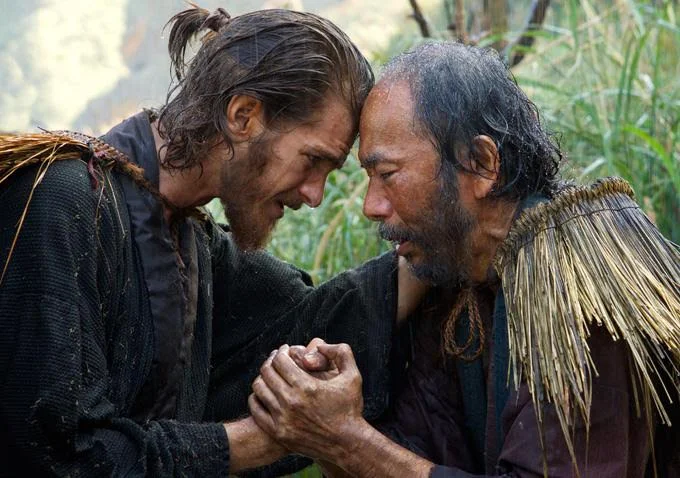
Martin Scorsese's latest film, “Silence,” a long, torturous, and melodramatic portrayal of a man’s spiritual journey, is finally getting an expanded release tomorrow after nearly 25 years in the making. The long-awaited passion project follows two Jesuit priests on their journey to locate their missing teacher, Padre Ferreira, who is rumored to have denounced his Christian faith for the “savage” Japanese Buddhism. Based on the 1966 historical novel “Silence” by Shūsaku Endō, Scorsese and past collaborator Jay Cocks adapt this renowned work for the screen starring Andrew Garfield as Padre Rodrigues, Adam Driver as Padre Garupe, and Liam Neeson as Padre Ferreira.

“Silence” opens with serene, misty visuals of Japanese nature followed by striking shots of dozens of Jesuit priests having boiling water slowly drizzled torturously over their naked bodies in an effort to have them apostatize. During this the last letter Ferreira sent to Portugal is read aloud to his former students Rodrigues and Garupe who commit to searching for their beloved mentor to prove that he has not betrayed their God. As the pair set through Japan, hidden and protected by Japanese villagers who are terrorized by the Japanese inquisitor for their Christian practices, their devotion is tested and they are pushed to extremes, tortured emotionally, physically, mentally, and most of all, spiritually.

As you listen to Rodrigues’s inner monologue, the audience is put in the unique position of feeling and experiencing his pain while simultaneously being limited to observing the action. Just as he cannot help the Japanese villagers without denouncing his God, the viewers also cannot do anything but watch in torment. Rodrigues’ journey from unconditional love for his God to the agonizing loneliness and betrayal he feels from both God and his own Judas, Kichijiro. Rodrigues’s torture becomes the viewer’s torture, and as he is asked what Jesus would do and if God would forgive him for denouncing him, the audience is asked “what would you do?”

This film, appropriately titled, is chilling with its absence of sound. From beginning to end we hear only the ambient noise of nature occasionally mixed in with the sound of burning flesh, sizzling water, and the cries and screams of the tortured. This is intentional, and its silence combined with its length creates an arduous and brutal experience. In one of his lowest moments, Rodrigues prays out to God, “The weight of your silence is terrible,” a line so heavy your heart sinks into your chest and so perfectly captures the essence of the film.

Mexican cinematographer Rodrigo Prieto, who is no rookie when it comes to shooting political and religious themed films (Frida, Comandante, Persona Non Grata), creates shots resembling the emotional and dynamic paintings of the Baroque Era. Famous for its religious themes and its depictions of Catholic saints and martyrs, Prieto turns scenes of torture and suffering into dramatic, powerful, and poignant visuals resembling the paintings of Caravaggio and Bernini. The shots of the three Japanese peasants crucified in the ocean as the rising tides pelted them into unconsciousness or families bound by straw and set aflame for practicing Catholicism are as serene as they are agonizing and unbearable. The use of the earth and its elements as means of torture is a reminder of the power of nature and how God’s creations can be used by humans against one another.  

Just as these images draw inspiration from Baroque art, Garfield and Driver’s frail figures and angular features parallel the paintings of the Byzantine era. The preparation for the role was so intense that Driver dropped 51 pounds to achieve this Byzantine look. Throughout the film, Garfield as Padre Rodrigues begins resembling the image of “White Jesus” common in western religious art so much that he even imagines his reflection transforming into that of Jesus himself. This is a perfect example of his character’s arrogance and belief that his religion is the one and only truth.

As a film that does not pass the Bechdel test, casts three white English speaking actors to play Portuguese missionaries, and centers around the physical and spiritual invasion of a foreign country told from the point of view of the Jesuit priest trying to impose his truth on vulnerable peasants, Silence does teeter on the fence of the “white savior” trope. Normally the inconsistency of the Portuguese accents would be off-putting, but the film’s focus still explores the imposing of Western beliefs and traditions on a country that already has its own deeply rooted culture in an outstanding way, resulting in a dark and torturous film that should not be missed.

RTJ Return with the Politically Antagonistic and Ominously Tense ‘Run the Jewels 3’

Music ReviewEzra CarpenterComment

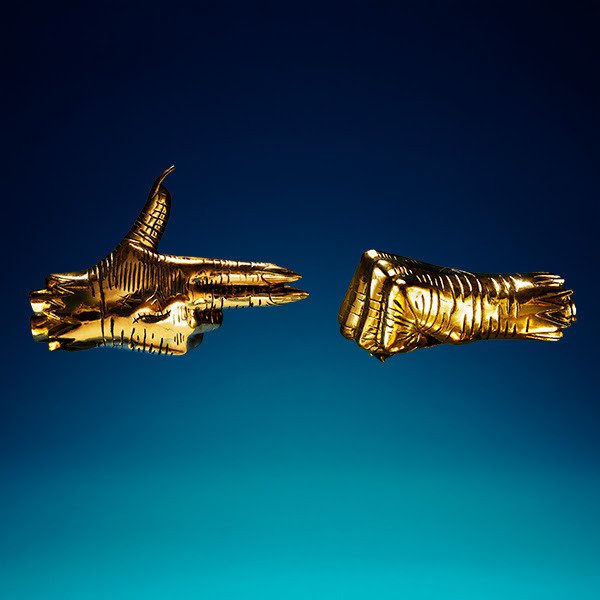
At the culmination of one of the most culturally and politically confounding years in American history, one thing remains obvious – Run the Jewels’ feverish energy is capable of sustaining the duo as hip-hop’s foremost political tour de force. Their relentless energy aside, the past year has undoubtedly taken its toll on rapper/political activist Killer Mike and his cohort El-P. While the fervor and angst which marked the genius of their breakout album Run the Jewels 2 has maintained, this energy has taken new form. Whereas Run the Jewels 2 was the left-wing cynic’s cathartic explosion, Run the Jewels 3 is about the turbulence of tension swelling beneath the surface of a brooding and uncertain political moment.

The rap duo’s third eponymous installation is a thesis on their politics, brimming with the sarcasm and humor that colors their wit and socio-political consciousness. Lyrically, Killer Mike and El-P are pristine, emphatic, provocative and earnest. Replete with impressive internal rhymes, their verses alternate with the same chemistry they discovered in their sophomore release and they communicate their ideas with an urgency as volatile as the political change of guard. RTJ3 begins with “Down,” a lament of the impoverished conditions of their lives prior to RTJ’s success. The song’s woozy synth instrumental feels spatially distant and pairs well with the dreams of socio-economic ascension sung in the chorus: “But even birds with broken wings want to fly.”

The song precedes the album’s first-released single “Talk to Me,” which garnered wide-spread notice for its pointed insults: “Went to war with the Devil and Satan / He wore a bad toupee and a spray tan.” The sequencing of these two songs is prudent and honest; the album begins at a point of vulnerability before reinvigorating and remobilizing the audience against political corruption. “Talk to Me” recapitulates the past year’s political context while outlining RTJ’s unapologetic brand of politics. “Born black / That’s dead on arrival,” Killer Mike raps, “My job is to fight for survival / In spite of these #AllLivesMatter-ass white folk.”

The album’s lyrics speak generally on RTJ’s shared political outlook, but Killer Mike does not shy from the specific experiences he had while supporting Senator Bernie Sanders’s presidential campaign. On “Hey Kids” Mike defends his support for Sander’s proposed tax increase on the wealthy, rapping “… got big ideas, got plans to rob / Any Rothschild living, Bill Gates, and the ghost of Jobs.” His verse on “A Report to the Shareholders" includes the lines “Choose the lesser of the evil people / And the devil still gon’ win” and “Ooh, Mike said ‘uterus' / They acting like Mike said ‘You a bitch.’” The latter refers to Killer Mike’s controversial reference to activist Jane Elliott, who said “A uterus doesn’t qualify you to be president of the United States.” Killer Mike stands firm behind the assertions he made as a Bernie Sanders surrogate and spares none from a well-crafted diss.

When Run the Jewels 3 isn’t a manifesto, it is humorous braggadocio laced into bass-heavy instrumentals that glimmer with disorienting synths. Its features are potent and carefully selected. Danny Brown begins the new year as successfully as he ended the last one with the critically acclaimed Atrocity Exhibition. Brown’s eccentricity and charisma render him a perfect RTJ  collaborator and his guest feature on “Hey Kids” supplements the album’s edge and personality. Rapper Trina provides the assertive hook on “Panther Like a Panther” – a welcomed return to the riot-inciting intensity of RTJ2. Elsewhere, Kamasi Washington provides a melacholic saxophone backing to the chorus on “Thursday in the Danger Room” and Rage Against the Machine frontman Zach de la Rocha anchors the album with the closing verse on “Kill Your Masters.”

Run the Jewels 3 is such an astute examination of recent politics that it becomes difficult to imagine Run the Jewels outside the context of an election year. Their confrontational and steadfast progressivism and their crude but clever comedic sensibility yield an album that perceptively chronicles a time of uncertainty, discontent, and divisiveness. They are rap’s best active duo and best political antagonists and yet, they remain focused on the collective welfare: “Not from the same part of town / But we both hear the same sound coming,” El-P raps on “A Report to the Shareholders,” “And it sounds like war / And it breaks our hearts.” With RTJ3, Run the Jewels have captured the zeitgeist of the past election year’s hysteria. It is a call to action, a political doomsayer’s passionate monologue to an uneasy crowd, and a fire that will burn in your belly.

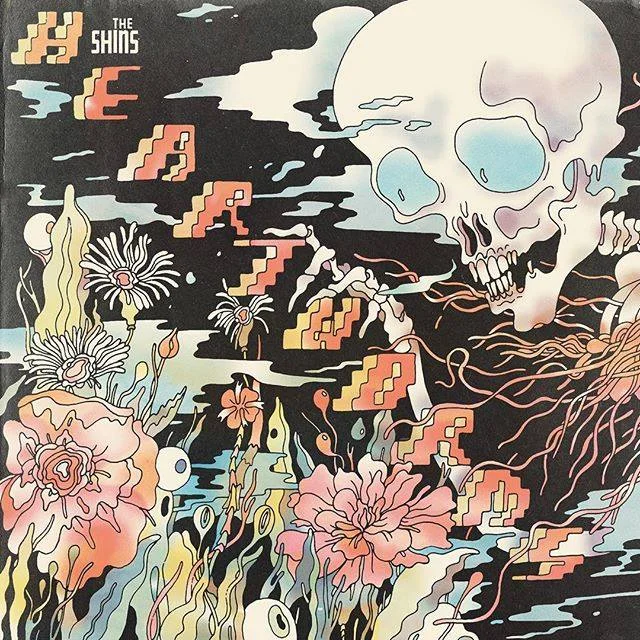
The Shins Announce New Album 'Heartworms,' Release Tour Dates and Second Single "Name For You"

New Music, Music NewsWeston PaganoComment

Sometimes it's amazing to reflect on how abstract and seemingly random band names become unquestionably normal to us over the years. We give no second thought to Spoon being a music group first and a utensil second, and the oddly conflagrant face value of Arcade Fire is but a distant memory.

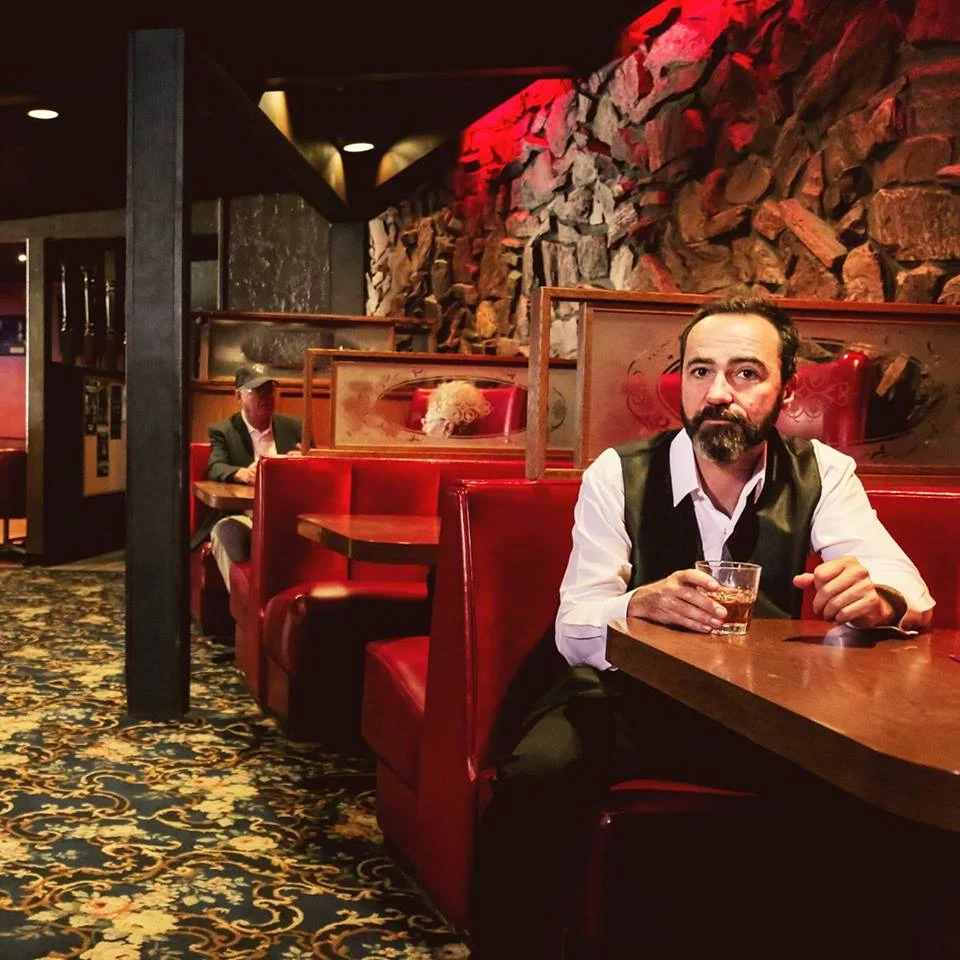
So too with The Shins, about as veteran an act as the indie circuit gets with any remaining relevance, can we take a moment to smile at their curious name with fresh eyes. "What's in a name?" is also the repeated question James Mercer asks in "Name For You," the second single from their finally announced fifth LP Heartworms.

Following "Dead Alive," "Name For You" is a sunny track dealing with labels and societal pressures on women today that does what Mercer does best; combining depth in meaning with a flawless pop exterior. There's still no release date, but the forthcoming record due out this year via Columbia now has cover art and some supporting tour dates, both of which you can find below after pressing play.

Pre-order HEARTWORMS: http://smarturl.it/Heartworms Follow The Shins: http://www.theshins.com http://www.facebook.com/theshins http://www.twitter.com/theshins http://www.instagram.com/theshins

Dirty Projectors' David Longstreth Is at His Most Isolated and Brooding on New Single "Little Bubble"

New MusicWeston PaganoComment

Following the biting first taste of new music from Dirty Projectors that was "Keep Your Name," David Longstreth has released a second single from his still unannounced forthcoming release.

"Little Bubble" explores R&B-leaning tones with gentle piano and violin instrumentation over lines as bare and dark as "I wanna sleep with no dreams / I want to be dead." Alternatingly introspective and aimed outwardly to, assumedly, former partner and bandmate Amber Coffman, Longstreth both deals in themes of isolation and continues to be the only musician credited on the tracks.

Somewhat less cerebral and glitchy than usual, "Little Bubble" has an apparently solo Longstreth at his most straightforwardly brooding, and while Dirty Projectors are keeping the details close to their chest so far, it seems safe to say there is more to come in 2017.

Dirty Projectors - Little Bubble (Official Video) Stream Little Bubble: http://smarturl.it/LittleBubbleStrm Download: http://smarturl.it/LittleBubbleDL Directors: David Longstreth & Adam Newport-Berra Production Co: Ways & Means Executive Producers: Jett Steiger & Lana Kim Producers: Rachel Nederveld & Sarah Winshall DP: Adam Newport-Berra Creative Consultant: Elon Rutberg Production Designer: Almitra Corey Editor: Sean Patrick Leonard Colorist: Kristopher Smale (MPC LA) Color Producer: Rebecca Boorsma (MPC LA) VFX: Stephen Pagano 1st AC: Sarah Lankford Drone Operator: Mike Bishop Hair & Makeup: Teresa Dorothea Production Assistant: Major Dorfman For more Info visit http://dirtyprojectors.net/ http://vevo.ly/p9aMdh

'La La Land' is a Fleetingly Charming But Painfully Dull Ode to Old Hollywood

TV/Film ReviewEthan WilliamsComment

From the incredibly showy opener and opening titles that boldly declare "SHOT IN CINEMASCOPE," it’s almost immediately clear that something feels just slightly off in Damian Chazelle’s sophomore follow-up to the angst-ridden Whiplash. These commuters in downtown L.A. jumping on their parked cars certainly act like they’re in a classic Hollywood musical and the camera certainly follow them as if they’re in one, and yet this number does nothing to charm or entice you into feeling the waves of nostalgia it’s meant to evoke.

This forgettable tune is followed by another, this time sung by star Emma Stone and her girlish cohorts all bathed in technicolor light and garbed in flashy colors meant to evoke memories of superior films such as The Umbrellas of Cherbourg or An American in Paris but again failing to spark any sort of charm or delight those films are renowned for. Chazelle keeps the camera rolling and spinning to wow the film geeks, but it ultimately feels so performative in a way that’s aping classics rather than evoking them.

And yet by some small miracle, the film begins to click when jazz pianist Sebastian (played by ultra-charmer Ryan Gosling) begins his half of the tale. A scene where Gosliing’s free-jazz roots and sensibilities clash with his employer’s (played by Whiplash villain J.K. Simmons) desire to keep it simple, stupid is one of the movie’s rare moments of real charm and musical fun.

Subsequently when Gosling and Stone meet at an '80s themed party a few scenes later, it feels as if the two stars’ potent chemistry and charm is going to be enough to carry La La Land through the bland songwriting and uninvolving story. Their tap-dance routine against a scenic Hollywood skyline is probably the closest the film can get to actually nearing the grace of a Gene Kelly or Fred Astaire film’s essence.

But this grace quickly becomes short-lived as it becomes imminently clear that the stars’ chemistry simply can’t prop up this two hour-plus exercise in nostalgia-baiting. The romance blossoms pretty quickly, so instead of a familiar boy meets girl tale, the story starts to revolve around two people so hopelessly annoying in their desire to perform their art like in the “good ol' days” that you begin to beg for these characters to break up simply so the film might actually become about something interesting again.

Sebastian’s desire to build a jazz club with real integrity, which initially felt like an innocent jab at how self-serious jazz purists can be, is actually in fact treated as the ultimate stake for this character’s arc. When Sebastian decides to get an actual steady-paying job any musician would kill for, the film treats this as a tacky betrayal of his “pure” art form and inexplicably wants to punish Gosling’s character for daring to step outside his freeform-jazz sensibilities. (And on that note, are we seriously supposed to hate John Legend’s music in this film? He’s meant to be the tacky antithesis to pure jazz but they actually give his band some of the more enjoyable music here.)

Ultimately every bit of aesthetic La La Land appropriates from infinitely superior and more sincere films simply serves as glorified window-dressing to a boring, cold and ultimately joyless reworking of Hollywood tropes without any kind of story to hang them upon. It practically begs the viewer to take it so seriously that it becomes near laughable “Look at these posters from old movies! The long takes! Hey remember CINEMASCOPE?! They shot Rebel Without a Cause in CinemaScope and we even have that in our movie! *wink wink* Are you not entertained??” the movie practically screams at you. The musical setpieces are neither frequent enough nor impressive enough to justify such a bloated runtime and despite its glorious ending and one (count it: ONE) impressive song, this facade is ultimately about as sturdy as a Hollywood backlot: push on it a bit and it topples spectacularly.

I won’t be surprised at all to see La La Land taking its victory lap around awards shows this season, because there’s nothing Hollywood loves more in an awards darling than a bout of self-congratulatory backpatting about its own legacy (see: The Artist), but you can certainly expect it to be forgotten about this time next year.

Exciting 'Rogue One' Admirably Bridges Gaps, Fills Plot Holes in Star Wars Universe

TV/Film ReviewWeston PaganoComment

[This review contains spoilers. But, come on, we all know how this one ends anyway.]

You have to admire Star Wars for making an entire film just to fill in a plot hole from 40 years ago.

Why would they make the Death Star with such a obvious and silly weakness? It’s a question Star Wars fanatics whispered (and Star Wars detractors shouted) for years, and now we finally have an answer. Built around the Death Star’s origin and the endeavor of revealing and understanding it, Gareth Edwards (Godzilla)’s Rogue One: A Star Wars Story predominately follows the quest to steal and transmit home the battle station’s plans and the surprisingly nuanced dynamics behind them. Without giving too much away, in doing so it includes what might be one of the light side / dark side transitions with the most humanizing depth in the entire series.

Whereas last year’s Episode VII: The Force Awakens at times watched like a tired reboot of Death Star III, Rogue One manages to combine the inherent nostalgia and predetermination of a prequel into something almost paradoxically fresher. You know the conclusion from the start, but the thrill of figuring it out along the way feels new enough to make you forget, and it’s justified by being a clarifying look into the past, not a repetition of the future. The ease with which longtime fans will be able to use Rogue One to introduce younger fans to the original trilogy is also a romantic touch as well, as the films connect nearly seamlessly, and, despite there being not one lightsaber on lightsaber battle in the full 133 minute runtime, and despite stealing a glorified flash drive being a far less explosive end goal than destroying the Death Star, Rogue One undoubtedly does enough to bring in new fans while satiating the old. After all, desperately attempting to connect to a network with which to transfer files is an amusingly 21st century problem for “a long time ago…” 

When discussing the cast it’s important to first note that while Rebel Alliance leader Mon Mothma famously claimed, “Many Bothans died to bring us this information,” when discussing the Empire’s plans for a super weapon in the original trilogy, contrary to popular confusion this actually took place in Return of the Jedi regarding Death Star II, and is not in reference to the trials and tribulations depicted in Rogue One. Therefore, while there is perhaps a disappointingly light representation of non-human characters, the lack of furry spies capable of invisibility that has been bemoaned by classic fans is not actually all that contradictory to whats canon. (New directors and writers have the right to stamp a healthy originality on the project, but come on, it wouldn’t have hurt to throw a few Bothans in there.) These, these are the “rebel spies” mentioned way back in the very first crawl in ’77.

But how do you create character development in a story in which, from the beginning, it’s pretty clear none of the characters will survive due to none of them appearing in any of the four chronologically subsequent movies? Well, in some cases you don’t. Much of the diverse cast, including the blind martial arts master type Chirrut Îmwe (Donnie Yen), the deadly warrior Baze Malbus (Jiang Wen), the Imperial pilot defector Bodhi Rook (Riz Ahmed), and the sardonic reprogrammed Imperial droid companion K-2SO (voiced by Alan Tudyk), are explored or grow very little if at all through dialogue often unremarkable beyond quips, and some (Îmwe and Malbus) die in predictably overdone action movie fight scenes that cheapen their existence even more than their underdeveloped beginnings.

That being said, it’s easy to imagine the film dragging had much more detail been added to people who, ultimately, leave the stage as quickly - and, in the big picture, somewhat insignificantly - as they come. The Force sensitivity of Îmwe, for example, can read as both an intriguing inclusion in a Jedi-purged world that showcases the countless disparate incarnations of The Force beyond its popular lightsaber-wielding polarization, or as a lukewarm substitution for the only film in the entire series that lacks a single Jedi presence and only barely shows any of the Sith at all either. Main protagonist Jyn Erso (Felicity Jones), however, does well in following up The Force Awakens’ introduction of strong female leads to the Star Wars universe while rebel assassin Cassian Andor (Diego Luna) offers a strong foil without succumbing to any romantic predictabilities.

Many of the film’s biggest flaws tie into the aforementioned action movie trope traps, but the majority were previously present through the Star Wars universe and are being faithfully continued here. For example, AT-ATs are still entirely inefficient, uselessly lumbering objects that cannot justify their production with a couple cannons on the head of an unnecessarily large elephant body, especially considering they struggle to hit even fleeing soldiers running in a straight line below them. (Also, if X-Wing fighters can destroy them so easily, where were they during the battles on Hoth? But I digress.)

On the flip-side, Rogue One also surprises with one of the most clever tactical moves ever shows in a Star Wars battle, with the Rebels using a ship as a tugboat to push a disabled Star Destroyer into another and, finally, into the shield generating station. Similarly, the detailed destructions of the Death Star’s first targets, merely whole cities on Jedha and Scarif, hit harder than the quick death scene of the entire planet of Alderaan in some ways, much like an intimately visualized paper cut might create a more visceral sensation of pain than a basic gunshot shown on a wide angle. Still, with most deaths coming from blaster fire or only alluded to, there is very little actual pain shown at the scarring levels of writhing under Force lightning or lightsaber lacerations, making the claims of Rogue One being the least child-friendly episode largely unfounded when if anything the opposite seems more true.

Fan service is present in the brief but notable glimpses of C-3PO and R2-D2 (rest in peace, Kenny Baker) and in trivial bits such as with the blue milk first seen on Tatooine and (a deep cut) the reappearance of Ponda Baba and Colonel Evazan, whom extra-dedicated viewers may remember as the bullies who harassed Luke in the Mos Eisley Cantina much like their passing altercation after coincidentally bumping into Jyn and Cassian on Jedha seven movies later. Most impactful (though setting a controversial precedent), however, is the CGI-assisted representations of past faces not as easily replicated; a young-again Princess Leia’s closing words and Grand Moff Tarkin’s (also rest in peace Peter Cushing) several reappearances were crucial to the storyline and benefitted greatly from the unavoidable awkwardness that comes from a different actor taking one out of the magical world created by cinema.

The modern ability to render gorgeous scenes from Scarif’s lush landscape all the way up to the impressive shield setup and space battle above it makes Rogue One a film you can't tear your eyes away from, yet the subtle reminiscence of Edwards pushing extras to grow out their mustaches and sideburns in the ‘70s style of the OT gives the flashy exterior an admirable authenticity. One area in which the film inexplicably misses an easy crowd pleaser? No opening text scrolling through space.

In an age beset by international terrorism and unrest in the Middle East, the depiction of Saw Gerrera (Forest Whitaker)’s splinter rebel faction veers so close to ISIS or Al Qaeda that it becomes impossible to ignore. The desert setting, guerrilla tactics, Islamic-style attire, and “militant,” “extremist,” and “insurgent” labels forge an undeniable connection, further deviating from a good versus evil simplicity while fueling the devil’s advocate thinkpieces about the Rebel Alliance and the Jedi who fight with them being anti-hero religious extremists within a terrorist organization. With this Rogue One does well to make an otherwise opaque conflict increasingly complex, interesting to dissect, and in some ways, realistically relevant.

Furthermore, the revelation that the Death Star’s planet killing strength is derived from Kyber crystals, the same source used in lightsabers and adorned on Jyn’s necklace, is a powerful poignancy that subtly sums up the duality of the force. That which creates light also fuels darkness and can be exploited by both simultaneously - just like The Force as a whole and, as discovered later on, specifically the Death Star’s plans themselves.

In many ways, being an anthology film unbound by linear trajectories into the unknown or being tasked as the first reboot of familiar characters gave script writers Chris Weitz and Tony Gilroy a benefit The Force Awakens didn’t have. That being said, The Force Awakens also has the benefit of the doubt in needing to be judged as a part of the trilogy it has begun, whereas Rogue One was limited to completing its cast’s brief, and comparatively shallower character arcs in just over two hours. Ultimately, Jyn and Cassian will never reach the canonical importance or popular staying power as Daisy Ridley’s Rey or John Boyega’s Finn, but their role in the Star Wars universe may well have proven more important. In any case, Rogue One couldn’t rely on the crutch of uncertainty - it needed an ending. What we get is overall a satisfactory one, not least when considering it begins the most beloved movie trilogy of all time.

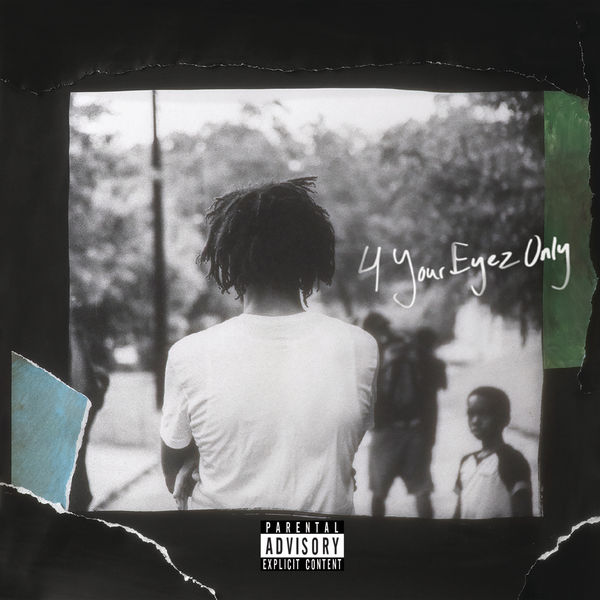
'4 Your Eyez Only' Sustains J.Cole's Profitable Position in Hip-Hop

Music ReviewEzra CarpenterComment

“Double platinum, no features,” the adage goes. It is the latter’s absence of association, however, as opposed to the commercial success presented in the former, which has kept J. Cole from falling the way of his mixtape heyday peers Wale and Meek Mill.

As divided as most hip-hop fans are about J. Cole’s music, it is difficult not to wish him success. His humble and sincere persona, substantiated by chance encounters with him on local bus routes and his bike commute home, have rendered him the most “likable” person in hip-hop. With J. Cole we have a different hip-hop figure. Where an artist like Kendrick Lamar is likely to glean over the heads of a community which elevates the likes of Lil’ Yachty and Lil’ Uzi Vert into the upper tier, J. Cole is able to engage the masses in a discourse on politics, social issues, and virtue.

J. Cole’s prowess as a producer revealed itself well before he attained his double-platinum status. Hits like “Power Trip” and “No Role Modelz” demonstrated the work of a creative mind with an innate ability to contort the popular instrumental palate and appeal to bread-earning demands of airplay. In this sense, J. Cole has been something of an oxymoron – a hit-maker with a live performance interspersed with sermons speaking against materialism. As endearing as these qualities are in J. Cole, it is a wonder that his lyrical substance has failed to match the quality of his instrumental production or his maturely grounded worldview.

4 Your Eyez Only acknowledges the fact that J. Cole connects best with fans on a personal level. From the album’s beginning and onward, he sings with an earnestness which doesn’t indicate a strain to achieve scintillating R&B vocals, but establishes vulnerability. His raps refer onto his signature range of swaggering self-assurance and endearing portrayals of insecurity. As a whole, the album’s instrumentals are more consistent than 2014’s 2014 Forrest Hills Drive. J. Cole laces boom-bap percussions with glitch-synth accents and motifs to create a body of work that is approachable and easy. The album shows his aesthetic not as improved, but refined. Nowhere on it do we hear J. Cole relate the world to frigid temperatures with his overused trademark ad lib. Instead, we are given a more patient and well-portioned album which looks to sustain listeners from beginning to end.

Returning J. Cole fans will find themselves satisfied with anthemic hits like “Immortal” and “Déjà Vu.” The latter’s production reveals the live performance sensibility that J. Cole has picked up in his past year on the music festival circuit. The song begins and ends with a call-and-response fanplay which has the makings for great performative moments, but does little to stimulate any provocative considerations. Superficialities aside, “Déjà Vu’s” trap percussion and Rich Boi-esque post-chorus make it a mainstay for the late night car ride or commute home.

An undeniable highlight, “Neighbors” contemplates racism through an anecdote inspired by true events. Its woozy, molasses-thick instrumental evokes early A$AP Rocky while raising interesting dilemmas of black success and stereotypes. The album’s intellectual high, “Neighbors” finds itself alone as a moment of progression for J. Cole. The rest of 4 Your Eyez Only fails to match, lyrically or instrumentally, the substance of J. Cole’s close reading of race relations on the song and can at best be considered superficial, tried, and tired.

Were J. Cole to give into the fixations of luxury and excess of his lesser popular peers, he may not be as prominent a figure within the genre as he currently is. His character yields no indication of him doing so, but the risk he currently runs with 4 Your Eyez Only is stagnation. 4 Your Eyez Only provides nothing more and nothing less than what fans have come to love about his music. It shows a successful J. Cole inhabiting the profitable and comfortable place in hip-hop he has carved out for himself and does little to reinforce that position to endure the long-term.