TRANSVERSO

- A culture magazine reaching terminal verbosity -

WHY? Announces New Album, 'Moh Lhean,' Drops Lead Single, "This Ole King"

Music News, New MusicWeston PaganoComment

Yoni Wolf and co. are back - WHY? will officially follow up 2012's Mumps, Etc. with forthcoming full-length, Moh Lhean, via Joyful Noise on March 3, 2017.

The first album recorded in Wolf's home studio since his 2003 debut, Oaklandazulasylum, and his first release since Testarossa, his side-project collaboration with Serengeti earlier this year, Moh Lhean looks set to be a forward-facing return to some familiarity.

The new record, co-produced by Wolf's brother Josiah, is introduced by lead single and opening track, "This Ole King." Filled with warm acoustic and xylophone melodies and vocal echoes, it's a lush track on the more organic side of WHY?'s instrumentation and delivery. "This ole king will be rising," Wolf sings with a somewhat uncharacteristically simple optimism. Thankfully the sentiment seems autobiographical.

Check out the the track and tour dates below. You can preorder Moh Lhean here.

From the album "Moh Lhean", released on Joyful Noise Recordings 3/3/17.

Why Urge Overkill's 'Saturation' May Be the Most Misunderstood Album of Its Generation

EditorialVincent BlackshadowComment

Urge Overkill’s Saturation may be the most-widely misunderstood album of its generation. The interweb backhanded it (“stadium rock by clever post-punkers” or “a perfect swaggering blend of arena rock and power pop”) with local Chicago critics similarly dissing it (Steve Albini called them “frat rock” in his retort to Bill Wyman including it in a top 10 list for 1993, while Jim DeRogatis compared the record to Weekend Warriors by Ted Nugent). Universally, the record has been dismissed as… Redd Kross. And I suppose if these armchair-rockers only listened to the first 30 seconds of the first song on every album they reviewed, they’d be right about this one.

Before we get into the musical genius of Saturation, I feel obligated to outline the Urge Overkill aesthetic that, after 30 years “together,” has been obscured by a lingering 90’s fog. It’s all clear now, though, and it’s easier to pinpoint the minuscule yet significant velvety nugget that Urge dropped on rock history. Consider this: Urge Overkill had the most punk-rock approach of any band in the post-Nevermind era.

Don’t believe it? I’m not surprised. The root of punk rock is non-conformity. Not political leanings, teenage angst or the chaotic or even systematic dismantling of various establishments. It’s all about refusing to do what everyone else is doing. The Ramones, Sex Pistols, Clash, Buzzcocks… they bled this music not to be popular or even minimalist, but rather to give their middle finger to Journey and Led Zeppelin. The route was minimalism, yes - and the result was popularity. But the motive was always non-conformity.

"Everything don’t need to be the same…"

Fast-forward 15 years, where the genre derived from punk is now “alternative rock,” and the biggest bands sport self-conscious stubble, baggy shirts and torn jeans. They sing about disillusionment toward whatever is handy— the music industry, the opposite sex, stardom, their own mortality. Pretty shallow shit, generally, although some of it is just great music.

Saturation Catch-Phrases:

“Attitude.”
“Don’t melt away!”
“Dumb song, take nine.”
“I wish the Z-ball was the sun…”
“I’m playin’... did you even hit record?”
“Is he on the clock or off the clock?”
“‘S TOO LATE.”
“Send in the butcher!”
“We’ve never recorded in the big leagues before…”
“Who played Judas?”
“You shoulda seen yo’ face!”

To put this in a light that even my musically-misguided peers will understand— you have your Cobains, your Vedders, Cornells & Corgans…and then there’s Nash F. Kato, Urge’s crooning, shade-wearin’, martini-swillin’ Iceman-slingin’ co-captain. If Nirvana and Pearl Jam were "modern rock," then Urge was "postmodern." From a purely aesthetic standpoint, they gave their (ringed) middle fingers to the guys that were giving their middle fingers to bigshots like Poison and Ticketmaster. Instead of writing them off as “Vegas revivalists,” critics might’ve considered them the hipster’s hipster, and farther into a punk rock personality than any Billie Joe Armstrong would ever be willing to venture.

"Come around to my way of thinkin'…"

Critics clued in on Urge’s tongue-in-cheek irony, of course. I’m not suggesting the band should have been taken seriously. At the same time, the DeRogatis’ and Wymans of Chicago failed to realize and perpetuate what was crucial about the band’s sense of fun. Even more damning, the greater critical community declined to validate Saturation as earnest alternative rock music.

So where does that leave Satch'?

There are a few Stonesy guitar lines, sure. There is that Doobie Brothers breakdown in “Erica Kane,” alright. And yes - it is fair to consider “Sister Havana” an anthem. A shouldabeenabonafide radio hit. But the songs owe just as much to Cheap Trick as “Smells Like Teen Spirit” owes the Pixies, or “Outshined” does Sabbath. “It’s a retro thing,” notes DeRogatis. What?! Listen to “Dropout,” or take a minute to find the bonus track, “Operation Kissinger.”

This record is 13 times as inventive as Ten or Siamese Dream. The atmosphere of Satch' owes a lot to the then-novel practice of pairing a directionless alt rock trio with a hip-hop production team. Phil and Joe Nicolo, professionally known as The Butcher Bros, make this album what it is. All of the sampling on the second side and the left-in mistakes throughout help Saturation transcend “rock album” status, emerging into “Warhol-esque pop spectacle” territory, as awol drummer Blackie Onassis once described it. It’s an art record, really-- and it’s a damn shame that few picked up on that...

What happened to Urge is bittersweet - though mostly bitter. It’s sad to think about a glum, dehydrated Nash Kato growing less sexy each year, as 1993 fades further into history and the Urge brand lives on through half-assed reunions and GenX nostalgia. But the attitude and music so impeccably and extravagantly displayed on Saturation are just as relevant now as they were when they were new. And if not, well, fuck. Still beats Weekend Warriors... 

Music video by Urge Overkill performing Sister Havana. (C) 1993 UMG Recordings, Inc.

Saturation: Song by Song

  • "Sister Havana": The best song of 1993, and one of the greatest of the entire decade. From hook-laden chorus to Pumpkins-esque sitar break… just a killer.
  • "Tequila Sundae": The brutal Hiwatt tone and flatulent bass synth give this one a very cool California feeling, but it’s actually one of the album’s weakest. It would make a pretty interesting Beck cover, however.
  • "Positive Bleeding": The Urge ethos. That slamming E chord in the second verse defines the song. Anyone who considers this similar to 70’s rock is either a fuckhead or knows some really good 70’s rock that we don’t.
  • "Back On Me": Many people’s favorite Satch' song. Sounds to me like a tame Nirvana impression.
  • "Woman 2 Woman": “Girl, what’s your sign? ‘Vagittarius,’ / But that’s not mine, so tell me you don’t want me no more.” A stage rush of hilarity, through the chaotic choruses and spoken-word sections. Brilliant
  • "Bottle of Fur": The album’s sexiest track, and also the most glam-rock. Complete with tubular bells and horn sections. Hubba hubba.
  • "Crackbabies": Just an absolutely wicked garage rock song. Note Kato and King Roeser’s studio mishap at the end - genuine or stilted, doesn’t much matter.
  • "The Stalker": One of the many inside references, addressed to a group of haters who terrorized Urge in their hometown, immortalized in this moshy, Bleach-esque sludger.
  • "Dropout": Yeah, this song is totally something off Highway to Hell. That is, if Highway to Hell had 90’s rap beats, a Bollywood soundscape, and beautiful lyrics and melodies from Onassis.
  • "Erica Kane": A manic punk slice of Husker Du-level aggressiveness and melody, followed by a great release in the loose bridge, which leads into a Mouldy reprise and then a snippet of… you guessed it, Hawaii Five-O!
  • "Nite and Grey": King’s finest contribution to the otherwise Nashier album, this song rocks in a catchy but very 90’s fashion. Track eventually fades into some memorable banter over the Mary Tyler Moore theme. Love is all around...
  • "Heaven 90210": A swoon-worthy, Strat-laden California poolside ballad. This song could be from 1971 or 2040 and no one would know the difference.
  • [Bonus Track] "Operation Kissinger": Good things come to those who wait (more than 20 minutes after “90210"). This extra adds yet another flavor to this rich cocktail of a record… the influence of The Butcher Bros. is evident and the piece matches the album cover perfectly. 

EDIT: We initially misattributed Steve Albini's "frat rock" comment (which was addressed to Bill Wyman) to Bill Wyman. Thanks for pointing that out, Bill.

Sykoya Combines With RJ Pickens for an Enticing Remix Of "Shiver"

New MusicNic Ten GrotenhuisComment

Chicago-based producer RJ Pickens has linked up with the London's vibrant indie pop act Sykoya for a remix of “Shiver," which originally appeared on Sykoya's Strange Night EP earlier this year.

The eerily beautiful vocals of frontwoman Anna Marcella blend excellently above the synth melodies and constant drum pulse while the electronic samples pair with their organic piano and bass to bring out a refreshing twist that makes “Shiver (RJ Pickens Radio Edit)” a track that you can dance to and also relax with at the same time.

RJ Pickens has been active in shaping Chicago’s dance scene with over 15 years of live DJ and production experience, during which he's supported Eric Prydz, Hernan Cattaneo, and Jody Wisternoff.

“Shiver (RJ Pickens Radio Edit)” is out today by Vested Recordings. Listen below.

Wild Beasts on English Expression, Carnal Desire, and How 'Boy King' Reconciles the Two

Music InterviewWeston PaganoComment

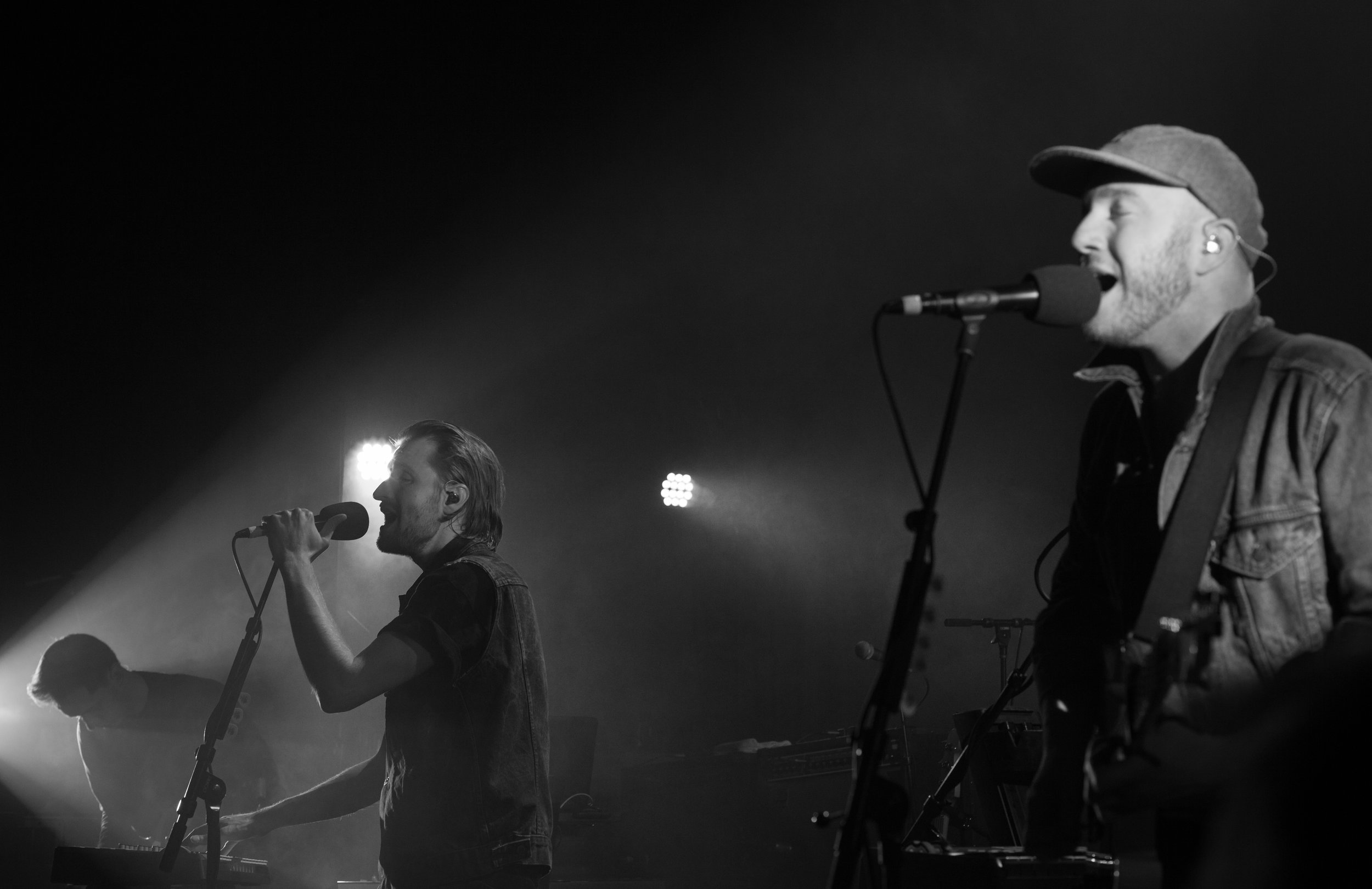
Photos by Andrea Calvetti (Above, from left to right: Tom Fleming, Ben Little, Chris Talbot, Hayden Thorpe)

"After five records there had to be an element of 'what the fuck?'" reads the press release that announced Wild Beast's latest offering, Boy King. The art rock four-piece hailing from Kendal, UK delivers that sentiment in spades on an album that sheds all that is calculated and coy for unabashed, knowing virility.

The day after the United States elected its own boy king, Transverso Media sat down with Hayden Thorpe and Tom Fleming, the vocalists and multi-instrumentalists who share frontman duties, to discuss English expression, carnal desire, and coming full circle in their combination of the two.


TRANSVERSO MEDIA: On “2BU,” one of Boy King’s best tracks, Tom sings “Now I’m the kind of man / Who wants to watch the world burn.” Have you been enjoying politics lately? 

TOM FLEMING: This whole record is a bleak response to a bleak time, really. I think that song in particular is about class envy in the UK, and a kind of destructive, masculine rage leading to absolutely nothing, which I think is a big thing on the record. [Before playing "2BU"] I actually shouted out in San Francisco, the last show we did, “This is for you guys, I want to bully the bully," but [I thought] that might be the last opportunity I got to do so, and it turns out it was, because [Trump] won. He’s not too bullied anymore, is he? [Laughs]

As a touring band from the UK, have you been affected by any of the political changes lately, from US visa policy updates to Brexit?

FLEMING: Well, nothing yet, ’cause [Brexit is] yet to happen, but it’s possible. We’ve lived our whole adulthood as free European citizens with essentially free movement and freedom to operate both physically and financially in other countries, and [could] live there if we pleased, and that might be under threat. So yeah, I guess in terms of impact it’s more psychological, but I think there certainly are a few parallels; If you look at a map of the US it looks very much like the Brexit map. It’s the same kind of resentment of political classes in our country that have led to most of the things in the country as well, and obviously in the States there are more international ramifications than the UK, but it’s still a dark time.

You often mention the English tendencies towards being apologetic with less emotional projection. American audiences, especially hearing Boy King, may not understand this background. Can you elaborate on that?

HAYDEN THORPE: I guess the album for a British band is quite forward. It’s quite unapologetic. It’s perception to a British person might be arrogance, but I think essentially it’s a broken heart record. There [are] two ways of responding to a broken heart, and in some circumstances that’s either to recoil in pain, or to kind of approach that broken heart with aggression and to kind of confront the world and to kind of express that pain in a bit more of a kind of an outward manner, and that’s kind of, in many ways, quite un-British. And the circumstances of us going to Texas at that time and where we were at in our lives and where I was at in my life and as people it was a pretty healthy dose of Americana, I think. I find it very nourishing and engaging being here how people act with one another; It’s so, for me, invigorating. In Britain you have a conversation with someone and in five minutes you will know their kind of class, their schooling, their financial position, and I guess maybe there [are] different codes in America for it, but certainly the expression of individuality here seems to be very much different in a way that being an outsider is nice, you know? I do think the healthier kind of America is very good to outsiders. Nerdiness and geekiness isn’t a thing in Britain, it gets beaten out of you at a young age.

FLEMING: [Laughs] I like to think our record is a pretty good typifying of that kind of pervy repression of the UK. There's a sort of calm surface, and what seems like a conservative outlook can actually be quite an odd place just beneath the surface, and it feels from the outside that America is much more of "This is what it is, fuck you!" which is fine, but the more I come here the more I realize I’m not from here. Even though it's familiar to me in certain ways it's definitely very, very different.

So is there a noticeably different reception to the record and the live show on different sides of the pond, then?

THORPE: Again it comes down to expression. British expression is sort of stiff upper lip; you don’t want to cruise too far outside the shallow waters ‘cause you might be seen as weird, you know? We made a career out of being weirdos, so we’ve always kind of ventured out into those waters, but you get the sense that here people are just a bit more vocal, both metaphorically and in speech.

FLEMING: [To] an American audience it takes the British audience maybe five minutes to get there to the same spot, the way America always turns up. And that’s not to denounce the British audience, it’s been amazing to us and it’s definitely our people as it were, but it’s just a completely different way of projecting.

THORPE: I’m kind of hesitant to talk in huge sweeping statements here because when we talk about America we’re talking about a thousand Americas, as is plainly apparent, and when we’re talking about Britain we're talking about many microscopic Britains that can really differ from town to town. Towns from coast to coast are a sort of ancient formation of towns; you can go eight miles and have a completely different accent, completely different food, and have a completely different way of being. We sense that ourselves, we play shows in the south of England and in the north of England it’s different, then you go to Scotland and it’s completely different again.

FLEMING: It does vary from town to town, and in Scotland, Glasgow is very different than Edinburgh, for example, and they’re like 30 miles apart.

One really unique place you've been is Texas, when you went to record Boy King with producer John Congleton (St. Vincent, The Walkmen, Modest Mouse, Spoon). Is it true he keeps a Grammy in his toilet?

FLEMING: He does, yeah. Knowing him I don’t think it’s an obtuse move, I think thats just where he has the space. He just works so hard all the time that he doesn’t really have the time to reflect on past glories. Obviously I think he’s done rather well as a result, he made a great record, so why not? But yeah, it’s true. 

THORPE: Yeah, I’d always beware of the gold disk in the work space. You don’t need that visual prompt.

FLEMING: Yeah, it’s fine to be proud of it, but you don’t need it where you work.

I hear a bit of St. Vincent in “Alpha Female”’s guitar. Is that his influence?

THORPE: Sure, I think by osmosis, for sure. She is a guitar hero in the classic sense, she’s sort of audacious and quite gifted in a quite visionary way, so absolutely. Actually we’re quite taken by the fact that we were using the guitar as a macho object but were inheriting so much from this woman playing; theres a natural shape to that especially with songs like “Alpha Female,” these sort of sickening slick lines. We’re talking about tools and machines here, that’s what we inherited. When you boil guitars down it comes down to electronics, and we kind of shared some of the same circuit boards, I guess.

Between “Tough Guy” and “Alpha Female” there are two incredibly exciting guitar solos that are highlights of the record, and they take on a sort of dueling quality back to back. Was that an intentional juxtaposition?

FLEMING: There is something in that, yeah. “Alpha Female” is maybe a bit more genuine, whereas “Tough Guy” is a bit more embittered. Like we were talking about it’s about taking that pain and shoving it deep, deep down and not showing any of it, and I think that’s sort of what “Tough Guy” is doing, whereas “Alpha Female” is a bit more positive. But yeah, certainly there’s always a play on gender going on in the record, and I hope people notice that the display of machismo is supposed to look like a performance, and not a very convincing one at that. And so the foreground of the guitars is very deliberate; let’s use them to play with that trope, let’s demonstrate that A) we can do that and B) that we know what we're doing with it.

Get My Bang” is about American consumerism, not sex per se, but as a single on an album as sexual as Boy King many are going to miss that. Is the interchangeability of these themes a statement in itself?

THORPE: It wasn’t so much American consumerism so much as just consumerism in general, in terms of we have Black Friday now in Britain. We inherited it off of you, but we took it gladly. It’s more about the sense of gratification and the unashamed lengths you will go to to seek that gratification, and in a suppressed society where, for good reason, you can’t kind of be cavemen and -women, it expresses itself in other pores. I just remember watching the Black Friday footage head in hands; people beating each other up for a flat screen TV, this is what western civilization has come to this end for? I just felt you are either not having enough sex or you’re not doing enough exercise, something has got to give here! [Laughs] That is not a healthy way, and I guess humans are bad at finding healthy ways of kind of getting out these carnal sensations ‘cause we’ve kind of been told the lot of them are sinful or unforgivable, and I guess that song is about stripping yourself of that inhibition and saying, “Fuck it, this is how I get off!” And that’s a song about self-interest, which is healthy and good for people to follow those self interests sometimes. For god’s sake, you need to release, you know?

Creating a record does seem marginally better than beating the shit out of someone in a Walmart.

FLEMING: [Laughs] Hopefully!

THORPE: I feel very privileged that we get a safe space where we can sort of act these things out. I mean, the stage is a fucking boxing ring; you come off and you do have s a kind of transcendental sensation. You feel bigger and mightier than you actually are, and therein lies a lot of the historical problems that musicians face with how am I supposed to quantify being, feeling like that guy, and shrinking to normal size again. There’s always a kind of navigation. 

Wild Beasts - Get My Bang (Official Video) from 'Boy King' - the new album out now. Order digital: http://po.st/BoyKingDL Order CD/LP/LPX: http://po.st/BoyKingStore Listen to Wild Beasts on Spotify: http://po.st/WildBeastsSP http://po.st/MyBangStream Directed by Olivier Groulx The video for 'Get My Bang' was shot in Belgrade and directed by Olivier Groulx (Arcade Fire, alt-J, Scott Walker) featuring vocalist Hayden Thorpe's twisted routine of Justin Timberlake-meets-Trent Reznor choreography.

Do you worry some people might completely miss the point of this record similar to how "All The King's Men" was misinterpreted at times?

FLEMING: Potentially. I think it’s been a bit more divisive than we appreciated. I think some things have been taken at face value which weren’t intended, but I think ultimately if you leave ambiguity in you have to trust people to get it, and I think it would be a big mistake to let the tail wag the dog, in that respect. Not to sound arrogant, but I think that, generally speaking, you trust people to sort out what’s what.

THORPE: I think it has in some sense but that’s okay, that’s sort of our job. You gotta hold your nerve at the borderland, and how else do you get the kick you get from doing what we do without that sort of sense of risk and danger?

FLEMING: There is a narrative that is fueled by the sort of self-reflecting echo chamber of social media that every artist has to think the same, that every artist has to be super right thinking [and] intersectional, and it can’t possible true. I think we’ve got a pretty impeccable track record in that regard, but people are very quick to jump on if they think something is kind of out of line. But there is a kind of satire going on.

THORPE: Well it’s a satire, but at the same time its a very heartfelt record, and that’s the only thing I can go back on. It’s my full heart, it’s not me trying to be clever, it’s not me trying to outthink someone, or trying to outsmart someone, it’s a heartfelt, true record. That’s the ultimate spine of it, and if anyone doesn’t feel that in their heart, then thats cool. I mean, I can’t make someone feel that in their heart. The analogy I always think of is when the plane is going down, you put the oxygen mask on yourself first; it’s like no, this is my medication, this is what I need for this sensation, this is my crisis, this is my oxygen mask, and if people don’t feel that that sort of suits their crisis or their place that’s totally cool. But I think one thing that it shocked people on that they maybe need to grow up with a little is that nice boys and girls like to do nasty things, you know? That’s just a fact of human nature, and I’m sorry if that’s a shock for you, I’m sorry if you have to find it out through us, but I tell you what, the internet is probably a far harder school than we are. [Laughs]

It’s interesting how in some ways there’s a sort of full circle in those lyrical themes from Limbo, Panto to Boy King, but the ways in which they’re conveyed and the music they’re set to have changed drastically.

FLEMING: I’m so glad you noticed the similarities between Limbo, Panto and this one. Some of the lyrics on Limbo, Panto could be on this one, which we didn’t really notice, and then we listened back and were like, “Oh yeah, that’s just the first record.” I think certainly the change in instrumentation and presentation has kind of been following our curiosity; we’ve had half an eye on what’s going on around us and half an eye on what we were going to do anyway, so we tried to incorporate stuff that without just kind of following trends and trying to hit every box that people expect us to do. 

THORPE: When we made this record first time round Limbo, Panto could’ve been this record, it’s just that we decided to turn left, and eventually we circumnavigated the abyss and came back to that point again. But I think we had to go that way round to inherit the craft and the deftness to pull this off, if you can say we pulled it off, and we obviously think we have, but…

FLEMING: [Laughs] That’s for you to decide.

THORPE: …to kind of keep the plates spinning that we’ve been spinning has taken a kind of an apprenticeship.

Obviously it’s still early days, but in moving forward do you think you’ll follow up Boy King with yet another left turn to continue reinventing, or do you find yourselves wanting to explore this direction a little longer? 

THORPE: It kind of feels like talking about breakfast with a mouth full of steak for dinner; there’s a sense of having to digest and metabolize what you’ve made. I think we have in some ways reinvented a method for ourselves. 

FLEMING: It always happens by accident, that sort of thing; we just realized the last couple weeks of recording, "Oh, we should’ve done this all along!" But, then of course, it would never be as good if you hadn’t, like [Thorpe] said, completed the apprenticeship.

THORPE: But every record anyone makes is a completely remarkable feat of human endeavor, you know? It takes a huge amount of things to align and to come together to get this shit into something kind of passable, so we're just kind of enjoying the fact that we’ve made something which we feel is kind of speaks for us in a life affirming way. I guess you’re looking to do something thats kind of life affirming, and taking this record out feels that way, which is how it should.


Boy King is out now via Domino. Read our review here.

Sylvan Esso Drops Glitchy Pop Single "Kick Jump Twist"

New MusicAndrew MeriwetherComment

After releasing the single “Radio” a little over two months ago, the Durham, NC based duo Sylvan Esso has dropped another thumping, pop-oriented groove. "Kick Jump Twist," like "Radio," begins with vintage, even nostalgic, synthesizers and samples. The bleeps and bloops are emblematic of Atari 8-bit videogames, and it’s hard not to imagine lead singer, Amelia Meath, punching hovering brick blocks with shimmering gold coins popping out.

This plunky beginning, however, quickly combines with Nick Sanborn’s quintessential production. The song masterfully builds, and in comparison to their first record, the latest singles of Esso demonstrate an evolution in composition. Esso seems comfortable with not giving the full drop till much later in the song, creating more complex layers of synths, and playing rhythms off Meath’s voice.

As of yet, there no definitive date for a new LP, but one imagines that with these new singles the sophomore album isn’t far off. You can, however, buy the two tracks out right now as a 12’’ via Loma Vista/Concord/Caroline International.

Listen to "Kick Jump Twist" below, and read our interview with Nick Sanborn here.

'Arrival' is a Conceptually Ambitious and Technically Sound Sci-Fi Story

TV/Film ReviewLuigi MorenoComment

Early film festival screenings of Arrival generated a lot of positive buzz for director Denis Villeneuve’s latest picture in the months leading up to its release, making it one of the more highly anticipated movies of the year. This, of course, led to some pretty sizable expectations; Plenty of people will go into this movie expecting something great and, for the most part, they will not be disappointed.

The central conflict of the movie is fairly straightforward; When twelve gargantuan alien spaceships land throughout the globe, several teams of experts are gathered to make contact with the beings inside of them. Arrival mostly focuses on the American team, led by linguist Louise Banks (Amy Adams) and physicist Ian Donnelly (Jeremy Renner). These twelve teams must work together to find a way to communicate with the aliens and find out the reason behind their presence on Earth.

Amy Adams delivers one of the best performances of her career as Louise, and that's saying something. She’s the emotional center of the film, and she carries this weight in a very understated fashion. Everything that the viewers experience is seen from Louise’s point of view, and a lesser actress could have been too over the top to be believable as this character. In a movie that almost entirely hinges on the viewer relating to the Louise’s mental goings-on, that would’ve been catastrophic. The supporting cast is adequate, lacking any other real standouts, but also comfortably without any unbelievable performances that would take one out of the story.

Arrival also deserves a good amount of praise for its technical aspects. The directing literally places the viewer inside the head of Louise, and this is complimented by some truly incredible cinematography resulting in visuals that tell the story as much as the script does. The shots in which we see Louise enter both the military lab and the spaceship for the first time show how anxious and overwhelmed she is during those scenes being a standout example.

The production design also deserves to be lauded, with the incredible design of the aliens, their spaceships, and their language never feeling campy. Much like the directing and cinematography, these elements all help tell a story through the visuals only; This is a movie that one could watch on mute and still enjoy. Watching it without sound, though, would deprive viewers of experiencing the score and sound design, both of which are top notch as well. On a technical level, Arrival passes with flying colors.

The film, however, is not without flaws. There is a storytelling device (the explanation of which would spoil crucial plot points) that the movie goes to way too often, resulting in a slow pace at time and choppy storytelling at others. Even though that device conceptually fit the film and sets up the big reveal in the climax, the execution of it was a bit shoddy, hurting the overall flow of the film. Pacing is the movie’s biggest issue, with certain parts of the second act and the resolution of the movie unfolding too slowly.

There are also some issues with characterization, as Jeremy Renner, whose Marvel Cinematic Universe character Hawkeye is often mocked for being there without any real purpose, gets the same treatment in this movie. His character is underdeveloped and is almost extraneous to the plot except for the one moment when he figures something out on his own. Renner does a solid job with the hand he’s dealt, but the script does not really give him much to do.

Still, Arrival is overall an extremely original, conceptually ambitious film that is definitely worth seeing. There will be some bumps, but this superbly crafted sci-fi drama is ultimately a technical masterpiece with a world-class performance at its heart.

Watch the new official movie trailer for Arrival. Coming to theatres November 11, 2016. When mysterious spacecrafts touch down across the globe, an elite team - lead by expert linguist Louise Banks (Amy Adams) - is brought together to investigate.

'Moonlight' is a Tender and Crushing Film About the Unseen American

TV/Film ReviewPatricia TancrediComment

After an eight-year hiatus from directing feature films, Barry Jenkins returns with his sophomore release, a beautifully executed tale of an unseen American. Moonlight shares the life of a poor, black, gay man, a member of intersecting minority groups often pushed aside and labeled outcasts of society. Jenkins takes a character that feels that he could disappear without a trace and expertly shares his struggle.

Adapted from Tarrel Alvin McCarne’s play In the Moonlight Black Boys Look Blue, Barry Jenkins breaks down the evolution of a man’s life into three parts. The film follows Chiron, a black man growing up in a poor community in Miami, as he comes to terms with his sexuality. Divided into childhood, adolescence, and adulthood, we catch glimpses of pivotal moments in Chiron’s life. In childhood, we get our first look at the bullying Chiron experiences and the unstable home life that shapes his future relationships. In adolescence, we see the progression of that bullying and his first and only experimentation with intimacy. In adulthood, we grasp the long term effects of the mistreatment Chiron endured throughout his childhood and teenage years.

The atypical structure of the film hints at its stage influence, but nothing about the film channels over the top theatrics too often found in film adaptions of plays. It is subtle and patient in its delivery creating constant tension throughout. The transitions between the three sections are seamless, and create a true evolution of character. Trevante Rhodes, Ashton Sanders, and Alex Hibbert give jaw dropping performances as adult, teenage, and child Chiron, respectively. Hibbert’s portrayal of six-year-old Chiron has the same depth and pain as Sanders’ and Rhodes’. The consistency in emotion and sensibility is chilling, unnerving, and crucial in understanding Chiron’s lifelong internal torment. The lack of dialogue and human interaction emphasize Chiron’s loneliness and alienation while the dizzying sensations, captured by cinematographer James Laxton, during the rare instances Chiron finds himself surrounded by groups of people highlight his inability to fit into the societal expectations of black men.

Jenkins does an impeccable job of aligning the audience with Chiron. The shots linger on his face capturing every emotional shift in nonverbal communication, all the sounds are subjective and emphasized according to how he perceives them, and the color blue saturates the screen acting as psychological insight into his constant introspective behavior. And while Jenkins touches on universal themes such as solitude and identity that help garner empathy toward Chiron, his story and position in life is unique, a reality unknown to most people.

The criticism of toxic masculinity and the way race, class, and sexuality influence the opportunities presented to men are placed front and center, but their delivery never feels overwhelming or forceful. Jenkins’ film is restrained and silent yet powerful filled with both tender and crushing moments, resulting in a triumphant and masterful stride towards diversifying the storylines we see in media. 

SUBSCRIBE: http://bit.ly/A24subscribe From writer/director Barry Jenkins and starring Trevante Rhodes, Naomie Harris, Andre Holland, and Mahershala Ali. MOONLIGHT - Coming Soon.

On First Solo Album, 'Use Your Delusion,' Man Man's Honus Honus Does Just That

Music ReviewWeston PaganoComment

Until Use Your Delusion, Man Man and Mister Heavenly maverick Honus Honus’ debut solo release, there had never before been a record you could fund in part with the purchase of a $666 denim vest and a disposable camera full of images of faked deaths. But, then again, there has never before been an artist with quite the same bizarro charm as Honus, either.

Despite flying solo, Honus (née Ryan Kattner) is backed by quite the supporting cast: Joe Plummer (Modest Mouse, The Shins, Cold War Kids, Mister Heavenly) pilots the percussion, King Cyrus King (Super Deluxe) contributes production and guitar, Dann Gallucci (Modest Mouse, The Murder City Devils, Cold War Kids) handles mixing, comedian Jon Daly is on sax, and even polymath Mary Elizabeth Winstead (Got a Girl, Scott Pilgrim vs. the World, 10 Cloverfield Lane) and Shannon Shaw (Shannon and the Clams) feature.

Still, it’s clear the self-released Use Your Delusion is a cathartic release of the chaotic menagerie stirring in its creator’s wildly whiskered head, loosened by the freedom of truly setting out on one’s own. It’s not easy to match the dynamic eclection of his Man Man discography, but Honus damn near tops it in half an hour. For example, the accessible pop of ”Heavy Jesus" leans more On Oni Pond, “Will You?”’s soothing piano is very Rabbit Habits, and the "sour milk and cocaine" death metal freak of ”Red Velvet" might feel most at home writhing on Six Demon Bag. But Honus explores brand new territory as well with the nearly David Gilmour-worthy guitar solo of “Santa Monica” and the surprise amusement of what can be likened to Eric Idle-esque pomp on album closer “Empty Bottle.”

Having moved his dystopian sound to the west coast, the “apocalyptic LA pop” vibe rings clearest through the surfy tones in the nimble guitar work most notably on single “Oh No!”. Set to lines like “Happiness is just an accident wearing different clothes,” it’s an artfully classic example of sad sentiments stuck in a sunny song. “Your heart is bubble-wrapped in permanent depression,” he coos too a deft touch of sax and an almost reggae pulse resulting in a deceptively delightful package. “Will You?” in turn matches its “Rabbit Habits” keys to the sunlit savagery of a suicide prolonged awaiting love with a paradoxical knowingness few could pull off with sincerity.

First single, “Heavy Jesus,” is similarly bouncy, but replaces the angst with heretic hilarity. They say God works in mysterious ways, but Jesus himself appearing to an unwilling heavy metal disciple via a late night quesadilla is certainly a new one. Use Your Delusion would lend itself well to a similar marketing campaign; It’s not hard to imagine midnight taco trucks blaring this album like an ice cream truck jingle gone rogue.

On “Midnight Caller” Honus claims, “I don’t see any point in honesty / ‘Cause honestly, it’s the worst / And honestly, honesty can take a long walk off a short pier,” with wordplay reminiscent of “Van Helsing Boombox.” Yet Use Your Delusion, nor any other song he’s ever sung, rings hollow or faked, even at his most maniacal. The word “carnivalesque” gets thrown around a lot when describing Honus’ repertoire, but endearingly that’s just what it often is. Honus howls, trapped in a house of mirrors that beautifully distorts the fits and visions of his genius. The alien bearded lady won’t stop screaming.

When Honus first spoke about the then-unannounced LP in an interview we did last year, he told us much of Use Your Delusion would be increasingly gentle on the vocal cords for a couple of reasons; One, Honus was shredding his pipes singing his older material and needed to tone it down in the interest of sustainability, and two, he sang more quietly in his LA practice space out of discomfort with an FKA Twigs knockoff and Bruce Springsteen cover band flanking him through either wall. I like to imagine somewhere they’re giving interviews about the shock of hearing “Red Velvet” from the other room.


Read our full in-depth interview with Honus Honus about Use Your Delusion, Man Man, Mister Heavenly and more, here. Buy Use Your Delusion here.

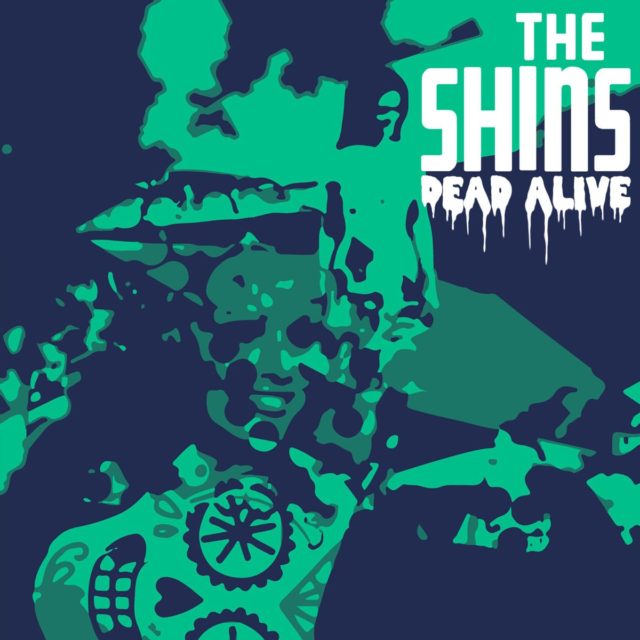
The Shins Return at Their Most Playful and Spooky on New Music Video "Dead Alive"

New MusicWeston PaganoComment

It turns out The Shins are still alive after all... or sort of. While we may not be getting LP5 until some time next year after the release date was pushed back to secure a more favorable position on Coachella's lineup, Columbia Records threw fans a bone today with "Dead Alive," a new music video fronted by a skeleton James Mercer and some classic dream sequence trickery.

Appropriately spooky for the Halloween season, it's their first release since 2014's contribution to Zach Braff's Wish I Was Here, "So Now What," and signals a proper followup to 2012's Port of Morrow. There's some white in Mercer's beard now (!) but the indie mainstays still exude a youthful energy (and wear checkerboard vans) on the new single as they play around with various illusory effects and horror film tropes set to wistful melodies and glowing vocals.