TRANSVERSO

- A culture magazine reaching terminal verbosity -

Michael Cera and Willow Smith Team Up for 2016's Most Baffling Collaboration Thus Far

Music News, New MusicSean McHughComment

Take heed! The collaboration we’ve all been chomping at the bit for has finally willed its way into existence – the ever-illusory 15 year-old, Willow Smith, and everyone’s favorite perpetual teenager, Michael Cera, have teamed up to create the most unforeseen collaboration of 2016 to date.

“Twentyfortyeight 2.0” marks yet another surprise musical release from Cera, who once moonlighted as Mister Heavenly's bassist, while marking the Superbad actor’s first “celebrity” collaboration. The track features the youngest Smith expending that familiar Smith progeny egotism, as the 15 year-old opens the track speaking aimlessly about “a yellowish hue” which she goes on to describe as "kind of nebulous." In typical teenage fashion, Smith appears to over-exert herself when trying to imaginatively masque her lack of world experience with bushy tailed sentiments of “being all that is” and “it feels like it's trying to tell me something” mixed with 420 tropes of “is it true that we really are?” It appears as though Willow has been spending far too much time in the whimsical company of her older brother, Jaden.

All of Willow’s aimless opining aside, the song actually isn’t “bad.” There’s a wandering innocence to Willow’s empty lyrics that almost elicits a state of wonder – whether aided by psychotropic substances or not – that endears the listener to Willow’s rambling state. The best part of the track is Cera’s production, which feels like its been ripped directly from a Juno or Nick and Norah’s Infinite Playlist outtake. In more recent pop culture lore, “Twentyfortyeight 2.0” sounds like a spiritual companion to M83’s “Raconte Moi une histore” from the band’s 2011 Hurry Up, We’re Dreaming.

The wandering video-game synth arpeggios sweeten an already saccharine song that allows the listener to distract themselves when Smith reaches the end of the track talking about societal struggle – “We’ve manufactured the society the runs on the backs of those with truth for them to victimize” – but instead of rolling your eyes, feel free to lose yourself in a wonderful wandering menagerie of stream of consciousness musing, echoing harmony hums, and lullaby beat production. 

Dank Meme Alert! The Father, John Misty Wants That "Real Love Baby"

New MusicSean McHughComment

Many don't know this, but Father John Misty actually was CBS' first choice to host the Late Show. He graciously declined when they told him he was not allowed to live-tweet during the show.

Blessed be the Father up high above. The benevolent lover of you and me, sardonic saint of all far below, the Father John Misty has a bevy of songs to bestow. “Why not?” is his word, but we know that he must. He knows not why he does, but it shall be known as word. The Father, John Misty has songs that must be heard. Praise him on high, but especially online – take to your Twitter, and troll til the night – inform the masses of “rejected” Toyota Prius promos, a House of Cards theme song, and the immaculately conceived “Real Love Baby.”

Forgive me, I must have blacked out. All the preceding nonsense aside, if you’re not a Father John Misty devotee such as myself, then you may not realize that despite the I Love You, Honeybear victory lap slowly coming to a close, Farmer Jah Misery is still cranking out satirical songs and creating commentary that would liken a modern day Oscar Wilde (settle down bibliophiles, it's just for dramatic effect). Realistically, Father John is more like a modern day analogue to Henry Chinaski, but I digress.

A mere handful of hours ago, Father John Misty released a tantalizingly playful new track, “Real Love Baby,” on his soundcloud page after releasing indie-folk skewering “Prius Commercial” track. “Real Love Baby,” is kind of remarkable upon first listen - despite being on tour for the better part of a year and a half now, Father John Misty has released one of his most hook-y and pleasant psych-pop track to date. A stroke of classic Father John brilliance, its safe to say that this single is likely to be FJM’s soundcloud “subtweet” answer to his “Prius Commercial” released the day before.

Who is Father John subtweeting (or subclouding), you ask?

 I know its likely to make me look more of a total dunce than I already do in everyday life, I would surmise that FJM is placing “Real Love Baby” out into the ether as a subtle assertion to the indie world that while he enjoys tooling around with the tired tropes and proclivities of indie music, he can still make better music than most despite doing it in jest, and “Real Love Baby” is living proof of such a fact.

All that being said, I realize my inference of opinion is about as unbiased as Trump saying Trump Tower has the best tacos, but that’s beside the point. The real point of my writing this is to inform those of you that have yet to hear the good word of the Father, John Misty that the message of the day is here to stay, and it's “Real Love Baby.”


Chance the Rapper Reflects on the City That Made Him in 'Coloring Book'

Music ReviewEric FracComment

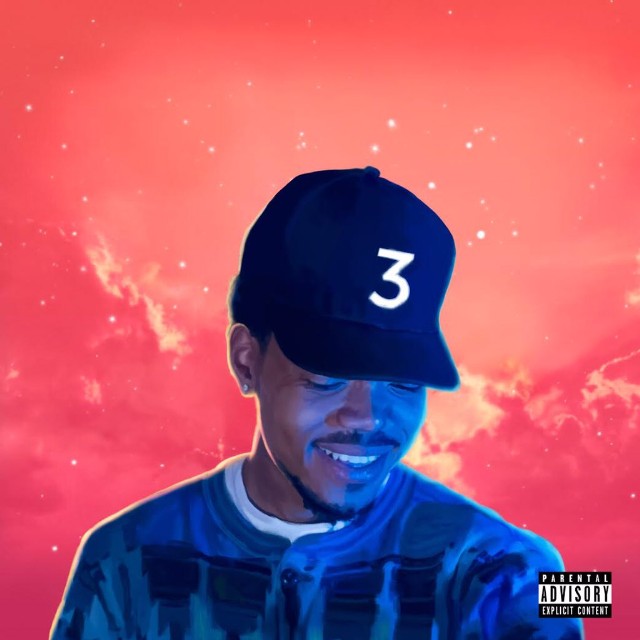
“And we back, and we back, and we back, and we back!” Chicago’s very own Chance the Rapper has finally released his much-anticipated third mixtape, Coloring Book, formerly known as Chance 3, and it’s got everyone excited for the summer that’s just around the corner. Yes, Chance is back, and so much better than before. In an interview with Complex, Chance summed up the hype leading up to Coloring Book: “This stuff is way better than Surf. I’ll say that on record. Donnie [Trumpet] is awesome, and the project was awesome, but this is all of us focusing our efforts into some hip-hop and some very dance-y shit, and it feels good. So I’m excited about that.”

When I first heard Chance on his 10 Day mixtape I walked with a newfound pep in my step in between classes; frankly it was one of my first exposures to hip hop songs that weren’t all about money, drugs, and women, and it was a very fresh breath of new life into my then stagnant hip hop playlist. This was music you could vibe to, music that made you genuinely smile because it made you want to dance. It seemed impossible to find someone who genuinely didn’t like Chance the Rapper, and he quickly rose to the top of Chicago’s hip hop scene without having anything to do with the drill music that has all but completely dominated the local scene.

Coming in at 14 songs deep, Coloring Book is no different, so grab a friend, take a deep breath, and just let the joy and beauty that is ‘Coloring Book’ dance into your ears as it makes you feel that sometimes rare emotion: pure happiness.

“All We Got (ft. Kanye West, Chicago Children’s Choir)”

Staying true to the beautiful sound of the trumpet, the song starts off with the familiar, “And we back, and we back, and we back, and we back, and we back,” and I can’t help but crack a smile already. Chance is back. The song features a powerful message delivered to the listeners by yours truly, Yeezus himself: “Music is all we got, living is all we got, so we might as well give it all we got The song is a fitting introduction to the project, and with a feature from Chance’s favorite hometown hero Kanye West it seems that Chance’s gospel sound on "Ultralight Beam" have carried over into Coloring Book, and it’s got everyone rejoicing.

“No Problem (ft. Lil Wayne, 2 Chainz)”

Let me be one of the first to say that this song will be one of the anthems of your summer. The song has everything it needs to be a radio hit; a catchy hook, a feature from 2 Chainz AND Lil Wayne, and a beat that you can’t help but bop your head to. "No Problem" is a warning to all the record labels trying to sign Chance: he’s not about it, and he wants to make it clear through lines like, “If one more label try to stop me / It’s gon’ be some dreadhead niggas in ya lobby.” You don’t want any problems with Chance, and he’s going to keep on doing what he’s doing whether others like it or not. 2 Chainz and Wayne do their thing on the song, each with their own flow that compliments the beat. Wayne also references his own struggle with his former record label Cash Money not letting him release "Tha Carter V,” with, “If that label try and stop me / There gon’ be some crazy Weezy fans waitin’ in the lobby.”

“Summer Friends (ft. Jeremih, Francis And The Lights)”

Growing up on the southside of Chicago, Chance reminds everyone about just how deadly the violence really is. He raps about how it’s the first day of summer and people are already shooting each other, and there are less and less students in summer school because of it. Sadly, “Summer friends don’t stay around here” is a stark reminder that the this is still a huge issue in the community, and the pain of losing his friends during the summertime still stuck with Chance.

“D.R.A.M Sings Special”

The shortest song on the project is a repeated verse in a soulful type lullaby by the Virginia rapper D.R.A.M who has collaborated with Chance through Donnie Trumpet and the Social Experiment, and it’s a deep message that reminds us all that we truly are special. Each and everyone one of us has talents and gifts that they were born with, and we need to be reminded that nobody is a nobody. The interlude preaches a message of self-confidence as well as inspiration to create yourself. Positive vibes all around.

“Blessings”

A testament to God, Chance isn’t afraid to show his devotion to his religion. He also touches on the Black Lives Matter movement as well as the birth of his daughter. A feel-good gospel song, and some emotional lyrics from Chance further solidify this track’s place in the project. Jamila Woods adds the cherry on top with her voice that makes you just want to throw your hands up in the air and praise whatever god(s) there may or may not be.

“Same Drugs”

“Same Drugs” is Chance’s farewell song to the drug taking persona he exuded during his days of Acid Rap, highlighting how he’s matured as a person to be a father for his daughter. He reminisces about the old days, but it’s on a positive note with no regrets. He thinks back to his carefree days as a child where everything was still filled with wonder, and even alludes to Peter Pan when Peter told the kids, “All you need is happy thoughts” to fly, as Chance encourages his daughter (who is referenced to as "Dandelion") to think happy thoughts, and in turn she will be a happy child growing up.

“Mixtape (ft. Young Thug, Lil Yachty)”

Wow, where to begin. First of all, Chance the Rapper + Young Thug + Lil Yachty? Never in a million years would I have even dreamed of those two on a Chance song, and yet this turned out to be one of my favorite songs off the project. Thugger and Yachty discuss their concern for the music industry losing it’s legitimacy by somewhat ignoring mixtapes. Yachty recently debuted his first official mixtape, and he’s bound to be one of the fastest rising stars in the scene in 2016. Young Thug on the other hand is becoming a much more common name now that Kanye has even had him featured on The Life Of Pablo, but the real fans knew that Thugger has built his career on his mixtapes, especially with his Slime Season collection. Chance feels like the industry is warping the minds and vision of artists who no longer release music for the passion but instead for commercialized purposes. Young Thug said it best: “How can they call themselves bosses when they got so many bosses?”

Angels (ft. Saba)”

A true dedication to the city that raised and made him, Chance pours his heart out to his fellow Chicagoans with fellow Chicago-native Saba on "Angels." In it, Chance talks about how he grew as an artist and he expresses his love for his hometown, complete with a music video featuring gorgeous shots of the city from an L train. It just makes me so happy and actually made me crack a damn smile, because for once I get to see a Chicago hip-hop music video that doesn’t have a single gun being waved at the camera, and that doesn’t have to do with what people label as “the dark side of Chicago” hip hop. Don’t get me wrong, I absolutely love the Chicago drill scene as well as all the new talent that’s sprouting out from it, but I am fully aware of the hardships and problems that have been going on in Chicago’s southside communities. The systematic segregation of the city as well as the fake war on drugs has ravished the communities, and the violence has always spiked during the summer. Chicago needs something to help start working toward solutions to the countless problems with the city, but Chicago will always have hope. Chance is willing to live and die for this city because he believes in it, and so do I.

“Juke Jam (ft. Justin Bieber)”

A song about Chance’s teenage years and an innocent relationship that he says he was too young to be able to take it to a sexual level. "Juke Jam" is sensual while keeping it innocent. The song’s chorus sung by fellow Savemoney rapper and Chicago-native Towkio is a vocal interpolation on R. Kelly’s "Feelin' On Your Booty," and damn it’s good. Bieber comes on here a couple times to do his thing with the song’s bridges, and the whole song just flows together extremely smooth. You’d be lying if you said this song didn’t make you feel some type of way with your special someone.

“All Night ft. Knox Fortune”

Goddamn it’s hard to not jump up and get groovy to this one. Chance proves he can be one funky dude on this track as he raps about how everyone’s drunk and trying to be friends with him now that he’s got fame and success. Chance tells them to give him his space and he just wants his friends and himself to just enjoy the party. Chance promised Coloring Book to be filled with “dance-y shit,” and it’s safe to say he delivered on that promise. This beat alone makes it worthy of a lengthy run in TV / film placements, and it’s a jam that can be played at parties and clubs alike.

“How Great (ft. My Cousin Nicole)”

Continuing on the religious themes prevalent throughout the mixtape, "How Great" is a continuation of Chance praising God. Chance’s actual cousin named Nicole opens the track up with a sample from Chris Tomlin’s "How Great is Our God"; the song is a great gospel addition to the project. Jay Electronica, a Muslim producer, does wonders to the track, and Chance himself throws in Christian rhetoric as he talks about worship and praise.

“Smoke Break (ft. Future)”

What a time to be alive. Chanco and Future Hendrix on the same track? What?! And it worked! Chance rapped about how he used to smoke out of a bowl because it’s much easier and quicker to do since his life is so hectic, and Future is looking for his queen to share his clean molly and whips with wings with, and there’s even what seems like a subliminal shot at Desiigner: “I got designer galore,” which could easily be Future’s passive aggressive ways of saying Desiigner is getting big off of Future’s sound. Guess we have to wait for Desiigner to drop his second official song to see.

“Finish Line / Drown (ft. T-Pain, Kirk Franklin, Noname, Eryn Allen Kane)”

The longest song on Coloring Book, "Finish Line" features veterans and up and coming artists praising the greatness of God and how far they’ve come thanks to him. The first part of the song "Finish Line" features Chance and T-Pain talk about their devotion to God, and how it's helped them to “see the finish line”. The second part, "Drown," features two up-and-coming female rappers from Chicago by the names of Eryn Allen Kane and Noname as they talk about how God has helped them out through their hardships in life, and they remind you that through God you will never drown. Beautiful analogy of how even though the water is deeper than it’s ever been and how life may seem harder than it has ever before, with the help of God you won’t drown and you will be able to get through anything.

“Blessings (Reprise)”

The conclusion to Coloring Book, Chance basically thanks God for how far he’s gotten and for everything that he’s been able to accomplish. Honestly, another work of art, and a fantastic way for the project to come to a close. Uncredited support from the likes of B.J The Chicago Kid and Ty Dolla $ign, amongst others, the song wraps everything that Chance is about up nicely in a song and reminds us just how gifted Chance really is. With God to thank, Chance is ever grateful for everything that he’s been able to achieve, and the dreams that he has still to set out and accomplish.


            Wow, what a ride. Coloring Book was well worth the wait, and it further solidified Chance’s spot amongst Chicago’s legends. With Kanye’s stamp of approval, the messiah of Chicago addresses his come up and how the city made him who he is, and Chance makes sure to pay tribute to that throughout the project. God also plays a major role in Chance’s life and career, and he thanks God for everything that he’s given to Chance and all the times that God has been there for Chance through difficult times in life. This is a project you can smile while listening, and something that will make you want to dance until you drop when you hear “All Night” at the next party you go to. He’s not just another Chicago rapper, he’s an artist, a believer, and an ambassador of positive vibes set out to remind us not to give up, better days are just around the corner.

'Café Society' Not a Night Club Worth Visiting

TV/Film ReviewPatricia TancrediComment

Cannes favorite, Woody Allen, made his 14th festival appearance with Café Society this year. In typical Allen fashion, the film stars big name actors including Jesse Eisenberg, Kristen Stewart, Steve Carell, Blake Lively and Corey Stoll, but despite the big names, Allen’s recent films have garnered most of their major buzz based on negative press. While the films cinematography, production design, and soundtrack are admirable, its poor performances and weak writing make it land on Allen’s growing flop list.

The film begins as Bobby (Jesse Eisenberg) moves from the Bronx out to the west coast hoping to experience Hollywood’s golden age. Once there, his Uncle Phil (Steve Carell) offers him a job. On his first day he meets Vonnie (Kristen Stewart) with whom he is instantly smitten. Vonnie first rejects his advances, but, when she is dumped by her boyfriend, she immediately comes crawling straight towards Bobby like a lost, lonely puppy. Following a series of unfortunate events and misunderstandings, Bobby is left alone and returns heart broken and hardened to New York. A few years pass and it seems as though Bobby’s life heads up hill. He marries Veronica (Blake Lively), has a child, and starts up a wildly successful nightclub with his brother, Ben (Corey Stoll). But, just when his life seems to be going perfectly, the trouble begins: Vonnie pops back into Bobby’s life. They share their dreams and their “what could have beens,” but they never fulfill their unrequited love.

Undoubtedly inspired by himself, Allen portrays Bobby as a naïve and romantic young man who must squash his romantic dreams to continue a life of monogamy and monotony. Eisenberg does a good job in portraying Bobby’s transition from immature young man to cynical adult, but unfortunately, the half-assed performances, unbelievable relationships, and the inclusion of themes repeated in Allen’s body of work make the plot uninteresting. It is normal for an artist to draw inspiration from their personal lives; it is usually encouraged. But, when the artist writes and directs films every other year, their work easily become boring and repetitive. Jesse Eisenberg, now an Allen film vet, plays essentially the same character he played in When in Rome. Instead of an aspiring architect like Jack, Bobby aspires
to work in Hollywood. Instead of falling for a beautiful and intelligent actress unlike any girl he has met before, he falls for a beautiful and intelligent secretary working in Hollywood unlike any girl he has met before. Like Jack, Bobby stays with the safe blonde rather than risking it all for an alluring brunette.

Kristen Stewart’s performance as Vonnie is basically Kristen Stewart wearing more pink dresses than normal. Stewart’s real life “tomboy” attitude peeps through as she attempts to portray a girly, bubbly, and captivating secretary. When adorned in fancy jewels and elegant furs, she looks uncomfortable, as if rejecting her character. In scenes requiring any romantic interaction, she appears hesitant and reserved. Also, casting Steve Carell as a suave and accomplished Hollywood hotshot hinders the believability of his character (typecasting at its finest).

The lack of depth in Stewart’s acting can be easily attributed to the lack of depth of her character. As a matter of fact, the lack of depth of all the female characters. Allen is known for writing idolized and romanticized female characters, but that is no excuse to continue writing such one dimensional, mind-numbing characters film after film. Both Vonnie and Veronica are introduced and sustained on such superficial level that limits the audience’s ability to see them
as more than objects.

With accusations about Woody Allen’s history of sexual abuse, the reveal of Vonnie and Uncle Phil’s relationship is unsettling rather than comical. It definitely does not help that Allen’s indiscretions are under the media microscope even more heavily now thanks to the rape joke at the opening ceremony. On top of the allegations, the lack of chemistry and authenticity in the on-screen relationships between Vonnie and Uncle Phil and Vonnie and Bobby leave the main story line and the jokes falling flat.

The only truly comedic moments include Bobby’s family. Bobby’s large and meddlesome family finds itself in sticky situations as they react to the events in their lives. Sadly, those scenes do not push the story line forward in anyway; they just exist for comedic purposes. Recycled and tired jokes, themes, and plotlines make for a boring and predictable film. Despite its trademark Woody Allen touches, Café Society does not live up to the director’s
past films.

Cafe Society is in theaters July 15th

The NuForce HEM8 Earphones Are a True Winner

Other ReviewFouzan AlamComment

Packaging

From the moment you unwrap the NuForce HEM8 earphones there is an unmistakeable feel of quality to them. The box and carrying case they come in is not only well built, but is an excellent value for protecting your purchase. The box comes with about six really nice ear tips, and some comply foam tips as well. They come in a waterproof hard case that is large and bulky, and includes a smaller, softer rigid carry case.

Design Philosophy

First of all, this is a quadruple balanced armature headphone, which means there are four little speakers on the inside. Each one is handling a little bit of the sound on its own, so that together, they form a cohesive unit. NuForce designed a proper crossover for these, and by taking steps to eliminate resonance within the casing itself, and design the crossover around such resonance. By paying attention to the casing, which many multi driver IEM's leave out, NuForce achieved a crossover that results in a far better balanced armature headphone than I've heard before. I would say overall, that this design results in a clean and cohesive sound that is as detailed as it is immersive. 

Accessories/build quality/comfort

The headphones comes with a hard case, a soft case, and six(!) different pairs of ear tips, meaning no one should have any problem finding ones that fit. And NuForce even went out of their way to include two separate cables - one with a mic, and a second one without the mic, both braided to reduce cable sounds. The cables are replaceable, and due to their quality it’s unlikely they’ll break or be damaged. but you have a replacement if you really need it. It’s a fantastic added value, and really makes a headphone that already feels better than its $500 price tag an even better value. 

The materials are exceedingly carefully chosen, and the entire package, from headphones to accessories, feels sturdy and high quality. When I first saw these, their small size surprised me. One of the unexpected side effects of designing these headphones like a larger speaker, with taking case resonance into account, is that you get a smaller speaker body than you would otherwise. The resulting package fits really comfortably into the ears.

Sound

First of all, the sound on these is PHENOMENAL. After letting them burn in for 24 hours came the song tests:

The first song we listened to was Eagles classic "Hotel California." The bass goes deep on the HEM8. Really Deep. But the genius behind them is that the bass doesn’t overpower the mids or highs. Rather, it warms the mids and compliments the crisp highs. The result is a cohesive and immersive sound, with a slightly fun signature - dark and deep bass, and a crisp, detailed treble. The HEM8 had me nodding my head to the beat, and smiling.

Our next listen to this was Arctic Monkeys' "Arabella" - another very tough song on most speakers, because the bass is complex and layered. The HEM8's handled it without any problems. The multiple layers were laid out in excellent detail over a 3-dimensional bubble that wrapped around my head. This is the result of a very even soundstage. The lows, mids, and highs are very clearly represented here.

Our third song on these was "Drive It Like You Stole It" by The Glitch Mob. Another excellent song with tons of little details that can get lost in the bass. This wasn't the case at all with the HEM8's. All the details and spatial cues came through without any problems and the representation the song was nothing short of jaw dropping.

After that came The Pixies' "Is She Weird." The separation between the softer and louder cymbals, and the guitar  was incredible. This song  truly demonstrates the capabilities of these headphones at the top of the frequency range. Every little detail is flushed out with sparkle, and without any sibilance (the really sharp hissing or "S" sounds).

Finally, for the mids and vocals, we listened to "Disenchanted Lullabies" by Foo Fighters. Vocals were clean and crisp, and the guitar, cymbals, drums, never intruded upon the words, instead flowing into a synchronous performance. 

Final Verdict

NuForce has a true winner on their hands with the HEM8. As expensive as they may be, they are an awesome value for the money and the best for their price point, and are for all intents and purposes a miniature version of the reference-level KEF speakers I have sitting on my desktop. The entire time I listened I found myself rediscovering little details in all my music, and was blown away by how great it all sounded along the way.

Radiohead Provoke Immense Sorrow on 'A Moon Shaped Pool'

Music ReviewEzra CarpenterComment

Chameleons of genre, icons of self-redefinition, dealers of some of the bravest decisions made in music history; the qualifications that reify Radiohead’s legacy are more than laurels upon which the band can rest, they are also the embodiments of character traits that have allowed the band to not only endure time, but claim it, and then redefine it. A Moon Shaped Pool serves to show that these impressive shows of ingenuity, as detrimental as they may potentially be, are still re-deployable in 2016.

On A Moon Shaped Pool Radiohead has demonstrated a mastery of their idiosyncratic approach to alternative music, doing so on the most sonically spare and lyrically provocative platforms of their career while simultaneously drawing upon the subtleties of their best work. The album features the minimalist electronic motifs of Kid A alongside the nimble guitar picking and understated riffs of In Rainbows, without negating its innovation. The album’s lead single “Burn the Witch” offers Radiohead at their most orchestral, while the ensuing single “Daydreaming” reemploys the band’s dichotomy of subtle instrumentals and paining vocals. Though this contrast may evoke comparisons to Kid A’s “How to Disappear Completely,” the song is a pivotal transitioning point into A Moon Shaped Pool’s most unexpected and most challenging material. The new album deals heavily with loss on a soundscape that is even more minimal than Kid A’s ambient tracks. But while the band has curtailed its complex instrumental layering in favor of isolated pianos and finger-picked guitars, the decision has resulted in an emotionally reductive listening experience.

Lyrics such as “Dreamers / They never learn / Beyond the point / Of no return” repackage the warnings of Radiohead’s signature doomsayers’ message with more consequential and permanent subjects such as hurt, regret, love, and longing. Paired with characters like those introduced in “Identikit," “Sweet-faced ones with nothing left inside / That we all can love… Pieces of a rag doll mankind / That you can’t create,” Yorke’s lyrical content offers a scathingly futile, yet beautiful message. His vocals vary between a soaring falsetto and an unembellished delivery; sometimes offering levity to weighty material and other times presenting disheartening scenarios straightforwardly. The latter is the perfect pairing for “Identikit"’s antagonistic guitar-riff – a palm-muted baritone melody teeming with attitude.

The shifts A Moon Shaped Pool takes between moods are noticeable, but not coarse. The piano arpeggios and trills of “Decks Dark” and “Glass Eyes” have a very secluding effect, though their background orchestration attributes a certain grace to the songs which yields an air of peaceful helpless, exemplifying the careful balance found in the pairing of lyrics and instrumentation and the selection of songs as well. The acoustics of “Desert Island Disk” and the dissonant synths of “Ful Stop separate “Decks Dark” and “Glass Eyes,” allowing listeners to shift between the various mental spaces these songs inhabit. It is the transitions made between moods, instrumentation, and lyrical content that allow songs such as “Ful Stop” and “True Love Waits” to coexist and help create one of the most unique Radiohead albums.

A Moon Shaped Pool is an album that may find some fans flat-footed. Those not expecting to deal with themes of loss and the fulfillment of love may find themselves either uncomfortable on occasion or dissatisfied. But if allowed to thrive past any initial sock, A Moon Shaped Pool will knock anyone on their ass and place them in the grips of an existential dilemma. But maybe “existential” is an inappropriate term for this album. It is modernist, as evidenced by details as spare and as fleeting as Thom Yorke’s buzzing background vocals. These droning and abruptly cutting falsettos provide the most succinct and holistic summations of what A Moon Shaped Pool offers: impressionistic whirs of pain and restraint, and a heart-hollowing sense of loss.

Burn The Witch.

Devon Welsh's First Solo Release: Out of the Cloudz and 'Down the Mountain'

Music ReviewWeston PaganoComment

Majical Cloudz may have sadly dissipated, but as promised Devon Welsh has not slowed, and on his first solo release (not an “album,” but merely a “collection”) since, Down the Mountain, he proves that even in tracks deemed excess he is capable of smoothly tapping into your synapses with a softer pierce and purer honesty than most would-be crooners could ever hope to achieve.

Welsh explains,

This is a small collection of songs that were written at different times over the last two years. Some of them were written during the same time as ‘Are You Alone?’ but did not end up on that album for one reason or another. Others were written and recorded for fun last summer.

I want to release all these songs because I like them a lot and since I am working on new music, my attention will inevitably go to that new music and these songs will be forgotten, and forgotten songs are sad.

So this isn’t an album, and it isn’t an album of ‘new music’, but it’s a collection of older songs that I like and that I feel deserve to be released.

Note: The recordings might sound a bit rough, I mixed and mastered it myself and am in the process of learning how to be better at that..

The titular track consoles a friend over the loss of their mother with the belting of “It’s alright" willing its soothing empathy to eclipse the darkness through volume as we’re treated to Welsh’s boldest vocal injection in recent memory. This gives away to a bouncy piano trot paired with lyrics as light as you’ll hear from the Montrealiant; “Every month is a pleasure / Enjoy this love with me.” “I want to sing to a room full of strangers just for fun / Oh what could be stranger,” Welsh admits in “I Won’t Let You Down,” hopefully hinting at solo performances to come, signature white shirt and all, the blankness of which always served as the perfect canvas for his soliloquies.

It’s fitting that his last tweet before the release was, “I hope I'm alive to see close-up images of other habitable planets, or even any planets outside our solar system…” Welsh’s music has always started with the bare-bones necessities - a rock, an atmosphere - and seemingly welded them together a galaxy away before gently beaming them back closer to home than you could have ever anticipated at first glance.

Collection closer “Dreams” ends with, “I will help you dream / I am your friend,” a sentiment not many could get away with in any meaningful way as he does, but with a steadily ebbing earnestness the heavy space inherent between Down the Mountain’s airy melodies and sedative vocals trawls the deepest veins of feeling such minimalism can mine. The hum and quiver of synthesizers are the breath and pulse while Welsh’s murmurs are the consciousness dancing upon them, but in a way altogether more beautiful than the sum of the parts. Words fail to quite describe such flawless liquidity.

“I don’t know why we’re born and we die,” “Starlight” ponders. It may be the mystery for the ages, but one thing is for sure: Welsh’s continued creative output into this world gives it just a little more meaning to hold on to.

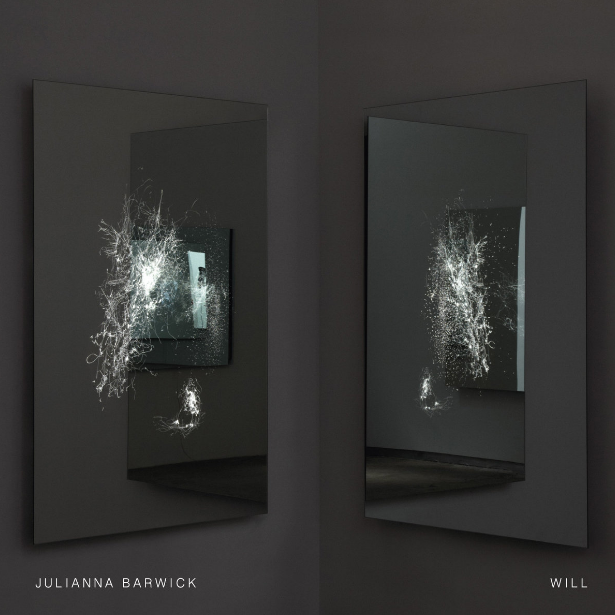
Julianna Barwick's 'Will' Wanders Into the Furthest Recesses of Sound

Music ReviewSean McHughComment

Ambient artists, post-rock bands, and noise performers have a rough go of carving out a name for themselves in music. On one hand, being that the music is almost wholly composition based, most listening masses ascribe an immediate “cerebral” rank to any and all releases (which, if you’re an egoist, can be both of great benefit and detriment). The inverse of the scenario is that being any sort non-lyrically driven artist can relegate one to the realm of conceptualism and/or performance art (not that either is necessarily an arena of “relegation,” perhaps just to the less exploratory masses) that would be viewed to many as a piteous endeavor. It is for that exact reason that I believe the noisemakers and ambient ascendants who are forced to push the bounds of sound conception without the assistance of lyrical direction are some of the most vital assets in the continued progression of sound as a whole.

There’s many a noise artist that has received considerable accolade for their efforts in sustaining the pioneering nature of their ambient, post, and cacophonous predecessors – Explosions in the Sky, Mogwai, Xylouris White, SUNN O))), Phantom Orchard, Faust – all of whom deserve their celebratory credit where such credit is due, but one artist who has quietly and quite consistently continued to challenge and progress the ambient arena on both large and small scale is one Ms. Julianna Barwick.

Perhaps one of the more ethereal ambient artists (such a description may be akin to calling a fuzzy rabbit soft, but I digress) having debuted in the past decade or so, Barwick has charted a course in music that is centered firmly upon her voice. I understand that this review was prefaced under the guise of ambient artists and post-rock albums are devoid of lyrics etc, but Barwick’s incantations are virtually indiscernible, like an atmospheric Wurlitzer manipulated and warped in a variety of manners to propel her music. A brief look at the Brooklyn transplant by way of Louisiana’s songbook, and its evident that despite having one or two repeated lines of lyrics in some of her songs, they are merely vessels for her to layer and loop the tracks in the name of ambient sounds.

Its been three years since Barwick released her astounding Nepenthe, an album which served as a secondary debut bringing larger appeal and admiration from the atypical music listening crowd. Barwick’s ability to juxtapose the confinement of being a soloist with the congregation of sounds of one voice is moving and more emotive than most lyrically based efforts. Where the soaring tones of Nepenthe helped elevate the listener to a higher plane, Barwick’s newest release, Will manages to do the same, but by eliciting heavier synth to most tracks, which in turn brings a darker, seemingly introspective gravity to the record. Will is more mature - both in the Gregorian sense of time, as well as sonically – as Barwick manages to effortlessly exude a tonality of crisp and clean, yet unpolished melodies that were at times overwrought on Nepenthe and previous efforts.

Rather than waste the reader (and listener)’s time giving the typical track-by-track review, rundown, etc. it may be of more benefit to the reader/listener to interpret Will as a whole, without dissection or individual critiques. Will is an exercise in rumination, stripped of any expressive production than might obfuscate Barwick’s innermost workings while crafting the album, in turn presenting a body of work that is wholly humble and fragile, at times even worrisome. Spirals of emotion and synthesizer help transport Barwick and the listener onto an almost lunar-like plane, which prohibits any mental impairment when it comes to digesting Will, as there are no clever production tricks or snippy lyrics to distract the listener from the album’s core principles – the sweet cafard that is being alone. Its spacious enough to peer into the furthest recesses of sound, in turn coaxing out the purest form of emotion and meditation for both Barwick and listener alike. Will is a heart-searching odyssey of observation and reflection navigated by Barwick’s deft ambient touch.  

'Captain America: Civil War' is Pure Comic Book Bliss

TV/Film ReviewEthan WilliamsComment

After a fairly stagnant summer of mixed to positive reception to Marvel’s two artistic gambles that were Age of Ultron and Ant-Man, the Russo brothers return to the Marvel universe to once again shake it to its foundation after the triumph that was Captain America: The Winter Soldier, and what results is undoubtedly the greatest achievement that a shared universe like this can offer.

Eight years ago, when Tony Stark strapped on that hot-rod red ‘n' gold metal suit for the first time in Iron Man, something like Captain America: Civil War could’ve only been imagined as a glint in Nick Fury’s good eye. The phrase “the Avengers initiative” sounded like goofy nerd nonsense to most audiences in 2008, but it has become almost as ubiquitous as something like “Agent 007” or “May the Force be with you.”

And now after eight solid years of films and universe-building pieces locking into place, finally Marvel feel they don’t have to spend too much time introducing new ideas or characters because by now we’re so familiar with this universe and its inhabitants that it’s no longer necessary. The introduction of characters like Wakandan prince T’Challa (better known as the Black Panther) and Tom Holland as our third Spider-Man in 15 years feels so assured and effortless, it’s strange to recognize this is the first time we’ve met them in Marvel’s cinematic universe. Civil War operates like a true comic book eventa massive, multiple-issue arc that brings in characters both new and familiar to tell an expansive story that somehow maintains both coherence and intimacy in the midst of so much bombastic action.

After the disaster in Sokovia averted by the Avengers during Age of Ultron’s climax, Captain America and the rest are still galavanting around the globe, stopping the bad guys with little to no government oversight. That is, until an honest mistake by newbie Scarlet Witch forces the Avengers to finally face the scrutiny that’s been building among the people of the world since Loki and the Chitauri touched down in New York. Cap feels that the new “Sokovia Accords” will only hinder the team’s ability to do good since they’ve always proven to have the people’s best interests at heart, while his counterpart Tony Stark, plagued by the horrors his creation Ultron caused in Sokovia, thinks the Avengers need some accountability after the mayhem they’ve caused since he took up the mantle of Iron Man.

Like any compelling debate, both sides have great points, and one of Civil War’s greatest strengths is giving both Cap and Iron Man equal reason to righteously feel the way they do. With Marvel’s diligent planning out of the arcs each film should take, the seeds of this diametric opposition have been sown since Iron Man 3 showed us Tony’s post-traumatic reaction to New York and Winter Soldier turned Cap’s trust of the government completely on its head.

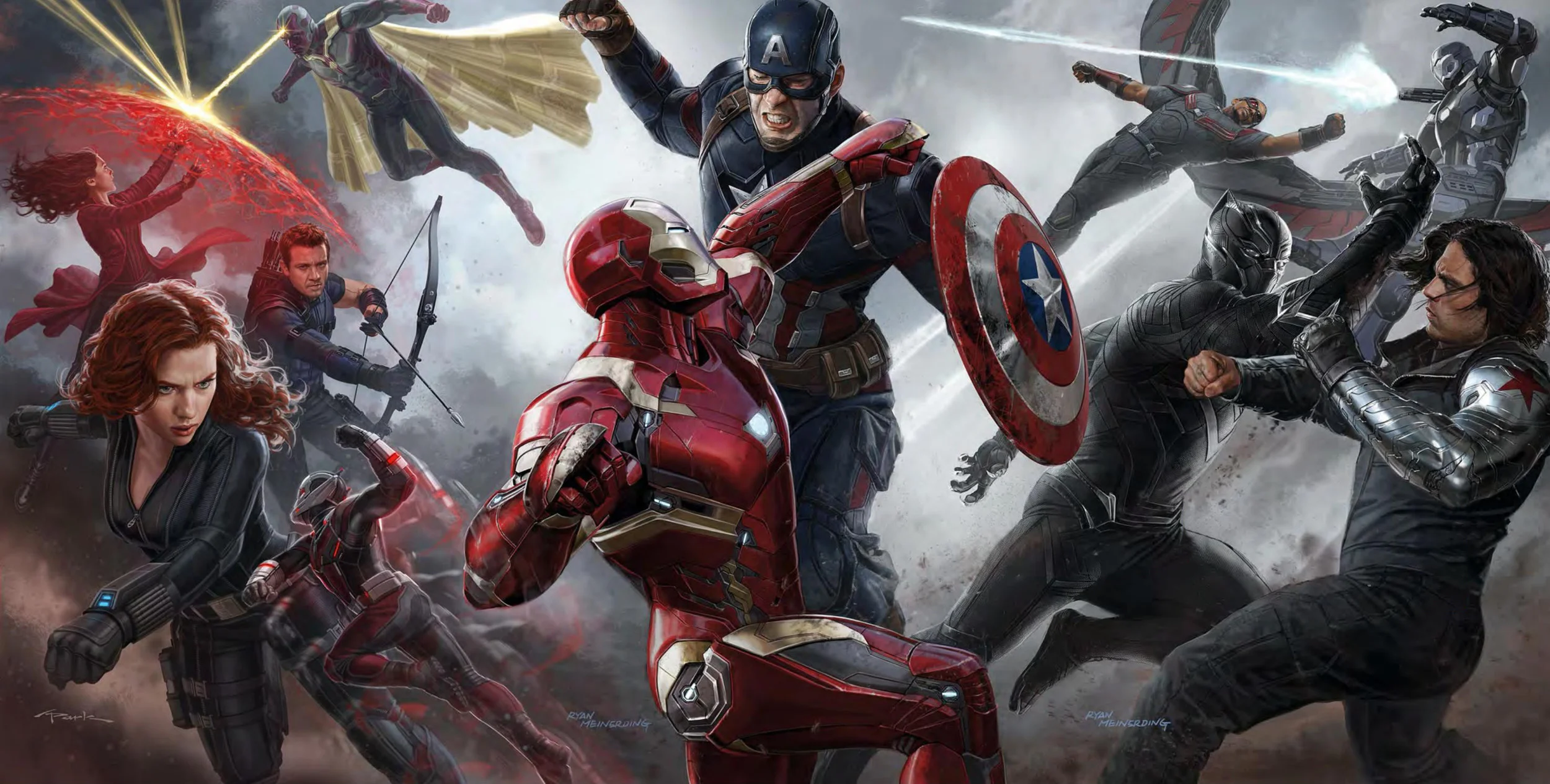
Civil War may boast the cast of an Avengers follow-up, but the film’s emotional crux is undoubtedly Cap and his relationship with comrade-turned-communist Bucky Barnes, a through-line begun in Winter Soldier that becomes the heart of Civil War’s conflict. Bucky is all Cap has left of his past life and he’ll do anything to protect him, even at the cost of abandoning his ties with Tony and his counterparts. Luckily for him he isn’t alone, and the various superheroes start forming along party lines, ultimately leading up to a direct confrontation where Cap and Iron Man’s teams have to decide if they really want to punch each other after all they’ve been through together.

The resulting decision to come to blows is where things start to ascend into jaw-dropping spectacle. The showdown of Team Cap and Team Iron Man on the abandoned tarmac is something comic book geeks could’ve only imagined in their wildest fantasies a few years ago, but here it is as the zenith of pure popcorn entertainment. Spider-Man zips around, popping off quip after quip, while Black Panther locks claws with the Winter Soldier; it’s sheer bliss even if we don’t want to see anybody seriously hurt.

Ultimately this desire is what makes the face-off that follows it infinitely more compelling. The long-teased slugfest between Cap and Iron Man is exciting on paper but absolutely devastating to witness, as two friends come to blows in an absolutely heartbreaking moment that shifts this cinematic universe for good.

Captain America: Civil War is an achievement only hinted at in previous Marvel movies, and to see it come to glorious fruition is absolutely mind-blowing. Robert Downey, Jr. turns in his best performance since the first Iron Man, as he’s asked to run an emotional gamut from his standard cocksure, quippy playboy, to a resigned, guilt-ridden participator in the Accords, and ultimately into a wounded child who can only lash out in frustration at the betrayal he’s been faced with. It’s not perfectly paced and has some seriously bad shaky cam/action choreographing in its opening moments, but it’s ultimately the film’s compelling characters that steer Civil War into “best ever” superhero film territory.

'The Colour in Anything' Expands James Blake's Emotional Spectrum

Music ReviewSean McHughComment

2016 is on a fast track for the most GOAT-worthy 365(ish) days of music this decade, from immortal icons passing on to musical Valhalla, to an inordinate number of “surprise” releases. First there was Rihanna, then Yeezy’s TLOP shenanigans, Beyonce putting Jay-Z on blast in cinemascope, and Drizzy Drake releasing an un-essentially long collection of Toronto woe-odes last week. Needless to say, there is a glaring trend amongst the artists who elected to forgo the mundane predictability that typically coincides with name brand artists – with many of them even going as far as debuting on the god-forsaken lost cause that is TIDAL – and it appears the taste for purposeful inconsistency has grown more pervasive outside of hip-hop and pop now as well.

James Blake, one quarter of the 2010’s indie Mt. Rushmore – Justin Vernon, Ezra Koenig, and Win Butler being the other of the four stone heads – released The Colour in Anything this past Friday, unannounced, but not totally unexpected – two singles were released leading up to the album’s release, creating a sort of pseudo promotional calendar.

The Colour in Anything, has been long overdue in the minds of critics and Blake fans alike. Blake had canceled extensive tours in order to capitalize upon creative whims and fancies, which in turn developed a capricious grapevine of rumors and hearsay regarding whether Blake was merely taking extended measures to forge LP3. In 2014, Blake originally announced that this new release would be titled Radio Silence and was slated for release in early 2015, but as you're now reading this over a year past that date, it's quite apparent something got in the way, and whatever it was, Blake’s reticent nature certainly did not lend itself to buoyant reverie amongst fans (though it did, ironically, lead to literal radio silence).

Blake had entered the Frank Ocean (a collaborator on the album) territory (but without the over zealous opining – WHERE ARE YOU FRANK?) in terms of hotly anticipated releases, and there was nothing but confusion and perplexity for some time. Apparently, during the interim that was Blake’s Radio Silence announcement and the eventual release of Colour, Blake had managed to write two tracks on Beyonce’s Lemonade (full circle!) – “Forward” and “Pray You Catch Me” – along with heading out to Shangri La Studios to finish the record with much needed vigor from Duck Dynasty doppelganger Rick Rubin.

Colour came out of nowhere, but it wasn’t without excitement. It’s an offertory record that showcases a side of Blake that has long been underdeveloped – the Enfielder’s most expressive and innermost musings – subsequently breathing new life in Blake’s career (not that it was ever really without it). Colour opens with a “what might have been” in “Radio Silence,” and the once eponymous track turned solitary lead off exudes a singular glance into the now defunct direction that was Radio Silence, instead enacting a startlingly apologetic new Blake.

The production is as tight as ever, but somehow feels more fragile and wavering than quietly confident, a la Overgrown. In comparison to Blake’s previous releases, many are likely to accuse the Londoner of wearing his heart on his sleeve, when in reality, it’s a more mature comfort with his songwriting process, unabashed, but polite, like the production on a track like “Points,” in which Blake warps his "No longer" hook over trap and dubstep afrobeats that build and swell with momentum in alarmingly smooth fashion. “Points” along with “Love Me in Whatever Way” establish Blake’s most singer-songwriter intentions with little to no pretense over the forthcoming nature of Colour as a whole, with lines like "Where you lead me I will go," and "Tell me when I have to go / And then love me there." It's gut wrenchingly frail, as if Blake has only just begun to come to grips with his emotional capacities, but just like that, he shuts himself off on “Timeless,” featuring wild “sound the alarm” synth wandering, as if to indicate to Blake that the time has come to shut oneself off from this strange new world of open opining. Interesting side-note about “Timeless”: Kanye West was originally slated to appear as a feature on the track, however, according to Blake, the verse from Mr. West “didn’t materialize.”

The record bounces back with the fully transparent “F.O.R.E.V.E.R,” a ballad that features only Blake and keys, as his voice infectiously wavers over simple chord structures speaking on his time alone while “you” were away. An interesting line in “F.O.R.E.V.E.R” – "I notice I can still ghost the streets" – a seemingly innocuous phrase, but when juxtaposing Blake’s reclusive tendencies with his abnormal level of public interest, it highlights an intriguing dynamic with which Blake (and those closest to him) undoubtedly struggles with. “Put That Away and Talk to Me” is the mandatory millennial musing over the use of phones and technology and the schism they cause, but the name itself provides more enjoyment than the creepy lullaby that is the track itself. Colour feels increasingly morose as the album progresses, all the while maintaining some mode of hope in the interim on tracks like “I Hope My Life” with opening refrains of, "I hope I’m right / When speaking my mind / I hope my life is not a sign of the times," as he struggles to distinguish and relate at the same time. “My Willing Heart” embodies such struggles by narrating a sort of out of body experience for Blake, a narrative that resembles – get ready for a stretch – an Icarus fell type of story, except Blake’s sun is love, which makes him altogether too vulnerable for his liking. It should be noted that “My Willing Heart” has a co-write feature with one Mr. Frank Ocean, who didn’t necessarily lend any lyrics, but certainly lent a spiritual boost for Blake when it came to "Making a record on your laptop…”

Halfway through the record at this point, Colour really comes into its own once “Choose Me” comes along, a production whirlwind that has clever nods to Blake songs passed – “A Case You” – all the while asserting a new domineering side to the fully transparent Blake that’s become so prevalent on Colour – "You don’t owe me anything / What could I want back from you?". To this point, “Choose Me” is the best standalone track; a nice confluence of Overgrown and Enough Thunder. Colour finds its footing on “I Need a Forest Fire,” the album’s second single featuring fellow indie-demigod, Justin Vernon. His influence is felt immediately, as the airy organ noises lead in a Vernon yell and a muffled loop. Vernon leads off the first verse, and in all reality, the track itself feels like a Bon Iver song a la Eaux Claires 2015 more than anything else, but hearing both Blake and Vernon trading verses and harmonizing over pastoral Ralph Waldo Emerson sentiments is a truly beguiling experience. According to Vernon, the track came from “wonderful accidents and good friendship,” which echoes the same warm sentiments Blake expressed about working with Vernon, that the two seemed like they were “separated somewhere down the line.”

Colour’s final third issues the close of a hesitant love manifesto from Blake, with “Noise Above Our Heads” expressing Blake’s desire to connect with an unidentified suitor – “I’ll find no peace until I know” – as Connan Mockasin’s wandering bass leads the meandering thoughts of Blake along. The eponymous track features a soliloquy with Blake addressing a significant other as a last ditch effort to preserve an already fast fading love; it's “classic” James Blake, with elegant vocals over keys, and elevated pitches thanks to his preferred double tracking takes. “Two Men Down” takes a left turn elementally, as Justin Vernon’s production injects a livelier demeanor to the track that centers on Blake’s prospective outlook over competing with another man in order to gain a lover’s hand. “Modern Soul,” the premier single for Colour back in February 2016, Blake expresses his disdain for being overwrought with social interaction – “What I didn’t see was I was talking to so many people at once / I had no idea…” – and the interminable confusion of whether one’s interest in Blake is over his personal being or “because of a few songs.” The penultimate track of the album, “Always” features one of the most devastating ideas on Colours, in which Blake enters a dreamlike state where he can control and manipulate every aspect of his world to mold it into its most ideal form. “Meet You In the Maze” closes Colours in a sanguine yet indeterminate state – Vernon’s influence can be felt heavily on the acapella (except for a vocoder) track, a la Bon Iver’s “Woods” – as Blake assures the subject of his rendezvous request that “music can’t be everything.”

The Colour In Anything is most definitely Blake’s best record to date, despite the album’s first half struggling greatly with the themes of transparency and love within Blake’s purview. The trials and tribulations of James Blake in love make for an apparently personalized record that’s all too unfamiliar to Blake’s previous modus operandi, but has subsequently bolstered his songbook and production tactics. The album receives a giant assist from Bon Iver’s Justin Vernon, whose production on a handful of tracks really manages to stretch Blake past his former boundaries. While the album did not feature the fated 20-minute track that he had once hinted at in the past, The Colour In Anything distributes his muted sensibilities and elicits a more forthcoming Blake that will hopefully continue to open up in the future.