TRANSVERSO

- A culture magazine reaching terminal verbosity -

EXCLUSIVE PREMIERE: Strange Heights Set out For "Home" in Second Single

Exclusive Premiere, New MusicWeston PaganoComment

Following debut single "Believe Me," Chicago-based newcomers Strange Heights are revealing the second track from their forthcoming self-titled EP, "Home" through Transverso Media.

Soft strings and xylophone plinks beckon you in, swirling around gentle vocal harmonies grappling lyrically with setting out against adversity and, ultimately, finding home. Flirting with the boundaries between folk and rock, Strange Heights fit the puzzle of their six-piece together to uplifting results.

Keyboardist and backing vocalist Nic Ten Grotenhuis tells Transverso, "'Home' is about perseverance in the face of resistance and about how passionate we are about music."

Formed last September, Strange Heights finished recording a four song EP just two months later, with Strange Heights due out May 15.

FREE Download: strangeheights.bandcamp.com/ Produced by: N. Rivera Mixed and Mastered by: Trevor Buckingham Artwork by: Miles August © 2016 Strange Heights

Lewis Del Mar's New "Loud(y)" Music Video Has Them Rocking Rockaway

New MusicWeston PaganoComment

Instantly hard-hitting duo Lewis Del Mar have released a music video for their Hype Machine-propelled opening single "Loud(y)," in which they're aptly causing trouble across Rockaway Beach, NY's streets and house show circuit.

The dynamic, lo-fi track off their debut EP released via Columbia in January thrusts with a frenetic drum beat under commanding Cage the Elephant-esque vibes - from "Ain't No Rest For The Wicked" acoustic stabs to a "Teeth" style spoken-word rant - and spills them out into Mac DeMarco's neighborhood to delightfully disastrous results.

"Can you please turn yourself down?" vocalist Danny Miller asks. It doesn't seem like Lewis Del Mar will be heeding their own advice anytime soon.

Get the debut EP: iTunes: http://smarturl.it/ldmEP Spotify: http://smarturl.it/ldmEPstream Follow Lewis Del Mar: http://www.lewisdelmar.com https://www.facebook.com/lewisdelmar https://www.twitter.com/LewisDelMar https://www.instagram.com/lewisdelmar

Edward Sharpe Is Dead: Alex Ebert on The Magnetic Zeros' Pursuit of Failure, Identity, and Unrealism

Music InterviewWeston PaganoComment

Despite the much bemoaned departure of band co-founder Jade Castrinos following their last full-length, Edward Sharpe and the Magnetic Zeros still had 10 different musicians packed on the tiny stage at Chicago’s Old Town School of Folk Music in an intricate intertwining of instruments and personality. It was not immediately clear, however, if their eponymous, messianic leader himself would appear, as his name was crossed off the bill.

Gallant's Debut 'Ology' Is a Study Of His Diverse R&B Abilities

Music ReviewSean McHughComment

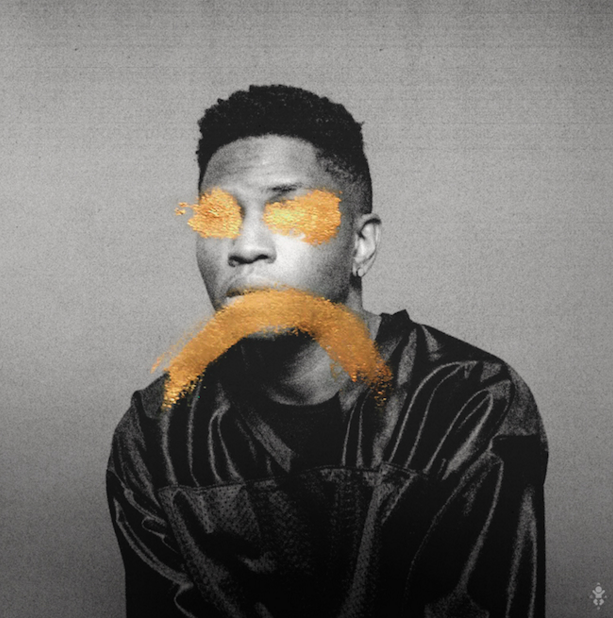
It's hard to believe that the ever pensive and introspected musical styling of Sufjan Stevens would some how be involved in launching the public facing career of a full blown R&B debut, but such is the case when it comes to Los Angeles/Columbia, MD transplant Gallant. Christopher Gallant, better known solely by his surname, supported Detroit’s favorite songwriting son on Stevens’ Carrie & Lowell tour in 2015, which featured the most Snapchat-able moment of Stevens’ career – a collaborative cover of Drake’s “Hotline Bling,” with Stevens and Gallant exchanging verses. The pairing of Gallant, a slick dancing, falsetto pitched R&B singer as Stevens’ opener felt oddly appropriate, mostly due to Gallant’s vivacious stage presence, prohibiting anyone in attendance to question his right to the opening slot.

Cross-genre pollination can work to an artist’s benefit or detriment, and in the case of Gallant, it's safe to assume that his time spent on the road with Stevens paid off in spades. Gallant’s long overdue debut record, Ology, recalls the most beloved R&B truisms while invigorating the overall landscape for a cornerstone genre that grown predominantly stagnant. The new school of R&B features futuristic samples warped through auto tune and Serato, something uniformly absent from the crisp organic sounds of Gallant’s sound. Furthermore, the lyricism in Ology is distinctly different from the coke-lined confessions of The Weeknd or trap music lyrical passiveness of Bryson Tiller; Gallant opts for the more vivid and warmer waters than his subdued contemporaries. In short, Ology is the R&B album no one knew they were missing.

Gallant has the honey-resin vocal tendencies that feel like melodic allusions to Usher and MJ, but his avant-garde leaning intricacies help him avoid any direct creative connections. Ology opens with single note echoes as they usher in a fever dream entry into the album’s first full length track, “Talking to Myself,” which wastes no time showcasing Gallant’s exceptional falsetto range amongst a shifting soundscape of R&B 808s, dubstep leaning drops, and coarse baritone saxophone; where Gallant’s melodies are wholly R&B, his instrumentals are other-worldly. “Shotgun” is an early album contender for best track of the record, as it stretches the genre confines of soul and R&B in a more modern mold. Gallant’s lyricism is a refreshing apologia from the cynicism of other contemporary R&B artists – “my God forsaken weakened pulse / I knew I have to admit this / I never was a force to be reckoned” – who would rather imbue stubborn self-righteousness. “Bourbon” is a pop R&B throwback with an injection of space age mysticism, harkening back to late '90s and early 2000s shimmery pop R&B tracks from the likes of Boyz II Men and Anthony Maxwell.

Gallant’s Ology presents an interesting movement within R&B, where he and fellow R&B disciples like Daniel Caesar further the genre bounds with gospel-esque runs mixed with heavy pop R&B production. Where Caesar straddles the line of Gallant and Bryson Tiller, Gallant operates in a realm of Usher-esque confidence that is propelled by his vocal chops. Songs like “Bone + Tissue” and “Weight in Gold” are Gallant’s vocal breakouts in the album’s first half, as if his capabilities (which are indeed more than capable) were so immense that he could no longer take holding such epic runs for later in the album.

As the record continues into its latter portion, the songs begin to explore other sonic realms, as “Episodes” flirts with surf rock, glam rock and '80s synthpop top-lined with effusive lyrical questioning of a relationship gone awry. Following “Episodes” comes “Miyazaki” – presumably named after the famed Studio Ghibli animator – a proverbial 180 from its predecessor, as a cool jazz rhythm allows Gallant to make short vocal runs before hopping into a The-Dream-esque vocal whisper. The lyrics of “Miyazaki” aren’t the most inspired – “If you want, I can make your body tremble” – but it somehow makes the song feel like an earnest mid-90s R&B panty-dropping ballad. “Miyazaki” fades into “Counting,” one of those obligatory R&B love lost nostalgia trips, but the track is revamped with light afro-beats over inspired lyrical vignettes – “I lost my pride in the crater / In ancient coal mines” – that suggest a truly thoughtful writer.

As Ology progresses, the vocal analogue for Gallant becomes more and more apparent – Gallant sounds startlingly similar to a young Seal that happens to have more vocal range and better taste is instrumentation. “Jupiter” kind of moves like a galaxical version of a Seal song, but Gallant deftly maintains his unique falsetto timbre as Moogs and shimmery percussion glimmer and glow. With Ology’s end in sight, we see the album’s first feature artist – new age hip-hop and R&B collaborator extraordinaire, Jhene Aiko - on “Skipping Stones.” It’s a nice R&B noir that sees light production, clean sounding drums and guitar, along with Motown adjacent horns that allow for Gallant to make some of his most impressive vocal arrangements. Aiko’s unique and affectation-less voice make for a nice addition on the duet portions of the track, but when she leads into her feature, the hip-hop singer as a lounge singer comes off as a bit of a stretch. Nevertheless, “Skipping Stones” is a true standout on the album, and a nice penultimate track. Ology closes with its most hopeful track, “Chandra,” where we hear Gallant opine, "Maybe there’s a home behind these eyes," which make for sweet sentiments within an emotionally confounding song that ranges from hope, to faith, to despondency, to attraction; all over a spacious orchestral arrangement.

Ology operates on a plane, which most debut records should aspire to achieve – it presents a cohesive sonic presence for Gallant, all the while allowing him to explore other musical pathways for future endeavors. Gallant is certainly not an avant-garde artist, but his willingness to consider other musical realms implies that his creative output could resemble something of a conceptually based artist. Gallant has entered an R&B arena that is already saturated by “new” and “groundbreaking” artists staking their claim to unforeseen R&B adaptations, but Gallant remains unfettered. His nouveau riche take on classic R&B is less of a gamble, and his diverse talent makes Gallant seems poised to experience a long standing career in and out of the genre. 

'Junk': Not as Bad as Its Name Implies, Still Not M83's Best

Music ReviewSean McHughComment

There’s been an unspoken trend in pop that’s seen the genre separate into two distinct factions: morose, trippy bedroom beats, or '80s synth-pop nostalgia. One is unchartered territory that allows for its adopters to act as the pioneers of the genre subversions, while the latter requires deft mimicry that Flock of Seagulls and Soft Cell probably wouldn’t be able to replicate. Nevertheless, the '80s revival throne is as ready and willing as ever to be assumed by some intrepid sonic soul, someone looking to create the next “Take on Me,” or produce the Millennial era’s answer to Tears for Fears’ Songs From the Big Chair. No one has managed to stake a substantial claim as heir apparent to synth pop sovereignty, but when pressed to identify a frontrunner, you’d be hard pressed to find a better candidate than Anthony Gonzalez and M83.

The French electronica pseudonym for Gonzalez and company, M83 has been in operation for over a decade and a half, as an outlier in the French house music scene. While most French DJs and techno artists fall under the Ed Banger Records or Thomas Bagalter (Daft Punk) umbrellas, Gonzalez has managed to chart a path unlinked to the two French powerhouses. For a decade and a half, Gonzalez has developed M83’s nebulous sound - equal parts cinematic, ambient, and non-derivative – but commercial success was never met until Gonzalez released his first double album Hurry Up, We’re Dreaming, in 2011. The album has garnered extensive critical praise, as far as being heralded as one of the best albums of the decade. M83’s supporting gigs of The Killers and Kings of Leon, along with Gonzalez’s transatlantic move to Los Angeles, heavily influenced the album, as the optimistic and dreamlike freneticism helped propel M83 into further unforeseen synthpop adulation.

While M83 had originally started out as a conceptual and indistinct vehicle for Gonzalez to imbue his perspectives upon the world, Hurry Up, We’re Dreaming’s unprecedented success unfortunately cemented M83 as a synthpop group (at least in the public’s eye). It certainly didn’t help that the album’s most popular track was the most synth heavy track on the tracklist - the infectiously melodic “Midnight City.” In that moment, M83’s original mission statement was enveloped in flames, stoked by label money grubbing and public perception, Gonzalez was more or less forced to expel the next M83 record under the expectation of it being yet another a synthpop leviathan.

When 2015 rolled around, word got out that Gonzalez was indeed working on a follow-up to Hurry Up, We’re Dreaming (the Oblivion soundtrack doesn’t count), and eventually, it was announced that M83 would release its much anticipated 7th full length release, Junk. As part of the mandatory album release press circuit, Gonzalez gave insight into the process of creating his long awaited follow-up, stating that Junk was inspired by the cheesy pop and electronic music of the 80s, along with “old-fashioned shows” like Punky Brewster and Who’s the Boss?. For most, that answer was sufficient and fun description, nowhere remotely close to being a red flag, but for others, the nostalgia tie-in felt to be a little too strong.

Junk is M83’s first album without longtime vocalist and keyboardist Morgan Kibby, having been replaced by Kaela Sinclair, via a crowd sourced audition process. Sinclair’s addition isn’t necessary pertinent to the album in particular, but the departure of a Kibby presented a foreboding omen for how the LP itself doesn’t feel like an M83 album, to the point of which it almost feels like a joke.

Junk opens with the album’s first single, “Do It, Try It,” keeping up with the punctuated titling preferences Gonzalez made apparent on Hurry Up, We’re Dreaming. The track is, well, fun? It does sound reminiscent of “Midnight City,” and the intermittent synth explosions feel akin to another Hurry Up, We’re Dreaming track, “Reunion,” but something just feels off. It feels like Gonzalez placing M83 at a weird intersection of Daft Punk meets Neon Indian meets Giorgio Moroder.

Granted, M83 is a concept driven band, so the notion of adopting features of some titans of synth pop – along with some not so (sorry, Neon Indian) – but for the first time on Junk, M83 begins to sound a little too derivative. The album’s second track takes an interesting turn as the track maintains an anthemic group vocal personality with a grating guitar riff that would sadden the likes of Niles Rodgers (whom it seems Gonzalez was looking to emulate). “Walkaway Blues,” feels jarringly moody, which could more or less be inferred from the cringe worthy song title, but the track itself manages to sound too busy and too vacant at the same time. Effectively, there’s no conceivable substance to the track that has so much going on, as if to mask the fact.

Cleanup track “Bibi the Dog” reveals itself as Junk’s first francophilic crossover, as the familiar M83 trend of French spoken word paces the track over a bass heavy rhythm. After the first three tracks, “Bibi the Dog,” almost seems too cool for Junk, up until the odd vocoder manipulations that break any of the song’s concentration. “Moon Crystal” is a track title that might raise hopes of casual M83 listeners looking for Junk’s “Midnight City,” but instead, “Moon Crystal” is one of the finest elevator music interludes I have heard on a French pop-nostalgia record (i.e. – the only one).

On “For the Kids" vocalist Susanne Sundfør croons in a mix of Cher and Yumi Zouma, asking “when will I see your face again?” It is clichéd to feature such an exhausted lyric, yes, but on a track titled “For the Kids,” at least it comes as a surprise. Luckily, the song features another children’s voiceover a la “Racounte-Moi Histoire,” which drapes an oddly somber tone over the track, a total misdirect by Gonzalez resulting in arguably the most finessed track on the album. Then, in an instant, the listener is torn from the first truly dream-like moment of the record and placed back in the unsettled platform that is most of Junk. “Solitude” sounds like Gonzalez’s attempt at creating a brooding James Bond theme, and “The Wizard” sounds like Gonzalez’s failed Frank Ocean demo, only further confusing the Junk landscape.

“Laser Gun” gives a sneaking suspicion of being a possible “Midnight City,” replicant, with similar percussive piano, and dream allusions of grandeur – “A place where dreams are played like comic strips” – but it just doesn’t feel quite as playful, it just feels tired. The track ends with a series of cheerleader chants that sound like a straight rip from any The Go! Team album ever. “Road Blaster,” “Tension,” and “Atlantique Sud” once again sound like M83 trying out parallel sounds of a listeners’ choice of piano poppers – though “Atlantique Sud” is a lovely French ballad, just not in a M83 fashion.

“Time Wind” is likely to be Junk’s second single, namely because of the track’s high profile feature, the world’s “coolest” scientologist, Beck. It's filled with lyrical cliché’s – “The harder you try makes it harder to let go / I know enough to know it's wrong” type stuff – and the instrumental backing is almost too open to bring in any substantial conviction to the track. Junk closes with a very quiet end that would have been foreign to most M83 albums, but at this point in Junk, anything goes. Overall, Junk feels like Gonzalez trying to maintain the concept driven heart of M83 all the while creating a record that would continue to satiate the less “cultured” musical palates that made Hurry Up, We’re Dreaming such an unprecedented success. Whether or not such a notion is true or not is beside the point, Junk is not a concept album; instead, it’s a stepping stone record for Gonzalez and M83 to navigate the choppy waters that are follow-up records. Junk simply buys time for Gonzalez to right the M83 ship and continues to shift and expand upon the band’s sonic membrane.

EXCLUSIVE PREMIERE: Victor Perry Guides Us to New Sounds On "Lighthouse"

Exclusive Premiere, New MusicJordan OvertonComment

The grounds of Atlanta's Morehouse College are full of musicians; to rap or sing R&B is the living and breathing culture that dwells within the gates of this institution, but hearing an artist that stands out with a rhythm different from the rest can be rare. 

Victor Perry, an emerging artist with a vocal range that surpasses that of many of his peers, is one such voice. His second single “Lighthouse,” a pop ballad, shows exactly what kind of artist he is: one without limits and always looking for a different sound. He paints an eloquent picture of what it means to have a relationship in turmoil, and what it’s like to feel the struggle of finding the path to stability, trust, and loyalty as he declares, “I’ll steer her to grace.”

Perry uses mid-tempo snare beats and a soothing piano and guitar intertwinement to supplement his image of a man desperately treading above the waves in a futile attempt to save a love, telling Transverso, “It’s not always about calling out their mistakes, it’s about being there to support them.”

With an EP titled 4 A.M. Nostalgia slated for release in the near future, "Lighthouse" is just a beacon of what's still to come. Stream it below, and buy it here.

Delivered by a voice with harmonic lyrical phrasing and contemporary crooning, Perry’s lyrical capabilities range from metaphoric calls for love and poetic searches of self-expression. His newest single, “Lighthouse,” off his upcoming EP – 4 A.M. Nostalgia, establishes a narrative that reveals a delicate perspective on the complicated nature of both being in love and what love is in itself.  In what seems to be a display of vulnerability to some, his music reiterates the timeless battle between love’s beauty and toxicity.

Frankie Cosmos Embraces Her Youthful Past for a Thoughtful Future on 'Next Thing'

Music ReviewCamilla GraysonComment

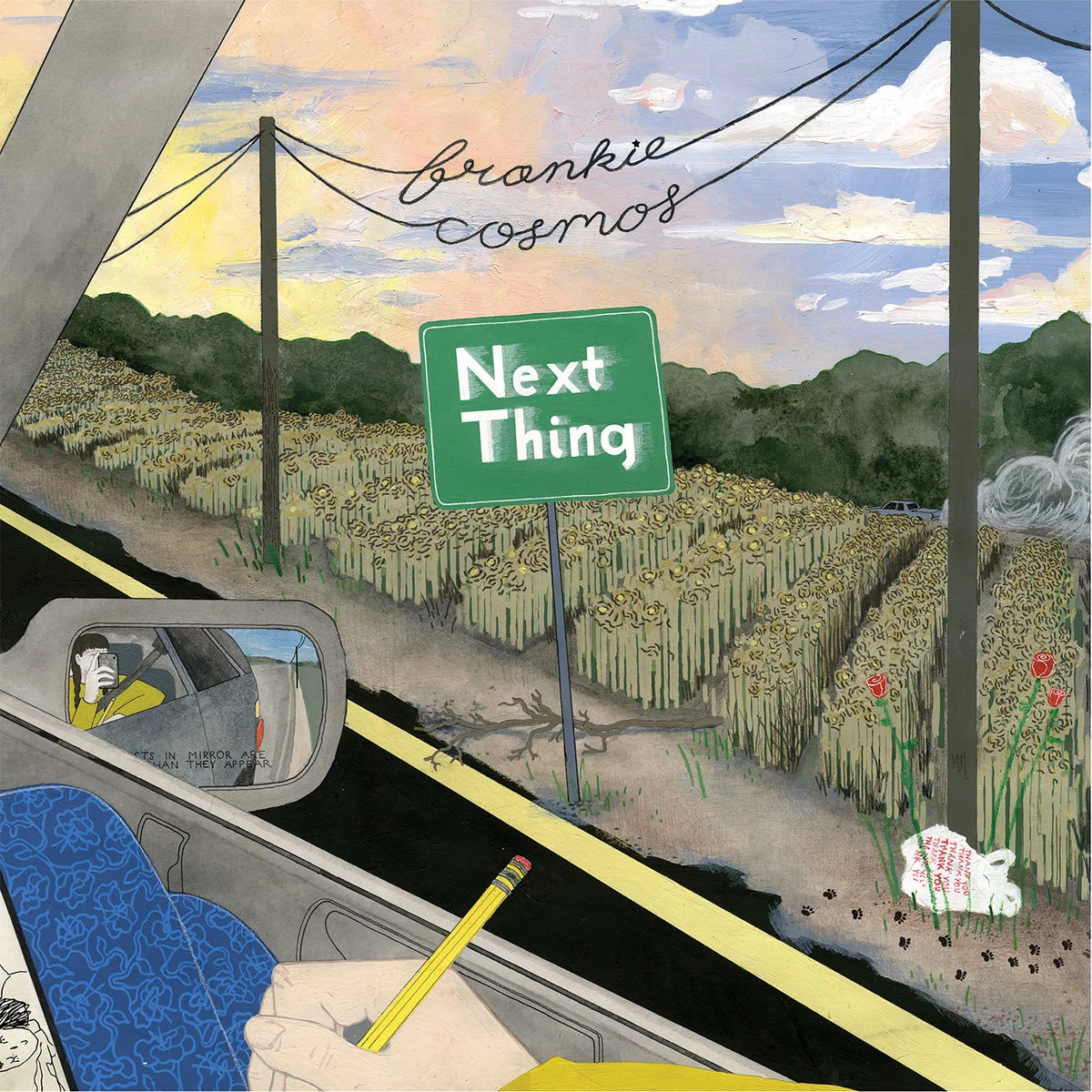
“Everybody understands me / But I wish no one understood me,” coos Frankie Cosmos mastermind Greta Kline on Next Thing. Through the swift but profound 28 minute runtime of her newest album she intimately sings of her relationship with others, her age, and herself, opening up her inner thoughts to the world. Generally, with songwriting this personal, artists risk their own vulnerability and judgment from listeners, but with Next Thing Kline manages to ride the line between private song making and a greater summation of the coming-of-age experience. Her poetic lyrics, although subjective and intimate, still carry some universal effect, and her simplicity evokes powerful empathy from the listener.

After a staggering catalogue of over 40 albums and EPs released on Bandcamp, Frankie Cosmos was finally thrown into success after her highly praised first official album, Zentropy. Leading lady Kline has always been the brains behind the operation - with her boyfriend Aaron Maine of Porches on drums - as she uses a natural inclination towards empathy to achieve painstaking emotional rawness. This ability to tap into subtle emotions could come from being raised by two actors, Phoebe Cates and Kevin Kline; her innocent introspection is ironic and humorous, but maintains a serious relatability. Inspired by poet Frank O'Hara, Kline uses everyday phrases that could be straight out of her diary to create minimal pop goodness, and her anti-folk writing that emphasizes lyricism over instrumental polish is original enough to conjure up nostalgia and emotion from the listener as her everyday experiences convey a pure honesty that, when attempted by other songwriters, can end up muddled.

Next Thing is aptly named; while 2014’s Zentropy focused more on playful, nostalgic musings of growing up, Next Thing has a heavier feel of more mature, intricate emotion that comes with shedding the “teen” at the end of your age. Kline is now 22 years old, and her new music shows it. Sure, this recent album still has the same pairing of upbeat, pleasing electric guitar and tinny percussion, but it takes on a whole new range of emotions that Kline might not have possessed at 19. Zentropy had ironically emphasized sadness from her cliched declaration that she was, “The kind of girl that buses splash with rain,” or the line, “I am so clumsy / I think how repulsive I am to you.” It was fun and light-hearted, but often over-exaggerated her self-deprecating nature, while Next Thing’s emotional sentiments are more varied. Tracks like “Self Doubt” and “Too Dark” are still laced with youthful insecurity, but the album’s overarching tone of sadness contributes an increased depth. This new form of melancholy plays with concepts that feel a lot more like 22; confusion about the future and its expectations that come with age, insecurity about being a fulfilling friend or lover, and realizing that sadness isn’t necessarily a bad thing. Three years after Zentropy, Kline still has feelings, but those feelings are finally felt confidently as she moves on to the next thing: self-assurance.

With poeticism that evokes rich imagery and a voice that meanders along the anchoring crispness of her instrumentation, Kline manages to differentiate herself from the hoards of lo-fi indie-pop artists of today’s scene. In the sharp album opener, “Floated In,” she uses her liquid vocals to captivate the listener, emphasizing the question, “What are you doing?” coupling it with echoing keyboard synths that balance her low melodramatic voice to create an overall gauzy melody.

“Fool” has timed crescendos that frame Kline’s wooziness in between contrastingly precise snare drum. “I’m 20” holds contrasting staccato picked guitar with floating background "Oo"s. “What If” has driving bass that keeps it upbeat, while “Interlude” and the album closer “O Dreaded C Town” have synths reminiscent of other bedroom pop artist, Florist, who she nods to in “Embody,” as Frankie Cosmos’s instrumentation continues to compliment the simplicity of her message.

“On the Lips” details watching David Blaine, when really it’s a song about falling in love with the idea of someone, while “I'm 20” sings, “I’d sell my soul for a free pen / On it the name of your corporation,” summarizing the overwhelming temptation to just sell out. “Embody” then offers sweet shoutouts to friends (including Eskimeaux’s Gabby Smith and Florist’s Emily Sprague) that represent the sweetness of friendship in your 20s, the type of friendship where you can see the “grace and lightness” of others, but recognize the personal goal to grow into and recognize yourself independently. Because of this it sometimes feels as if the listener is eavesdropping on a piece Kline wrote for herself and her close friends rather than an audience. She is quoted in Pitchfork as saying, “I’m gonna make [Next Thing] the most me thing ever, and scare off anyone who isn’t gonna like that. It was an exercise in staying true to myself," and she followed through, creating what is essentially is an intimate letter to herself with private meaning and inside jokes. Although the songs clock in at under two minutes, they each take on a presence of their own, making quite an impact with so little words in such little time.

The personal touches make this album Kline’s original narrative, but that does not prevent the listener from applying their own experiences to her music. In fact, hearing such personal experiences offers an insight into the tumult of someone else’s life, which, in a way, helps to reconcile the tumult of your own. She beautifully articulates the discomfort and newfound independence that lies in the transition between teenagedom and adulthood. These personable experiences of personal development are present throughout the album, and these bittersweet coming-of-age realizations only exemplify the widespread connection Kline feels towards her outside world.

In relation to Kline’s large portfolio of released work, Next Thing has a more direct and thought out message about what it means to be a young person. Even the seemingly unfinished lyrics of “Outside with the Cuties” was a conscious, matured decision by Kline. Her emotions face towards the future, and although she wishes that nobody understood her, she creates music that is universally relatable.

Wild Child on How Songs Evolve over Time, Hometown South by Southwests

Music InterviewRemedy GaudinoComment

Since their debut in 2011, Wild Child has become a staple in the Austin, Texas indie scene, but stolen hearts around the world with their endearing ukulele melodies, honest lyrics, and charming live performances. Sweeping the festival circuit this upcoming summer to perform their latest effort, Fools, the folksy six piece is continuously on the rise. 

Before performing their first of three hometown South by Southwest showcases, founding duo of Kelsey Wilson and Alexander Beggins (who may or may not be newly engaged) sat down with Transverso at local favorite, Swan Dive, for a chat about their latest album, touring, and the inspiration behind it all.

Director: Christian Sorensen Hansen Artist: Wild Child Album: The Runaround (2013) Label: The Noise Company Purchase on iTunes: https://itunes.apple.com/us/album/the-runaround/id689505418 New album 'Fools' out now.


TRANSVERSO: Fools came out in October, how’s that been going?

KELSEY WILSON: It’s going great, we have a lot of really good festivals lined up because of it.

I’ve heard third installments of anything, whether it’s an album, TV series, book, is typically harder to write. Was this true for Fools?

WILSON: Writing has never been an issue for us, that’s something that has always been there. With the first record we did it all ourselves. We rented equipment and figured it out. For the second record we did it professionally in a studio with a producer, like a nine-to-five kind of thing. This last record we found our favorite parts of both of those and just used them. We were in a studio but we could be there all night and we were just with homie producers, so at 2 AM if I was like, “I wanna do vocals right now!” I could.

How has Fools changed your live show?

ALEXANDER BEGGINS: Well, it’s kind of a curse because we just want to play all the new songs we just wrote, but we have to play a back catalog, but it’s been good and I think we’ve written a lot for our live show in mind. There are bigger songs, some more crowd friendly foot-stomping tunes. It’s weird how your live shows can dictate what you write.

What inspires Wild Child as creative individuals? 

WILSON: Other people. It’s always about experiences we’ve had with other people, we can only write about exactly what’s happening. It’s always straight from the journal, which makes it kind of hard because it’s extremely personal and really honest but we cant write something that we don’t agree with entirely and feel entirely. So, yeah it’s always just exactly what’s happening which is funny because then you sing about those tiny ass moments for the next two years every day and it’s like, "I’m still talking about that?"

You’re forced in to remembering those small moments repeatedly.

WILSON: And you have to get right back in that headspace every time you sing it, and Fools is pretty extreme.

Wild Child came together as a band from writing about break ups and situations like that, so is it hard to perform those songs over and over again even after those feelings have passed?

WILSON: After awhile they start to mean different things. You can attach songs that we wrote four years ago to different people. We wrote a song four years ago and still to this day we’ll be playing it live and be like, “That’s what I meant - that’s what that means - I get it now.” So they’re constantly evolving the more we experience and the more that we play them.  It’s not actually always the same, which is cool.

It makes the meaning change over time, so it gives it a whole new feeling towards it. 

WILSON: And you get to celebrate these experiences through meeting other people who’ve had them and connected to the song, so the songs stop meaning a song about a bad thing that happened and now it’s a song that connects you to thousands of strangers you don’t know. 

So how does it feel playing SXSW as a band from Austin?

BEGGINS: It’s really comfortable, this is like in our backyard and we actually only play Austin like once a year, so it's fun for us to get to play. But it feels like no pressure at all we already have everything we need, so it’s not like we’re trying to find this, we need this, this guys gonna be here. We’re just here and lets play some songs. It doesn’t really feel like a festival to me. 

WILSON: Yeah it’s just that one time that our city gets trashed and super crowded.

Back in Chicago we have Lollapalooza, but it's more contained. 

WILSON: We’re going to Lollapalooza for the first time this year.

BEGGINS: We’re stoked; really excited about that.

Are there any cities you are especially excited to go to for this upcoming tour?

WILSON: We have our favorites, I think we’ve played everywhere now so it’s kind of like what friends we have that are living there that we haven’t seen in awhile. It’s always nice to go to New York, LA, Chicago. Chicago has always been really good to us. Always.

BEGGINS: We’re doing a lot of stuff in Canada this year, too. Vancouver for the first time will be really exciting.

Wild Child has a sort of grassroots fan following. How do you think that will develop or evolve as you continue to grow as a band?

BEGGINS: I think that we have this secret weapon. We’ve developed this fan base that I think is going to be with us for a long time. It’s not this overnight success; all of the fans have grown with us for the past five years.

WILSON: It’s been a slow and steady build. For the past five years every single time we go through a city the crowd is 30% bigger, so it feels sustainable and real.

BEGGINS: I think that’s the way to do it these days. I mean, we would take overnight success if it came to us, but it's nice to know you can handle what’s coming at you. 

WILSON: And with overnight success - how do you keep that up? You can’t, no one does. But it’s like we can keep this up all damn day.

How do you keep it up? Last year you were out on tour for about nine months, plus writing and recording a record.

WILSON: We’ll schedule. If we don’t have to leave the hotel room until 2 PM, we’ll wake up early and do some writing. We went to Savannah, Georgia to record Fools. It’s beautiful and we just needed to go somewhere where we didn’t know anyone except for the producer and the studio, so it was like, that’s our option. We rented a house and it was like summer camp. 

BEGGINS: Our whole life is pretty much on a calendar. 

WILSON: It’s in 48-hour sections. I know what we’re doing today and I know what we have to do tomorrow. At all times.

Fools is out now. You can buy it here.

From Airheads to The Grammys, DIY Duo White Mystery is ‘Outta Control’

Music Interview, New MusicWeston PaganoComment

Rare are the bands blessed with the full package of a naturally iconic appearance, instantly classic backstory, and genuine DIY earnestness all at once, yet that’s exactly what Chicago-based brother-sister duo White Mystery have always had in spades. 

The radiance of Miss Alex and Francis Scott Key White’s shocks of ginger hair somehow personify their fuzzy rock riffs better than you would’ve imagined possible, and backed by their appropriately Orange brand amps even a cursory glance tips you off to something special. But below the Iron Maiden t-shirts, denim, and lo-fi jams is a frontwoman who can shred with the best of them – when she’s not singlehandedly filling the roles of the band’s record label, PR, booking, management, and merch production all at once.

On top of being a completely self-sufficient music industry microcosm, White Mystery manages to churn out a full new album (or, in the case of last year, an entire feature-length film) like clockwork on the 4/20 date of each and every year, while Alex also daylights as the Vice President of The Grammy’s Chicago Chapter, leading one to wonder just how many different hats she can wear over her fiery locks.

To announce their forthcoming LP Outta Control, the raucous redheads took over Last Call with Carson Daly last night to debut singles "Sweet Relief" and "Best Friend," the latter a sunny, Jefferson Airplane-esque track that tells the tale of camaraderie and is stop-motion animated as an adorable canine dive bar to raise awareness of adoptable rescue dogs in a music video released today.

Transverso spoke with Miss Alex White about White Mystery's origins, Airheads, and how their next release is on a mission to make pop music good again.

Pre-order on iTunes NOW: http://apple.co/1RByTFR


How was performing on Last Call with Carson Daly?

[It went] really well! White Mystery flew out to LA and played this legendary club called The Troubadour in Hollywood where Janis Joplin, The Doors, Guns ‘n’ Roses, even Cheech & Chong got discovered, and we played a full concert, and Carson Daly’s current NBC late night show recorded us and it air[ed yesterday.]  We’ve been on TV and we’ve been in movies, but this is our first time on network late night television.

You mentioned Cheech & Chong, are they an influence of yours?

[Laughs] Well Cheech & Chong definitely inspired the White Mystery movie That Was Awesome, which is a stoner film that came out last year on 4/20, and Cheech & Chong reviewed our album and helped premiere the trailer when it came out last year, so yeah, it was cool. Of course I love Guns ‘n’ Roses and Janis Joplin and all that stuff too.

What’s it like having an annual release date of 4/20 that coincides with the stoner holiday and is usually near Record Store Day as well? How much of that was planned?

That’s a great question. When we first started the band Record Store Day did not exist yet. So we really lucked out when two years later or so the record holiday came about and happened to always be within three to four days of our annual record release. So it really benefits our CDs and albums going into record stores around the world, and we do release it early to record stores depending on when the record store day is, so if it’s on the 15th the new White Mystery release will be in stores already.

What originally inspired setting that date?

Well it’s funny because Francis and I – my brother that’s the drummer – we had both been in a lot of different bands separately but also together with other band members. I traveled the world with my old band Miss Alex White and the Red Orchestra, [and it’d] be like, “Okay, bye Francis, see you later!” and [I] kind of left him at home and would be on my merry way with my bandmates, and when I graduated college and moved out of my childhood home here in Rogers Park in Chicago we started missing each other. We almost started hanging out more when I moved out then when I lived at home, and we started jamming and developing new songs. Myspace was available and Garage Band had become a program that allowed musicians for the first time to record a song and put it up on the internet immediately, and that really changed the environment for musicians, so here we were experimenting with Garage Band and that kind of thing, and we were like, “Wow, let’s start a band!” and we did. And we looked back at our Myspace and were like, “Oh, we started it on 4/20, I guess that’s our band anniversary!” and you know, ever since then we’ve used that date as an annual, cyclical milestone that makes sure we stay on track and are always producing new music and pushing boundaries for creativity in the music industry.

What can you tell us about this year's 4/20 release that will happen later this month?

It’s one of those things where everyone knows we put a new album out every year and have been since we started as a band, but it still surprises them somehow. It’s our best work yet, and we want to drop it like a big bomb. So basically the new White Mystery album - which is to be released on April 20th and the single [today] along with the stop motion animation music video - is called Outta Control which is inspired by White Mystery Airheads, which we had based the name of our band on back maybe 20 years ago when we got an Airhead taffy candy that said "White Mystery Outta Control" on the wrapper. [That candy’s wrapper] no longer [says that today], but that’s what inspired the name of our band [and] album. It’s really important to us to stick to our original vision. So anyway, it’s our 5th album; it is our pop masterpiece that we spent a lot of brain hours on developing it into the best possible album ever, where in previous years we did not have the luxury of time that we did for Outta Control. For instance, our third album Telepathic we recorded in two days while we were on tour in Oakland, [and] we recorded Dubble Dragon our double album at a live show in one take at a studio, so for this album we were like, “Okay, let’s take some time and really dial this album into a masterpiece.” It covers a lot of mood, but it definitely has the kind of dark witching vibes of a lot of White Mystery albums, but it has a lot of really great upbeat pop songs.

Outta Control cover art

Outta Control cover art

As someone with a DIY rock background what is the ideal pop song vibe to you?

A pop vibe is sort of ironic because while the album is called Outta Control it’s probably our most controlled work yet, which is how you create pop music. For instance, a lot of times when we made albums the drumming and guitars are just everywhere, you know, it’s like exploring over here and exploring over there and just like wailing and shredding and pounding, but in order to create pop music like every single stroke and note needs to be very methodical, and once you listen back if it’s not something that sounds absolutely perfect you have to actually revisit it until it is. So that’s what we did with the new album, we tried to make it [a] perfect masterpiece and that was a very fun challenge for me, you know? I love The Monkees, I love The Rolling Stones, I love Patti Smith, and I listened to a lot of their seminal records and it also really inspired me to try to make the cleanest album possible. When you listen to record like modern garage records I like Ty Segall, for instance. A lot of times the producer will put a lot of fuzz or a lot of reverb on the record to give it this kind of lo-fi sound, but we actually wanted this record to be more of a hi-fi sound that, for instance, could be on the radio and perhaps expand our audience more so.

You seem very connected to your DIY Chicago identity and have a sort of a cult fan group. When you say you’re looking to expand what are the boundaries or lack thereof you’re looking to transcend? 

Well we’ve traveled worldwide to Hiroshima in Japan and Karlsruhe, Germany or Queenland, Ohio, you know, we’ve played a lot of pretty obscure cities on Planet Earth, and there will always be an audience of people who have seen White Mystery, and in some cases multiple times. We’ve been a band for 8 years and we’re extremely grateful for our fans because they are the backbone of what we’ve been able to achieve all these years, and what we’d like to do is make mainstream music better. So right now when you go to the Grammy’s or watch the Grammy’s it’s honestly a lot of very contrived sort of tame pop music, and a lot of times I kind of envy my parent’s generation when bands like The Who and The Rolling Stones and Deep Purple were actually popular and on the radio, and I think that the White Mystery mission would be to try to make pop music good again with this new album.

You're also the Vice President of the Grammy’s Chicago Chapter, do you often feel like you’re one of the craziest, rawest, indie-est people in that circle? How do you reconcile those two worlds, are you trying to change the system from the inside out?

Well I’m not sure how much I can actually really comment about it but I would say that the Chicago Chapter is full of amazing working class professional musicians who are on a mission to basically help musicians make a living in a world or industry that has changed a lot in the last 20 years. You know we’re in the streaming age now and people used to make money off of album sales. It’s a diverse group of people and I wouldn’t really consider myself… they’re all unique individuals and we’re all working towards shared goals of advancing music in the Midwest.

whitemysteryband.com

whitemysteryband.com

To go back to your origin story, you have a photo of you at an Airheads factory. How did that come about?

Yeeeahhh! So basically - and that was years ago too - we received an email from the marketing department of [Perfetti Van Minelle] - which makes Airheads and Mentos - that said, “We’ve been watching you for a long time and we saw that you’re playing Cincinnati which is just right over the river from our factory where we make Airheads in Erlanger, Kentucky. We would be honored to have you visit our factory and we will make sure that we are producing White Mystery [Airheads] that day.” So we went and we put on our little Laverne and Shirley cloak and toured the factory and they gave us tons of free candy and it was one of the best days of my life.

If you order vinyl from Polyvinyl they include Airheads in with the package; have you ever considered including White Mystery Airheads in with yours?

Yeah we have done [that], and we’ve passed them out at shows, and you’ll see there’s even a picture of us in a giant bathtub full of Airheads and we passed those out at Halloween. I like Polyvinyl and they’re in Champaign, Illinois which is kind of funny, but I think that the thing they and we have in common is that Airheads are kind of the unofficial candy of record stores. When I was a teenager and I worked at Laurie’s Planet of Sound in Lincoln Square, [Chicago] Airheads [were] the only candy we sold ‘cause it’s not like chocolate where it goes bad or melts or gets gross, it’s taffy so it just sits there and it’s kind of, you know, like a Twinkie where you could eat it today or in five years and it’s gonna taste the same. So a lot of record stores would sell these Airheads and that’s partly why we really love them and why Polyvinyl love them too; they don’t go bad, they’re flat and they ship without getting smooshed or broken, and if you ship a Snickers bar it’s gonna be, like, melty or fall apart or get smashed, where an Airhead is [a] flat sugar, non-expiration kind of candy. And they’re cheap, they were like 20 cents when I was a teenager, so it’s like you could literally have 50 cents and still get change back after you got candy, you know, so I think that [since] they’re so inexpensive and made in the USA they have the feel. Made in America, baby! And I think that that’s partly why we love ‘em so much too, that’s the secret. [Editor's Note: I had to eat an Airhead while transcribing this, and though I didn't have White Mystery on hand, the cherry red flavor I did have was probably the next most appropriate option.]

It seems throughout your career you tend to end up in duos: The Red Lights, Miss Alex White & Chris Playboy, and White Mystery. What is it about this dynamic you like best in music? Do you not like the idea of too many cooks?

Well I guess a lot of the time I would want to start a band with whoever was my best friend at the time, and, you know, it was just easy. So if there was someone else out there who’s your best buddy, who you hang out with all the time, then you start a band together; one of you plays drums and the other one plays guitar. So it just kinda worked out that way. And with The Red Lights, Elisa was my really good friend in high school and she had passed away at a really young age, and then Chris Playboy who replaced her also passed away, and Eddie [Altesleben] who was the drummer of The Red Orchestra who was a four piece band, he passed away as well, so it’s like even when you’re super heartbroken from the passing of your friends when your passion is music it helps you get through rough patches. So I like playing in two pieces ‘cause there’s just a really special dynamic that happens between two people and it allows you to be creative and collaborative, and then you never need to buy a van, you can always tour in a car.

Will White Mystery ever be solved?

[Laughs] Well back on 4/20/2008 Francis and I agreed we would do the band for exactly 10 years, so technically the riddle will be solved 4/20/2018.


You can preorder a physical copy of Outta Control here or a digital copy here.