TRANSVERSO

- A culture magazine reaching terminal verbosity -

Yeasayer Transcends Time and Space on 'Amen & Goodbye'

Music ReviewWeston PaganoComment

There are few bands that can evolve as effortlessly as trio of art rock Brooklynites, Yeasayer. On their fourth LP, Amen & Goodbye, they don’t just reconcile the worldbeat freak rock of All Hour Cymbals, psychedelic pop of Odd Blood, and brooding, dark electronica of Fragrant World, but manage to transcend time and space itself with a mélange of biblical allusions, futuristic sound, and countless other seemingly disparate stylistic and thematic juxtapositions.

Switching from their one figure per album cover tradition to a Sgt. Pepper’s-esque tableau immediately visualizes this idea of there being many influences (A&G is also, appropriately, the first time they enlisted an outside producer), but while The Beatles used their identity experiment to sever themselves from their past, in a way Yeasayer solidifies and combines theirs. Both groups took the chance to evolve, though, and Yeasayer evolve forwards, backwards, and sideways across boundaries in all directions simultaneously, exhibited especially in the interludes that punctuate A&G with a sort of time-traveled erraticism across “Computer Canticle 1”’s tech hymn of tribal space noise and “Child Prodigy”’s baroque celebration.

The recording process too felt an odd situational paradox - recording live as a band for the first time in the wilderness of upstate New York, Yeasayer had to battle the audible hum of a nearby electric fence or wrangle escaped goats if they turned it off. With normally only about two and a half year breaks in between full-lengths, A&G required an atypically long four to procure, explained at least in part by a rainstorm leak damaging much of their tapes (such are the dangers of analogue recording). Not all was lost, however, with that same precipitation providing the rainfall background to “Gerson’s Whistle,” which appropriately concludes, “Troublemakers make the world go round.” 

It’s no mistake Yeasayer both references the similarly wet Genesis tale of the Great Deluge in album opener “Daughters of Cain” and shows a rotting, severed Trump dictator head in “I Am Chemistry”’s faux-claymation post-apocalyptic hellscape of a music video, saying, “Living in America, you're faced with presidential candidates talking about the end times, and everything is so God-laden. It became a theme for us when we were thinking about lyrics, reflecting on our culture and these big questions about religion." (Political forays are nothing new to the band after the stygian pulse of Fragrant World’s “Reagan’s Skeleton.”)

'I Am Chemistry' taken from the forthcoming Yeasayer album 'Amen & Goodbye' which will be released April Fools' Day, 2016. Directed by New Media Limited.

The track “I Am Chemistry” is a clever litany of poisonous substances set to a glorious, undulating synth rapture and Suzzy of The Roches adding vocal depth with a curious choral contribution. It’s quickly followed by the second official single and most unabashedly pop offering since Odd Blood, “Silly Me,” which opens with choppy acoustic stabs before sharply transforming into a full blown dance lament with the infectious refrain, “Silly me / Where’s my head / I can’t believe now it’s over / She would be here if it wasn’t for silly me.” With glittering admissions like "With crystal ball I now can see / That I'm a man of low degree," it's surely one of the most cheerfully upbeat confessions of guilt you'll ever have the pleasure of hearing.

“Half Asleep" pairs the gospel mantra of “Deliver me from evil” with Middle Eastern sitar-like tones before “Dead Sea Scrolls” breathes energetic groove into the ancient religious manuscripts that lend it their name, until climaxing and convulsing with a frantic primal scream of avant-garde robotic sax that I haven’t once been able to avoid turning up the volume for yet. It speaks to your primitive mind, but your primitive mind has long since been encased in a synthetic shell. With subsequent “Prophecy Gun” we get a gently frenetic beat and ominous bassline layered with vocals almost reminiscent of Paul Simon at his most soothing.

An ode to co-frontman Anand Wilder's daughter (whose birth, incidentally, postponed at last minute a Yeasayer gig I had crossed state lines to attend back in 2012), “Uma" provides their best slow dance since 2010's underrated “I Remember.” Complete with an instantly whistlable, quivering theremin melody played on a digital heartstring and heavy love letter lines of, “And in our overlapping lives / 30 years on either side / Never thought I’d be surprised that I’m alive when you’re alive,” and, “Hope I still can make you smile / When I get to be senile,” it's a piercing highlight that shows even adoration itself is firmly welded to the concept of time.

Amen & Goodbye is Yeasayer’s most heterogeneous body of work, both in terms of the patchwork of its sonic and textural peaks and valleys but also its blending of classic motifs with newly formed bizzarities in a way that never feels heavy handed or campy. Its mysticism and mythological character is scattered but strong like the fable of a universe that doesn’t exist yet, though the personal, poignant closer “Cold Night” grounds the LP with an honest attempt to come to terms with the loss of a close friend: “It’s been one year since you turned yourself back into dust / I guess this is life / You perish or you survive.” Some things never change no matter the context, chronology, or instrument used; life is finite whether ended in a biblical flood or fascist regime. “Was there something I could've told you?” Maybe not. Or maybe this is it exactly. Amen & Goodbye indeed.

'Batman v Superman: Dawn of Justice' Is a Disasterpiece of Epic Proportions

TV/Film ReviewEthan WilliamsComment

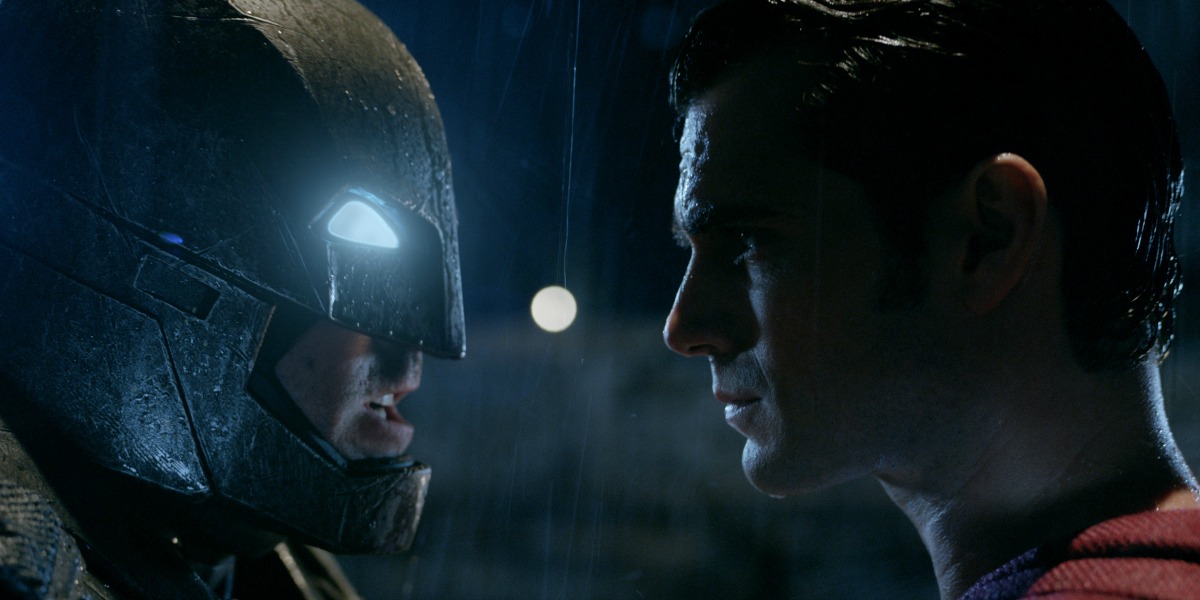
Batman v Superman: Dawn of Justice is a film done half by committee and half by a hack filmmaker, resulting in one of the most baffling tentpole blockbusters in recent memory. 

For all of Man of Steel's issues, there was at least a semblance of hope that dealing with the fallout of Superman's destructive battle in Metropolis would provide an interesting crux for a showdown between comics' two most iconic heroes. Instead Warner Bros. and Zack Snyder don't really shoot themselves in the foot so much as they take a shotgun blast to both kneecaps before this franchise has even truly begun.

To every comic fan out there, these characters probably couldn't be less recognizable, which ends up feeling like a huge miscalculation. And while making such darker and grittier choices when it comes to our titular heroes isn't necessarily a death sentence for a franchise, failing to make an interesting or coherent story certainly should be. For all of the promise that a clash between these two titans should entail, the conflict disappointingly takes a back seat to a mishmash of setups for future movies while failing to have a compelling story or characters of its own.

Even at two and a half plus hours, DC's obsessive desire to catch up with the world-building of Marvel's Avengers means BvS ends up more bloated than a dead whale, covered in pustules meant to tease (or threaten) even more of this tripe. Not to mention it manages to both cram in and bungle some of DC's most iconic comic book runs before we've even had a chance to know or come to like these characters at all.

Everything leading up to the promised battle is..."experimental" editing, we'll call it... where any vestige of film logic simply evaporates almost as soon as it appears. Scenes with virtually no relation appear in sequence with no rhyme or reason (or establishing shots) and it makes following the plot or grasping the buildup towards the climax a Superman-sized feat. And when the two finally do come to blows and the movie starts flailing towards something interesting, the tension is deflated like a sad sigh escaping a wet balloon, which then devolves even further into CGI mayhem and one of the most dramatically underwhelming attempts at emotion in a comic book film to date.

But it would truly take a Herculean effort to reconcile the giant misstep that has been Henry Cavill's Superman. Instead of giving Cavill a single chance to make himself likable after a muted showing in Man of Steel, screenwriters Chris Terrio and David S. Goyer instead double down on the hemming and hawing that is Superman's Christ complex, refusing to give him a single moment of likability or humanity. His laughably unearned relationship with Amy Adams' Lois Lane is still utterly uncompelling and Lois once again never rises above a plot device when their relationship ought to be the warm heart of the film. 

And if Cavill's Superman hits a bum note, his supposed foil is an absolute flatline. Even if Jesse Eisenberg's Lex Luthor was just a more neurotic and eccentric mad scientist than his shrewd businessman counterpart in the comics, it still wouldn't excuse this film's muddled attempt at a motivation for his evil machinations. Luthor's reasoning for pitting the heroes against each other flabbergastingly changes or simply isn't explained and every one of Eisenberg's fidgety attempts to get something meaningful out of the material does not click whatsoever. 

If any character makes it relatively unscathed after this movie's thrashing it's Ben Affleck's Batman, even if he’s transformed from a principled vigilante with a code into a murderous, grim old bastard who doesn’t mind branding his victims so they’ll be viciously killed in prison (seriously). While certainly landing amongst the better film portrayals of the Caped Crusader, it's an unfortunate fact that most of the Batman material here is a less interesting retread of what has come so many times before. For all of Snyder and crew's ass-kissing of Frank Miller's classic The Dark Knight Returns, it would've been nice to use that grizzled incarnation of Batman to explore events in his past never portrayed before onscreen. There's only so many times you can feel something as Thomas and Martha Wayne are gunned down in the street and BvS hardly does anything different in the Bat's backstory (are we 100% sure the scene where young Bruce falls in a well isn't the exact same footage from Batman Begins?). Even Batman's most interesting action sequence where he chases down an armored truck is cheapened when the realization sets in that Christopher Nolan did this so much better barely even eight years ago. 

As for Gal Gadot's Wonder Woman... she's there. She fights. She does some fairly inconsequential Justice League exposition... wait, why was she here again? To just remind us she has a moving coming out next year? Is this whole movie just a DC infomercial?

There's a fascinatingly great superhero tale buried within Batman fighting Superman that should truly stimulate our superhero consciousness, and Batman v Superman: Dawn of Justice has the unfortunate task of having to balance that interesting story with building an entire cinematic universe over the course of a few hours. For those fleeting moments where our heroes do trade blows there's a spark of movie magic that no hack or studio exec could ever screw up, but it's buried under a two hour mess that tries to cram "DC's Greatest Hits" into a dour, colorless romp of unlikable characters. Not all superhero movies have to be colorful or funny, but at least give us a dramatically satisfying story if we're to hop onboard another extended universe.

Batman vs Superman Dawn of Justice Official Trailer #3 US | Subscribe: http://bit.ly/1O5lo1q | Offizieller German / Deutsch Kinostart: 24 März 2016 Zack Snyder's BATMAN V SUPERMAN: DAWN OF JUSTICE is in theaters March 25, 2016.

SBTRKT Steps Out of Familiar Sound On "SAVE YOURSELF"

Music ReviewSean McHughComment

If we’re still looking for nicknames to describe the musical year that’s been in 2016, might I suggest “The Year of the Surprise Release”? Granted, two of those “surprise” releases were at the hands of Doug from TIDAL (The Watch plug - hello Andy Greenwald and Chris Ryan), in which Rihanna and Kanye worked to assert their social over financial currency preferences. Then we saw Kendrick release untitled unmastered., a left field release that somehow operates on the level of To Pimp a Butterfly and somewhat dethroned Kanye from his throne atop the musical zeitgeist. Obviously, there’s a common denominator amongst all three of these giant releases (no, its not that they were all featured on The Life of Pablo, thought you’re headed in the right direction) – they’re all hip-hop based albums, even with Kanye’s constant assertions of TLOP being a gospel record.

Don’t worry, that’s all the Kanye talk this review has in store, but long-winded intro aside, there’s something to be said for hip-hop lending itself to being a disruptive force that would benefit from guerrilla style releases rather than the usual promotional cycle. Keeping with the recent slew of first quarter surprise releases, collaborator/producer extraordinaire SBTRKT has added his name to the heavy hitting list.

SBTRKT is a producer that I’ve come to become increasingly fond of with each subsequent release – not necessarily for his musical handiwork (though I do enjoy it), but rather his ability to get such fantastic features on his records. Early SBTRKT featured Jessie Ware, Little Dragon, and other releases included Raury and Ezra Koenig, making each of his records a stimulating exploration in collaborative coordination and SBTRKT’s understanding of musical cohesion.

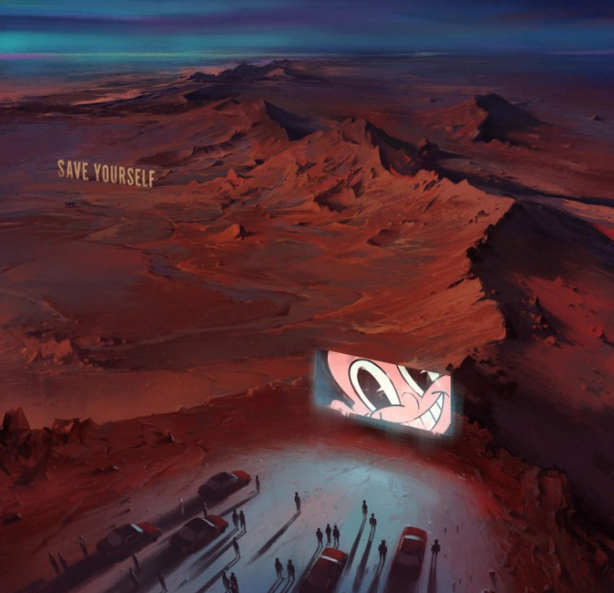
Newest release to date, SAVE YOURSELF, is also his most cohesive – continuing the trend of steady and substantial maturity as a producer and creative mind. Outside of the aged development of the record, SAVE YOURSELF also touts itself as the most intrepid release by SBTRKT, with effectively one week’s worth of promotion leading up to the surprise release of the album.

Most of SBTRKT’s albums are at least ten tracks deep – the longest of his long-play efforts, Wonder Where We Land, featured a tracklist twenty-two songs long. SAVE YOURSELF is an interesting diversion from SBTRKT’s prior releases, as the record only contains nine tracks – making SAVE YOURSELF some strange convergence between an EP and LP. Furthermore, the production on SAVE YOURSELF is an interesting departure from the heavy-jungle rhythms of past – SAVE YOURSELF sounds like a heavy mixture of Chrome Sparks meets Madeon style house music. There are still the apparent hip-hop, R&B, and funk amalgamation that’s considered a SBTRKT touchstone, but SAVE YOURSELF also features more adventurous studies into trap music, as well.  

In terms of the house vs. trap music contention present in SAVE YOURSELF, the record opens with the aforementioned Madeon-esque bright beat driven opener “GEMINI,” reminiscent of a hopeful space odyssey as synth drive the song along with twinkling piano and tones with little to no percussion at all before fading into the album’s truly introductory track, “GOOD MORNING.” As mentioned before, SBTRKT is an artist/producer who is largely defined by those he collaborates with, and in terms of past collaborations, his collaboration with The-Dream on “GOOD MORNING” is arguably one of his best to date. The song focuses largely on celebrating the commitment to remaining steadfast in love; exploring marriage, child rearing ("Here’s to the baby that you’re going to carry”) and loyalty. It’s a stunningly mature and specific track for a SBTRKT song considering most of his songs in the past have focused largely on vague interactions or allegorical scenarios. The lyrical focus should be credited to The-Dream, who has found second life as a songwriter after his brief stint as a solo artist in the early to mid 2000s.

SAVE YOURSELF is SBTRKT’s best long-play release by a long shot – for starting out as a self-taught producer, the growth over three album’s time makes for an impressive coming of age record on SAVE YOURSELF. It also features SBTRKT’s finest collaboration with frequent collaborator, Sampha, on “TBD.” The track opens with 808 beats eerily reminiscent of Chrome Sparks as ominous guttural noises layered over chimey hits before Sampha begins to wail over the track at its first break. Having followed SBTRKT’s journey since his first EP, its safe to say that “TBD” sees SBTRKT and Sampha connecting in such a collaborative manner that the shifts from house to soul to trap in a single song issues no obstacle for the two.

Following Wonder Where We Land, it started to appear as though SBTRKT was an A&R gem that had begun to run out of creative juice, and a follow-up to the robust sophomore effort would need to see some substantial changes made, or at the least explored. SBTRKT had become an artist who needed to show some growth, with self-taught production only extended so far on the A&R plane. Luckily, SAVE YOURSELF allows SBTRKT to really grow and live within some unchartered territory that is so considerably divergent, its hard not to be impressed that such a gamble would be made in the first place. It almost feels as if SAVE YOURSELF was a representative manifesto of SBTRKT’s mindset in regard to continuing his young and verdant career.

Hear Peter Bjorn and John Reach "Breakin' Point" on New Single

New MusicWeston PaganoComment

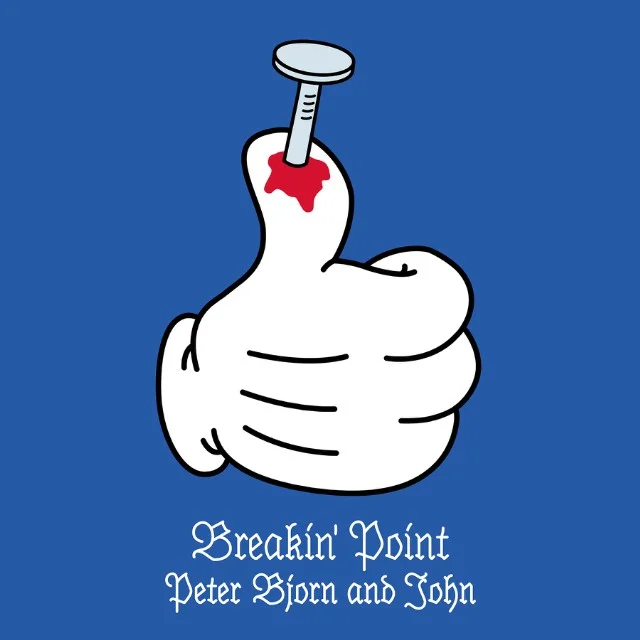
It may feel hard to believe it was a full 10 years ago now that "Young Folks" whistled Peter Bjorn and John into our ears and hearts, especially with how similarly the new title track from the band's forthcoming LP Breakin' Point starts out.

Originally debuted on NPR in a broadcast from as far back as last July, the single joins "Do Si Do" and "What You Talking About?" as our first glimpses of PB&J's comeback record slated for release on 6/10 via the trio's own label, INGRID. Still thumbs-upping since 2011's Gimme Some, the cheerful Swedes add an impassioned chorus and gently raining piano to the whistles, explaining to Stereogum:

It’s about waiting for new things coming ahead that will leave the past in the dust or at least make it look very different. About mental and physical adjustment. About kids becoming parents and maybe about growing up. About perspective, balance and seeing things for what they might actually be and not blown up to grotesque proportions. It features great production from Emile Haynie and whistling (may seem like bigger news than it is, hey its only whistling) and its the title track from our new album and we’re very proud of it!

Buy our new single 'Breakin' Point' on iTunes here: http://smarturl.it/pbjbreakingpointdl Stream our new single 'Breakin' Point' on Spotify here: http://smarturl.it/pbjbreakingpointsp Follow Peter Bjorn and John: Facebook - http://smarturl.it/pbjfacebook Twitter - http://smarturl.it/pbjtwitter Spotify - http://smarturl.it/pbjspotify Instagram - http://smarturl.it/pbjinstagram www.peterbjornandjohn.com/ This is the Official Youtube Channel of Peter, Bjorn and John.

Margo Price Catalyzes the Country Renaissance on 'Midwestern Farmer's Daughter'

Music ReviewSean McHughComment

If you don’t live in Nashville, then you may or may not be privy to the country music “resurgence” happening within the city. The critically condemned bro-country supposedly (I only say this because it's not like bro-country has been eradicated) has met its match at the hands of “throwback” country artists like Christ Stapleton, Sturgill Simpson, and for some reason, Jason Isbell - whose Americana stylings are lazily thrown into the mix.

That being said, there’s nothing wrong with bro-country if you enjoy a little dirt road chilling or whatever, that’s cool - sure, Florida Georgia Line sucks, but Luke Bryan seems like a pretty nice guy, and Sam Hunt is doing some cool stuff. Granted, I am grateful for some much-needed country-western escapism in music, but there in lies the problem – non-country connoisseurs consider it as nothing more than deft escapism that is slowly building into a trend.

While the emergence of Stapleton – a man who spent over a decade as the songwriting king of Nashville – and his recent run of headlining festival announcements has helped provide a more substantial stage for country artists of all creeds, there’s still a substantial underrepresentation of the number of exceptional female “throwback” country artists such as Kacey Musgraves, Nikki Lane, and Aubrie Sellers. Now, some of these kick-ass country queens have gotten their just share of media coverage – namely Musgraves – but their records still go largely unnoticed by the masses. I understand that music is a largely subjective field, and it would be unfair to try and shove artists down listeners’ throats, but artists like Musgraves and the criminally underrated Lane deserve to be heard.

My best guess as to why the new-school of old-school female country artists have yet to get their due recognition is the awful taste of country Taylor Swift and Big Machine left in the mouths, eyes, ears, and minds of listeners. We grew rightfully sick of her calculated precociousness, but an unfortunate casualty in the annoying nature of T-Swift’s modus operandi were the real women of country music. After years of genuinely talented artists being largely underappreciated, old school country music may have finally found its queen to properly rule along Stapleton –the hard-drinking, heavy-living country balladeer turned Jack White protégé – Ms. Margo Price.

Price is the first country artist signed to Jack White’s Third Man Records label, and such an ascription might finally be the big name endorsement necessary for a country artist to be taken seriously by the non-country masses. Chris Stapleton is a certainly a self-made man who has had his fair share of help along the way, but he received a “legitimizing” bump from his and Justin Timberlake’s duet performance of his song “Tennessee Whiskey” at the 2015 CMA Awards. Jack White is of course one of those musical entities that has achieved demigod status – a la JT – that offers a “can do no wrong” standing amongst many music aficionados and casuals alike.  It’s an unfortunate reality within country music – the political style endorsement needed to validate an artist’s cultural relevance – but such is the nature of those who are afraid to venture into new sonic realms (listeners, that is, not Stapleton or Price).

Order the "Hurtin' (On The Bottle)" 7" single with non-album B-Side "Desperate and Depressed" from Third Man Records HERE: http://thirdmanstore.com/margo-price-hurtin-on-the-bottle-7-vinyl "Hurtin' (on the Bottle)" is the first single from Margo Price & The Pricetags upcoming record MIDWEST FARMER'S DAUGHTER, coming March 2016 on Third Man Records.

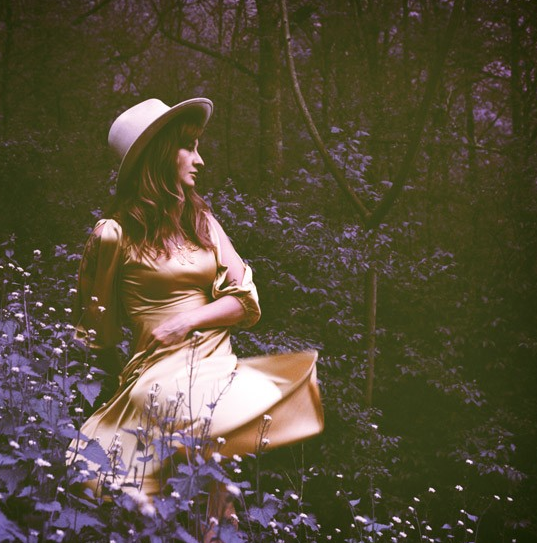
Price has been picking up some considerable steam in relation to the release of her debut record, Midwestern Farmer’s Daughter, thanks in large part to a stellar SXSW run and a slew of fantastic television appearances – peek her killer Colbert debut – that have manifested into a fever pitch of anticipation for a consummate country record. In short, Midwestern Farmer’s Daughter is a country record through and through, but it features some new age sensibilities in regard to its lyricism and occasional non-country tonalities.

Midwestern Farmer’s Daughter opens with “Hands of Time,” a title that might possibly imply the much-ballyhooed nature of Price’s overall “sound,” a little bit Dolly Parton meets clichéd fictionalism, as the fun country sentiments of yesteryear – prosaic references of working hard at a young age, wanting to do right by her parents, busting her ass, etc. It seems a little too purposeful with its sentiments, almost as if to sucker in nostalgia addicts who bought into the heavy “throwback” country hype. It’s a lovely song, as a steady stream of percussive string hits and meandering banjo and steel guitar present a set lovely (but underutilized) scene.

Second track and one of two singles, “About to Find Out,” is a highlight. Price opines new age feminism through the lens of Southern cynicism, with some fantastic breaks for her stellar backing band to hit hard on licks and drive the unapologetic country girl vibe home. It's a sort of testosterone ridden woman’s rally cry to warn any man that might cross her. “Tennessee Song” feels like an obligatory addition to Midwestern Farmer’s Daughter - as she references both I-65 and 440 West – familiar country motifs that feel more like placeholders than personal signifiers. The chorus of “Let’s go back to Tennessee” feels like another latitudinarian sentiment that becomes a recurrent theme on the album; on one song Price might be a hard-nosed, kick-ass woman (when she’s at her best), while on the next song she’s love-addled and pining for her man (not quite her best).

Cleanup track “Since You Put Me Down” acts as an open letter to a former lover that left Price – or her unnamed narrator for the record, its never quite clear – wilting and dejected, as she “been trying to turn [her] broken heart to stone.” It’s a fun song that echoes the classic sentiments of Dolly or Emmylou Harris doing their damndest to stand upright while expressing petty sentiments with little remorse. “Since You Put Me Down,” is one of the smoothest tracks from a musical standpoint, as well, as the cool ballad turns into an ambling country manifesto for Price’s steel guitar player to display his immeasurable chops. Now that we’ve hit the meat of Midwestern Farmer’s Daughter, it seems fitting that Price would throw a curve ball in the form of “Four Years of Chances,” that resembles the strange country/disco era, as Price reminds the anonymous recipient of her ire that he’s been given more than enough time to atone for his shortcomings. Once again, the lyrics leave a little to be desired – mostly in regard to the modern woman with old school influences versus the modern woman trying to capitalize on nostalgia for a certain sound – which effectively means there’s not much lyrical depth, but damn does her band sound good. Like really good.

We pass the halfway mark of the record and we finally get our first taste of Price’s Nashville story – or at least a story revolving around Nashville – “This Town Gets Around.” Judging from the song title, one might assume that the title personification might provide an allegorical subtext for the track, but not quite. That being said, it’s one of Price’s best tracks in terms of tongue in cheek word play like “Well as the saying goes / It's not who you know / But it's who you blow that’ll put you in the show.” It's by far and away the most endearing track, mostly for the smack-you-in-the-ass-then-give-you-a-wink writing paired with a classic country swing.

The next few tracks are more or less familiar reimagining’s of earlier tracks – highlights being the preeminent country western swing sound of “Weekender,” a habitual drunk tanker’s manifesto which leads into the track that started the Margo-mania, “Hurtin’ On the Bottle,” an early favorite for best song title of 2016 – but also begins to highlight one of the troubling realities of Margo Price: a far too familiar sound that’s more reminiscent than fresh. It almost feels like country music as desperate for their Chris Stapleton female analogue, and Kacey Musgraves and Nikki Lane were far too well established to shoulder the burden, so the onus was ascribed to Price. Its an interesting consideration when you consider that Price and Stapleton’s stories are somewhat parallel – Stapleton spent years as a member of The Steeldrivers, a formidable, but middling country group; in congruence, Price fronted Buffalo Clover, but took off once she went solo.

Midwestern Farmer’s Daughter goes out with a whimper, which isn’t necessarily a bad thing – “World’s Greatest Lover” is a well meaning ballad that expresses the sweetest country love sentiments, but its all too formulaic to invigorate the records grand finale, “Desperate and Depressed.” A song title that might elicit an eye roll from those who are familiar with the most recurrent country motifs, but “Desperate and Depressed,” actually works as a serviceable sendoff of Price’s first record. Midwestern Farmer’s Daughter is a damn good debut record, but a so-so country record – it doesn’t quite reach Kacey Musgraves’ Pageant Material and pales in comparison to Stapleton’s opus, Traveller, but it makes for an interesting experiment. Stapleton and Musgraves benefit from major label backing, while Price works independently, either as the pioneer of indie-country, or the eventual martyr who never quite found her “own” sound. Price means well on Midwestern Farmer’s Daughter - and she hits a lot of great notes - which certainly point to a tenured and exceptional career, but a part of me fears that she could end up falling victim to a recent nostalgia trend. She’s the type of girl to go her own way, and hopefully in the future, she begins to carve a more substantial path that builds upon Midwestern Farmer’s Daughter.

Iggy Pop Signals His Departure On 'Post Pop Depression'

Music ReviewSean McHughComment

Iggy Pop has got to be the single most overlooked “legend” in music (settle down, Mudhoney and Tears for Fears fans, it's just an opinion) – the guy has outlived contemporaries, pivoted with coming trends, more than stayed afloat following his departure from The Stooges, and never failed to impress with his frenetic style on stage despite being a spry 68 years old.

Pop is also the source of some of the finest tour diary anecdotes, including my personal favorite: Iggy Pop was once duped into opening for Flock of Seagulls in the 1980s. Understandably flummoxed by the disregard for his pedigree, Pop did what Pop does best – cause a scene. Enlisting the help of the tour’s production crew to craft a giant wooden cross, he painted his face green, and would drag the giant cross out on stage every night with the bewildering face paint only heightening his stage histrionics, which eventually got him kicked off the tour. It’s artists like Iggy that allow for present day “mavericks,” “renegades,” “free-spirits,” “weirdos,” etc. to perform in deranged manners minus any real career detriment.

A bastion of punk, proto-punk, art rock, and everything in between, Iggy has spent a lifetime of cavorting and writhing around on stage, and for 23 albums – including 5 Stooges records, one James Williamson collaboration, and 17 solo records (which includes a cover album recorded entirely in French, Apres) – he has managed to maintain his status as rock music’s most adept chameleon. His seamless transition from collaborator extraordinaire on his Skull Ring record in 2003 – featuring Green Day, The Stooges, The Trolls, Peaches, and Sum 41 – to his jazz record inspired by Michel Houllebecq’s novel La Possibilite d’une iˆle, Preliminaires in 2009; we’ve seen Iggy Pop cover just about every musical base a punk rocker from Ann Arbor, Michigan could conceive.

To that notion, anything that Iggy Pop puts out from this point on – be it a solo record, a compilation, b-sides, demos, or covers – should be celebrated as yet another fine accoutrement that adorns the already spectacular apparatus that is Iggy Pop’s discography. Unfortunately, when music legends release projects in the twilight of their careers, the efforts do necessarily ensure a maintenance of the gravitas that’s become synonymous with their name (looking at you, Bob Dylan’s Shadows In the Night). Fortunately, such a shortcoming is not the case with Iggy Pop’s most recent release, Post Pop Depression - a record so incomparable with past Iggy efforts, it could be argued that the former Stooges front man’s collaborative effort with Queens of the Stone Age front man-turned-super-producer Josh Homme could be the finest release of Iggy Pop’s career to date.

A nine-track sonic exploration of Iggy Pop’s Joshua Tree retreat – where Homme’s studio is located – Post Pop Depression features an unofficial “supergroup” as Iggy’s backing band – Josh Homme (Queens of the Stone Age, Them Crooked Vultures), Dean Fertita (QOTSA, The Dead Weather), and Matt Helders (Arctic Monkeys) – helping provide some of the fullest sounds ever featured on an Iggy Pop record. Post Pop Depression opens with “Break Into Your Heart,” a track that prominently features Iggy’s vocals asserting the affirmative recognition of Pop’s career, fueled by physical force and creeping persistence. The Homme production influence is practically instantaneous, as the warping synth and guitar sound akin to QOTSA’s Era Vulgaris tones, melded with the Arctic Monkeys’ Humbug style-rhythm and unobtrusive percussion (recorded at Joshua Tree by Homme), both of which provide the robust sonic anchor as the perfect inverse to Iggy Pop’s sinewy vocal proclivities.

As Post Pop Depression ventures further, the Homme hand becomes more and more noticeable – but in the best of ways – as “Gardenia” sounds like QOTSA’s “The Blood is Love” meets “Make It Wit Chu;” playful with hints of indignation. The bellowing timbre of Iggy Pop’s voice makes the poppy chorus – “All I wanna do is tell Gardenia what to do tonight.” – sound purposefully comical.

Third track, “American Valhalla,” is an interesting congruence of Iggy Pop ideology mixed with fairly unconventional instrumentation – at least for Iggy Pop. A song that originated from a Homme instrumental demo title “Shitty Demo,” featuring vibraphone and steel drum “motifs.” Interestingly enough, the vibraphone is turned off the entire track, so the noise adds yet another peculiar facet to an already strange steel drum melody. The Valhalla – an afterlife destination for only the most indomitable of warriors - focus stems from Homme and Iggy Pop’s text dialogue oriented on whether or not there is in fact an American Valhalla. Iggy Pop then spent the following day singing along with the track, eventually settling on possible answers to his original question – “I’ve shot my gun / I’ve used my knife / This hasn’t been an easy life  /I’m hoping for American Valhalla.” The rest of the song is considerably moving for an artist best known for societal skewering and romping around on stage.

The middle portion of Post Pop Despression begins to groove in a more familiar Iggy Pop fashion. “In The Lobby” features some deft stick work from Arctic Monkeys drummer Matt Helders – a man whose involvement in his primary gig is already criminally under-acknowledged – helping provide a tight winnowing beat for Iggy Pop to prance around lyrically. Iggy Pop explores the realities of his inevitable age, and his shift from his peak to his his considerably more restrained present; death and disconnect becoming more and more apparent as album motifs.

Being a 68-year-old master of punk music, Iggy Pop could have accepted his peremptory status, continually speaking out against societal niceties and pitfalls (though “Sunday” explores Iggy Pop’s thoughts on corporatized living), but instead, he grapples with the banality of his eventual departure – well aware that his death is inevitable. It’s a perspective in music that has rarely been explored – someone totally comfortable with their life’s work, but still trying to feed the beast that is “purpose.” Songs like “Vulture” concern themselves with the unfortunate reality of being an aging public figure, running into people angling for some sort of financial reward for their end-of-life courtship; thus the songs title. “German Days” sees a return to the heavy-Homme’d soundscapes – thick base lines paired with airy guitar licks, as Homme even provides backing vocals that basically whittle German culture down into a four minute and forty eight second ode. “Chocolate” is an unexpected surprise for an album that has already established its rock-heavy trappings, featuring bells and chimes over a cool disco beat, it’s the first track on the album that really suggests this may be the last album we ever see from Iggy Pop.

If Post Pop Depression is in fact Iggy Pop’s definitive punctuating mark on his famously ungovernable career, it’s about as good a note he can go out on as any. Pre-meditated closing statements can be sad affairs – Glen Campbell’s Ghost on Canvas – and other times oddly premonitory – David Bowie's  – but this closing statement feels nothing like either of those sentiments. Post Pop Depression feels like the first of many further installments in Iggy Pop’s marathon-man career – forever indomitable in every aspect, and wry as ever – but then again, for a guy that’s been frolicking around shirtless on stage for the past 50 years, that may be the best way to go out.

Aidan Knight Talks About Overcoming Trepidations and His Ultimate Triumph on 'Each Other'

Music InterviewSean McHughComment
Photo by Brian Van Wyk

Photo by Brian Van Wyk

Every once and while, there's an artist that operates "under the radar" - a rather tired notion, I know - where the majority of an artist's journey goes unknown by the masses, making things all that sweeter for those privy. I'd say it's a safe assumption that Aidan Knight is such an artist for many, but not for lack of trying. One of the most unflagging and insightful guys working in music today, the Vancouver Island native took a moment during his tour in Italy to speak with Transverso Media about his most recent effort, Each Other, the politics of recording, and Ennio Morriconne.


TRANSVERSO: How’s the tour going?

AIDAN KNIGHT: It's been going great so far. We’ve been having pretty good luck – no flat tires, nothing too crazy so far – so knock on wood it continues.

How does it feel to have Each Other out in the world for a few months now? Cathartic?

Yeah! It feels great to put anything out, but especially something that takes a long time to make. It’s hard to convey all of the stuff that goes on behind the scenes when making a record, if that makes sense, but it feels like... I don’t want to use “cathartic” because it kind of sounds like a fancy word. [Laughs]

Right, sorry about that! 

[Laughs] No! I just try and dumb it down when I talk about these things. But yeah, it's kind of like there’s a bunch stuff that no one really sees but I think the end result was really great. And I’m glad that its out now, because there’s a lot of stuff that happened in between the recording process to the release date that kind of was like “I don’t know what’s going to happen here.” So it’s nice to make it definitive that its out now.

I saw that you did run into a number of obstacles during the recording process for Each Other. Did that come to influence the album at all?

Most of the sort of struggles came after the recording process. Around the time that we were doing the vocals and the mixing and stuff is when some things started coming together. Our bass player was starting to have his hearing issues and eventually our drummer just had to go back to school. So we pretty much lost two of the five people who were instrumental in sort or putting the record together, but it didn’t really affect the songs that you hear. I think it just mostly affected my sort of - how to put it eloquently - just my thoughts on how to keep going, you know, whatever the future was going to look like. And that seems really dramatic for me to say that now, but at the time it really felt like, “Oh, maybe I just kind of hang up the towel here." We had already spent the time and already spent the money on recording it so we would have needed a bunch more money to produce the songs and release the record and all, so maybe we cut out losses? Then something just kind of turned around – and I wish I could really put a finger on what that was – but I think it was sort of the support of the people who I work with, and my family and friends, and the people I was sharing the record with, and they were saying like “No there’s actually some really good stuff on here!” [Laughs] Surprise, surprise.

That’s great, I’m sure that support was an awesome thing to have.

Yeah, well that’s sort of the frustrating thing about working on music – is not having the perspective to see what’s good or bad anymore – you’re just seeing this stuff go off the rails or wondering whether or not there’s still enough good stuff on the rails to sort keep the stuff moving along. So it felt like that for a very small chunk of time – I don’t know – a month or two? And then it just kind of, eventually I just snapped out of it and realized that it was something worth releasing at the very least and at the very best, that there was actually good stuff on there. And now with being able to actually step back and listen to it, and to be able to play it now every night – I’m just really enjoying the songs. So I feel very fortunate that there are people in my life who can sort of direct me away from my bad decisions.

How has it been performing it live? It sounds like that’s changed your view even further?

Yeah! Yeah it has. I think that it’s a really great live. Again, I don’t want to be too… sometimes I feel like I’m being too over the top saying, "It’s a great live record!” But by the nature of us, all five of us: Colin, Dave, Julia, Olivier, and myself all playing these songs really together in a room and more or less making that the sort of basis of the recording. Now that we’ve taken those recordings and put them up on stage, the translation is better than anything else I have ever worked on before, because everything else I’ve ever done has really been a studio record. Like multi-track recording, where you go in and you record the drums and the bass and the guitars, and this was more. Everyone was kind of feeding off of each other, and so its easier to do that on stage, but also, I just think the songs are some of the strongest stuff we’ve worked on so far. So yeah, I’m really liking it so far. That being said, we’ve only played it really for Europeans, not a whole lot of North Americans yet. So we’ll see what North America says about it.

Do you think you’ll continue the “off the floor” recording as opposed to studio?

I think I’m going to do a blend of things. It's nice to kind of know what works in both approaches. There’s a lot of records that I love that were made in a short amount of time – live off the floor. But I have a real love for great studio recordings – I mean like Wilco’s Yankee Hotel Foxtrot is one of the best studio records that I can think of. And in Canada, Broken Social Scene’s You Forgot Their People, is an amazing record. So those are two good indie-rock examples of great studio recordings. But I don’t know, there are also these two other little bands called The Beatles, The Rolling Stones, and Led Zeppelin. You know, there’s a power to both of them, and I’d like to investigate and sort of explore melding the two. I don’t know what that looks like yet, but I already have the desire to do some more recording, but I don’t have any time this year, because we’re busy with touring right now, which is great.

There’s a lot of great minute detail throughout the record, “Funeral Singers” in particular. What was the process in creating that track?

Yeah, that was one that we had the idea for that song off the last record in 2012 called Small Reveal. It was one of the songs, or a song idea that we had, that we tried to develop, and it just didn’t pan out. So we kind of kept it and kept working on it at sound checks, rehearsals, and jams. And when it came time for this record, it was probably the first or second song that we knew that we were going to do for the recording. And it was like, again, it was hard to explain when you can’t see the behind the scenes of how the songs came together, but that song changed so much from the original idea and was rewritten many times. Eventually when it came time to record it, we spent the first two days of recording time getting set up and just working on that song. And that was maybe the hardest two days of the whole recording process where Marcus Paquin (The National, Local Natives, Stars), the producer of the record and I just sort of got together on the second day and were talking together and saying “What’s going on here? It seems like there’s a lot of tension going on between the control room and the tracking room.” I was just like “I just don’t think the song is turning out the way I thought it would turn out. I don’t know it just doesn’t seem right.” So there was this moment where it really felt tense, almost to the point that we were going to walk away [laughs] in a similar kind of way to the two months after we had finished recording.

It was like, "Okay, we’ve already flown all the way out here, we’ve booked all the studio time. Maybe we can just cancel it and get some of the money back and revisit it in two months when we have a little bit of a better idea.” But Marcus, he’s just got incredibly great ears, and he has all the best attributes of someone whose sympathetic and can compromise but also has a vision for what he thought things could and should sort of sound like. So he just said “Look, its your record. You have to be happy with it. I have this idea and I think its going to work, and I think what’s going to make this sound really great is if you guys all get into the studio and all record together at the same time.” And I was just kind of taken aback at that, I didn’t think we were making this live recording going in. I thought we were going to put on a click track and the drums were going record, the bass was going to record, I was going to record my guitar part, and we were going to tweak out on some stuff. He just had this other idea and we hadn’t talked about our sort of approach to the recording. So for “Funeral Singers,” it was like two days banging our heads against the wall and on the third day we just got it all recorded in this one, maybe two-hour session. And then from there we just added a couple of overdub and background sounds, but for the most part that song is just the right off the floor. It was just really captured really well, which really made the detail. And the clarity that you hear in the song is actually us realizing what was going on, really getting behind it, really playing together, and Marcus and Niles at the studio really just nailing it on the recording.

Director: Ft. Langley Producer: William Wilkinson Cinematographer: Oliver Brooks Actress: Shannon Emery Key Grip: Justin Steele Colour: Mikey Rossiter @ The Mill Production Assistants: Rowan Mackenzie & Madeline Collier Special thanks: Todd Hooge @ Hooge Studios Don Knight

As far as the overall structure of the record, was that mostly your final decision? Or did Marcus have some influence as well?

I think for the most part, I came up with the track order. I just sort of had a general idea. I kind of have this bizarre process of listening to the recordings in a bunch of different orders. What I like to do is either walk really late at night out on Vancouver Island which is where I was when we finished up the recording - it's definitely not a big city at all, it's more rural in parts - but there’s an urban center. So you can walk through a lot of different landscapes and I like to sort of walk, run, and drive with the record on and sort of see how it makes you feel in motion. For this record, it was mostly driving – I think it’s a really great 34 minutes of music- if you’re driving somewhere it has a great sort of wave that happens to it where it builds and comes back down, and goes up and down in the right places, and it sort of takes you - again, there are some words I really hate to use – but it sort of takes you on this emotional kind of crest. I think that’s really important in a record, that it directs you, or at least that’s my intention, and I know not everyone is going to listen to all eight songs in order, or maybe they come up with their own sort of playlist of stuff, or maybe they only listen to three or four. But I think if you really listen to it, particularly if you’re listening to it… well, I don’t think you can drive with a record player, but if you could, side A side B is another thing that I think a lot about. So side A ends with “What Light Never Goes Dim,” and then side B ends with “Black Dream.” So its two very different sort of feeling sides, but I like it.

I noticed that! It seems that side B kind of has a more disparate tint to it, and in particular going from “St. Christina” straight into “You Are Not Here.” I assume that was done intentionally? Would you be willing to elaborate on how those two songs became connected?

It became intentional, but at first it was not. [Laughs] “St. Christina” was actually a longer piece of a song that sort of devolved into a lot of noise and static, and sort of turned into this more soundscape-y thing, but we just could not figure out how to make that piece of audio and how to make it work. At that time, Colin and Dave had sort of stepped away, and I felt like the conflict for me was that I didn’t want to make more audio without the input of those two guys. So “St. Christina” just somehow ended up being harmonically – in terms of the chord structure – just worked really well, and just had a little bit of noise that perfectly segues into “You Are Not Here.” Its one of those great things that I just love about making creative stuff – you can plan, and plan, and plan, and plan but sometimes the unintentional, the accidental work so much better than anything you would have thought. So those two songs are a great example of that happening.

There seems to be a personal aspect to your lyrical approach – almost a verbalization of an internal dialogue. Do you ever wonder how those would be interpreted once they’re let out into the world?

I’d say that’s a pretty good insight… kind of freaky for someone that’s never met me. [Laughs] Here’s what I will say – I don’t have a lot to say on lyrics – I think of myself as on any day being and extrovert or an introvert, but I hope that I’m becoming a better performer. Through touring and playing music, but the thing that I like the most about music is having nothing expected, nothing in front of me, starting with nothing, and there being really no pressure or ego, or anything in the way. And then stepping back when something has been created, looking at it and seeing myself and the stories and people and things that are in my life. But I don’t think about them in the process of making them so much. So I think that when you hear it when talking to journalists and other musicians, and people who are asking me about my music, they say they kind of come across as confessional, and I think like “Yeah, of course.” I don’t know what else there is to write about. And even if I mask them, and I’ve tried writing from other perspectives, but I think there’s always something that sort of leaks out from your own history that has to go into the stories. So yeah, I’ve been saying a little bit more often that I don’t keep a journal, but the journal that I do keep just happens to be a very public one. And that’s the songs, and they get released out into the world, and people get to hear my little stories and little songs, and I’m becoming okay with it. I didn’t love the aspect of releasing music at first, but its hard not to get caught up in the echo? Or something on the other side – having people come up to you and be like “Your songs meant something to me,” that’s a great feeling. I don’t mind that at all. It’s still embarrassing to have people read so deeply into your lyrics, but I get it as well. I do listen to other people’s music and it means something to me. It’s a great thing.

How does the record compare to your previous releases: Small Reveal and Versicolour?

I think there is a line that goes through all of the records. I mean you could just say that’s just myself, my sort of lyrical perspective. But I think Each Other is to me in some ways the first record, and the other ones were developments, like a learning stage. I still think there’s lots of value in them, but I think of this record being one of the first ones where I’m not so concerned, I’m not so precious. To me this is sort of my letting go record, where I sort of just really play with my friends in the bands, and make music together, and not have to be so fingers in everything. I was listening to this podcast with Albert Hammond Jr. from The Strokes, and he was saying his most recent record, he was also feeling if he didn’t hold everything, the whole thing would become fucking awful. And I was just like, man, I felt the same way, and now I don’t feel that way so much. It was like now I don’t have to micromanage every little thing. This is kind of a glimpse into my history, I wasn’t able to let people come in on the thing, but now I think if you let people do the thing that they do really well and can let them feel good about it, then I think the result has to be better. It actually sounds and comes across as more complete and more human, and better over all if you just let people do things where they’re really excited about it, and they have more free reign to do interesting, unexpected stuff. So that’s the biggest change between the records.

That sounds like a very liberating experience.

Oh it feels good, man, it feels good!

Who informs Aidan Knight’s style?

I mean, its kind of corny, but my parents have a pretty huge influence on me – they’re both musicians. They’re not professional musicians, but they both enjoyed music and I was sort of able to grow up in a really uninhibited house. I was able to really listen to any music that I wanted, and sort of learn any instrument. We never really had a lot of money, but that was never really a barrier for me. If I wanted to play drums, my dad would be like, “Alright, lets find you a drum kit,” and my mom would be the first person with sticks and say, “Okay, go for it.” So to have that kind of access, I mean, I could downplay that and say some famous musician, but I don’t think anyone’s been more influential on me than my family.

Dream bill of people you’d like to perform with?

Yeah. I like the idea of sort of more reclusive artists. Here’s the thing, there’s a bill of artists I would like to see perform, because I don’t deal that well with the pressure of playing with living legends or anything like that. But I’d love to get on stage and perform a couple songs and just watch like, I don’t know, Kate Bush, Tom Waits. I’d love to see Tom Waits and Run the Jewels play a show together. I think that they’d be really political, but then musically just super out on the fringes. I think that could be really awesome.

That’s about as good an answer as any that I’ve ever heard. So do you have a dream venue you would like to play at one day?

We’re getting to play a lot of them, to be honest. A lot of them are on this tour we’re doing right now with Half Moon Run. We got to play at Paradiso in Amsterdam, which is historic, and we’re playing at Roundhouse in London. Its got to be over 3,000 people. It’s a great venue in the capital city. On our last American tour we got to go to Lincoln Hall in Chicago. That venue was awesome. It wasn’t huge or anything but it was probably one of the best shows of our American tour last time. That one was really great. We’re doing a really small venue in the town that I grew up in Victoria called Lucky Bar. It’s just this little, like 200 person bar that I haven’t played at in six or seven years. That one just feels like a really fun venue to play at. I mean, I’d love to play at Carnegie Hall or somewhere like that. Here’s what I will say – I never would have thought that I would have gotten to play at places like Paradiso and Roundhouse and Lincoln Hall when I was first starting. When I was sixteen and had a little guitar and working on my first songs, so really, any venue that we go into that has an audience that’s ready and wants to see us play music feels like a huge accomplishment. I’m looking forward to just pursue that.

I saw that you’re a fan of Italian composer Ennio Morricone. Were you excited to see that he finally won an Oscar for best score this past year?

Yeah, [laughs] after what, like 60 years or something? Yeah, we were over here when that happened, so the Oscars were happening a little too late for us to stay up all night and watch it live. So I missed it live, but I watched a recap of all of it, and everyone was excited for Leo to win. I was most excited for Ennio to win, because you can feel however you want on award shows, but we should be recognizing people who are... I can actually say that he literally generated a genre of soundtrack music. He created a style that is maybe the most cinematic of music. This moving style of orchestral soundtrack music, so it seems insane that he wasn’t recognized when he was in sort of his prime, but I haven’t seen Hateful Eight to really comment on it, but I’m sure that its amazing, because he is a great composer and thinker of sound. So yeah, I’m totally excited.

Have you had a favorite meal so far on this tour? I understand you’re a pretty big fan of good food.

[Laughs] Yeah. We are about to go into France this week, so I guess I’ll tell you then. I mean, we just got into Italy, so we haven’t gotten a chance to really eat anything too crazy, but we’re in the region where like polenta and gorgonzola cheese [are from], so we’re in the area where there is a lot of good food. I’ll have to catch up with you after I’ve had what I’m going to eat in the next two weeks. 


Read our review of Aidan Knight's Each Other here. See his tour dates here.

'10 Cloverfield Lane' is Highly Effective Slow-Burn Thriller

TV/Film ReviewEthan WilliamsComment

Proving lightning can in fact strike twice, the marketing campaign that snuck 10 Cloverfield Lane's teaser onto the Super Bowl lineup did in fact generate that similar ripple of excitement that made Cloverfield an enormous viral success.

 But interestingly, producer JJ Abrams and company opted to distance this installment significantly from the found-footage Godzilla-inspired model that made so many waves in the film world and instead opted for a more straightforward thriller that seemingly has nothing in common with its predecessor.

10 Cloverfield Lane plays like a longform classic episode of The Twilight Zone, with a first act punctuated by some gut-punch thrills and a final two thirds expertly constructed to be one of the most effective slow-burn thrillers in recent memory.  So even when the twists and turns it charts are par for the course in this sort of sci-fi/thriller mix, it’s the blend of perfect pacing and a towering John Goodman that truly separates it from the pack.

Michelle (Scott Pilgrim's Mary Elizabeth Winstead) finds herself locked in an underground bunker with two strangers after a seemingly catastrophic event occurred on the world above. Also trapped is farmboy Emmett (Broadway’s John Gallagher, Jr.), a lovable yokel tinged with regret about missing out on his life before the incident.

Their captor is Howard, with John Goodman playing exactly the type of guy you'd expect to build a massive fallout shelter under his farmhouse. Goodman's awkward yet still somehow menacing personality is just enough to put you on edge despite his best intentions. Goodman is nothing if not affable and that’s why the fact that he could snap at any time on the two youngsters is truly unsettling. It's by far the movie's highlight and yet another gem in the filmography of one of the all-time great actors (forget Leo, where’s Goodman’s Oscar for The Big Lebowski?).

Cloverfield Lane takes its time carefully unfolding the mystery of what happened aboveground as well as what secrets Howard is hiding himself, and the result is a thriller that doesn't rely on jumps or gore and treats its audience with respect rather than contempt. The pacing keeps things chugging along at a thrilling rate and aside from a somewhat underwhelming final ten minutes, 10 Cloverfield Lane is nail-biting fun that's far more than just a cheap marketing gimmick. If this is to be our new horror/sci-fi anthology, let’s not wait another eight years to get the next installment off the ground.

Subscribe to TRAILERS: http://bit.ly/sxaw6h Subscribe to COMING SOON: http://bit.ly/H2vZUn Like us on FACEBOOK: http://bit.ly/1QyRMsE Follow us on TWITTER: http://bit.ly/1ghOWmt 10 Cloverfield Lane Official Trailer #1 (2016) - Mary Elizabeth Winstead, John Goodman, Movie HD Waking up from a car accident, a young woman finds herself in the basement of a man who says he's saved her life from a chemical attack that has left the outside uninhabitable.

The Magnetic North's Simon Tong Discusses Past, Present, and 'Prospect of Skelmersdale'

Music InterviewSean McHughComment

When The Magnetic North first formed they set out as a one-off, planning for their debut release, Orkney: Symphony of the Magnetic North, to act as the consummate collaborative culmination between UK indie staple Simon Tong (blur, Gorillaz, The Verve, The Good, the Bad & the Queen, and Erland & the Carnival), Erland Cooper (Erland and the Carnival), and Hannah Peel (John Foxx and the Maths). Despite the trio's initial desires to run the full lifespan of a group with a single release, demand for a follow up grew (as usually is the case when fantastic records are made), and the band reconvened to contemplate their focus for a potential LP2.

The group's cartographically inclined debut focused on motifs surrounding The Orkney Islands in Scotland (Cooper's home), and turned out to be far more influential than the group had initially expected, opting to orient their sophomore effort on yet another locational premise, this time the Tong's enigmatic hometown of Skelmersdale, England, via Prosepct of Skelmersdale.

I was fortunate enough to speak with The Magnetic North's Simon Tong about the trio's upcoming release, Prospect of Skelmersdale, which consists of a series of vignettes centered on the town where Tong spent some of his most formative years.

Taken from the new album "Prospect Of Skelmersdale" out 18th March 2016. Pre-order CD / LP / DL here: http://fulltimehobby.sandbaghq.com/the-magnetic-north-prospect-of-skelmersdale.html


TRANSVERSO: Are you looking forward to getting Prospect of Skelmersdale out into the world?

SIMON TONG: I think so, yeah. I don’t know, I’m slightly worried about it.

Why is that?

Well the album [is] kind of about where I grew up. I’m kind of wondering what the people of that town will think about it – whether they’ll like it or they won’t like it. I don’t know.

With that in mind, most people in the US may not be familiar with Skelmersdale. What’s it like?

Yeah, I don’t think many people in the United Kingdom know about Skelmersdale [as well]. Its been strange. We’ve just been doing some press in Paris and Berlin as well, and its been very strange talking about this small insignificant town in England that we made a record about; its very surreal.

Does that put the onus on you to direct the dialogue about Skelmersdale?

Yeah, I suppose so, but the other two members of the group, Erland and Hannah, they’ve been there quite a few times, so they know the place, and they were very much involved with the making of the record – the lyrics and the feel of the whole thing. They kind of have an idea of what they’re talking about as well. But yeah, because our first album was about the Orkney Islands, in Scotland, where Erland’s from. So the onus was kind of on him for that one. So yeah, for this one, it feels like the weight is slightly on my shoulders. [Laughs] It’s a good weight to carry.

Does that mean if there’s a third LP, the onus will be on Hannah?

Very much so, yeah. [Laughs] I hope she’s ready for it.

What was your initial reaction when Hannah suggested visiting Skelmersdale, in regard to the album?

I just wasn’t sure, because we made the first album by accident almost. I don’t know if we got it written in the press release, but the first album was inspired by a dream that Erland had – he was visited by a ghost in his dream who had told him to write a record about where he came from. So, that was kind of the starting point of the group; that was how we kind of formed and made a record, because of this supernatural dream. It’s a strange project, really, and we didn’t think we going to do another album. We just thought we were going to do one album about the Orkney albums, and we thought that’d be it, we’d just leave it at that. Lots of people kept saying, “Oh, you’ve got to do another album, you’ve got to do something else,” and so we kind came around to it thinking, “What can we do it about? What can we do it about?” And Hannah just kind of said “[Simon] Where do you come from?” and I said “Well, I lived a long time in this town called ‘Skelmersdale,’” and she says “Ah, tell me about it. Tell me about the town.”

It was a new town, it was built in the 60s, as kind of an overflow from Liverpool. A lot of the poor people in the slums of Liverpool got moved to this new town. And then in the '80s, the Transcendental Meditation (TM) community set up there and she was like, “Wow! That’s a good plot for an album,” and I said, “Really? Do you really think so?” And she was like, “Yeah, come on, we got to!” So she was kind of the driving force behind getting project off the ground really. In terms of getting me to think about what an album about Skelmersdale would entail. So I basically wrote about ten or eleven track titles from my memory of places in Skelmersdale, just kind of things connected to it. [Then I] sent it over to her and Erland and they were like “Wow, these titles, they’re inspiring us already.” Titles like “Pennylands,” is one title and “Silver Birch,” is another, and it was kind of like “Oh, these sound like such beautiful places.” And then I thought, “Well actually, why don’t you go see for yourself,” so I sent them up there to Skelmersdale, which is sort of Northwest England. I gave them a list of places to go, and they went and visited these places. A place like Pennylands is a not particularly nice counsel estates, you know it’s the housing estates. So a lot of these places sound really nice, but when you get there. It was kind of a good adventure for them to go and see what this place was like, what kind of, its good for them to get a perspective without anything coming from me influencing their mind. They could just go and take some photographs of these places and stay there for a few nights to see what they think of the town. So that was just the starting block to sort of kick the project off.

Was that a significant turning point in regard to getting the album creatively oriented as well? With you being the most familiar with Skelmersdale – did a lot of the creative intuition come from you, or was it largely collaborative?

It was very collaborative, actually. Maybe initially, it came from me – just a few little song ideas and lyric ideas. But they very quickly picked up on things and developed their own ideas. And that was very much what we did with the first album as well, and Erland kind of let me and Hannah write about his town/homeland quite freely, and how we felt while visiting there as an outsider. So I kind of gave them that opportunity to write about it as an outsider, and then I would write about it as someone who actually has experience in there. Yeah, that’s kind of how we do it – we sort of trust each other’s view and intuition, I suppose. We all know what our sound is – we all kind of have a definite sound of what instrumentation we use, and what kind of way of recording and making a song. We kind of all know the general color palate of The Magnetic North.

Did you ever find yourself gravitating toward certain aspects or vignettes of Skelmersdale when Erland and Hannah asked you describe the town?

Yeah, I suppose it was a series of little snapshots that I had drawn from my memory of people and places. Well we knew we kind of wanted to bring in the Transendental Meditation Community, because that was where I kind of grew up in the middle of it. That was all part of Skelmersdale. We had to kind of touch on that, and we used some old audio footage from a friend of my dad’s [who] had recorded when they started building the community. So we have this sort of opening ceremony of this person kind of inaugurating the Golden Dome, which is this sort of place where they all go and meditate. And then we found, when Hannah and Erland went up the first time, they found this woman in the library who had like a local writers group in Skelmersdale, and she gave them this DVD that had these old 1970s industrial kind of promotion videos which were made by the council and the corporation that run the town to kind of promote it for industry. It’s a very funny kind of stiff upper lip kind of British BBC documentary [that was] slightly patronizing of the local community like “Welcome to Skelmersdale, look at these new factories we’ve built; we’re just crying out for industry,” and so we kind used a lot of sound bytes and interwove them with the music and really gave the album its backbone, and kind of backdrop, I suppose; a kind of late 60s, early 70s kind of lens on the music and everything.

Taken from the new album "Prospect of Skelmersdale" out 18th March 2016 on Full Time Hobby. Pre-order CD / LP / DL here: http://bit.ly/1PiF3qp

So is the footage used in the videos for “Signs” and “A Death in the Woods” from those early promotional videos?

Yeah they’re these promotional videos, but they’re great. There’s this kind of sheen of slightly, well its slightly cheap film. Its not high quality Hollywood film; its really kind of faded. 60 mil or… God knows what it is, but its got this sort of grainy look, kind of mostly British look to it.

Where does a song like “A Death in the Woods” come into play when creating the album’s tone/direction?

I suppose that was one of the first songs we wrote, I think. Its kind of a mish-mash or an amalgamation of different memories of mine thrown together; its not particularly one story that runs throughout the song. Its just a lot of images and kinds of things that I remember, like in a dreamscape almost; just thrown in like a stream of consciousness. So that kind of set the feel of the album. Because the whole project was started by [the] supernatural dream that Erland had. Our creative process is sort of the process of trying to revoke ghosts of the landscape of wherever we’re writing about – whether it’s the Orkney Islands, Skelmersdale, or wherever it happens from. That’s kind of what we’re trying to do: we’re trying to find the magic that’s buried under the landscape. With the Orkney Islands it was really easy for the first album, because the Orkney Islands are a beautiful, beautiful place next to the sea, its got cliffs, and it has so much history. Its got Neolithic monuments, five thousand year old villages; its really just soaked in history. Its got great poets and writers have come from there, you just can’t fail to be inspired by the place.

How did Skelmersdale compare to Orkney?

Skelmersdale is the complete opposite of that. Immediately, there’s nothing and you think “Oh, hell. How am I going to write about this place?” Its almost like – it's very brutal – the architecture has lots of concrete, it almost looks like something out of the Soviet Union that’s sort of been picked up and plunked in the middle of England; but in its own way, that’s sort of very inspiring in and of itself. It's sort of modernist, and I’m sure that plenty of people that study architecture and town planning would look at it and go, "Oh, look at this, its fantastic.” You wouldn’t necessarily want to visit there.

So what angles did you find in regard to writing songs about Skelmersdale?

It was funded by the government, so a lot of the houses there are kind of what we call “Council Houses” or sort of rented houses, but over the years people have eventually bought them as they changed the law, but they’re still predominantly rental homes. It was quite a poor place in the '60s, '70s, and '80s; it was very depressed. The industry came initially and then just as soon as any government grunts came out, they just disappeared off to Brazil or wherever it was cheaper to work. So you were kind of in this ghost town of people. There’s no train station there, just lots and lots of roads, and people just kind of couldn’t afford the cars, so people were just kind of stuck in this town. What interested us, we realized quite early on in making the album that we can tell these stories of people and we can try and musically represent the landscape, but we have to give some kind of hope, we can’t just make a depressing album about how shit this place used to be – we had to give some optimism and hopefulness. Going back to the town, I kind of left 20 years ago and I haven’t really been back until the past couple of years since I’ve been doing this album, and it feels kind of like its getting better. It feels like the people themselves are kind of making it better. Its almost like a community needs a long time to develop.

Has the community begun to change at all, or have things just remained the same?

The town is about 50 years old now, and it feels like people are finally building that community and kind of [have] a sense of identity themselves and it just feels like there’s hope there. When the Transcendental people moved there in the '80s, I think they kind of changed the town by bringing optimism in. They had this belief that – the Maharishi is dead now – they had a belief that they wanted to set up a little village in every country that would meditate and people would gather and meditate, and affect the countryside around them. Wherever they were, they gave off good vibes. So they moved to Skelmersdale to set up this community, and there’s probably five or six hundred people there and they meditate every day in the Golden Dome with the view that they were going to improve the town simply by meditating; that they were going to give off these good vibrations. They had lots of scientific evidence to show that they were doing this. Whether that really did happen or not, I think that the fact they moved to the town itself sort of way. It brought these sort of middle class people who brought this attitude, and I think it has made it a more interesting town culturally. The identity of the town changed.

You mentioned the Transcendental Meditation community of Skelmersdale – did TM have any significant impact on the creative process?

Not really, only because it was there. I mean, I don’t do it anymore, but my father was a fanatical follower – and he still follows the Maharishi even though he’s not alive – so its always kind of been in my life. And if I was going to write about a town like Skelmersdale, it was going to have to be there in the background somewhere. I have a love/hate relationship with it, and I’m not going to slag it off and say its terrible, but I’m [also] not going to promote it. Now the Maharishi died ten years ago now, but now David Lynch has taken the mantle, and he’s kind of the leader in waiting, which makes it even stranger.

That’s where my only familiarity with the TM movement stems from, is the popularity of it within Hollywood/creative circles.

I mean they’re having an active push to try and get creative people and artists involved in doing it, to get as much promotion as it can. I mean, the Maharishi used The Beatles in the 60s, he definitely used them to springboard the movement in the West.

Speaking of The Beatles, is your track “Run of the Mill” a reference to the George Harrison song?

Yes! It actually is [the song].

Any particular reason as to why?

Initially it was a coincidence. Erland and Hannah have a studio over in East London, and they were working one day and a friend of theirs, Laura Groves – a beautiful singer from Yorkshire, actually an old friend of Hannah’s just came by and she started playing on the piano [the George Harrison song] and we thought “Oh that’s fantastic, let’s record it,” and we recorded like a simple kind of piano version which is actually the way it appears in the album, and we just put the guitars in after. Initially they just recorded it, and it wasn’t until later that we thought “actually, this would fit so well with this album,” and that’s just kind of the, obviously, the George Harrison connection with the TM. But the song itself, “Run of the Mill,” it has connotations to the north of England anyway, it has mills and stuff, so it just kind of seemed to sit really well. It was one of the last songs to go on there, because we weren’t really sure we were going to put it on. The album was just kind of there and we just plonked on at the end and then listened to it and thought it just kind of closed the album. It was just a bit of serendipity really, and we just kind of ended up using it. It just really fits with everything else, and it was a beautiful way to close the album.

Are there any sort of over-arching motifs or themes you would like to be conjured up for the listeners?

You know, I think you can enjoy the album without knowing anything about the concepts within Skelmersdale. I hope people would just enjoy it as a piece of music whether its just listening to single tracks here and there or listening to the album as a whole – I obviously hope people would listen to the album as a whole album, thought people very rarely ever do nowadays – just to invoke. Its really drawing on childhood memories anyway. Kind of the feeling of looking back on your childhood and seeing these memories that have been buried in your head, I suppose anyone can relate to that. Just kind of having that magical kind of way you remember a Christmas or whenever you remember playing on your front lawn or a holiday. Its just sort of looking back in that 70s lens or whatever era you grew up in, just looking back at it like an old photograph, or an old grainy bit of film. Trying to give that impression while listening to the album, you’re traveling back there into the midst of your sub consciousness. 


Read our review of Prospect of Skelmersdale here.

The Magnetic North Explores Simon Tong's Transcendentalist Hometown in 'Prospect of Skelmersdale'

Music ReviewSean McHughComment
A- rating.png

Bringing an album into existence is no small task. It’s the ultimate culmination of an artist’s expression and is - in most instances - an unceremoniously intimate endeavor. Maintaining that intimacy while orienting a collection of songs to become a living, breathing embodiment of a concept, memory, or place can be doubly as daunting.

Considering such notions, the prospect of creating a representative musical snapshot that combines the triumvirate of aforementioned sentiments almost inevitably runs the risk of falling flat – either by being too specific for those unfamiliar with the subject, or even worse, by not meeting the expectations of those most familiar. While regarding hypothetical listeners’ individual receptions of a conceptual or representative work is hopefully absent from the creative process, it is exactly what makes conceptual pieces a perilous undertaking.

Nevertheless, such hyperbolic scenarios have yet to reach the awareness of The Magnetic North – a conceptually fueled rock symphony outfit fronted by one of the UK's most ubiquitous guitarist/keyboardists, Simon Tong (blur, Gorillaz, The Verve, The Good, the Bad & the Queen, and Erland & the Carnival) – having created an altogether beguiling and transporting musical rendering of Skelmersdale, England, The Prospect of Skelmersdale.

Originally designated as a site for UK population redistribution in the 1960s, Skelmersdale floundered as a council estate village for almost two decades until the Transcendental Meditation (TM) movement unexpectedly revitalized the town in the early 1980s. The establishment of the town as the official UK capital for the TM movement injected new life in the struggling village, as families devoted to the teachings of the maharishi flocked to the Skelmersdale. Amongst those the zealous masses converging on Skelmersdale was the family of The Magnetic North’s Tong, whose past relation and experiences connected to the town acted as the primary inspirational force behind the LP.

To understand The Prospect of Skelmersdale, one must first understand how The Magnetic North operates and came into being. Tong, along with Erland Cooper (Erland and the Carnival) and Hannah Peel (John Foxx and the Maths), came together in 2012 to create an album based on a dream Cooper had in which an apparition told him to produce a record focusing on his home of Orkney, Scotland. Consisting of pastoral (and symphonic) depictions of features unique to Orkney, the trio released Orkney: Symphony of the Magnetic North, and thus The Magnetic North was born.

Originally intended as a one-off endeavor, The Prospect of Skelmersdale came into consideration - after some third party encouragement - when the trio gathered to determine what their next effort would look like. Somewhat influenced by the locational focus of their first album, it was Peel’s curiosity about Tong’s past life in Skelmersdale that oriented The Magnetic North to zero in on the once promising community.

Taken from the new album "Prospect Of Skelmersdale" out 18th March 2016. Pre-order CD / LP / DL here: http://fulltimehobby.sandbaghq.com/the-magnetic-north-prospect-of-skelmersdale.html

Prospect of Skelmersdale wastes no time in transporting the listener to a wholly tangible auditory analogue of Skelmersdale, opening with “Jai Guru Dev,” an introductory piece that features choral vocals and audio from the dedication of the TM movement’s “Golden Dome;” establishing an over-arching theme that is simultaneously hopeful and mysterious, along with the TM movement motifs. The Prospect of Skelmersdale operates in a series of musical vignettes that assist in setting the overall tone of the record, with tracks like “Pennylands” and “A Death in the Woods” maintaining the optimistic outlook so many people associated with the community. The compositional prowess of Peel rings true on “Pennylands,” (an actual location in Skelmersdale) as the combined vocals of the trio offer hopeful melodies spread over dubiously tense strings that ebb and flow over driving (yet discerning) percussion.

A perspective shift from its preceding track, “A Death in the Woods” maintains a more realistic assessment of Skelmersdale – a prospective paradise that never fully reaches its presumed potential. The track shifts from a relatively subdued narrative nature into a full-blown electro symphony, as the phrase “We only came by on our way to paradise” echo into the song’s frenzied end, and in turn officially bringing the listener to Skelmersdale. Clean up track, “Sandy Lane,” echoes the same bright sentiments expressed in “A Death in the Woods,” as the combined group vocals narrate the colorful sentiments “You are golden too…” presumably a reference to the Golden temple or some relation to the TM community as light woodwind lead the song out into the middle portion of the album.

Prospect of Skelmersdale consists of individual snapshots varying in their connection to the town itself, with the body of the album providing some of the most vivid depictions. The album’s initial single, “Signs,” features more archival audio promoting the town itself, while the song’s lyrics maintain a loving assertion of wanting what’s best for someone literally waiting for a sign. Follow up tracks “Little Jerusalem” and “Remains of Elmer” begin to diverge from the established tone of hope and optimism shift into more (at least sonically) ominous songs - talks of mediation and outright order and harmony being viewed in dream like lenses, as if to acknowledgment the fledgling prospects of Skelmersdale.

The final third of Prospect of Skelmersdale coincides with the beginning of a figurative (and literal: “Exit”) exit from the town, featuring some of the strongest connections to the TM community. “Exit” brings about a quiet instructional verse that directs an unidentified listener to say goodbye to something or someone (Skelmersdale perhaps?), while maintaining an acknowledgement of some higher purpose. “The Silver Birch” and “Northway Southway” provide more illuminating lyricism and hopeful musical perspectives speaking to future opportunities.

Prospect of Skelmersdale ends in a manner that resembles the albums’ inception – with a serendipitous cover of a George Harrison song, “Run of the Mill.” Harrison was a noted disciple of TM, and according to Tong the cover came about when Peel and her friend Laura Groves were playing the song. Coincidence aside, the rendition is a beautiful song to include on the album, and arguably the perfect track to go out on – with its TM adjacent relation, as well as its exeunt nature.

For as complex and atypical a context the town of Skelmersdale features, The Magnetic North managed to encapsulate aspects of the town that evoke lush pastoral scenes seemingly foreign to a town that has been all but forgotten. Despite Tong’s more than twenty years of being removed from the township, he manages to guide the trio in a particularly deft representation of a unique environment, creating a capsule that is suitable for all to experience both sonically and spiritually. If the expectations for a once auspicious community faded, the outlook is bound to shift thanks in large part to Tong, The Magnetic North, and The Prospect of Skelmersdale.

Taken from the new album "Prospect of Skelmersdale" out 18th March 2016 on Full Time Hobby. Pre-order CD / LP / DL here: http://bit.ly/1PiF3qp


Read our interview with Simon Tong of The Magnetic North here.