TRANSVERSO

- A culture magazine reaching terminal verbosity -

David Bowie Avoids Complacency, Continues to Push Boundaries on Bizarre '★' ('Blackstar')

Music ReviewSean McHughComment
a rating.png

The concept of fluidity is not necessarily a notion an artist would aim to procure, much less at the risk of their own legacy. However, if there ever was an artist so poised, so precise, and so deft to continually morph and adapt with a sort of genre androgyny, it would certainly be David Bowie. Each release throughout Ziggy Stardust’s career is uniformly unique - each record adopting aspects of various influences throughout, most of which are equally ambitious and ambiguous, but always maintaining Bowie’s mystical hallmarks. 

Bowie’s newest addition to his compendium is  (stylized, but technically Blackstar, which is what the writer shall reference for the rest of the article), an ambitious collection of jazz leaning tracks that continue Bowie’s half century long career of genre fluidity that continues his status as one of the true icons of rock music, not necessarily for a “classic” rock sound, but rather the intrepidity to stretch the confines and concepts that rock music once resided within. On Blackstar, Bowie continues to explore new sonic landscapes, but this time, rather than challenging conceptions of rock, Bowie virtually spurns what we know of rock music altogether.

Released three years after 2013’s The Next Day, which followed an unsettlingly long period of Bowie-less music, Blackstar enlists New York jazz musician Donny McCaslin and his group of acclaimed players (Ben Monder, Jason Linder, Tim Lefebvre, and Mark Guiliana) to create one of the most unnerving Bowie albums to date. Blackstar’s incorporation of dark jazz flair with undertones of death, savagery, and detachment is more defined than past efforts.

Bowie being who he is, a number of devout fans have spent considerable time trying to uncover the cryptic themes within the tracks, with most being no closer to meaning than before, but others are quite apparent and only further confused by those closest to Bowie.

The title track, “Blackstar” seems like a direct reference to the rise of ISIS and is supported by Donny McCaslin, with the continual allusion to a “solitary candle.” Such a subject matter would not be out of the realm of possibility for Bowie, who has seemed to have a morbid fascination with despicable characters, a la Big Brother, President Joe and his murderous Saviour Machine, and Thomas Newton on previous projects. Another interesting aspect of “Blackstar” is track’s run time, which stands at nine minutes and fifty-eight seconds; it had been even longer, but when Bowie and his cohorts found out that iTunes did not place songs longer than ten minutes up for individual sale, they shaved time with two seconds to spare.

Despite Blackstar’s considerably darker themes, it also shares an air of more lyrical playfulness from Bowie. Second track, “Tis a Pity She Was a Whore,” in name alone is playful and about as “out there” as any in recent memory. The track opens with a heavy drum and bass lead and horns whirling every which way, before Bowie opens with the delightful “Man, she punched me like a dude / Hold your mad hands / I cried,” setting a disparate scene for Bowie’s narrative. The track moves at a rattling pace, leaving an unstable scene of uncertainty whether or not the narrator had been robbed by the titular “whore” or not. Bowie certainly spares every outside detail in order to enhance the strange nature of the song.

Lazarus” is the second Blackstar single, as well as the eponymous title of Bowie’s recent Off-Broadway hit, starring Michael C. Hall of Dexter television fame. “Lazarus” unsettles throughout, never quite reaching a point of comfort for the listener or the track’s protagonist, who had experienced ascension into “king-like” living in New York, but ultimately yearns for freedom from the confines of the life being presently led. The track was performed by Michael C. Hall on The Late Show with Stephen Colbert, in which Hall sang Bowie’s lyrics “nothing left to lose,” which undoubtedly doubled the meaning, with Bowie’s notable absence and acknowledgement that being a 69 year old pop-icon, there was hardly any way his legacy could be sullied.

Overall, Blackstar is one of Bowie’s most audacious of undertakings, an effort that could potentially be with great consequence, but because of such risks being as they are; Bowie only elevates and exceeds expectation to meet the task at hand. But then again, anyone ever really doubted any aspect of Bowie’s work? “I Can’t Give Everything Away,” is a haunting admission that Bowie is aware that his time is reaching an end, and rather than being a single voice from one point in time, he has become a voice that spans multiple generations. Bowie is aware of his deity status in the world of music, and no matter what new direction he takes his music, the masses will not doubt it. He's virtually untouchable, unassailable entity, but not above admitting imperfection in being so.

Yeasayer Announce New LP 'Amen & Goodbye', Release First Single and Video "I Am Chemistry"

New Music, Music NewsWeston PaganoComment

Yeasayer are officially following up 2012's fantastic Fragrant World with their 4th full length record, Amen & Goodbye, via Mute on 4/1. The Brooklyn band have been teasing quite thoroughly with several small snippets being sprinkled around the internet in past days, but have now revealed the first full taste with a music video for leading single "I Am Chemistry."

Featuring an unholy marriage of sci-fi and psychedelia, "I Am Chemistry" appears to be a faux-claymation computer animated hellscape in line with the captivatingly bizarre digital aesthetic first introduced circa Odd Blood. Deformed incarnations of the trio dance among undulating orchids to the sound of freak synth grooves and a curious choral interlude. 

The post-apocalyptic foreign world depicted even seems to contain a severed Trump dictator statue head rotting in the background at the 1:12 and 1:35 marks, which would be their first political foray since "Reagan's Skeleton."

EDIT: Yeasayer has confirmed:

A press release describes the forthcoming release as “a collection of strange fables from the Bible of a universe that does not yet exist," which, after viewing the tracklist, seems to be the only possible explanation.

Amen & Goodbye

  1. Daughters Of Cain
  2. I Am Chemistry
  3. Silly Me
  4. Half Asleep
  5. Dead Sea Scrolls
  6. Prophecy Gun
  7. Computer Canticle 1
  8. Divine Simulacrum
  9. Child Prodigy
  10. Gerson’s Whistle
  11. Uma
  12. Cold Night
  13. Amen & Goodbye
Amen & Goodbye

Amen & Goodbye

You can preorder Amen & Goodbye here.

'Carol' Is a Gorgeously Filmed Portrait of Love and Loss

TV/Film ReviewEthan WilliamsComment

Set amidst a hazy glow of 16mm, Todd Haynes' Carol is a beautifully devastating piece of melancholia. Returning to the familiar '50s backdrop of his tribute to Douglas Sirk, Far From Heaven, Haynes focuses his unusually soft lens on a timid but curious young shop girl named Therese (Rooney Mara) and her affair with the mysterious but intriguing socialite Carol (Cate Blanchett).

Adapted from the Patricia Highsmith's groundbreaking novel The Price of Salt, Carol takes its time in carefully constructing the forbidden romance at the center of the film as something genuine. By taking the time to let it grow, the effusion of romance becomes more cathartic and the heartbreaks become even more achingly painful.

Mara is pitch-perfect as the young Therese, a girl who thought she knew what she wanted until it all comes tumbling down. Her ambitions to discover what she truly wants in life are subverted by her own shyness, and in a role where she's meant to be such a mild-mannered piece of wallpaper, it truly speaks to Mara's talents that she's able to imbue Therese with just the right amount of both optimism and anguish. The scene in which she confesses to Carol she has no idea what she wants because she "says yes to everything" is one of the film's most powerful.

Blanchett too is astonishing as the titular Carol, infusing her elegant socialite airs with a sense of pain, especially in her moving interactions with her young daughter. Blanchett gives Carol this queer sense of aloofness, and even when it seems she is closest to Therese there is still a mysterious "otherness" to the older woman character. Yet once the dramatic punch of the second half hits, she drops all airs of fragility and evolves into something more touchingly humane, giving Carol a sympathetic sense of desperation in her loving pleas.

Seemingly lost among the awards chatter however is the perennially underrated Kyle Chandler as Carol's estranged husband Harge, a man so torn apart by the futility of his marriage but so desperate to make things normal in his life again. When at first it seems his role is simply "the evil ex-husband," it was a pleasant surprise to watch him evolve into something wonderfully more complex, as his love for Carol grows increasingly more strained against the circumstances of her sexuality. 

Forsaking the crisp sharpness of digital photography, cinematographer Edward Lachman opted for the beautiful simplicity of 16mm film and it lends Carol a strikingly gorgeous haze and grit. The breathtakingly composed shots are given the dreamlike qualities of memory, as if groggily recalling the nostalgic minutia of romance: the lingering gaze of a lover, the offhand smile, the squeeze of a shoulder. It's a rush of color but also of feeling, and it makes Carol a truly sensual experience in every sense of the word. 

Todd Haynes beautifully captures the flourishing romance between star-crossed lovers, but also deftly illuminates how tragic this kind of affair felt back in 1951. It's a portrait of the outsider in a way that can truly break your heart, even if it leaves with a sense of optimism, and a gorgeously orchestrated piece of filmmaking with a tender ache that won't fade quickly. 

The Top 30 Records of 2015

Music ListTransverso MediaComment
2015 year end photo.png

3. Beach House - Thank Your Lucky Stars

Thank Your Lucky Stars acts as both an extension of and pivot point for Beach House’s career as a whole. Many may want the band to actively change in a progressive way, but the band chooses to continually broaden their sound in the most familiar and microscopic ways possible instead. Perhaps one of the best integration of all five preceding albums, you hear the metronome, drums are crisper, individual instruments are audible, and Victoria Legrand’s lyrics are unexpectedly discernible at certain points. It's what works for them, and its afforded Beach House the ability to carve out a dream-pop legacy (and avoid becoming a caricature) on their own terms.


2. Majical Cloudz - Are You Alone?

Are You Alone? takes off where the Montreal duo’s preceding Impersonator left off; a paradox of bare-bones, minimalist soundscapes ebbing with lush depth that are somehow simultaneously tranquilizing and uplifting. Welsh’s immaculately vulnerable monologues and unflinching vocals are gently bold, and they drive their synth lullabies forward with severe care. It's Welsh at his most overbearing, and yet his tight grip is irresistible. Calculatedly organic, passionately controlled, it’s a journal reading in a dream.


1. Tame Impala - Currents

Currents is the most adventurous, interesting, and well-produced collection of songs Kevin Parker has created thus far, sitting atop Tame Impala's discography as the most mature and painstakingly crafted iteration in their twisted psych-pop world. From the lush synth tracks that bubble through the mix to his effortless, washed out vocals, every sound is rendered with the utmost care. Currents proves Parker is unable to stick with a certain sound, forever looking for new ways to evolve his ideas and push his project beyond what was expected when Innerspeaker first hit the shelves.


'The Big Short' Is Smartest Movie of Year

TV/Film ReviewSean McHughComment
Screen Shot 2015-12-28 at 9.33.59 PM.png

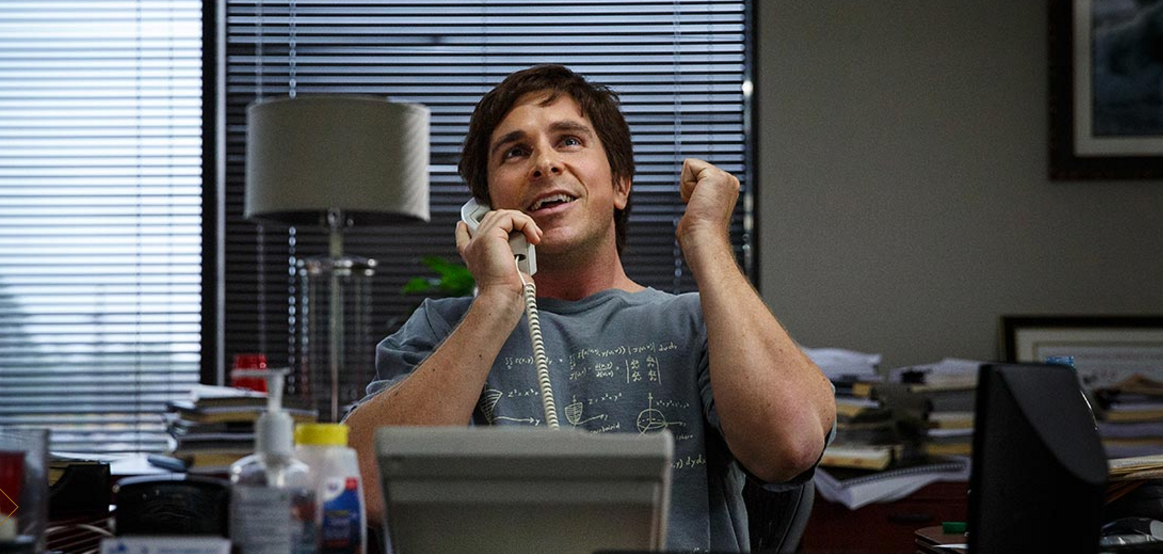
Well, it’s happened. The man most famous for being a frequent Will Ferrell collaborator, Adam McKay, has made (arguably) the smartest movie of 2015. The Big Short is a derisive satire based on the 2010 best-selling non-fiction book of the same name, focusing on a handful of key players on Wall Street and across the country who not only predicted the inevitable housing crisis of 2008, but looked to capitalize on the looming crash quite handsomely.

McKay and Charles Randolph adapted the screenplay from the Michael Lewis’ book that chronicles the real life series of events that lead to a respective group of money managers (Steve Carell and his motley crew), investors (Christian Bale and Brad Pitt), and Wall Street types (Ryan Gosling) who looked to bet against the wildly profitable sub-prime mortgage industry. Seems like a tough sell, right? A movie that revolves around a bunch of rich white guys in their offices outsmarting all the other rich white guys sounds hardly interesting, or original (see: Gordon Gecko). That’s where the combination of McKay’s comedic prowess and ingénue along with the A-list arsenal of acting immersion lift The Big Short into unparalleled satirical standing.

The Big Short is grimly funny – opening with an uncanny (and later on, intermittent) fourth-wall break a la Wolf Of Wall Street from Ryan Gosling, whoops, in the movie he’s Jared Vennett, a hotshot Deutsche banker. Vennett takes the viewer through a brief montage on the history of the real estate, mortgage, and various other large-scale financial industries in a fun and expository manner. Despite the light and playful nature of Vennett’s historical run down, the overall sardonic tone is established, allowing the film to become much darker and fuel itself with clever wit and rage.

The players introduced in Vennett’s expository homily are as follows: all around acting chameleon Christian Bale as the glass-eyed, hermitic M.D. turned San Jose investing consultant with a penchant for drumming, Michael Burry, Steve Carell as the New York corporation-condemning neurotic misanthrope Michael Baum and his troupe of equally maladjusted money managers (one of the films truly unexpected highlights) portrayed by Hamish Linklater, Rafe Spall, and Jeremy Strong. Brad Pitt not only stars as Ben Rickert, a despondent Wall Street banker turned political activist/guiding light to a couple young gunners from Denver (Finn Wittrock and John Magaro), but also lends a hand as a producer on the film. Finally, the film’s pseudo narrator, docent, fit fanatic, Jordan Belfort-lite, antagonistic protagonist, resident “burn” distributor, Jared Vennett, played by Ryan Gosling in a jerry curl.

Due to the magnificent People magazine fodder the exceptional cast actually is, the film takes a couple beats to fully commit to the characters within the story. That being said, Bale disappears into Burry’s anti-social, atypical nature seamlessly almost instantaneously, with Carell’s well-intentioned, yet cynical portrayal of Michael Baum not far behind.

Rather than give a full recount of the film’s synopsis, the reader may be better served with focuses on the unique and clever aspects of the film instead. The film operates in multiple parts - documentary, farce, drama, satire, etc. – with each aspect being highlighted in various capacities. Gosling’s Vennett serves as a wonderful narrator for the more historical, expository asides, while Carell and Bale offer more dramatic performances within the film. Pitt’s role in the film is mostly ancillary, but provides a lens that inevitably makes the viewer question the protagonists’ moral standing as a whole.

The A-list cast certainly carries the film, but perhaps the most notable aspect of the film as a whole is the manner of which complex real estate and mortgage terms are explained in layman’s terms by the likes of Margot Robbie, Anthony Bourdain, Richard Thaler, and Selena Gomez.  When key terms and complex mortgage phrases are introduced, Gosling inevitably throws a quick cut to a cameo. Each cameo is essentially an informational vignette that gives both a humorous and informative explanation of the term. Again, instead of reproducing each individual informative vignette, just know that one involves Margot Robbie in a bathtub (eerily similar to Wolf of Wall Street), Anthony Bourdain in a kitchen, and arguably the best of the three, economist Richard Thaler and pop star Selena Gomez explaining synthetic CDO’s (Collateralized Debt Obligations) and the “Hot Hand Fallacy” over a game of blackjack.

The Big Short is the smartest movie in 2015. It’s sharp, divisive, engaging, and humorous, without sacrificing any ounce of information in the name of Hollywood dramatics. It is a movie that focuses on subprime loans, something so complex, even the banks that doled them out failed to fully grasp exactly what they entailed. McKay manages to take a bewildering piece in history and craft it into a digestible package that does not sacrifice any wit or edge so audiences can understand more clearly. The Big Short observes and utilizes the events (24-hour celebrity news cycle) that obfuscated the eventual recession, and in turn illuminates the situation so viewers can make their own decisions on what went wrong, and who (if anyone) is to blame.

From the outrageous mind of director Adam Mckay comes THE BIG SHORT. Starring Christian Bale, Steve Carell, Ryan Gosling and Brad Pitt, in theaters Christmas. When four outsiders saw what the big banks, media and government refused to, the global collapse of the economy, they had an idea: The Big Short.

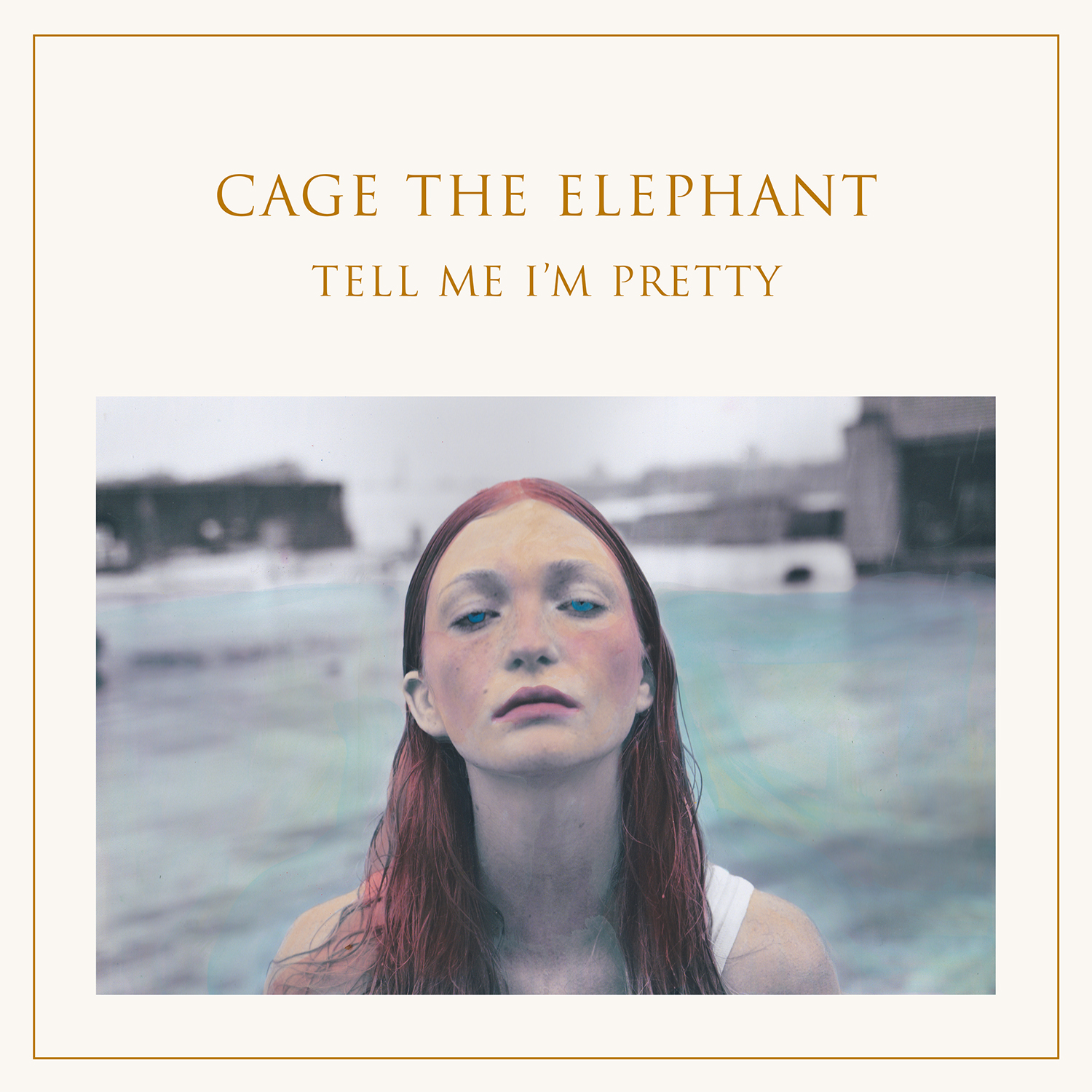
Cage the Elephant's 'Tell Me I'm Pretty' Earns the Request

Music ReviewSean McHughComment

What does a band do when their most successful album to date generates just as much inner turmoil as it does critical acclaim? In the case of Cage the Elephant and their 2013 release, Melophobia, the answer is simple – blow things up. After a run of three insatiably frenetic exercises in pseudo-punk rock anxiety, a spectacular reputation as live performers, major label ascension with RCA, and an eventual Grammy nomination for Melophobia, Cage the Elephant had reached an impasse.

The extensive touring and massively unanticipated (yet much deserved) reception of Melophobia led to friction within the band. Guitarist Brad Schultz called the experience "a living hell,” so much so, that it culminated with lead guitarist Lincoln Parrish’s eventual departure in December of 2013. Parrish, who had been a part of Cage the Elephant since age 16 in 2006, had not foreseen the rapid growth and success of the group, stating that his ultimate goal was to “be a producer before anything else.” Nick Bockarth, filled Parrish’s void for the remaining Melophobia tour stops supporting The Black Keys and Foals, which stretched well into 2014.

During the Kentucky rockers’ run with The Black Keys, Schultz and Black Keys lead man/Nashville super-producer Dan Auerbach tossed around ideas for some new Cage songs, and long story short, the rock n’ roll salons led to a collaborative relationship between the two which ultimately led to the creation of this fourth studio record, Tell Me I’m Pretty.  

Opener “Cry Baby” is a jolt to the system; cleaner and brighter than former Cage openers, the twinges of Brit-pop throw TMIP into uncharted territory. "Trouble" is a deceptively wistful tale of woe spun over breezy woos just begging to be sung along to, complete with a lyrical nod to their magnum opus with "You know what they say / Yeah the wicked get no rest," while the other single “Mess Around” pairs fuzzy riffs with infectious poppy hooks, perfectly wrapping up the band's dirtier feel in a tight 3 minute package. Auerbach himself even provides the guitar solo, though it would be unfair to automatically dismiss this effort as Black Keys fodder.

While Auerbach’s association with TMIP may trigger an automatic assumption that the album as a whole would be filled with Black Keys-isms, that assumption overlooks how Cage the Elephant’s greatest mores and themes are present throughout the album, though ever-evolving. From Matt Schultz’s familiar wailing on “Sweetie Little Jean" to the stark Rolling Stones-esque rollercoaster that is “Cold Cold Cold," it heavily mixes their brand of manic bravado with sixties rock n’ roll pop whimsy. 

TMIP artfully toes the line between alternative and radio-ready, being much more direct and polished than records past, though this is more a testament to the maturation of Matt Schultz’s lyrical and melodic presence, rather than the involvement of a ubiquitous rock personality. Where previous Auerbach collaborations did fall victim to this (Lana Del Rey), TMIP comes off as entirely a product of the group’s effort.

Tell Me I’m Pretty is also arguably Cage the Elephant’s best recorded album to date, and though it does have variances from what’s become their “sound,” there’s really no reason to fault the band for wanting to expand their sonic catalog. Should they not want to alter the sound and design of previous efforts that left the group frictional and dejected? What Cage the Elephant has created on Tell Me I'm Pretty is an album that will inevitably strengthen the group’s future efforts, rather than being shackled to a particular vibe or genre. It may not shatter with the same chaotic dynamism along the way, but it does manage to be, well, pretty.

A Very Transverso Holiday: 50 Songs for the Season

Music ListTransverso MediaComment

The holidays are a magical time of year, a time often evoked through the use of song. We at Transverso have decided to collect some of our favorite festive tunes into a playlist for you and yours to enjoy in the coming days, beginning with the original Christmas song, Paul McCartney's "Wonderful Christmastime."

These 50 seasonal tracks are sure to be the perfect soundtrack as you hang ornaments on your tree, bake cookies, or leave your young son at home without supervision in a crime-ridden Chicago suburb for an extended period of time.

[Spoilers] 'The Force Awakens' Is Worthy Rebirth of Beloved Star Wars Universe

TV/Film ReviewWeston PaganoComment

[This review contains spoilers]

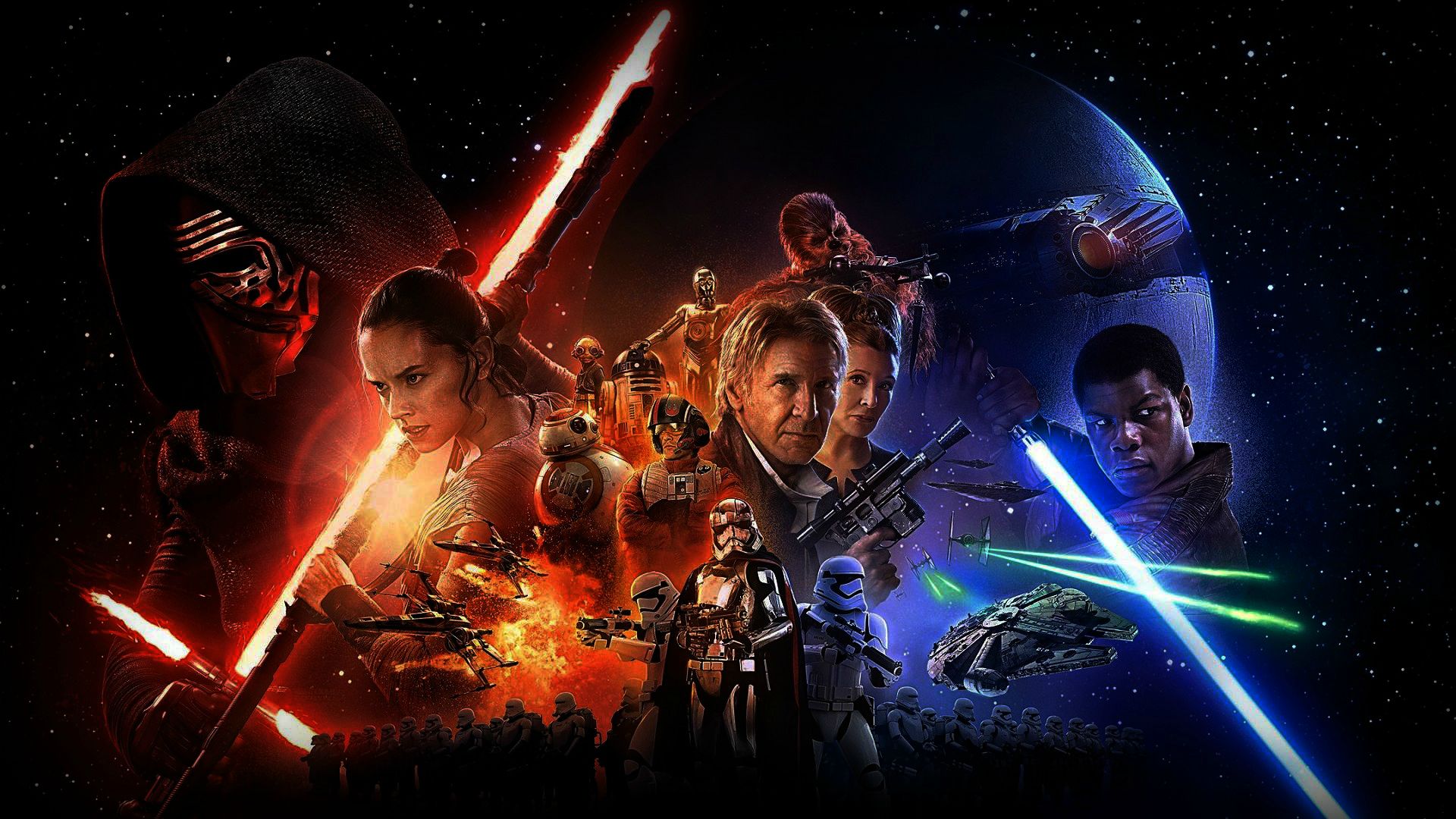
From the moment the opening crawl began there was a palpable, tingling excitement permeating the theater, as only the most cold-hearted can avoid at least a small burst of childlike wonder at the sight of those golden letters that signal the beginning of a new Star Wars film hurtling across space. This one, the JJ Abrams-directed Episode VII: The Force Awakens, did not disappoint.

Introducing the Rebellion-turned-Resistance's golden-hearted flyboy Poe Dameron (Oscar Isaac) as well as new droid friend BB-8 (Bill Hader & Ben Schwartz), we’re quickly connected with an instantly likable young cast capable of moving the now open-ended series forward. The real stars, though, are Empire splinter group First Order's determined yet often unsure (importantly non-clone) ex-Stormtrooper turncoat, FN-2187 (a reference to Princess Leia’s A New Hope cell number), better known as Finn (John Boyega), and the plucky and self-sufficient Rey (Daisy Ridley), a lone scavenger of unclear heritage on the desert world of Jakku. 

Despite how tiring it must be still fighting a somehow larger power three decades years later, the original cast members have aged well. Princess Leia (Carrie Fisher) is a general in the New Republic now, Han Solo (Harrison Ford) is just as charming and fun a scoundrel as before, and Chewbacca (Peter Mayhew) still doesn't show a single grey hair. C-3PO (Anthony Daniels) now has a (mysterious or mundane?) red arm, and R2-D2 (Kenny Baker) comes around eventually. Even Admiral Ackbar (Tim Rose) remains at the helm of the navy’s controls.

A big fear leading up to Awakens was that the new and old characters would not mesh well as the two worlds collide, or that Abrams would struggle to utilize the returnees without making it too much about them or kick them aside almost entirely, though this concern abated almost as soon as Rey and Finn seamlessly banded together with Han and Chewie after being captured by the latter. It never feels like an outdated babysitting even when Rey displays round-eyed admiration upon meeting them, much like the fans themselves sitting beyond the fourth wall.

The looming foil to these heroes, Kylo Ren (Adam Driver), is soon revealed to be Leia and Han’s son Ben, an official canon replacement of the expanded universe’s Jacen, Jaina, and Anakin Solo, as well as a nice nod to EU's Ben Skywalker, son of Luke (both, of course, named in memory of Obi-Wan “Ben” Kenobi). Beginning as one of Luke Skywalker’s (Mark Hamill) protégés, he derailed his former master’s attempt at regrowing the Jedi by turning to the Dark Side. It is this background that sets the scene for Luke’s disappearance, as our protagonists spend the most of the film in search of him.

Overall, the plot line runs largely like glorified reboot of A New Hope with strong parallels throughout: a young, apparently orphaned and force sensitive individual escapes their desolate desert home planet (Jakku serving as Tatooine II) before being thrust far out of their depth and into intergalactic conflict. But many of these parallels are turned on their heads, such as the father-son dynamic; just as Luke once dangled over a bottomless pit at the mercy of his Dark Side dad, Kylo Ren flips the script and ushers in the end of an era by throwing his own benevolent parent Han into the abyss with a ruthless - and heartbreaking - fatal stab. One can argue it was predictable, but you’d be lying (or quite cold) if you didn’t feel at least a twinge of hope as the lovable hero tried to save his own son face to face at his own peril.

Sporting the much discussed lightsaber with twin exhaust ports near the hilt, Kylo Ren’s unstable but powerful blade is of course a symbolic representation of the anger and erraticism associated with the Dark Side itself. (It is also, interestingly, the first uniquely built lightsaber we see since Darth Maul and Count Dooku’s modified weapons in the prequels.) Not quite the archetypical ne’er-do-well, Kylo Ren exhibits emotional complexity the absence of which was often bemoaned in the prequels. It’s clear he has raw talent and certainly the pedigree, but he needs training, and it's interesting to see a Star Wars villain not fully formed and brooding over a storied past for once, but rather vulnerable, raw, and growing. Despite his cocksureness he even admits to Han he is struggling with the pressure before killing him, and it's a key facet to Kylo Ren’s character that we observe his insecurity and volatility.

Kylo Ren aspires to emulate his grandfather, Darth Vader, even wearing a mask in the same style and praying to his idol’s damaged helmet at one point. It’s here when one can’t help but recall how Anakin, Yoda, Ben, and even Qui-Gon Jinn were able to communicate with their followers from the afterlife through the force, and wonder if - and if not, why not - Kylo Ren has done so with his inspiration. And would there not be a disconnect as Anakin had turned back to the light at his latest living point? (It also begs the question if this what Luke has been up to in his exile, though with Alec Guinness unfortunately passing away in 2000 it raises the issue of who would play Ben’s ghost.)

And who is this mysterious larger-than-life hologram of Supreme Leader Snoke (Andy Serkis) that he reports to? His ancient appearance implies he is new only to us, but where would that place him during the events transpiring only 30 years before? With the Banite Line of Sith finally dying out with Vader's last breath, neither Snoke nor Kylo Ren hold the Sith title of Darth, so what are they really? Is it possible that Snoke is somehow a return of Darth Plagueis, Darth Sidious’ immortality obsessed late master? We have until May 2017 to speculate.

Throughout Awakens, many of the same classic Star Wars motifs are expanded upon, like the vaguely UK-accented bad guys parading around, now even more overtly fascist than ever before with Nazi-reminiscent rallies in front of their new genocidal super weapon. Despite being only a rogue faction of the disbanded Empire, their technological ability appears even more powerful with a Death Star-esque sun-sucking death ray (of questionable physics) embedded in a planet called Starkiller Base, which is capable of evaporating multiple worlds at once. That’s no moon, it is literally an entire planet this time, and the classic mission impossible to lower shields and destroy it from the inside repeats for the third, somewhat self-aggrandizing but still nevertheless wholly enjoyable, time. Combined with subtle expansions on the awe-inspiring little things, like Darth Vader’s force pull on Han's blaster evolving into Kylo Ren's force freeze of a blaster bolt itself, Abrams furthers the narrative as sort of a love letter to the original trilogy.

Despite these developments the militaries of both sides seemed to have changed little over the elapsed time (X-Wings and TIE Fighters are still not obsolete, apparently, despite the stark changes in weaponry between the first two trilogies and the archaic appearance of dead vessels on Jakku), though there is the small but notable addition of some sort of sword capable of sparring with a lightsaber, brandished by a Stormtrooper against Finn in his first lightsaber battle on the luscious Takodan. It’s the only time we see our galactic enemies smart enough to invest in lightsaber-resistant melee weapons besides General Grevious’ electrostaff-wielding MagnaGuards in Revenge of the Sith; for all their ineptitude at firing and seemingly little tactical or uniform changes, at least they now have enough sense to realize maybe they should designate at least one individual capable of countering their main threat. Still, in a series always revered for amazing us by introducing us to something new every episode, it did seem the growth in that area was a bit stunted.

Staying true to the original vision, The Force Awakens employs puppets over CGI whenever possible, and, barring the ravenous tentacle monsters on Han’s other ship, everything seems real enough to make you forget about fantastical digital editing. The 3D showings added depth without being overbearing exaggerations, and the overall visual representations ranging from lightsaber duels in the snow to riveting dogfights over gorgeous planetary displays were stimulating feats of beauty.

This is not to say there are still scenes which require at least some suspension of disbelief, such as, how did Rey and Finn find the Millennium Falcon unlocked, why do evil bases still not install security cameras in their hallways to better find escaped prisoners, why was there only one guard left with a force sensitive prisoner, and why was it one so susceptible that even a completely untrained Rey could seduce him? Not to mention the subtly strange implications of R2-D2 conveniently powering on with the rest of the map when the plot needed to advance, and Rey and Finn overpowering a trained and experienced Kylo Ren with little more than heart. But Abrams keeps things moving along at such pace and with such coursing excitement it’s impossible to linger on these detractions.

The film is also not without playful moments, though they’re thankfully created without a character anywhere near the often hilariously maligned and dreaded Jar Jar Binks, which seems especially pandering and silly in the light of our two new main characters' effortless chemistry and natural comic relief intertwined with real human emotion and dialogue.

Even at its most self-indulgent, The Force Awakens earns the hype by being a genuinely enthralling experience built through deft character development and plot drive mixed with authentic nostalgia derived simply through the Star Wars brand. Moving forward it is perhaps best to think of this as the first of three as opposed to the latest of the OT, though Abrams’ intent in crafting a beginning, middle, and end does make it a satisfying film in its own right, despite the near-literal cliff hanger of Rey handing a lightsaber (that chose her over Kylo Ren) back to Luke (who could potentially turn out to be her father or uncle) on a mountaintop, with Kylo Ren’s life status unknown.

From the quintessential opening scene in the dark of space to the ending that felt too soon despite a 136 minute runtime, The Force Awakens was one of the rare films for which the theater applause didn’t seem tacky, as it truly brought us at least a few parsecs closer to the beloved magical home we left a long time ago, in a galaxy far, far away.

Hear David Bowie's Second Haunting '★' ('Blackstar') Single "Lazarus"

New MusicWeston PaganoComment

Following the chilling and bizarre title-track and video released last month, David Bowie has revealed another lengthy glimpse of his forthcoming LP, which is looking set to be one of the most challenging and progressive works of 2016.

Woozy yet deliberate, the former Thin White Duke twists prog rock and jazz in "Lazarus," a six and a half minute track previously featured in the new off-Broadway play of the same name. Saxophonist Donny McCaslin's brass wails back Bowie as he laments, "Look up here / I'm in heaven / I've got scars that can't be seen." Lazarus, being the subject of biblical reincarnation, has hope though: "Oh I'll be free / Just like that bluebird."

"Lazarus" will have its official video premiere 1/7, with coming out in its entirety the following day via Columbia.

King Krule No More, Meet Archy Marshall on 'A New Place 2 Drown'

Music ReviewSean McHughComment

Zoo Kid, DJ JD Sports, Edgar the Beatmaker, King Krule – all pseudonyms of one Archy Ivan Marshall, who chose to spurn his most recent moniker (King Krule) in exchange for his given name on his most recent release, A New Place 2 Drown.

Before delving into Marshall’s most recent, eponymous effort, it may serve to understand the journey that culminated with ANP2D. A peculiar character, Marshall grew up in a divided working class home in Peckham, England. Marshall attests that he was subjected to “a lot of weird shit during his [childhood].” The combination of divorced parents, “weird shit,” and sleepless nights spent listening to Pixies and the Libertines eventually inspired Marshall to create these “soundscapes.” 

In 2010, Marshall revealed himself to the world as Zoo Kid, with his beguiling baritone and doom jazz guitar riffs on the track “Out Getting Ribs.” Almost immediately, Marshall was (uninspiringly) heralded as an artist far beyond his years, with additional fuel coming under his new moniker, King Krule, and a similarly titled EP in 2011. Shortly thereafter, Marshall released his first official full-length record, 6 Feet Beneath the Moon, in 2013 through XL. The album was met with critical acclaim, as well as lauded by Beyonce and Willow Smith (who covered “Easy Easy” in 2014), then Marshall (and King Krule) effectively disappeared, with the exception the occasional video here and there (“A Lizard State” in 2014).

Keeping with the disparate nature of his music, Marshall’s music and subsequent radio silence were unfamiliar, uncharted, and uncomfortable. Had early success frightened the divergent talent? Or was Marshall’s solitary and uncommunicative nature caused music media to purposefully ignore him?

All theories of Marshall’s activities and practices were ultimately laid to rest in late 2015, when Archy Marshall’s newest effort under his own name, A New Place 2 Drown was (fittingly) announced with little to no enthusiasm from Marshall himself, as well as the an accompanying media book and short film. News trickled out that not only had Marshall begun to explore new art forms, but he had done so with his brother no less, indicating that ANP2D was ultimately a collaborative effort.

In short, ANP2D is an endeavor unfamiliar to typical Archy Marshall/King Krule process – the focus is not necessarily on the music, but rather the literary companion. 208 pages long, the book features artwork, poems, and photographs curated by Marshall’s brother, Jack. Archy attests that the book “is a scrapbook of [his relationship with his brother] and how we see the world.” The film illuminates the aforementioned relationship between the two Marshalls, exploring their creative processes in a bleak slice of life, surrealist lens.

The multi media explorations in the mundane may be Marshall breaking new ground, but the 37 minutes of musical accompaniment is a continuation of King Krule. Marshall’s music has always explored the mundane and the desolate, in service of creating his previously mentioned soundscapes, which ANP2D certainly achieves. Marshall harnesses the lonesome nature of King Krule tracks past, and layers it atop the despondence that from 90’s hip hop.

ANP2D opens with “Any God of Yours,” an instrumental dirge that allows Marshall to impress his honed production growth upon the listener. The growth is a departure from 6 Feet Beneath the Moon, with Marshall altogether spurning the doom jazz/stark-hop sound of Krule for more pure hip-hop. Tracks like “Swell” and “Arise Dear Brother” are almost indiscernible at certain points when it comes to Marhsall’s lyrical presentation, though the mumbled delivery only heightens the soundscape immersion.

The cleanup track “Ammi Ammi” is a melodramatic expression of Marshall’s life in the dingy sides of town, with cool crooning from Jamie Isaac supplanting Marshall on the hooks. “Ammi Ammi” and “Buffed Sky” elevate ANP2D into more distinctive territory, giving glimmers of an overarching theme – something that was obfuscated in previous efforts.

ANP2D serves as the most direct platform of the multi-media myriad into Marshall’s personal exploration and subsequent growth over the past two years, vaguely referencing lessons learned (“Sex With Nobody”) and new production practices (the sleepy 808s on “Eye’s Drift” and “New Builds”), but at certain moments, Marshall gets lost in the soundscape mentality. Closing track “Thames Water” falls victim to the occasional cliché ("girl this place is evil") and some rather curious multi-layered vocal work, eventually segueing into an almost entirely new track. 

It would be a disservice to say that the music of ANP2D is an afterthought, though the accompanying book and short film may indicate that somewhere down the line music may take a back seat to Marshall’s artistic process. Luckily, A New Place 2 Drown offers enough of the genre bending familiarity of King Krule and the new working class grit and grind of Archy Marshall who finds beauty in the mundane, specifically the purposefully mundane work of his brother. ANP2D offers a glimpse into Marshall’s more contemporary perspective and creative outlook, which may prove to be more transcendent as Archy Marshall than King Krule could have ever been.