TRANSVERSO

- A culture magazine reaching terminal verbosity -

The 58th Grammy Nominees Announced, Kendrick Lamar Leads With 11

Music NewsWeston PaganoComment

The annual music industry achievement / popularity contest extravaganza that is the National Academy of Recording Arts and Sciences' Grammy Awards has revealed its list of nominees today.

In the wake of his ubiquitous To Pimp a Butterfly, Kendrick Lamar leads the pack with 11 nominations for the shiny gold gramophones that will be passed out in the second latest ever ceremony in LA on February 15, narrowly missing out on matching Michael Jackson's all-time record of 12 in 1984. Taylor Swift and The Weeknd trail behind in second place with 7 each.

Check out the nominee lists of select categories below.


GENERAL


RECORD OF THE YEAR

  • "Really Love" – D'Angelo and the Vanguard
  • "Uptown Funk" – Mark Ronson featuring Bruno Mars
  • "Thinking Out Loud" – Ed Sheeran
  • "Blank Space" – Taylor Swift
  • "Can't Feel My Face" – The Weeknd

ALBUM OF THE YEAR

  • Sound & Color – Alabama Shakes
  • To Pimp a Butterfly – Kendrick Lamar
  • Traveller – Chris Stapleton
  • 1989 – Taylor Swift
  • Beauty Behind the Madness – The Weeknd

SONG OF THE YEAR

  • "Alright" - Kendrick Lamar
  • "Blank Space" - Taylor Swift
  • "Girl Crush" - Little Big Town
  • "See You Again" - Wiz Khalifa Featuring Charlie Puth
  • "Thinking Out Loud" - Ed Sheeran

BEST NEW ARTIST

  • Courtney Barnett
  • James Bay
  • Sam Hunt
  • Tori Kelly
  • Meghan Trainor

ALTERNATIVE


BEST ALTERNATIVE ALBUM

BEST DANCE / ELECTRONIC ALBUM

  • Our Love - Caribou
  • Born in the Echoes - The Chemical Brothers
  • Caracal - Disclosure
  • In Colour - Jamie XX 
  • Skrillex and Diplo Present Jack Ü - Skrillex and Diplo

ROCK


BEST ROCK PERFORMANCE

  • "Don't Wanna Fight" – Alabama Shakes
  • "What Kind of Man" – Florence + The Machine
  • "Something From Nothing" – Foo Fighters
  • "Ex's & Oh's" – Elle King
  • "Moaning Lisa Smile" – Wolf Alice

BEST ROCK SONG

  • "Don't Wanna Fight" - Alabama Shakes
  • "Ex's & Oh's" - Elle King
  • "Hold Back the River" - James Bay
  • "Lydia" - Highly Suspect
  • "What Kind of Man" - Florence + The Machine

BEST METAL PERFORMANCE

  • "Identity" - August Burns Red
  • "Cirice" - Ghost
  • "512" - Lamb of God
  • "Thank You" - Sevendust
  • "Custer" -Slipknot

POP


Best Pop Solo Performance

  • "Heartbeat Song" – Kelly Clarkson
  • "Love Me Like You Do" – Ellie Goulding
  • "Thinking Out Loud" – Ed Sheeran
  • "Blank Space" – Taylor Swift
  • "Can't Feel My Face" – The Weeknd

Best Pop Duo/Group Performance

  • "Ship to Wreck" – Florence + The Machine
  • "Sugar" – Maroon 5
  • "Uptown Funk" – Mark Ronson featuring Bruno Mars
  • "Bad Blood" – Taylor Swift featuring Kendrick Lamar
  • "See You Again" – Wiz Khalifa featuring Charlie Puth

Best Pop Vocal Album

  • Piece By Piece – Kelly Clarkson
  • How Big, How Blue, How Beautiful – Florence + The Machine
  • Uptown Special – Mark Ronson
  • 1989 – Taylor Swift
  • Before This World – James Taylor

Best Traditional Pop Vocal Album

  • The Silver Lining: The Songs of Jerome Kern – Tony Bennett & Bill Charlap
  • Shadows In The Night – Bob Dylan
  • Stages – Josh Groban
  • No One Ever Tells You – Seth MacFarlane
  • My Dream Duets – Barry Manilow (& Various Artists)

RAP


Best Rap Performance

  • "Apparently" – J. Cole
  • "Back to Back" – Drake
  • "Trap Queen" – Fetty Wap
  • "Alright" – Kendrick Lamar
  • "Truffle Butter" – Nicki Minaj featuring Drake & Lil Wayne
  • "All Day" – Kanye West featuring Theophilus London, Allan Kingdom & Paul McCartney

Best Rap/Sung Collaboration

  • "One Man Can Change The World" – Big Sean featuring Kanye West & John Legend
  • "Glory" – Common & John Legend
  • "Classic Man" – Jidenna featuring Roman GianArthur
  • "These Walls" – Kendrick Lamar featuring Bilal, Anna Wise & Thundercat
  • "Only" – Nicki Minaj featuring Drake, Lil Wayne & Chris Brown

Best Rap Song

  • "All Day" - Kanye West Featuring Theophilus London, Allan Kingdom & Paul McCartney
  • "Alright" - Kendrick Lamar
  • "Energy" - Drake
  • "Glory" - Common & John Legend
  • "Trap Queen" - Fetty Wap

Best Rap Album

  • 2014 Forest Hills Drive – J. Cole
  • Compton – Dr. Dre
  • If You're Reading This It's Too Late – Drake
  • To Pimp a Butterfly – Kendrick Lamar
  • The Pinkprint – Nicki Minaj

MUSIC VIDEO / FILM


Best Music Video

Dream Culture Discuss Origins, Influences, and Moving Forward

Music InterviewEllen WilsonComment

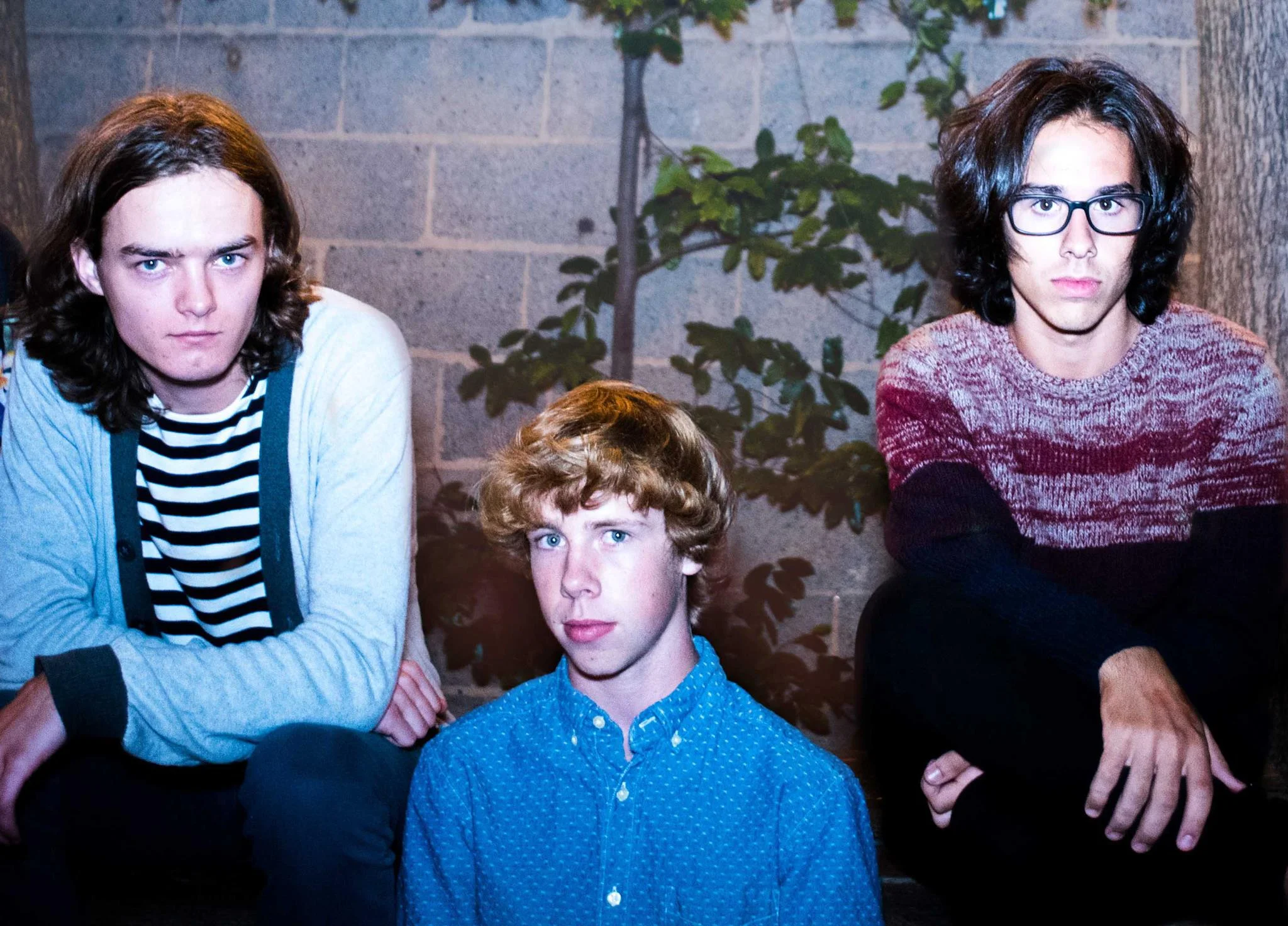
Up-and-coming Athens, GA group Dream Culture are coming off of their second EP, Post Habitual, on which they fine tuned their UMO and Tame Impala influenced brand of psychedelia into a refreshingly groovy sound for a small town known for their heavy hand in college rock.

Transverso sat down with Evan Leima (vocals, guitar, keyboards), Chad Andrews (drums), Billy Ross (guitar) to discus their beginnings, their record, and moving forward.

TRANSVERSO: So what is Dream Culture’s origin story?

LEIMA: I met these guys through drum line. It was my senior year, we’re all drum line people. I started hanging out with them once they got into high school and then Billy kept telling me how awesome his basement is and it took me forever to go over there but once I did I was like “Oh! The hype is real!” I was making music for a while on my own and then Billy was doing that as well. Chad lives close to Billy and he would walk over to his house. That was in the suburbs when we formed. It’s finally gotten to the point where we don’t need to practice that much anymore. When we have new material that we want to learn we’ll usually take a weekend to get down on it. But we now only particle like one a week.

What was the process of making your debut Self-Titled EP? 

ROSS: Well, we recorded it in my basement. That was the biggest space we had, so it was the most logical space.

ANDREWS: And also the coolest space.

LEIMA: There’s a really good vibe to it. But the first EP - I generally record everything by myself - I would go over to Billy’s house and we would hang out and I recorded it on this big 24 Track Tascam thing.  I would do the drum track, then bass track, then the guitar track and so on. The EP was recorded from December 2013 to like summer 2014. It actually took a while for it to come out after it was all done; we finished it in the summer but it ended up not coming out until like December 2014.

And who mixed it?

LEIMA: It was mixed by this awesome guy named Miguel Ruiz. I used to work at Buffalo’s Cafe down in Suwanee, [Georgia,] and he would come in and get wings etc. and then eventually I served him and figured out he was a regular and it turns out he was an audio engineer. I recorded the vocals with him and he mastered it. All the instrumentals on the original EP I mixed myself. Which I still to this day think that it was a terrible idea and I shouldn’t have done it. But you know, that’s how it is.

Why do you think it was terrible?

LEIMA: because I was terrible! The drums were really loud.

ROSS: The hi-hat was really loud.

LEIMA:  So yeah I kind of wish I hadn’t mixed it. I’m not unhappy with it, but I wish I didn’t mix it. But he mastered it really well! He did a good job on the vocals.

Tell us about Post Habitual.

LEIMA: Post Habitual was recorded at The Glow recording studio up in northern Athens with Jessie Mangum out. A lot of people know him because he does these awesome summer singles, the MOEKE Records Summer Singles series. So what happened, the way I hooked up with him is that I recorded a single and a B side and I went to go get the tracks mixed and mastered by him. By that time I had acknowledged that me mixing was a bad idea. So I brought those to him and we just really hit it off. I went in and we had all the same favorite bands and he said my favorite bands and he was really digging what I was doing. He said he really believed what we were doing and asked if I wanted to go record with him and I said yeah. I had some songs lying around some of the songs were like a year old.  Like "Every Day" off the EP is like a year and a half old?

ROSS: Yeah, it's really old.

LEIMA: It’s an old song. It’s funny though, because Radiohead has songs that are like 10 years old and stuff. I guess its not really old but in terms of Dream Culture’s existence its old.  There’s one song on it that I wrote while I was there. I recorded everything there and mixed and mastered there.

New Single Released June 1, 2015 Written and recorded by Evan Leima Mixed and mastered by Jesse Mangum Artwork by Paul Hwang Photo by Lauranne Teyssier

What's next for Dream Culture?

ROSS: Shows.

ANDREWS: Promotion.

LEIMA: Yeah, shows. It’s been really good. “Imperfect on Purpose” was pretty good. I'd think the original EP was kind of like an opening statement. Its been cool to have a real kind of piece of art now that people will listen to it and wouldn’t know that we are just a bunch of dumb idiot teenagers that have no idea what we are doing.  We are going to be doing a lot of shows. Obviously Dream Culture is still active and I can see some singles coming out in the next year. And Billy has his own project called Spanish Spanish and I’m going to be playing drums for him. 

Tell me about Spanish Spanish.

ROSS: It’s just my own project where I write and record all the music. So now I’m just in the process of writing and recording a lot. Not worried about anything else other than getting a lot of music down.

LEIMA: I haven’t been writing a lot of music lately because with the EP it as all written already, rather than what I’m used to where I could just record and mess around whenever I want. It was at a studio somewhere where I had to book sessions with Jessie and it was weird; I didn’t really want to start working on stuff in my studio because I wanted to focus on the EP. I really want to make something with a female vocalist and start producing for someone else’s stuff because I don’t want to oversaturate Dream Culture. I’ve been trying to collaborate with some local artists so we’ll see what happens.

You've been compared to a lot of other psychedelic artists like UMO. Talk about what influences you.

LEIMA: I’m really into this Swedish band called Dungen. I also really like Unknown Mortal Orchestra. I really like what Ruban [Nielson of UMO] is doing. I got to meet him when he came for the Urban Outfitters show [in Athens] and he signed my guitar. Super cool dude. He was just so opened to us about asking him all of these nerdy questions. And there is this French band called Moodoid. I was very lucky because when I was in Paris a couple months ago and I was only there for a weekend and that week there was a show and it was free. They are really cool. One of those crazy flamboyant bands. It’s a dude and three chicks and they all wear make-up and glitter and stuff and tuxedos.

ROSS: They’re perfect.

LEIMA: So those are probably the three main influences. When it comes to the sonics and guitar sound I was definitely going to a UMO-y vibe. As far as drums go, Jessie’s main philosophy with the mixing is he’s going for a blend of 60’s funk and Ringo mixed together. Kind of like a really compressed sound. It helps that we were all on drumline because we are so on time all of the time. There’s never been any dragging or rushing issues.

Anything else you want to add?

LEIMA: Big shout out to Jessie at The Glow.


You can catch Dream Culture, along with touring members Graham von Oehsen (keyboards) and Freeman Leverett (bass), on December 12th at the Independent Public Alehouse

Troye Sivan Offers Voice to a Generation on Blue Neighbourhood

Music ReviewSean McHughComment
B rating.png

The YouTube Generation may have finally found its voice, and thank goodness it’s not PewDiePie. Enter Troye Sivan – the twenty-year-old singer/songwriter/actor – who has been in the hearts and minds of millions of YouTube subscribers ever since he came out as gay in an incredibly heartfelt video in 2013.

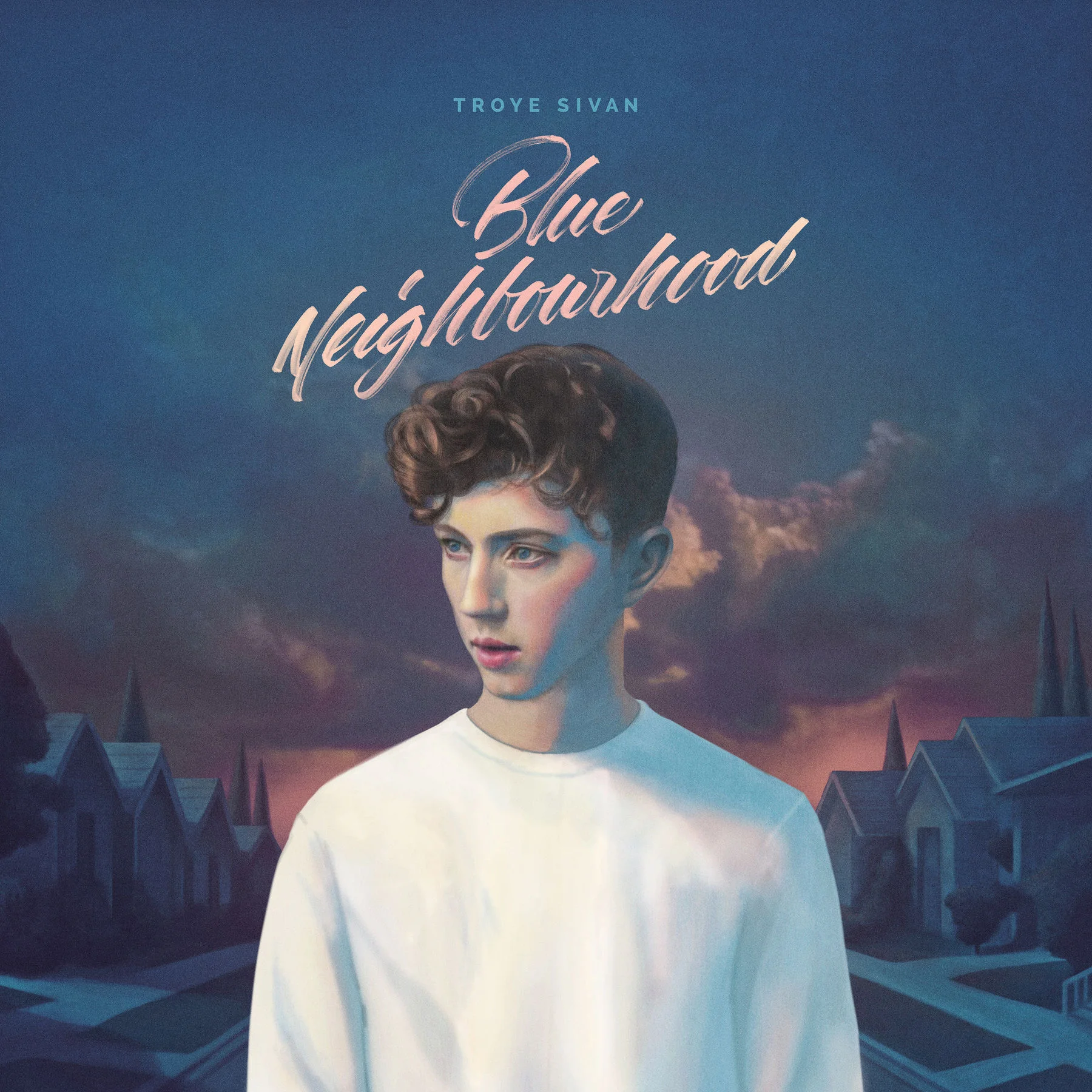
Fully disclosed and unfettered from public speculation, Sivan released two critically acclaimed and chart topping EPs, Wild andTRXYE. Thanks in large part to the success of the two EPs as well as social bumps from the likes of Taylor Swift (“GO @troyesivan WILD IS STUNNING AND AWESOME…”), Adele (On Sivan covering “Hello” – “I burst into tears”), and Sam Smith (Sivan’s cool timbre “Does things to [his] body.”), Sivan dropped his first full-length release, Blue Neighbourhood, on December 4th, through EMI Music Australia and Capitol.  

Blue Neighbourhood opens with an eponymous carryover from Sivan’s second EP, WILD. A heavy-hitting single masquerading as a leadoff track, “WILD” sounds reminiscent of a Lorde B-side, but with a more vivacious outlook – “Kissing up on fences and up on walls / On the way home / I guess its all working now…” Sivan’s unwrinkled vocals are a product of the upcoming generation of pop stars – minimally touched vocals, surrounded by airtight production allowing for more focus on overall tone versus individual tracks.

“WILD” also kicks off Sivan’s three part music video narrative of the relationship between two young boys as they experience tragedy, discovery, lust, loss, and melancholy throughout their lives. Second track on the album (and video number two), “FOOLS,” is yet another WILD EP holdover, though arguably the strongest of the three older tracks. “FOOLS,” expresses a traumatic realization of falling hard in a relationship, as well as a parallel to Sivan’s newfound fame “I need time to replace what I gave away / My hopes they are high / I must keep them small.”

Blue Neighbourhood is a different sort of debut than that of Sivan’s other pop counterparts. His coming out video in 2013 allowed for his debut to not be overanalyzed with focus on subject matter and who or what certain songs may be addressing. Instead, it allows for Sivan to comment directly and honestly on subjects that concern him the most, such as “HEAVEN,” featuring Betty Who. The track is one of the more ballad-leaning songs on Blue Neighbourhood, which allows it to operate as the true core of the record. It connects to the fundamental struggles of Sivan’s generation, fear of not attaining certain levels of acclaim, success, fulfillment, happiness, etc. In short, it asserts that everyone has enters their own “Blue Neighbourhood” at one point or another. What is a “Blue Neighbourhood” exactly? Sivan never really quite explains, but the YouTube generation anthem assuages any anxiety that his peers may succumb to.

In short, Blue Neighbourhood, is certainly a successful debut (it hopped to No. 1 on iTunes following the launch of its pre-order), but it still runs into pitfalls of exhibiting the extent of his vulnerability in sex on “BITE” and the struggle for normalcy while juggling fame on the predictably named “COOL,” but overall, Sivan shows that he holds more promise than other pop artists with a command of his narrative and voice. While Blue Neighbourhood is solid, and being propelled by millions of young Sivanians (perhaps a bit of a stretch), there is still room for Sivan to expand upon his narratives and mature as an artist and songwriter. 

'Spotlight' Offers an Authentic Portrait of 21st Century Hysteria

TV/Film ReviewEzra CarpenterComment

Being quite young during the onset of 9/11 paranoia, my own memory of the world during my adolescence is but a cluttered news reel of towers burning, Scott Peterson testimonies, and pastors sidestepping news crews on courthouse steps. But Tom McCarthy’s Spotlight clarifies this childhood as it authentically replicates America’s unraveling sense of security in the early 21st century. 

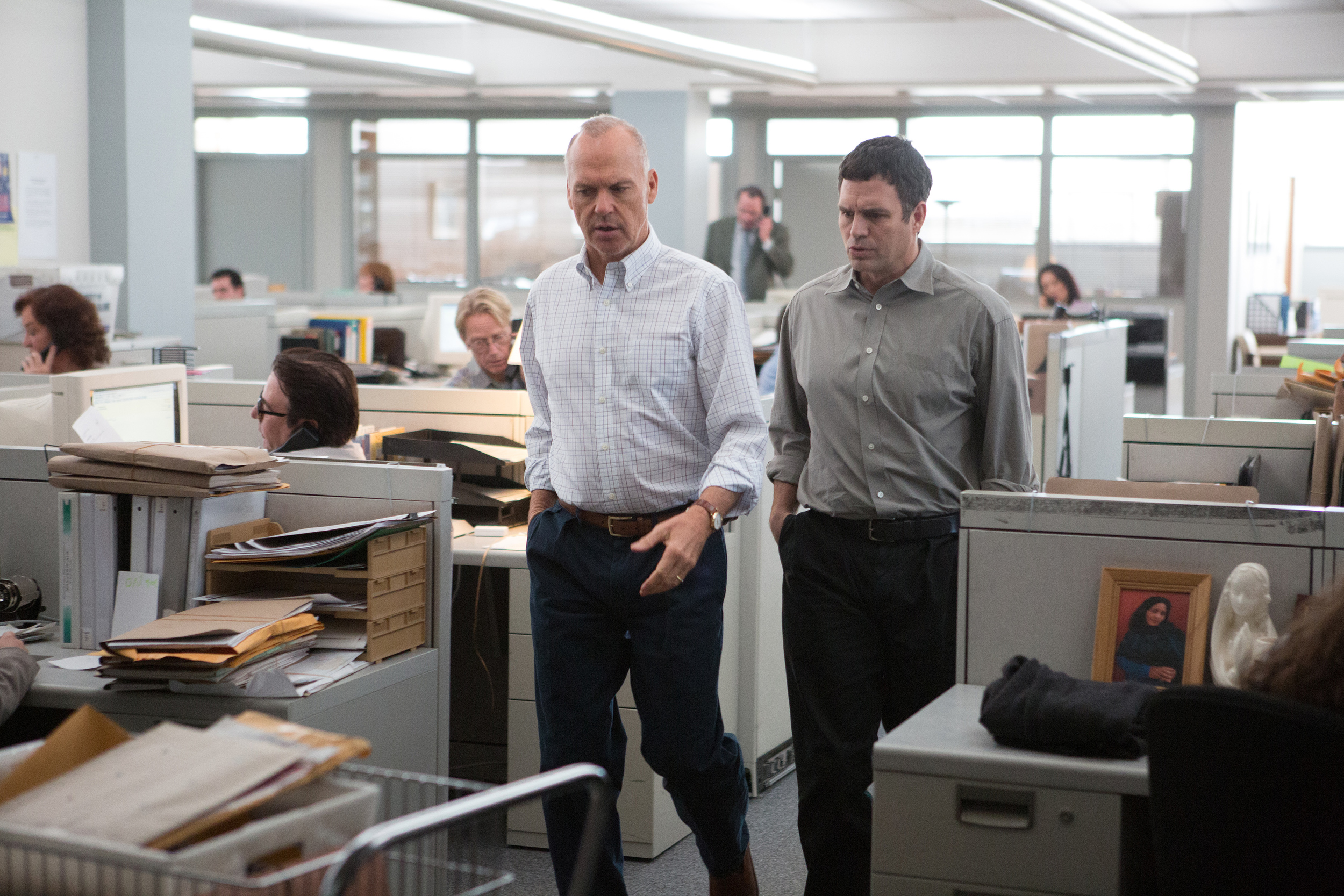
Spotlight follows the Boston Globe’s exposure of the child molestation conducted by the Catholic priests of the Boston Archdiocese since the early 1980s, and the Vatican’s subsequent cover-up of a scandal that proved to be more widespread than the endemic it was initially perceived to be. Michael Keaton plays Walter “Robby” Robinson, head of the Boston Globe’s “Spotlight” investigative team comprised of four “lapsed” Catholics: Mike Rezendes (Mark Ruffalo), Sacha Pfeiffer (Rachael McAdams), and Matt Carroll (Brian d’Arcy James). 

Upon first impression, the Spotlight team is highly unremarkable – white collar reporters investigating city scandals at a leisurely pace from the confines of a windowless office space saturated with the mundane. But once the air of ordinariness is established, tension persistently intensifies. With each successive step made closer to the truth, Spotlight is increasingly unnerved by its cognizance of the Church’s grave immorality, evident in how Rezendes’s internal torment steers him further and further away from his initial comical vibrancy. 

Spotlight’s cast delivers. Keaton’s rendition of Robinson’s professionalism is unflinching and Leiv Schreiber is uncomfortably distant as the new incoming editor Marty Baron. The cast does not surpass expectation, but it does not need to, since this is a film whose organic complexity and relevance will undoubtedly shake the religious foundations of even its most pious audience.

This film is best described as a white-washed neo-noire, a nice counterpoint to David Fincher’s brand of dark and disturbing. Its camera techniques are engagingly varied and while its symbolism can be as on-the-nose as a shot of a churchyard playground, consideration of that landscape’s normality begs questions of whether such imagery is on-the-nose enough. 

Spotlight captures a complex cultural moment made problematic by how intricately knotted it is in religious, legal, cultural, and economic difficulties. It examines society through every scope, covering ground between institutional responsibility to maintain the communal welfare and the role of faith in a hard knock blue-collar community. This is a film that will rustle inside you at the most unexpected moment, and - I think it is important to note - as I was leaving the theater, every elderly viewer present seemed incapable of leaving their seat.

'Brooklyn' Is a Subtly Sweet Oscar Contender

TV/Film ReviewSean McHughComment

Oscar season is upon us, and so comes the more unique (Anamolisa), unnerving (The Revenant), and unapologetic (The Danish Girl) film releases from studios both large and small, all in hopes of gaining more fiscal and critical glory within Hollywood.

One of the earliest released, small(er) budget Oscar contenders, Brooklyn, is really none of the aforementioned descriptors; if anything it is unassuming – a film that offers no real cultural dissonance, dialogue, or distress – and therein lies the film’s true beauty. It is soft, sweet, thoughtful and tender.   

Brooklyn (adapted from the 2009 Colm Tóibín novel) is a period piece chronicling a young Irish girl, Eilis Lacey (Saoirse Ronan), and her journey emigrating from Ireland to the United States, and assimilating into American society in the early 1950s.

At its core, Brookyln is a coming of age story, in which Eilis is faced with a variety of obstacles, modest in nature, but altogether riveting with their realism. The subtle reality of Ronan’s performance offers much more depth than the average coming of age story:

We witness Eilis learning (the hard way) how to operate on an trans-Atlantic voyage – through a particularly graphic bout of food poisoning mixed with sea sickness, in what will surely be one of the more graphic Oscar-worthy performances in years past.  

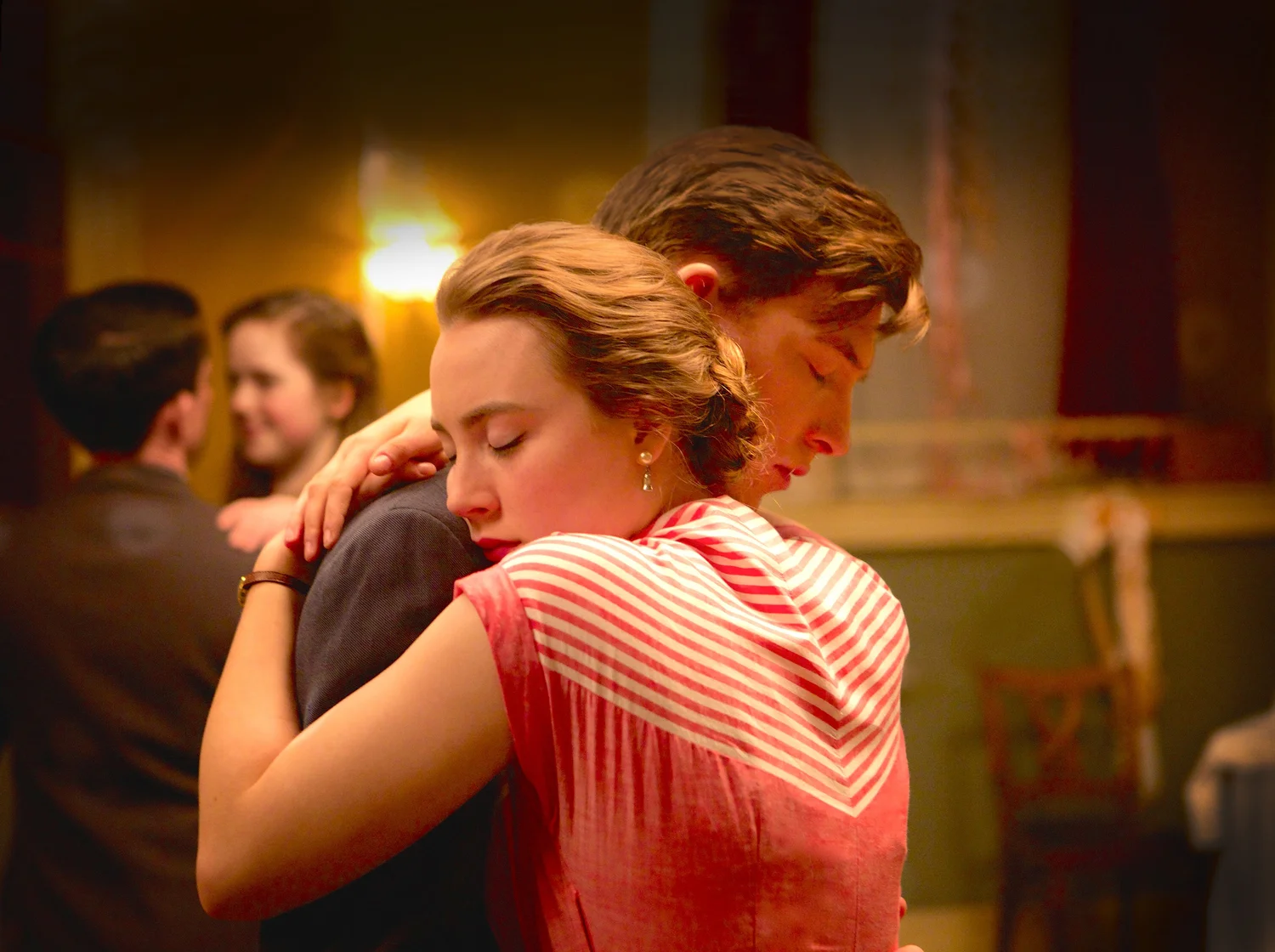
Ronan deftly presents courting in 1952 Brooklyn with the same subtle anxiety and palpable emotion not uncommon in today’s dating scene - at a dance put on by the local church, Eilis eventually meets her husband to be, Tony Fiorello (Emory Cohen). Tony, an Italian boy, shows much more interest than Eilis, but chips away at her hardened exterior in hopes of one day winning her heart. They meet every night to walk home from Eilis’ night classes at Brooklyn College, where she studies to become a bookkeeper. Their exchanges become more intimate and earnest, talking about raising their kids to be Brooklyn Dodger fans, as Tony helps Eilis find a sense of belonging in America.

Just when it seems that Eilis has finally carved herself a place in Brooklyn, and life was beginning to look up, there is wretched moment in the film’s third act. Eilis, still working at Bartocci’s Department Store, is informed by Father Flood (Jim Broadbent) and Miss Fortini (Jessica Pare) that her biggest supporter and beloved older sister, Rose (Fiona Glascott), who gave up the chance of a life of her own in order for Eilis to chart a path to America, has died.

Eilis’ sister’s death catalyzes the film’s ultimate dilemma. Being called back to Ireland to put her sister to rest, familiar faces come back with great reverence and regard for the Americanized Eilis, including one Mr. Jim Farrell (continuing an already impressive year for Domhnall Gleeson). For the rest of the film, Eilis is tasked with choosing which life suits her best, framed by delicate moments of painstaking decisions between the familiarity of home or her responsibility for her life lead in America.

More understated in tone than its source material, screenwriter Nick Hornsby and director John Crowley masterfully transport an already charming story to screen in a hyperrealistic manner. Dramatically speaking, the conflict in the film moves at a glacial pace, but therein lies one of the greatest aspects of Brooklyn – the film reflects the subtlety of charting one’s own course in life. An film that is sure to be a career defining moment for Saoirse Ronan, as well as an Academy Awards 2016 darkhorse – Brooklyn reminds us that there is no debt to one’s past, and the greatest moments in life are not owed to others, but rather, shared.

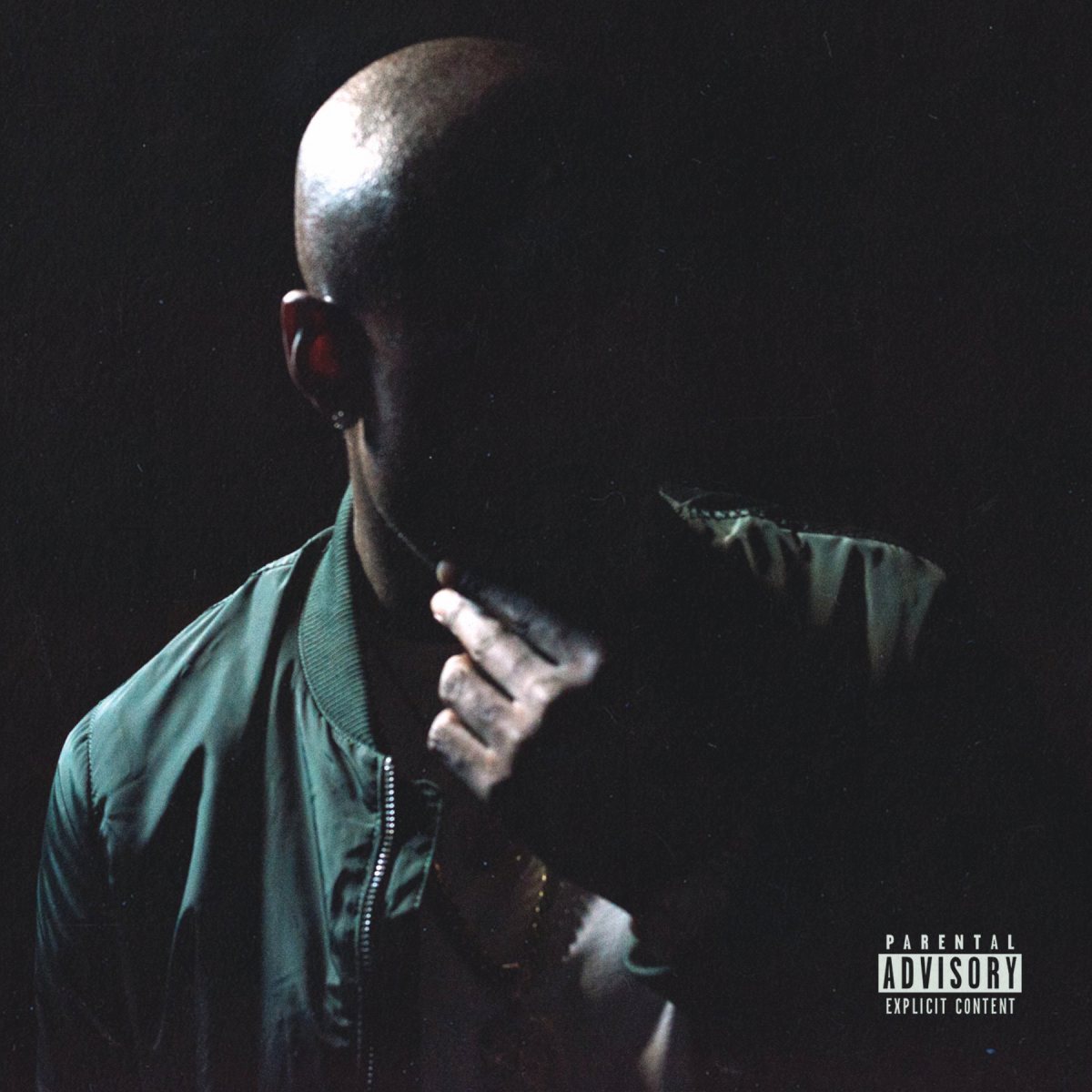
Freddie Gibbs Brings His Name Into the Limelight on 'Shadow of Doubt'

Music ReviewSean McHughComment

Not even a year removed from joining forces with 808 doyen Madlib to create one of 2014’s best collaborative efforts, Piñata, rapper Freddie Gibbs has found time to drop two EPs and his most recent full length effort, Shadow of Doubt. One of the more underrated and tireless lyricists on the circuit today, the Gary, Indiana native son has done nothing but further amalgamate his legacy as rap’s most unheralded hero.

Shadow of Doubt is a far cry from the dynamic duet that was Piñata, with Gibbs exchanging Madlib’s singular break beats and samples for multi-producer packaging, spanning the hip-hop spectrum. In turn, the variety allows Gibbs to flex his lyrical musings in an array of fashions – some brimming with machismo (“Forever and a Day”), salty dog syndrome (“Freddie Gordy”), and a possibly self-narrating jilted lover opining over past oblivion (“Careless”). The frenetic emotional energy asserts Gibbs’ ability to separate Shadow of Doubt from any past bodies of work, further cementing the underestimated prowess of his flow.

Gibbs has for some time now been considered one of the more hawkish of his rap compatriots – at times more brute lyrical force than emotional finesse - with such a precedent being torn down by one of Shadow of Doubt’s most powerful tracks, “Insecurities.” Disarming self-awareness laced with an almost regretful tone – “I was ready for whatever, man / I remember I was selling things / I let it go” - allows for Gibbs to present an offertory that is almost unbecoming, had it not been masterfully paced by Gibbs’ classic cadence. 

Another highlight of Shadow of Doubt is the Gibbs’ choice of collaborators. He calls upon his rap contemporaries; take “10 Times,” a more modern approach to hip-hop, ranging from the hazy mediations from Gucci to flipping the of the script to Bay Area legend E-40, who offers one of the more humorous non-Gibb verses on Shadow of Doubt: “Lifestyle, ribbit, ribbit / That’s what I’m going to use when I stick it / She bad, she fat / She gon’ get a ticket / Thicker than a buttermilk biscuit…”

Laughable lyricism aside, Gibbs’ choice to feature grizzled veterans of the game allow not only for the guest MCs to shine, but help heighten Gibbs’ tonal dexterity. “Extradite,” perhaps the album’s strongest feature track, presents Gibbs commenting on the peculiar state of rap and hip-hop, at times jeering at his younger peers’ inability to remain relevant as long as someone of his own caliber. The feature verse, deftly performed by Black Thought of The Roots fame, is the album’s most politically fused, with commentary on recent race tensions and the like, all being juxtaposed by a smooth jazz beat.

Shadow of Doubt is a record that is unlikely to shift cultural dialogue or work its way into the zeitgeist, but that has never been Gibbs’ intentions. Shadow of Doubt acts simply, a rap manifesto of MC’s continual challenges to the rap game, with little to no pushback. If rap has become more emotionally deft, then it has abandoned one of its core principals – lyrical thought to shift the perspective of those who will listen. Modern rap can at times be vapid and sensitive, but not for Gibbs. Shadow of Doubt is an assertion that Gibbs is the only true aggressor who remains in the game.

Jadakiss Affirms His Legacy on 'Top 5 Dead Or Alive'

Music ReviewSean McHughComment

The Internet’s pervasive nature has helped society in countless ways. One “helpful” new bit of knowledge is that we as human beings seem to love lists. People waste countless hours insouciantly arguing and spewing vitriol in defense of their beliefs on which grumpy cat has the funniest ugly Christmas sweater (I died when I saw #8!!!).

So as one might imagine when Billboard released their “10 Greatest Rappers of All Time” in early November, there were the given masses that disagreed with how certain “locks” were left off the list. Granted, there was sure to have been plenty of politicking amongst the Billboard staff on which rapper included might cause the most pushback amongst readers (looking at you Kendrick), but perhaps the publication’s biggest blunder was the exclusion of the original Ruff Ryder of hip hop, Jadakiss.

Whether or not Jadakiss had any actual knowledge of Billboard’s inconsiderate omission of his body of work to the list is certainly in question. Luckily, Jada has taken it upon himself to inform the masses that there’s no need for his inclusion in a “Top 10” article because he’s released his self-asserting and all-time affirming, Top 5 Dead or Alive.

T5DOA serves as Jada’s fourth solo album, and his first since 2009’s The Last Kiss, though Jada has released a mixtape and a handful of singles during his six-year major release hiatus. After little to no prodding from 105.1 FM’s The Breakfast Club, Jada claimed that T5DOA was “something to enjoy your holiday festivities, your Thanksgiving, your Black Friday shopping, get into your Christmas feeling… all the way to Easter.” Jada continues to share his inspiration in the interview, stating that his inspiration for the album came stemmed from his time in the '90s, coming up with Notorious B.I.G, Nas, Eminem, and the fact that those “greats” had shown him proper respect as peers.  

Jadakiss showcases his verbal versatility on T5DOA, with little to no need for the theatrics and histrionics purveyed by today’s other popular hip-hop artists. The first track, “First 48,” is a beautiful narrative from an emcee opining about his hip hop prowess with lines like “They love to hear the don speak / That’s because the dialogue ain’t within arm’s reach,” further asserting his place on the Mount Rushmore of rappers.

T5DOA is set up like an old-school hip-hop record, with skits popping up intermittently throughout, but features the brazen bravado that’s become so popularized by the likes of Drake and Kanye West. The album is a departure for Jada, with some particularly uncharacteristic beats that force Jada to stretch his lyrical musings in more involved manners. “You Can See,” featuring Future is equal parts trap music and classic Jada bars that carries one of the original Ruff Ryders into the modern age of hip-hop.

The features on T5DOA further cement Jadakiss’ versatile foray into the modern hip-hop canon. Artists like Future, Diddy, Lil Wayne, Wiz Khalifa, Styles P, and Jeezy seem to span the spectrum of 2000s hip-hop standards, with Jada continually bringing the fire. Each feature shows some sort of new vein of Jada’s classic flow and cadences, “Ain’t Nothin’ New” feels more like a Ne-Yo or Nipsey Hustle track that happens to feature Jadakiss, rather than 48 bars from Jada with a harried chorus thrown together by the other two.

Ruff Ryder fans can rejoice as well, though there is no full-blown reunion track, Styles P and Sheek Louch both feature on the album. “Synergy” featuring Styles P is one of the albums throwback tracks, with Jada and P exchanging verbal couplets over a Just Blaze beat. “Realest in the Game,” featuring Young Buck and Sheek Louch is perhaps the most aggressive track on the album, with Buck, Sheek, and Jada all assessing their streetwise power; think 2005 G-Unit (Young Buck).

Granted, Jadakiss has never quite experienced the same Top 40 success as his other rap counterparts, but he always managed to carve out his own sort of “street life trepidations” and was never really challenged. That is not the case in T5DOA. Jadakiss may be the closest thing to a “rapper’s rapper,” and T5DOA serves as Jada’s self-celebratory, cocky assertion of his staying power in the rap game, having managed to come out with another “banger” after six years of top line silence.

Watch a Basketball Team Gorilla Mascot Steal Your Girl in Tame Impala's "The Less I Know the Better"

New MusicWeston PaganoComment

Seeing the girl of your dreams holding hands with some guy, or basketball team gorilla mascot, named Trevor may not be "the greatest feeling ever," but watching the new music video for Tame Impala's "The Less I Know The Better" might well be one of them.

You can't really go wrong when directed by delightful Spanish collective CANADA, who have been making some of the most brilliant music videos in recent years from El Guincho's "Bombay" to Battles' "Ice Cream," and their work with this Currents classic is no exception.

CANADA drench the Australian indie darlings' groovy bassline wallop and sultry croons in their quintessentially quirky and colorful aesthetic for a trippy and stimulating experience bound to rival preceding music video "Let It Happen" in those near-encroaching year-end lists.

This love triangle tale of man and ape is a particularly sexual and surreal short film even for them, and it's safe to say the more you watch the better.

A Guide to Finding the Best Headphones for Your Money

Music List, Other ReviewFouzan AlamComment

In recent years it’s become harder and harder to find headphones that allow you to listen to music the way it’s meant to be heard, as more and more audio gear is made with heavy bias. The iPod explosion contributed to a saturated market for headphones, and so many companies felt the need to differentiate their products based on creating a unique sound. Unfortunately, this trend has made it much more difficult for purists to enjoy music in the best way possible - the way the artist originally intended for it to be heard.

Headphones that are unbiased may not sound very impressive when you first try them on in a shop. However, just like a good wine, you will notice that they provide more subtle details to every single track in your library in time, and that they aren’t horrible for listening to certain genres or more complex tracks, as biased equipment can often be. If there is bass or treble in the actual track, you will hear it in all its genuine texture and crispness, and if there is NOT, then you won’t have it added to the music in a bombastic, bloated manner, distracting you from the essence of the music. If you’re coming from sub-par headphones, it can be an unusual experience, but it will grow on you.

There are still headphones in every price range that were made with the goal of achieving this transparency, and we have reviewed and sorted them below by price range and in-ear v. over-the-head categories.


UNDER $50


In Ear:
VSonic VSD1S ($49)

VSonic came into the audio world with a splash, and provides a wide range of headphones, from the cheap yet quite clean sounding VSD1S to the more expensive products like the GR07. This particular model is the best you can do for an in-ear headphone at this price. For those on a budget, this will handle everything you throw at them.


Headphones:
Sony MDR ZX100 ($32)

If you’re looking for strong headphones for this price range, Sony has your back. They make the most well balanced and clean sounding headphones that won’t break the bank.


$50–150


39295716_SE215-xlarge.jpeg

In Ear:
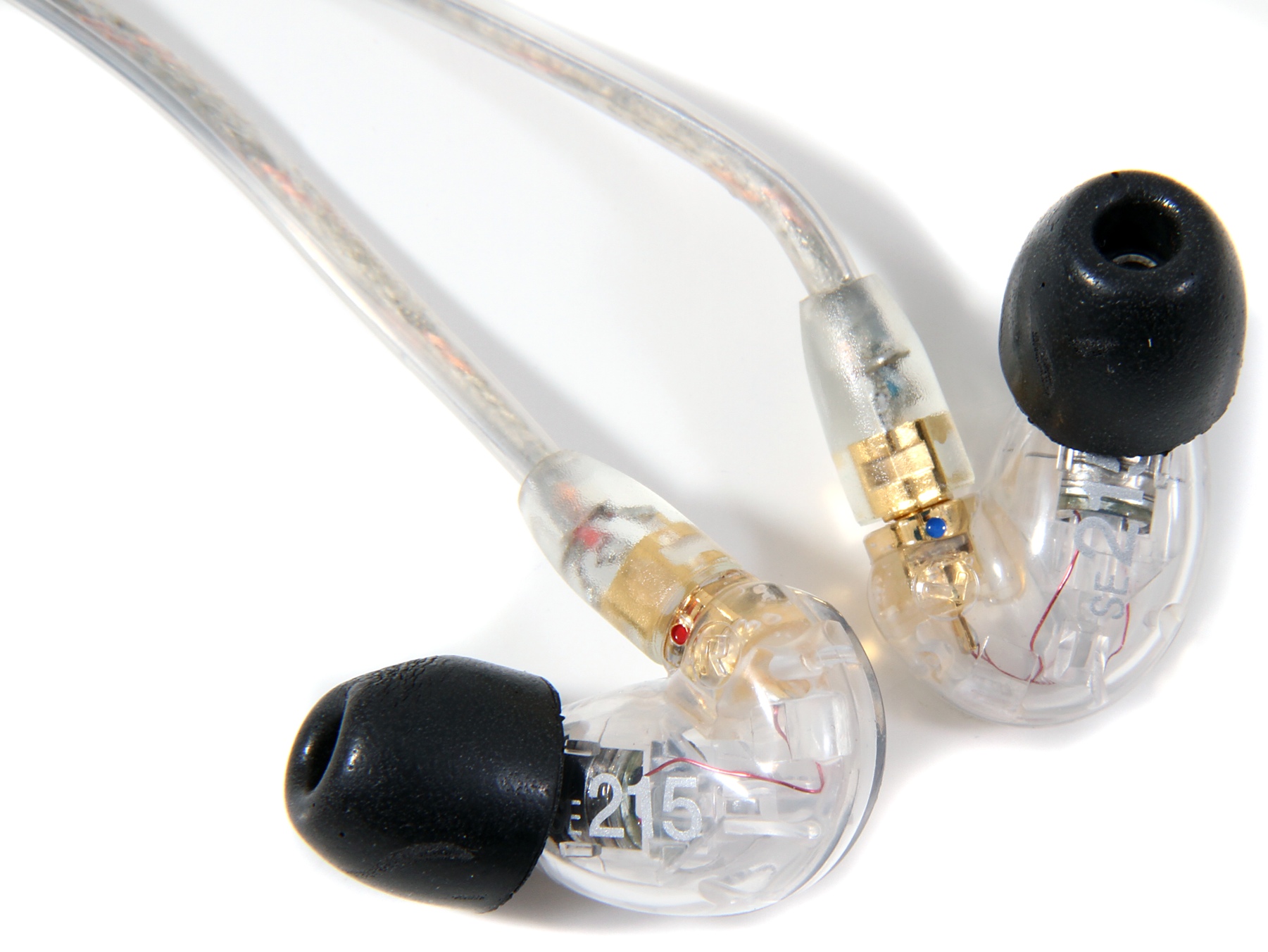
Sure SE 215 ($99)

Ah, Sure. They’ve done an amazing job with their in-ear monitors, and the SE215 is the first place you start to see a good dual driver earbud. These are also the first balanced armature headphones on the list. Balanced Armature drivers are smaller, and produce a more accurate sound, but across less pitch. Sure got around that by sticking two balanced armatures in each earpiece. One for the highs, and one for the lows, contributing to a nice clean sound, with plenty of detail to boot.

Headphone:
AKG ATH M50X ($150)

If you search around online it's not hard to find a lot of people who really love the ATH M50X. They are an improved model of the ATH M50, and are most people’s
gateway drug into audiophilia. Comfortable and noise cancelling, they also have excellent sound quality. If you're the type to close your eyes and imagine your favorite band playing in front of you, this is the way to do it.


$150–250


In Ear:
Westone UM2 ($250)

Like Sure, Westone has done some wonderful things for in-ear lovers. Again, using a dual balanced armature system, but with better tuning and more detail, Westone creates a winner at this price point for those who want every detail in their music, from their morning commute, to their daily run.

Headphone:
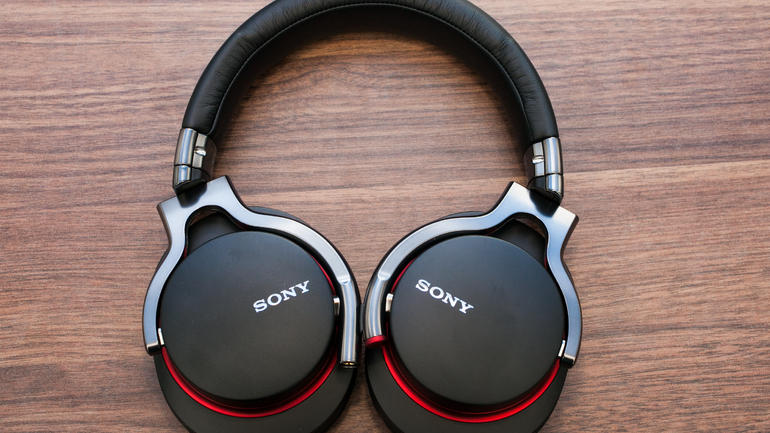
Sony MDR1R ($223)

Big brother to the other MDR mentioned earlier, these headphones have some of the clearest, crispest sounding instrumentals and vocals you can find for
this price. The are also one of the first headphones in this list where you start to get some real soundstaging. The music feels 3D, and the sounds of an orchestra
will envelop you.


$250–350


In Ear:
Logitech Ultimate Ears 900 ($349)

Ultimate Ears was its own company until Logitech bought them a few years back. While their lower end models aren’t really anything special, the UE 900
stands out as one of the best sounding in ear headphones I’ve heard at this price. Sporting an impressive four balanced armature drivers per ear they have separate drivers for the mids, highs, and bass. The soundstaging on these is beautiful, and when you walk around, it feels like the band is following you through
space. It’s a wonderful feeling. Oh, and as an added bonus, the cables are removable.

Headphone:
Sennheiser HD 600 ($340)

Sennheiser has long been regarded as the king of headphones, until they were usurped by Audeze a few years ago. Even then, at this price range, you simply
cannot get anything better than the HD600. This is the stage where the sound you get out of MP3 files starts to feel like it’s not quite enough, so switching to some lossless audio, or more detailed sources, such as CD or Vinyl is suggested for maximum enjoyment. Keep in mind that these are open back headphones, though.
People will be able to hear what you’re listening to. But don’t worry too much - everyone will appreciate some Tchaikovsky.


$350–450


In Ear:
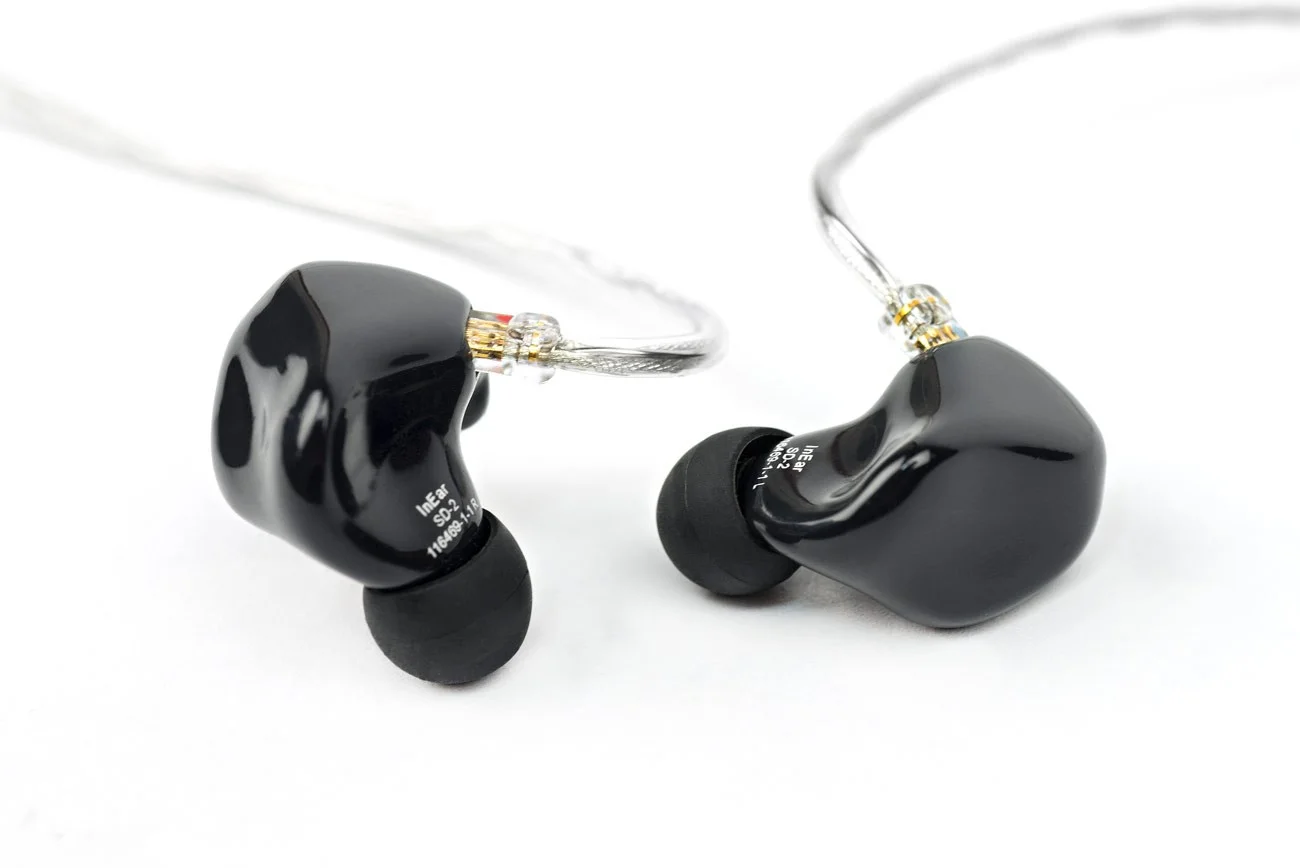
InEar StageDiver 2 ($450)

There’s a lot that could be said about German engineering, but the only thing I will say is that these are the first In Ear headphones I've heard that match the
soundstage of over-the-head headphones in their price category. There are two things that balanced armatures tend to struggle with. First, they have trouble doing
bass, and second, they have trouble with the 3D nature of sound, simply because they’re so close to your ears. The StageDiver 2 is not held back by either of these, and has two precision tuned balanced armature drivers. It
presents a beautiful sound that’s perfect for portable users, with some of the most perfectly balanced bass, mids, and highs in a 3D setting. These are the holy grail of in ear monitors.

Headphone:
Oppo PM3 ($399)

Now we’re getting into some interesting stuff. with the Oppo PM3, for the first time, we see a planar magnetic headphone under $500. Planar magnetic headphones are the “next level” of speaker technology, too big to be placed into tiny in ear units, but perfect for large headphones. The Oppos are comfortable, and
impeccably detailed. They leave nothing to chance, and just present clean, beautiful, smooth, and perfect sound. The bass is not overpowering, but it reveals texture as it goes low... so, so low. It doesn’t feel like someone is playing in your head, it feels like they’re in the room, revolving around you.

oppo-pm3.png

Watch Sir Paul McCartney Teach You How to Make Mashed Potatoes in 1998 Video

Music NewsWeston PaganoComment
paul mccartney mashed potatoes.jpg

Paul McCartney is a talented man. He can play bass and sing and write and compose and... make mashed potatoes.

Filmed for what was his first broadcasted appearance following his wife Linda's death from breast cancer in 1998, Sir Paul treated fans to a tutorial on how to cook the traditional dish per his late partner and bandmate's recipe.

This cheeky little glimpse of a legendary Beatle doing something so pedestrian, from the talking oven mitt to the playful health tips, is as endearing as it is informative, even if it is a bit nerve-wracking to see such magical fingers to close to a knife blade.

So whether you're an expert chef or a first-timer, sit back, take notes, and enjoy. Maybe someday we'll get instructions for "Honey Pie" or "Savoy Truffle" next.