TRANSVERSO

- A culture magazine reaching terminal verbosity -

A Look Back: Uncle Kracker First Asked Us To Follow Him 15 Years Ago

EditorialJonathan KlingerComment

Anyone with ears can attest to the brilliance that is Matthew Shafer’s voice.

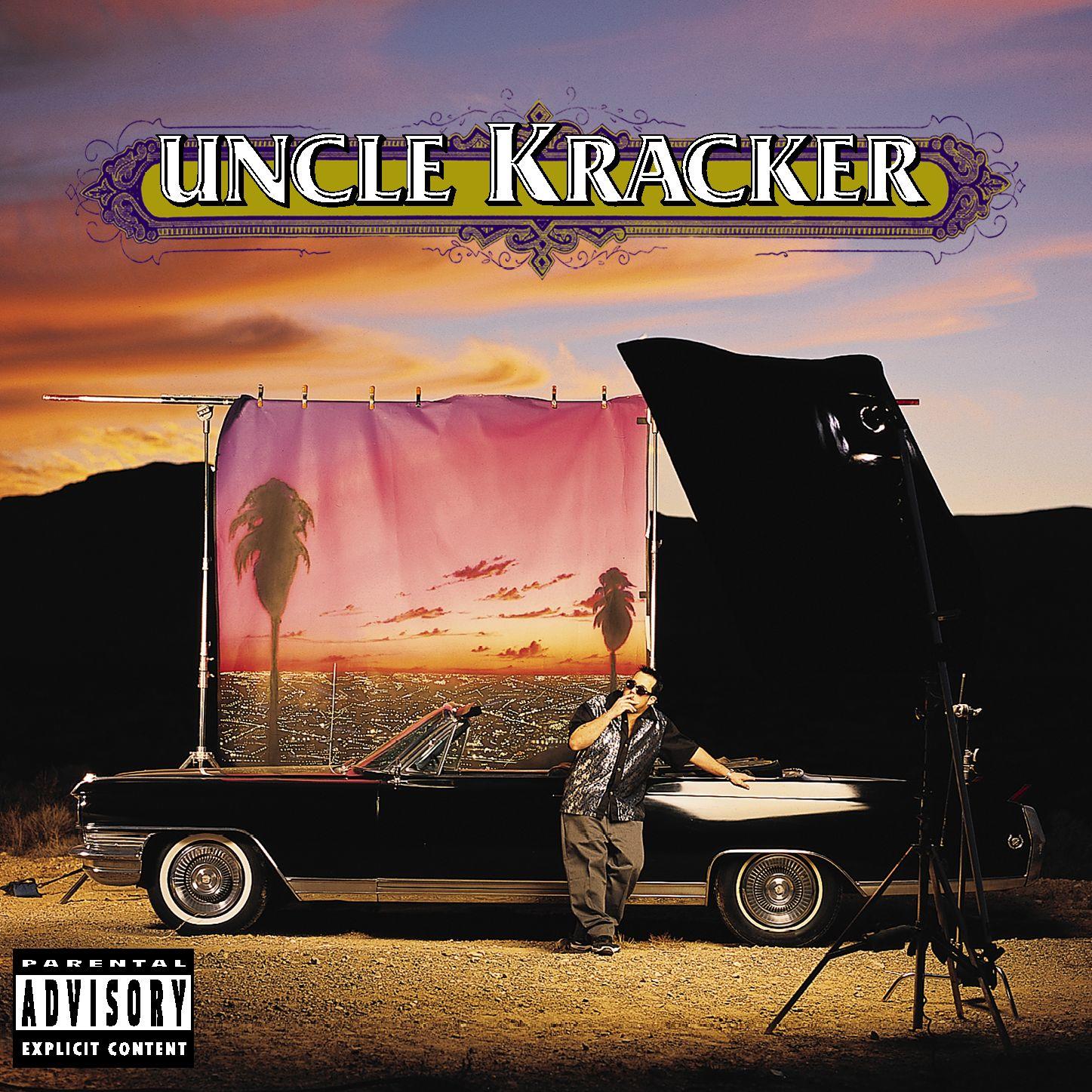
Shafer, or Uncle Kracker for you simpletons, was fresh and unknown until that day that will forever be remembered in history, the day on which he released what is now considered the greatest album to ever be heard. June 30th of the year 2000 marked the world’s first impression of Uncle Kracker with the instant classic, Double Wide.

Double Wide peaked at Number 7 on the Billboard Top 200, but will forever be remembered as Number 1 to his musical nieces and nephews. With a lineup consisting of no one that matters other than Kid Rock and our avuncular caucasian hero himself, they slowly rapped/rocked their way into our ears, and straight through to our hearts.

Uncle Kracker's music: so good its soundwaves are visible

Album highlight, “Follow Me,” was my idea of the ideal smooth-talker’s anthem. The song, which has undertones of excessive drug use and cheating on a spouse, was the big hit of the summer and was the first three tracks on my summer 2001 mixtape. Seven-year-old Jonathan learned every single word and would recite them upon request or any time he felt like it.

Follow me everything is alright,
I’ll be the one to tuck you in at night,
And if you want to leave I can guarantee,
You won’t find nobody else like me.

Beautiful. Just hearing it now gives me shivers. Cockiness with just the slightest tone of comfort. That is exactly how I wanted Michelle Duncan in my 3rd grade class to feel as I sat her down and stared into her eyes, mouthing along the words to the song. Was she uncomfortable? No, she loved it. Besides, all the weird undertones (or blatant tones) went right over our heads.

We all thought the song was comparable to things like “I Want it That Way” or other classic Backstreet Boys hits like, “I’ll Be the One” or “I Need You Tonight.” We didn’t want to know what types of drugs Kid Rock and Uncle K were lighting up to when they were recording it, all we cared about was that little three minutes and thirty-five seconds we could share while she sat on the swing at recess listening to the song through my portable CD player. (Remember those?) Luckily for her, once the song ended, she got to enjoy it two more times.
Michelle wasn’t the only one that got the “Follow Me” love. Rembold family, remember our American Idol night? Remember how I made it through four rounds singing the same song every time? The reason I get so specific with these examples is because I know everyone shares one thing in life: We all love Uncle Kracker, specifically “Follow Me.” The names and faces are different, but the experiences are universal.

Is he the strongest performer? Absolutely. Do his lyrics imply that he cheated on his wife (who was his childhood sweetheart) while he was probably coked out of his mind? Definitely. Does that mean we can’t enjoy this masterpiece that is the defining song of the 2000s? The biggest no. There isn’t a day that goes by without me humming along to the iconic guitar riff. Dun-dun dun dun dun dun dun dun, dun dun, dun-dun dun dun dun dun dun dun. duun dun. So great.
M. Night Shyamalan Returns to Form in Horror-Comedy 'The Visit'

TV/Film ReviewCorey DowdComment

Academy Award-nominated screenwriter and director M. Night Shyamalan became an overnight phenomenon following the debut of his third feature, The Sixth Sense. To this day, any and all advertisements for his movies will feature the words, “From the writer and director of The Sixth Sense.” Following up on it proved simple for Shyamalan, releasing two more films that received similar acclaim, Unbreakable in 2000 and Signs in 2002, yet in the 13 years that have passed, he has (arguably) not made nor been involved in a single film reaching anywhere near the success of those three. (The Village has its defenders, but I am not one of them).

That is, at least, until now.

Shyamalan’s latest work, The Visit, is a found-footage horror-comedy about two young children who go to meet their estranged grandparents on a weeklong trip. The film starts off in an interview with the Mom (Kathryn Hahn), who has not spoken to her parents in 15 year following a massive falling out due to her relationship with an older man. 10 years later, the man leaves her with their two children, Rebecca (Olivia De Jonge) and Tyler (Ed Oxenbould). Mom has a new boyfriend, and he decides to take her on a cruise, so, after a seemingly spontaneous invitation, the kids decide to make the trip to Nana (Deanna Dunagan) and Pop-pop’s (Peter McRobbie).

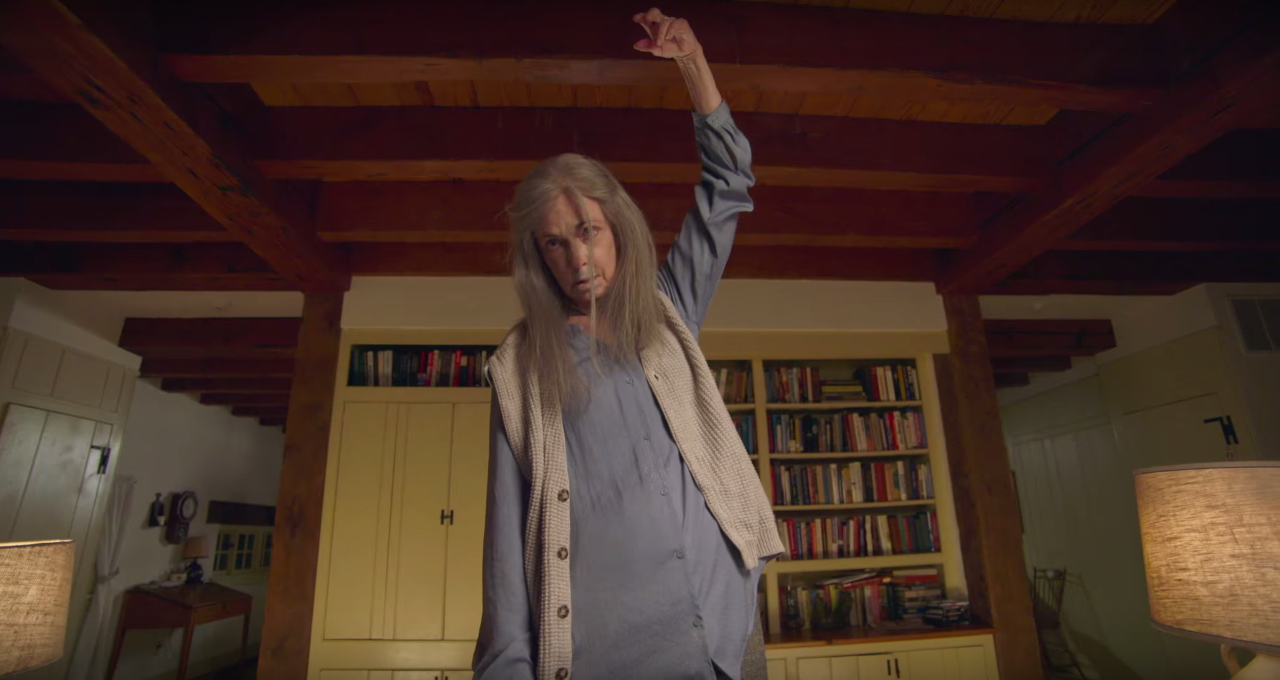
But there’s something a little off about grandma and grandpa. No one is allowed in the basement, nor out of their rooms after 9:30 PM. When the kids decide the break curfew, they find that grandma sleepwalks at night and vomits everywhere. She makes strange noises and claws at the walls. When the kids come clean to grandpa, he writes it off as her just being an old lady. 

Unfortunately, grandpa’s not a shining example of normalcy either. One day, taking the kids into town, he gets paranoid and attacks a stranger. The kids call their mother and explain what’s going on. Mom says they’re just old.

Figures.

There’s one scene that stands out among the rest in this movie in terms of both horror and humor and effortlessly blending them. The kids are playing hide and seek in the crawl space beneath the house. We switch between their POVs throughout, and as one is being terrorized, we may cut back to the other, who has no idea what is going on. It’s a great scene that really showcases the directorial skill of Shyamalan. 

The Visit's script is an absolute return to form for Shyamalan, delivering what is easily his best work since The Sixth Sense, complete with fittingly outstanding performances. Oxenbould is especially notable, for giving a believable and hilarious performance, while De Jonge pulls us in as a young aspiring filmmaker who wants to stay ethical and true to her creative vision. Dunagan, however, is the true star of the movie, putting in a captivating, haunting, and profoundly entertaining performance, with McRobbie's character being off-putting throughout, coming up with half-baked explanations for the strange goings-on at the house.

Pay no attention to the trailers for this one. Remember in 2012 when Drew Godard’s horror-comedy masterpiece The Cabin In The Woods was about to be released? Or Adam Wingard’s 2013 You're Next? The trailers we got made it seem as if they were straight-up slasher flicks. Going into the theaters to actually see them proved disappointing for many, as what they ended up getting were dark comedies. This is a very similar situation to the campaign for The Visit. The trailer tries to sell the movie as something that will terrify you, but the truth is you will be laughing a lot more than jumping.

This movie is scary when it’s supposed to be, and it’s funny when it’s supposed to be. The Visit is M. Night Shyamalan’s first step toward a massive comeback. Here’s hoping he can keep it up.

Unknown Mortal Orchestra's "Can't Keep Checking My Phone" Video Is a Rabbit-Hole of Phenomena

New MusicWeston PaganoComment

Unknown Mortal Orchestra's third album, Multi-Love, is already a standout record this year, and now we have a new music video for its second single, "Can't Keep Checking My Phone," that is sure to be on the year-end lists as well.

A menagerie of unusual afflictions and other peculiar phenomena from Stendhal syndrome to divine intervention, the 4:21 runtime is chock-full of incredibly stimulating imagery with captions inspired by the style of trading card games like Mars Attacks. Directed by Dimitri Basil and Cooper Roussel (with art direction by Laura Gorun and Dominique Basil), it's just the type of thing you would hope to stumble upon in "an internet rabbit-hole researching at four in the morning," as described in UMO's Facebook post.

Put down your phone and click play on this (slightly NSFW) adventure below.

Beach House's 'Depression Cherry' is Velvet Textured Cloud

Music ReviewWeston PaganoComment

“There’s a place I want to take you,” beckons Victoria Legrand over gently marching percussion in the appropriately titled opening track, “Levitation.” If you’re a Beach House fan, it’s a place you’ve been many times before, floating just above the atmosphere. 

While the French-American vocalist and guitarist Alex Scally’s fifth album Depression Cherry, like the rest of their dream pop discography, has a direction in mind, it’s at the mercy of its listener, with Legrand cooing, “I’ll go anywhere you want me to” shortly after.

Beach House, like most of their genre, don’t demand. Like dreams themselves, their soundscapes are what you make them. Manipulated within your own head, whether consciously or not, they can fade, ignored into background obscurity, or completely envelop you as you lie entranced on a thick, soft carpet of the ethereal.

Following “Levitation,” Depression Cherry comes back down to Earth with the second song, “Sparks.” An outlier in style, it’s a sort of waking from this dream, jolting the status quo with a fuzzier, harsher edge. This leading single seemed like a sign of something new, but ultimately comes off as a cherry-red herring as the record then relapses back into the sad, comfortable formula Beach House have perfected since their formation in 2004.

While this may be disappointing to those who lament the “same album over and over” approach and were hoping for some diversification, it’s hard to fault a group who has found their niche and carved it so deeply. Descriptors like “dreamy,” wistful,” and “lazy” have become, well, lazy over the years, but lazy is exactly how it all still feels, like a record player stuck on a lower speed. Though that is not meant negatively; this lull deceives those who are quick to write off their sound as boring or indistinct.

That being said, Depression Cherry doesn’t quite scale the sheer heights of the duo’s preceding two records, Bloom or Teen Dream, but largely by fault of Beach House setting the bar so high themselves. While those perfect moments mixed their ephemera with just the right amount of dynamism, Depression Cherry lacks some of that extra punch overall. The subsequent “Space Song," for all it’s echoing of “fall back into place,” does offer it, however, and it soars through the stars with sparkling synth beats in exactly the way an intergalactic swim might sound if the waves could exist in a vacuum at all.

And it’s exactly a vacuum in which Beach House want to exist. In an official statement they explain that the new record is what happened when they "let [them]selves evolve while fully ignoring the commercial context in which [they] exist,” shut away from it all. Even the relatively controlled environments of their own shows apparently dislocated them from their comfort zone, claiming “[T]he growing success... larger stages and bigger rooms naturally drove us towards a louder, more aggressive place; a place farther from our natural tendencies.”

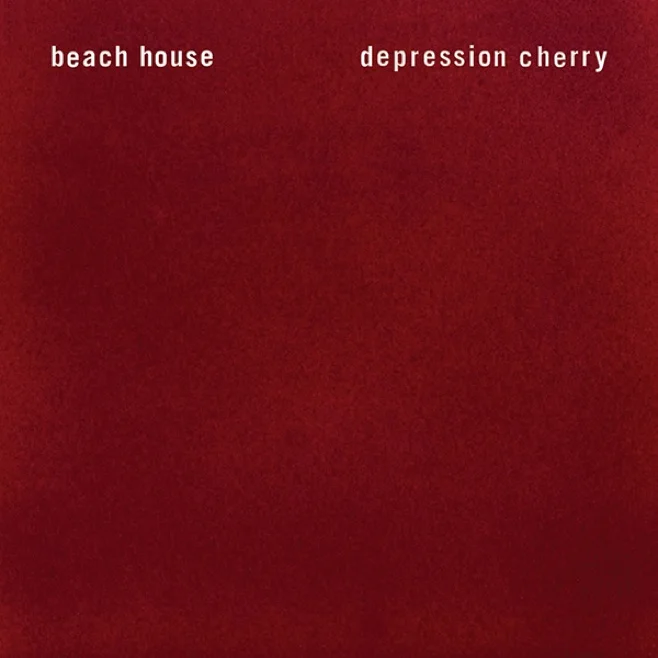
So what was already so simple has become more so. While the red velvet vinyl sleeve reminiscent of Bee Gees’ Odessa adds further texture, even their trend of solid, monochromatic cover art is simplified further, with the minimalist details of Teen Dream’s faint zebra stripes and Bloom’s dots vanquished in favor of pure, unadulterated stasis. At first (and second) listen it’s easy to glaze over the music in a similar way, though give it a chance and out of the homogeny come swirls of beauty. In a particular Beach House-y touch, the duo even handpicked select lyrics to display on their official Sub Pop site, aware of how hard it can be for listeners to distinguish them on their own.

On that same page they describe the record as "a color, a place, a feeling, an energy,” and it's represented literally on the sleeve. Like the seat cushion in that old chair at your grandmother’s, you can brush your fingers along Depression Cherry’s sonic textures one way to make it change shade as the fibers lean, then smooth it back out the other way again. You can spin your fingertip in a spiral, or make stripes, but it’s all still a surface level alteration in a cloud.

"The first thing that I do before I get into your house / I'm gonna tear off all the petals from the rose that's in your mouth,” “Beyond Love" quietly stabs, showing Legrand at her most aggressive. Breathing restless life into the ambient haze she wrestles, "I really wanna know / I really do breathe / We really do breathe / We really wanna know.” 

These lyrical tones juxtaposed amidst the careful caress of the organ and slide guitar could leave a casual listener gliding by, blissfully unaware of the deeper, more forceful current rushing below the surface of gilded waters lapping calmly at his boat, yet that makes their realization all the more powerful. Legrand claws at you from the inside whether you're aware of it or not.

Later on, the spoken word alternating with a fleeting, slowed-down mirroring of John and Yoko’s “Happy Xmas (War Is Over)” melody before captivatingly pleading guitar is layered with an angelic chorus makes the curiously named “PPP" a standout moment of not only the LP but their career. In “Bluebird” we find what is likely the only time Legrand will lie to you, as she soothingly misleads, “I would not ever try to capture you,” before “Days of Candy” ends Depression Cherry as fittingly as it began with the sendoff, “I know it comes too soon / The universe is riding off with you."

Whether it takes you where Legrand first longed to end up or not is up to you.

Depression Cherry is out now via Sub Pop. You can enter to win a red velvet poster for free here. You can buy the record here.

Win a Delicious Actual Red Velvet Beach House 'Depression Cherry' Poster

Music NewsWeston PaganoComment

Luscious Baltimore duo Beach House's newest album Depression Cherry is out today via Sub Pop, and we at Transverso are giving away one free, limited edition poster.

BUT THAT'S NOT ALL.

It, like the vinyl record, will be made of actual red velvet. Like the kind that you can touch. Finally there is a physical item as smooth as the sounds themselves.

Listen to the album and enter to win below, and read our Depression Cherry review here!

Close-up of the red velvet texture

Close-up of the red velvet texture

UPDATE: Congratulations to Raymond Thimmes, the winner of the poster and (surprise) a CD too!

You Should Download the Surprise Mixtape Toro Y Moi Dropped Today

Music News, New MusicWeston PaganoComment

Just a few short months after Chaz Bundick released his last LP What For? in April, the prolific chillwaver better known as Toro Y Moi has surprise-dropped a new mixtape titled Samantha today via a dropbox link in his Instagram.

The 20-track album features collaborations with Rome Fortune, Kool A.D., Nosaj Thing, and fellow South Carolina native, Washed Out, as well as a photo gallery available for download as well.

Samantha

  1. Power of Now
  2. 2 Late [ft. Kool A.D. and SAFE]
  3. Driving Day
  4. Good Song
  5. Pitch Black [ft. Rome Fortune]
  6. Us 2
  7. That Night [ft. Kool A.D. and SAFE]
  8. Stoned at the MoMA
  9. Room for 1zone
  10. Want [ft. Washed Out]
  11. ambient Rainbow
  12. Benjiminz [ft. Rome Fortune]
  13. Boo Boo Mobile
  14. bytheneck
  15. Real Love [ft. Kool A.D.]
  16. Enough of You [ft. Nosaj Thing]
  17. The Usual
  18. Prayer Hands
  19. Holy Nights [ft. SHORE]
  20. welp, tour's over

The Fratellis Mature With 'Eyes Wide, Tongue Tied'

Music ReviewHenry SmithComment

Like so many bands with outstanding breakout albums, the temptation for fans to use their earliest works as a benchmark for any subsequent albums is huge, and almost impossible to resist. Very few artists start off high and carry on climbing (Arctic Monkeys being a good example), but the majority of bands with breakout debuts, such as The Strokes, Cage the Elephant, and even Nirvana, suffer from a decline in popularity after their follow-up efforts fail to hit the exact heights previously climbed.

The trick with these albums is to listen to them as if they were completely new acts. If you don’t have "Ain’t No Rest For The Wicked" playing in your head, Cage the Elephant’s Melophobia is plain fantastic, while, Nevermind aside, In Utero could be by far and away Nirvana’s best work. It’s this same perspective that you have to take when spinning Glasgow-based rockers The Fratellis' fourth studio album, Eyes Wide, Tongue Tied; it's nowhere near Costello Music, but once you give it a chance, you might find you like it all the same. 

The opening track, "Me and The Devil," is a prime example of how The Fratellis have evolved in the nine years since their smashing debut; it’s much lighter on the guitar and the scratchy, raw vocals that were prevalent in songs such as "Chelsea Dagger" or "Flathead." It’s a more refined sound, and although in previous LPs Here We Stand or We Need Medicine it falls flat, it’s clear that guitarist Jon, bassist Barry, and drummer Mince have gone back to the drawing board this time and come out with a coherent effort to appease their fans. They spent a great deal of time in the United States and it shows, particularly in Bruce Springsteen-inspired "Desperate Guy" and the superstitiously swinging "Dogtown." There are still the some glimpses at nostalgia, though, with callbacks to their first album, most notably in "Rosanna" and "Baby Don’t You Lie To Me!"

That being said, the first half of the album is far better than the second half. À la First Impressions of Earth, it loses momentum quickly, meandering through more nondescript songs with influences that become slightly heavy-handed. All the same, Eyes Wide, Tongue Tied represents a more mature evolution of the band, and is generally a step in the right direction. Costello Music may be long gone, but there's still life left in The Fratellis.

'Mission: Impossible - Rogue Nation' Continues Series' Incredible Resurgence

TV/Film ReviewEthan WilliamsComment

If there’s one thing that Mission Impossible: Ghost Protocol proved, it was that it’s never too late to inject some life into your Hollywood franchise even with three installments already on the books. While the adventures of IMF agent Ethan Hunt had always been loads of fun, it was Brad Bird’s absolute joyride that was the first to make the jump from good to great. And if there’s one thing that Mission Impossible: Rogue Nation could be faulted for is that it does feel quite similar to its wildly successful predecessor.

The thing always most striking to me about the Mission: Impossible franchise was its ability to have remarkably different visual and narrative styles but still retain enough similarities to make the series feel coherent. Each new Mission was an experiment in how a new director could infuse their unique visual style with Tom Cruise’s love of practical stunts and decadent spy setpieces (a concept explored in this wonderful video essay by Sean Witzke) And while writer/director Christopher McQuarrie may not continue this sort of radical visual experimentation, Rogue Nation still offers plenty of fun allusions to film history and plenty of incredible action sequences that are among the high points of the entire series.

Rogue Nation finds the invincible Ethan Hunt on the trail of a vague network of underground terrorists known as “The Syndicate,” a group using the same amount of stealth and skill as the IMF but instead using it to spread chaos. At its head is the mysterious Solomon Lane, played with hissing menace by Sean Harris in the best villainous role of the series since Philip Seymour Hoffman’s terrifying turn in the third Mission. So to combat that threat, Hunt has to reunite the old team once again, including the hysterical Simon Pegg as Benji (finally given plenty to do in Rogue Nation, his third outing), as well as Ving Rhames’ Luther and Jeremy Renner’s Brandt.

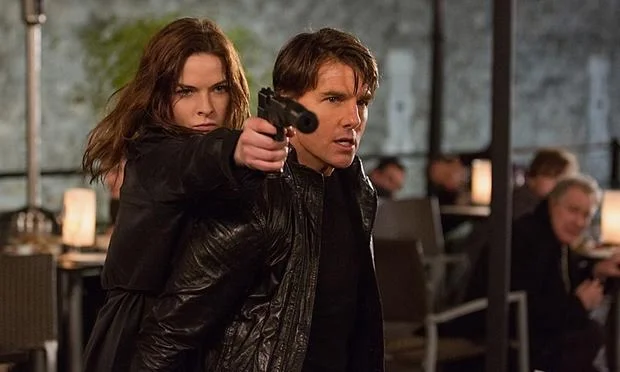
As fun as it is to see the old faces again, the real star here is the new arrival of Rebecca Ferguson, who plays the illusive Ilsa Faust, a seemingly rogue MI6 agent practiced at the art of deception. In a refreshing change of pace from many modern roles for women in action blockbusters, Faust is given free reign to be interesting, layered and, above all, kickass. Sexy but never defined by her sexuality, the movie takes the time to let her develop nuance and make a memorable addition to Ethan Hunt’s accomplices he’s acquired over the years. (And, as an aside, having her named Ilsa and placing the action in Casablanca is a reference too lovely not to grin at.)   

Just as important as the team in a Mission: Impossible movie is the increasingly madcap action sequences Ethan Hunt has to put himself through, and thankfully Rogue Nation doesn’t disappoint. From the get-go Cruise is hanging off the side of a giant cargo plane 5,000 feet in the air, and it’s clear that neither he nor McQuarrie are interested at all in scaling back the excitement or invention that makes the action of this series just so much fun. And while a heist sequence has always been par for the course in this series, it hardly gets more nail-biting than the way Rogue Nation places it underwater and gives the ticking clock even more urgency.

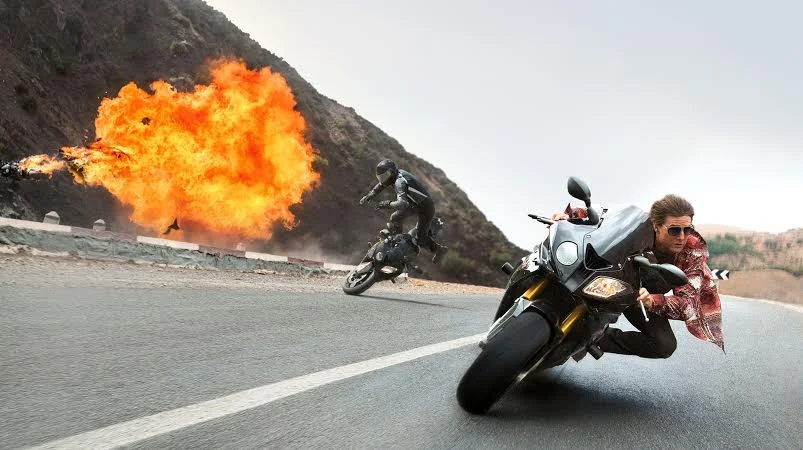
Cruise gives every ounce of his physicality into the role of Hunt once again and has to be considered the West’s only answer to the union of stunt and star that is Jackie Chan. Cruise is still taking hits and taking them hard in a way that makes the abundance of martial arts in this movie feel more physical and realistic. He’s still rolling off motorcycles, flipping cars and taking very ill-advised jumps because he is Ethan Hunt, and he’s the only man who can do what he does. Thematically, it’s so rewarding because he is at his most interesting when he’s at his lowest point, and the more Cruise ages the more interesting it is to see him get up again after each fall.

But if the film had to be boiled down into a single sublime sequence it would have to be the night at the opera that introduces Hunt to the true threat of the Syndicate as well as Faust’s involvement in it. In a very overt and masterful homage to Hitchcock’s The Man Who Knew Too Much, Hunt has to foil an assassination attempt on the Austrian chancellor while scaling the backstage catwalks amid the crescendos of the Vienna opera. Shot by the incomparable Robert Elswit and with some really tight editing from Eddie Hamilton, it’s the wonderfully orchestrated high point in a movie full of amazing setpieces.

While Mission: Impossible - Rogue Nation doesn’t try to reinvent the wheel in a series that has benefitted greatly from big risks, it does take some of the best elements from the previous entries and distill them into a supremely entertaining whole. By combining the twisty espionage of De Palma’s first, the kinetic action of John Woo’s second, the sadistic villain in Abrams’ third, and the themes of Ethan Hunt’s aging first explored by Brad Bird in Ghost Protocol, Rogue Nation delivers another wholly satisfying entry into a franchise that continues to intrigue and excite with every turn. Just try not to smile the entire time.

Hear David Gilmour Dreamily Cover The Beatles' "Here, There And Everywhere"

New MusicWeston PaganoComment

Leading up to his forthcoming solo record Rattle That Lock, former Pink Floyd guitarist David Gilmour has unveiled a one-off wispy rendition of The Beatles' "Hear, There and Everywhere" in this month's issue of MOJO Magazine. The sleepy track originally appeared on the classic 1966 album Revolver.

This is only the most recent of many connections between the two groups of artists, which also include Gilmour's contributions to Paul McCartney's recordings of "We Got Married" and the ballad version of "No More Lonely Nights."

Rattle That Lock is due out September 18 via Columbia Records. Hear the first single and title-track here.

Dead Neighbors Talk Beginnings, Local Athens Scene, and Creating Their Debut LP

Music InterviewEllen WilsonComment

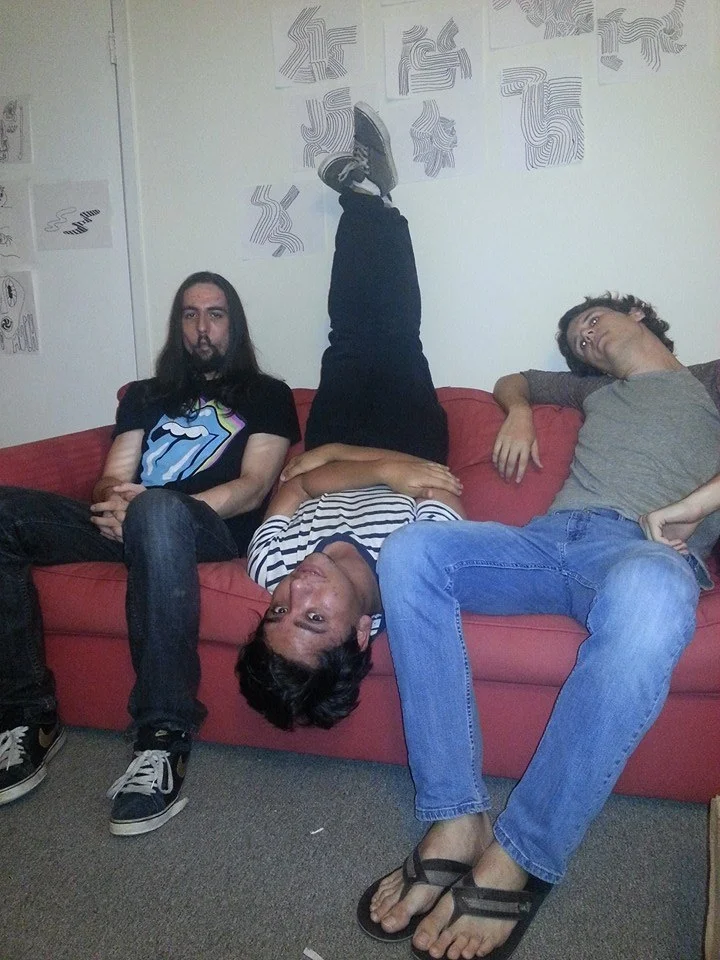
If you’ve been to Athens, Georgia lately, you’ve probably seen the name of local standouts Dead Neighbors around town, from Caledonia Lounge to Flicker Bar. The DIY trio played countless shows over the last two years before finally recording their self-titled debut, which came out on June 24th via Fall Break Records. Transverso sat down with Sebastian Marquez (vocals/guitar), Howard Stewart (Drums), and Alex Addington (bass) over some popsicles in the sticky Southern heat to talk about their beginnings, the making of the album, and the local scene. Click play, sit back, and enjoy.

Transverso: You’ve been a band for two years now and just put out your first album. How does it feel to have finally reached this landmark as artists?

Sebastian: It’s weird. It’s weird for me. Back in middle school I always thought about being in a band, then I had to switch districts in middle and high school and all the people who I thought I would’ve been in a band with, I ended up moving away from So that was interesting. The closest thing I got to being in a band back then was a talent show in high school. But yeah, it’s been really cool. It’s like I’m playing Guitar Hero, but in real life.

Howard: It’s been cool for me, not so much on the weird side, but yeah, it’s good to have records of yourself playing so you can show people. It’s nice.

Alex: I felt like we’ve been working up towards it the whole time we’ve been a band. It feels like the next logical step we needed to take to move forward as a band. 

I understand you all used to be in another band before this. What can you tell us about that?  

Sebastian: So, this is actually the origin story of dead neighbors: through sheer luck I was walking down the hallway when I lived in [University of Georgia dorm] O House on the fourth floor and I just saw two dudes playing Guitar Hero. This was at the beginning of the semester so everyone was being extra friendly, so I was like, “I love Guitar Hero!” and they were like “We love Guitar Hero!” One of the guys turned out to be Brad Gerke, and all four of us just kind of met through a series of coincidences starting with Guitar Hero. It just kind of happened.

What was that band called?

Sebastian: A Lot More Less.

How did you come up with the name Dead Neighbors?

Alex: The funeral home.

Sebastian: Oh yeah. So, when Dead Neighbors first started I was living in a house on Atlanta Avenue that was across the street from an actual funeral home. Like, I’d be sitting out on the porch reading like, Faulkner or something like that, and there would just be a funeral there. So right after we moved in the house, [my friend] came over and we were talking, and he just said randomly, “Yo, you live next to a funeral home, you should name a band that lives here The Dead Neighbors.” And I was like “drop the ‘the’ and you got a deal!”

If you weren’t called Dead Neighbors what would you be called?

Howard: I spend a lot of time coming up with ridiculously band names but I don’t know if I would want to be called any of them. One of the names my roommates and I came up with was Freudian Nip Slip.

Sebastian: I have to think about this one. Probably like, The Silver Rockets. It’s a Sonic Youth song, so…

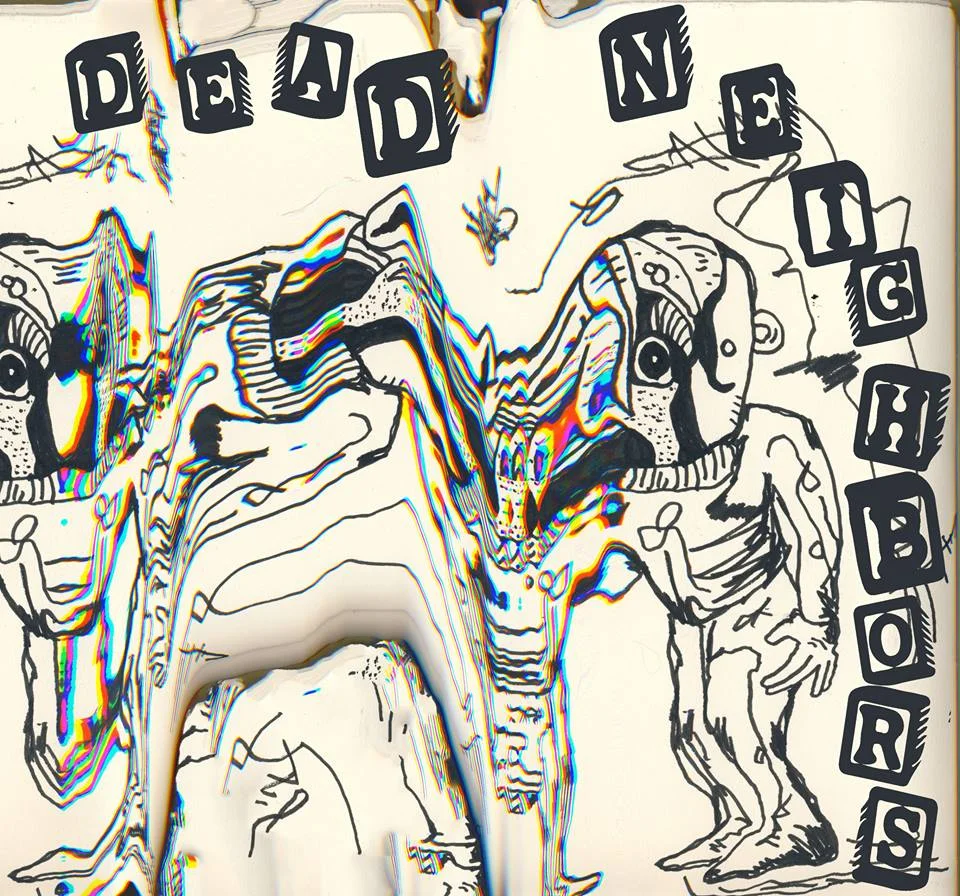
Dead Neighbors cover art, by Austin Lonsway

Dead Neighbors cover art, by Austin Lonsway

What can you tell us about the process of making Dead Neighbors?

Sebastian: We’d been playing these songs for about a year and a half at that point. I was talking to Xander [Witt] from Muuy Biien about what we could do on a budget so he pointed me towards his friend Scott, who used to live at the [creative space] Secret Squirrel. He’s up in New York now. We just recorded the whole thing in his bedroom in the basement of the Secret Squirrel, which is beneath Ben’s Bikes. It was cool. [It was over] a period of about like a month or so?

Howard: Yeah it was like February.

Sebastian: Yeah, just over the course of that month we would just go over there on weekends, I would just drink a shit-ton of tea and either do guitar takes or vocal takes. Howard was able to get all of the drum takes out in one day. There was minimal confusion honestly. All things considered it went really smoothly considering our budget of nothing. It was really cool. So we recorded the whole thing for about a month, we sat in a listened to some mixes and I just gave him some notes on it and then we had the first copy of the album ready within a week after that. I sent it over to Terence [Chiyezhan], you know, murk daddy flex, [and] he mastered that first copy. But that mastering brought out some things I didn’t like about the album, like vocals too loud on Stereo Song or the guitar not sounding right on Ever or something like that. By that point, Scott had already moved to New York so it was emails back and fourth for about another month, giving him notes, trading music back and forth. After that was done, I brought the album over to Terence and we mastered the album in one day. We just sat in his bedroom and we mastered it using his monitors and his computer. I know enough about studio work to be dangerous enough but for the most part he was like “just close your eyes and tell me when you think there is enough reverb.” It was actually really easy and very fast. We knocked the whole thing out in about four hours. On a side note he had some of the best tea I’ve ever had.

What was it like recording in a bedroom?

Sebastian: Cozy. It was a cool bedroom so that helped psych me up for it.

Howard: It sounded pretty good. I don’t know a lot about sound but Scott told me it was a good room to record drums in, it was like L-shaped.

Sebastian: It was very asymmetrical.

Howard: So the drums sounded good. It was a very relaxed thing. I feel like in a studio there would be a lot more pressure to get stuff done as soon as possible.

Sebastian: The vibe felt good.

What would you say is the overall mood of the album, what it felt like when recording?

Sebastian: So, have you ever watched Neon Genesis Evangelion? It felt like that!

Howard: I’ve never watched that.

Sebastian: It’s an anime. But you know, it felt surreal for me. Just doing exactly what I wanted to do. Getting to play guitar really loud and sing into a microphone for money. It was cool.

Howard: The mood of the album itself, there are some more angry songs on there, but I think as we progress we get a bit more chilled out.

Alex: I’ve done my own stuff when I’ve recorded myself a long time ago, but it felt pretty natural. It was exciting to record all of the music we’ve been working on and playing at shows.

What equipment do you use that affects your sound most?

Sebastian: The combination between guitar and amplifier always has a weigh in on it. The guitar I was using was the very first electric guitar I owned. My dad got it for me for like, an eighth grade birthday present. It was a really crappy guitar, but it could still play and I think that guitar specifically had a greater effect on the way the album sounded, pedals notwithstanding

Alex: Sebastian doesn’t really use pedals all that much, and I don’t use them at all. I really just mess with equalizers a lot on the amps. 

The album is a sort of mixture between shoegaze and punk. Do you identify with one more than the other?

Sebastian: I feel like I listen to more shoegaze. I started discovering punk the summer after A Lot More Less ended up disintegrating and it heavily informed me when I was writing the album. Bands like Mission of Burma and Sonic Youth. Sonic Youth isn’t necessarily punk, but they do have their punkier moments.  It’s kind of hard to put Dead Neighbors in a box but I end up saying, for the sake of ease, that we split the different between Mission of Burma and My Bloody Valentine. I guess myself, I identify with the shoegazer archetype if there is one.

Howard: I’d say for drumming, I’ve always played punk rock beats on the drunk set. So I guess the default, go-to drum parts that I wrote, especially for the first songs, were a lot more punk influenced for sure.

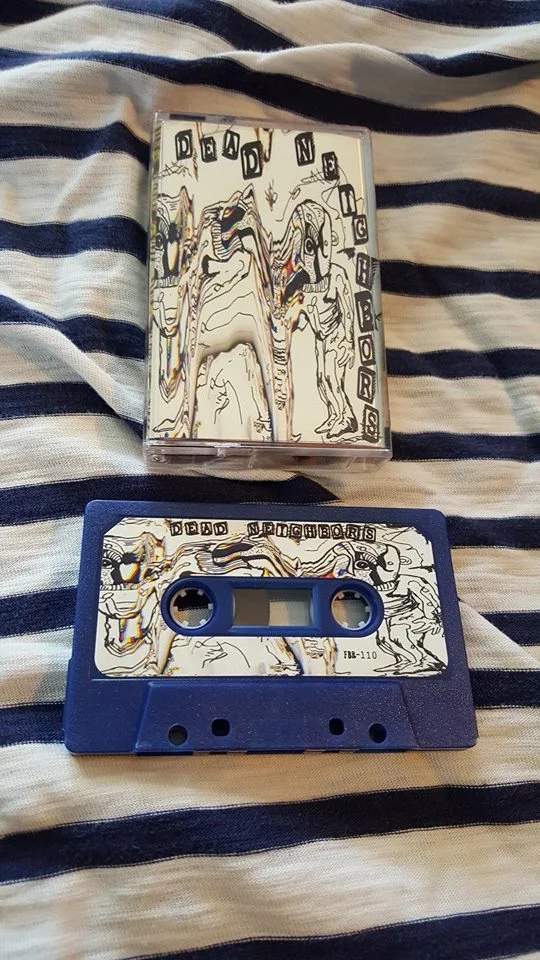
Fall Break Records is distributing the album as cassettes. How do you feel about that particular format and are there plans to release it in others?  

Sebastian: I feel like a cassette is the best way to listen to the album honestly. There is just that layer of hiss that adds something else to music. And I think specifically what we’re playing is going to sound really good on it. We don’t have any plans to release it on any other format right now. For most of our shows, what we’ve been doing right now is just burning CDRs in my room and having people pay what they want. Technically its out on CDs but only if you come to our shows. [Dead Neighbors is available on cassette and digital format here, as well as on iTunes here.]

What is your favorite song off the album?

Sebastian: That’s a tough question. It’s probably “Tell” because it’s got both sides, it has both of the moods that we explore on the album in one song. That and it’s just really fun to play. The transition part with all the snare drum hits and all the harmonics on the guitar part is really cool. It’s the most fun to play for me.

Howard: Yeah I like “Tell.” I think it’s my favorite because the song was written very well. It has the light airy part in the beginning and then hits you in the face.

Alex: I would probably say, I like “Stereo Song,” but Tell is probably a close second. It’s either or.

 What is the song you hate most in this world?

 Sebastian: You know, for a while it was actually “Hey QT” but I’ve done a complete 180 since because I fucking love PC Music.

Howard: There are a lot of songs that I’ve heard that I just think are terrible and I would want to do most things other than listening to them, but I don’t know the names of them or who it’s by.

Alex: This is specific and it’s not like they wrote the song but I just recently heard Guns N’ Roses cover of “Knocking on Heavens Door” and that would have to be one of them to be honest. Or anything written by Nickleback.

What is a lyric you’ve misheard in the past?

Sebastian: This happens to me a lot. I was reading the lyrics to “Zebra” by Beach House and for the most part I just didn’t understand anything Victoria Legrand was saying at all. I looked at the lyrics, they’re actually really pretty. I always thought the song was explicitly about Zebras but now that I’ve read the lyrics I have no idea.

Howard: Recently I listened to a Smashing Pumpkins song called “Lucky 13” and I swore that he said something about Obama in the chorus. They I looked it up and the song was released in 2001.

Alex: 75% of what Nirvana preforms. And in studio too.

What does it mean to you to be in an artist in Athens, Georgia?

Sebastian: It feels really cool to me. With the album now, I feel like we just kept this really cool tradition going, kind of like the passing of a torch. Right now we are just a little scribble in a really big book but I think it’s pretty cool to be a part of a scene that is bigger than yourself.

What are some of your favorite local bands?

Sebastian: Always much love to Muuy Biien. RIP Nurture. Lets see, if we’re talking Athens and Atlanta I love Warehouse so much. We’ve been super tight with Swamp since day one.

Howard: Yeah, I like Swamp. And in Atlanta I like the band Sling.

Sebastian: Shouts out to Saline too.

What is your favorite venue to play?  

Sebastian: I love playing Flicker. The sound guys are cool, you get two free beers, and I like how it looks and the way the stage is set up. They have some weird stuffed birds above the stage and some flags. My favorite addition is if you’re on the stage and looking directly forward and then up there’s a big black light poster that just says “Don’t Fuck Up.”

Howard: Flicker is my favorite as well. If you get like 15-20 people there, even that amount of people it feels like it’s full.

Alex: I think my favorite to play would be the 40 Watt but in terms of places we regularly play at I would say Flicker also.

What other cities would you like to play most, and which bands would you most like to tour with?  

Sebastian: I want to play in New York, Berlin, and Tokyo and I want to tour with Deerhoof. On a slightly more realistic note, we’ve had multiple bands from Boston and Philadelphia play with us and they’ve always been really receptive to it. So I think playing there would be really fun. Also on a more realistic note, I would like to tour with Scooterbabe.

Howard: I’d like to play in Chicago maybe, or like San Francisco or London.

Alex: In terms of a venue I think it would be cool to play Royal Albert Hall or something like that. 

Why should people care about what you’re doing?

Sebastian: Well, I can’t tell people to care about it, but it’s really earnest I think. We didn’t make this band because we wanted to make money, we’re doing it because we want to make music and it really comes through on the album. I think people should care because it’s such an earnest offering of music. It’d be really cool if everyone listened to it.

What’s next for Dead Neighbors?

Sebastian: Even while we were recording the album I was working on new material. We have two new songs that weren’t on the album that we’ve been playing live for a few months now. I’m working on writing words for a third song so I was thinking we get like, two more and I make some ambient stuff and we could have a good EP on our hands.


Dead Neighbors is out now on Fall Break Records, and you can buy it in cassette and digital formats here, as well as on iTunes here.