TRANSVERSO

- A culture magazine reaching terminal verbosity -

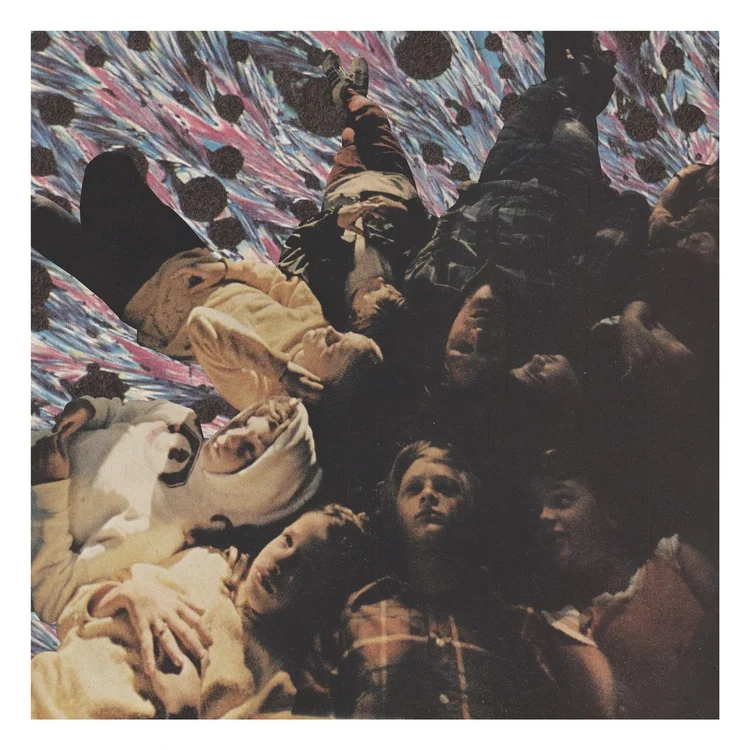
'Music For Dogs' is Gardens & Villa's Transitional Catharsis

Music ReviewWeston PaganoComment

Despite its name, in Music For Dogs you won’t find high pitched whistles only canines can hear. As far as we know, at least.

Gone too are the tightly controlled and driven, pulsing melodies of 2014’s brilliant and powerful Dunes. The delightfully wild erraticism and uniqueness of its flute and many of the delightfully shocking falsettos are absent as well. Gardens & Villa, now a duo, have moved away from the alternating Tim Goldsworthy-produced dance pop hooks and synth-soothing minimalism to return to their roots, yet their retreat seems haphazard at times. While before their high energy tracks exuded a sort of sexy confidence, the more frantic tracks on Music For Dogs feel as if they’re being chased by their own ambitions, looking over their own shoulder all the while. 

After a bubblingly synthetic "Intro" catapults you into "Maximize Results" you’re whisked into vocalist Chris Lynch forcefully inviting “Looking for love I can take you there / Pushing my luck I can take you there,” seemingly embarking on something promising as his voice rises in pitch to a piercingly frenetic crescendo over quickly hammered keys.

The following track, leading single and pop highlight "Fixations," is an interesting anomaly in the way that it eschews both Dunes' inspired, hard-hitting drama and Music For Dogs' chaos with a much looser and more playful vibe, especially echoed by the video reminiscent of the Warhol-esque psychedelic party scene in Midnight Cowboy. Acting as the middle portion of a one-two-three punch with "Everybody" marching in at the rear, we begin to hear the paranoia implicit throughout much of the record vocalized: “Everybody wants the new you / Nobody cares who you are / Taking pictures of the new you / Watching you from afar / Everybody wants to use you." This sort of discontent commentary on a paparazzo-style culture of music consumption and the fickleness of an industry in which they recently experienced rejection from both their label and disillusioned significant others, it conceives an idea that one would anticipate going on to form the backbone of the LP, but strangely seems to peter out.

The momentum slows after this, as Gardens & Villa mix in the introspective self-help mantras of "Paradise"’s “I wanna believe that I’m trying everything / It could be me someday / I’m gonna find my paradise” with the more literally grounded “Alone In The City,” in which the band, having recently relocated to LA, deliver some of the record's most rousing vocals as Lynch cries out “Do you feel alright?” It's genuine soul-searching, though it's clear the duo might feel more comfortable in their own skin if they could just pin down exactly where it is.

Bookended by “General Research”’s brief resurgence of the iconic flute of old (this was the first time I've ever listened to an album and thought “Wow, I wish this had more flute”) and the monotonous “Jubilee” cleverly mentioning our “terminal verbosity” slogan within the din, is standout track “Express.” And it indeed feels like an express, opening with drum set locomotion like its brother “Bullet Train” (from Dunes) before passing straight by any unnecessary stops. “Express" propels us back to the suaveness we love Gardens & Villa for best, complete with punchy guitar and Lynch articulating that it’s “time comes to express your feelings” while his haunting vocal specters do just that even better than words. 

It's hard to put your finger on exactly why Music For Dogs feels like a step back despite these bright moments. “I wanna believe that I’m trying everything” Lynch croons, and though some of the glittering texture and synth soundscapes are there, they now feel like the exception instead of the rule, having taken a backseat to more traditional measures. You can’t help but wonder if the short 36 minute runtime feels a bit rushed because it was, with the album being written and recorded so shortly after their previous full length and the subsequent Richard Swift-aided Televisor EP (which, by the way, is too often overlooked). 

We only eventually catch a glimpse of the lingering regrets of the duo’s two ended relationships at the very end in "I Already Do,” a melancholic yet optimistic sign off. Suddenly the LP feels like it only narrowly missed being a breakup album, with “I still never deleted all my photos of you / Keep them in my pocket but I’m never scrolling through” firmly dating the record in 2015. Lynch’s declaration of “It’s so hard to breathe when you’re always on the move” speaks volumes about where their transitions in sound, location, and romance have left them, yet there’s little resolution: in cathartically lilting "I’m gonna miss everyone / I think I already do” he leaves it unclear whether Music For Dogs is a beginning or an end.

'The Man From U.N.C.L.E.' Is Sleek Spy Fun

TV/Film ReviewEthan WilliamsComment

Set during the chic, sleek Sixties at the height of the Cold War, The Man from U.N.C.L.E. marks the first return of indie-British-turned-Hollywood director Guy Ritchie since his big budget adaptation of the Sherlock Holmes franchise. Based on the 1960s television series of the same name, U.N.C.L.E. follows American secret agent Napoleon Solo (Man of Steel’s Henry Cavill) and his Russian counterpart Ilya Kuryakin (The Social Network’s Armie Hammer) as they have to put aside their countries’ differences to protect the lovely Gabby Teller (Ex Machina’s Alicia Vikander) and try to find her missing father who may be hiding nuclear secrets key to both sides of the Cold War.
 
            Combining three of the hottest tickets in Hollywood at the moment in its three lead roles, The Man from U.N.C.L.E. is a whizz-fizz of a spy thriller, disappearing in a puff of smoke almost as soon as it enters your brain. It’s a rush of beautiful people in beautiful locations with plenty of charm to spare, even if there isn’t an entirely substantive reason for the whole shebang. And while all three leads acquit themselves quite admirably, trading quips and barbs with ease, the film really shines when its focus turns on the rapport of Cavill and Hammer, with Cavill being U.N.C.L.E.’s true standout. The brilliantly cheeky homoerotcism of the whole affair is a nice little play on the buddy cop formula, and I have to admit, the film does get a lot more fun when you imagine Cavill and Hammer are in fact in love with each other.

While the set pieces feel relatively smaller in scale compared to most summer blockbuster fare, the fun lies more in how Ritchie infuses them with his trademark sense of black humor and just enjoying the rapport that is built between Cavill and Hammer.  Whether it’s the tables turning on the Nazi torture scientist or the delightful boat sequence where Cavill decides to have some lunch, the small scale is overcome by the unique execution.
 
As an adaptation of a Sixties spy television series, The Man from U.N.C.L.E. succeeds in translating that kind of tone and charm into big screen laughs and thrills, even if it never reaches the dizzying heights that made a series like Mission: Impossible certified box-office gold. That being said, it's easy to tell that in less playful hands this material could’ve scraped the bottom of the Bond barrel, but luckily coasts by on the merit of snappy one-liners and a sexy cast instead.

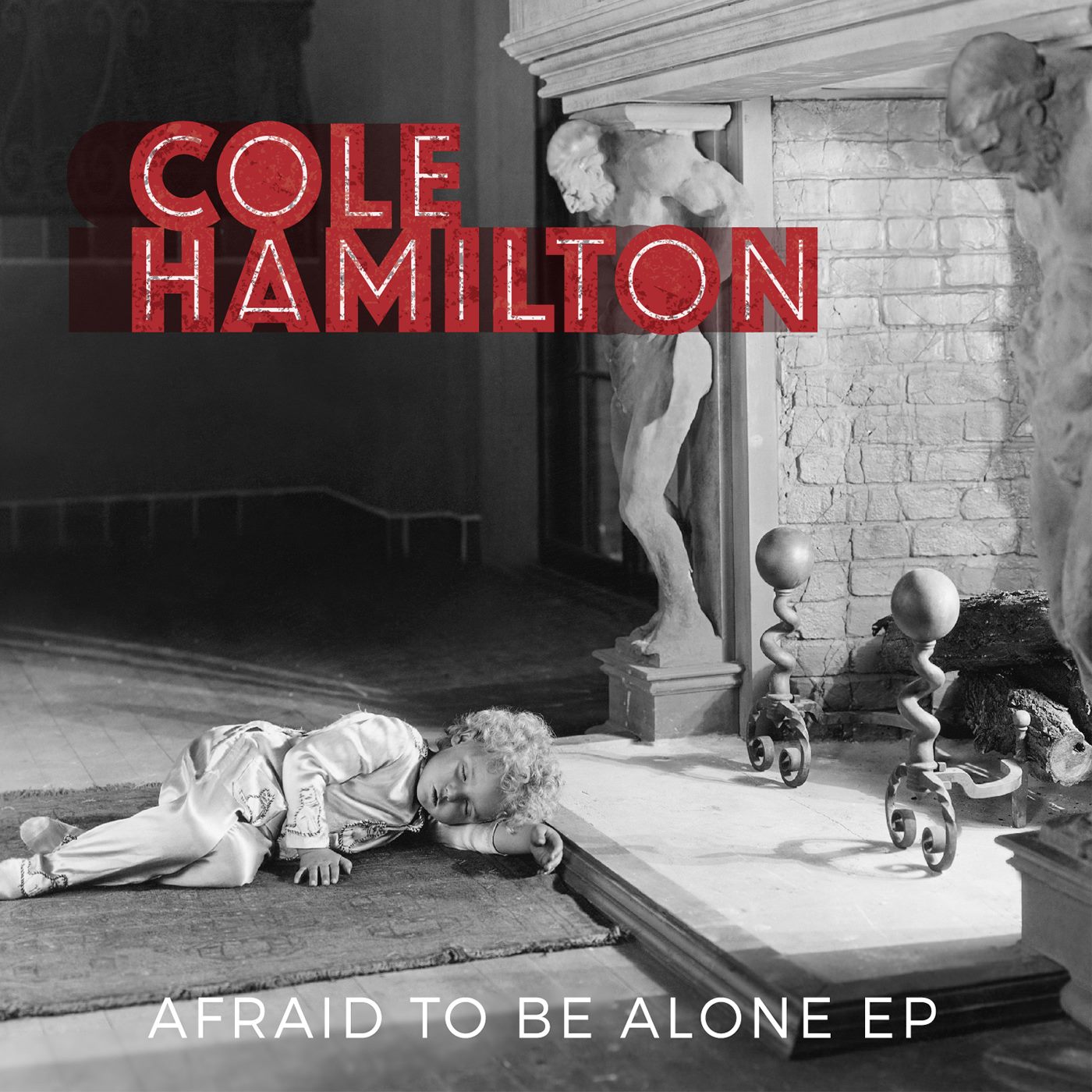
EXCLUSIVE PREMIERE: Stream Cole Hamilton's Debut EP 'Afraid To Be Alone'

Exclusive Premiere, New Music, Music NewsEllen WilsonComment

It’s hard to believe rising Tulane University sophomore Cole Hamilton didn’t begin writing music until his first year of college. It’s not that that’s too late in life, it’s just surprising considering the amount and quality of work he has already completed in such a short time when most of us were still trying to figure out which building our classes were in.

“I spent the whole year writing music and ended up with 20-plus songs,” Hamilton told us.  “From those 20 I took my favorite four and made the [Afraid To Be Alone] EP.” 

Hamilton recorded these tracks after returning to his hometown of Northbrook, IL where he reunited with high school friends Chris Neuhaus (drums), Paul Tisch (bass), Gracie Sands (guitar), Peter Roberson (trombone), Danny Neuson (trumpet), and Joseph Lee (saxophone) and worked with producer Craig Williams at Dr. Caw studios.

Afraid To Be Alone begins with catchy Two Door Cinema Club-inspired pop-rock tracks “(Just Between) Everyone You Know and Me” and "Louisiana" before descending into darker vocals evoking an Arctic Monkeys-esque swagger in “Crystal.” The EP ends with “Stay/Go,” a track adorned with a heavy horn section and an earnestness that will leave you wishing Hamilton would indeed stay instead of go. 

Afraid To Be Alone is out now and available on Spotify, which you can listen to below.


Life's a (Dirty) Beach in Beirut's New "Gibraltar" Music Video

New MusicWeston PaganoComment

Beirut have followed up the peculiar and playful music video for their forthcoming record No No No's title track with "Gibraltar," a slow, percussive number showcasing vocals from frontman Zach Condon as gentle as lazy waves on the beach.

It seems fitting, then, that the new music video accompanying the single has the band ambling across that very landscape, though in this case it is littered with trash. Surreality and smoothness are not the only traits the two videos have in common, though, with this one also being the directing work of Brother Willis.

Watch "Gibraltar" below.

No No No can be yours this September 11th via 4AD.

Tame Impala's New "Let It Happen" Music Video is Hallucinatory Hell

New MusicWeston PaganoComment

Tame Impala's recent record Currents is a stand-out so far this year, so it's only fitting that the music video for the opening track "Let It Happen" should be equally impressive.

Directed by Grammy-nominated filmmaker David Wilson (who also directed the band's Lonerism single "Mind Mischief" back in 2012), the video shows a hallucinatory and "An Occurrence At Owl Creek Bridge"-esque journey through skies of nightmares for the hapless protagonist.

Unfortunately (though understandably), the 7:49 minute track is cut down to 4:16 for the video, though the original length is cleverly displayed on the alarm clock featured at the 1:14 mark.

You can check it out below, but with a viewing experience this exhilarating you may want to be buckled in thrice like the character himself.

'Paper Towns' Doesn't Quite Live up to What John Green Had Mapped Out

TV/Film ReviewWhitney WilliamsComment

When Paper Towns came out many people flocked to the theaters with a pack of tissues in hand expecting to see a movie similar to The Fault in Our Stars, but this film is not a tear-jerking teenage melodrama quite like Green’s previous work. Behind the plot of a missing girl and a boy’s determination to find her is a genuine true-to-life story about a group of kids who don’t have it all figured out, but they sure as hell are trying. After selling millions of copies, the novel debuted as #5 on The New York Times Bestsellers List. But did the film reach its full potential?

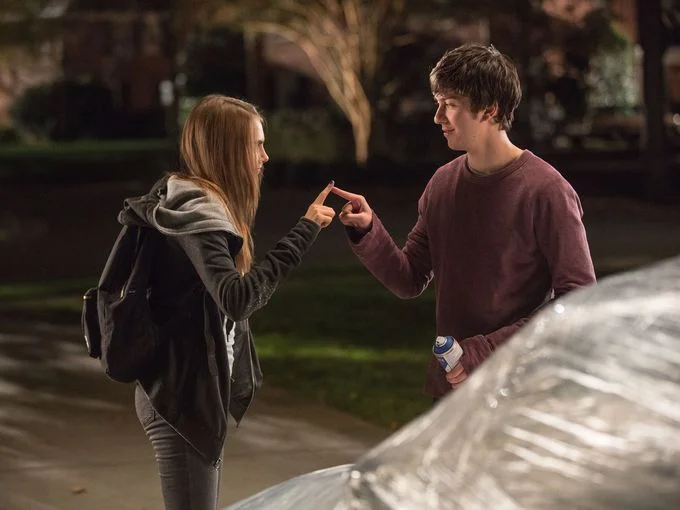
A paper town is not a real place but rather a nonexistent location put on a map by its creator to protect against copyright infringement – if the town is found on another map they would know it was copied. In the author’s note of the novel John Green says it is the idea of “creating something that other people want to make real,” which largely sums up leading (though absent for most of the film) lady Margo Roth Spiegelman’s driving force of motivation in life. Margo (played by model and St. Vincent’s girlfriend, Cara Delevingne) is the It-Girl at Jefferson High School, with a hundred stories winding the rumor mill about her many adventures on the East Coast. As well as being the most popular girl at school, she also lives across the street from awkward and straight-edged Quentin (Nat Wolff), the film's leading man. Quentin’s initial monologue explains the many miracles of life and his belief that everyone is entitled to at least one of these miracles during their lifetime. Endearingly, Quentin considers living near Margo to be his.

The two were childhood friends before their lives took different paths and drifted away from each other, so when Margo crawls through his bedroom window a few weeks before graduation and convinces him to join her for a night of revenge, he can hardly refuse her persistent charms. She persuades him to perform epic pranks including vandalism and breaking and entering – basically the most eventful night young Quentin has ever had. “That’s the way you should feel your whole life!” Margo lectures Quentin.  His head spinning with excitement, he goes to bed unaware that his childhood crush would go missing the very next day, gone to exile herself in an attempt to make her very own paper town real. 

Aided with the clues Margo left behind, he sets out on an cross-country adventure with his best friends, Ben (Austin Abrams) and Radar (Justice Smith), traveling 1200-miles to upstate new york to find Margo and her new, fictional place of residence, risking the possibility of missing prom.

Prom? What started out as a promising tale of self-discovery disappointed me when they made the stakes so mundanely low, ultimately condemning Paper Towns to be a typical teen flick. It contains all the elements of an average teen movie: Kids sneaking out, cool kids conspiring with nerds, a complete lack of adult supervision, a wild party, and, of course, a Senior Prom in jeopardy. With the only real risk being the possibility of missing prom as opposed to graduation itself as it was in the original text, screenplay adaptors Scott Neustadter and Michael H. Weber did not give Paper Towns much room to grow. 

Another example of exaggerated low-stakes is the overly dramatic scene during the road trip at the gas station. With only six minutes to fill the car with gas, buy some food and grab a change of clothes, the trio of teens, now joined by Radar’s girlfriend Angela (Jaz Sinclair) and Margo’s best friend Lacey (Halston Sage), sprint out the convenience store and pile into the car with Quentin doing a cute little spin over the hood. I understand the need to represent a time crunch, but the scene comes off as being overemphasized.

Though not solely the fault of Shreier who does try to take advantage of slower scenes in between for character development, the cast still feels paper-thin. Quentin starts out as a work-obsessed geek who is loyal to rules and restrictions and ends the movie with hope for the future, marveling in the revelation that Margo was never more than a girl (“What a treacherous thing it is to believe a person is more than a person”). This is a revelation he would not have come to terms with if not for Manic Pixie Dream Girl, Margo Roth Spiegelman. 

According to film critic Nathan Rabin, a Manic Pixie Dream Girl (MPDG) is a cute and quirky, female romantic lead  “that exists solely in the fevered imaginations of sensitive writer-directors to teach broodingly soulful young men to embrace life and its infinite mysteries and adventures.” Here lies the neat and tidy description of Margo’s role in Paper Towns. The problem with characters like Margo is that she only exists as a means to aid the young white male on his own road to discovery.  Paper Towns’ story arc inched along until it eventually dropped off at the discovery of Margo, and seeing as we never find out what she intends to do with her life (let alone where she lives), one can’t help but feel the filmmakers simply used the trope of a confused young girl as an easy plot-device. But hey, as Margo said, “Everything is uglier up close.”

One can appreciate Paper Towns with nostalgia for high school days, but with that being said, I would have enjoyed the film a lot more if I was still fifteen years old. By leaving out so much of the novel, Shreier’s adaptation failed to fully realize the inspiring, coming-of-age story John Green had mapped out.

No, Tall People Are Not Obligated to Stand in the Back of the Crowd

EditorialWeston PaganoComment
iStockphoto.com

iStockphoto.com

As part of a series called The Good Listener, NPR recently ran a piece titled “Are Tall People Obligated To Stand In The Back At Concerts?” in response to a Facebook post by an individual (presumably of the shorter variety) who complained:

I was recently at a show of the unseated variety when, to my dismay, a very tall and wide chap with a head boasting the approximate dimensions of a cereal box stationed himself directly in front of me. I spent the whole (crowded) show craning to one side or another so that my view was not entirely obstructed. I wished this gentleman to be banned from concert-going forever, or at least to be forced to view the show from the back row of every venue. My question is: What obligation does the big/tall person have to his or her fellow concertgoers with regard to obstructing the view?

Cranium sizes comparable to breakfast food containers aside, tall people are not a rare species at musical performances and other cultural events in which many people are gathered together to look in one direction and view a single stage. Many of these concerts are general admission, meaning that the floor is open to standing room exclusively, and that space is filled on a first-come first-serve basis, regardless of physical stature. And that’s that.

The idea that everyone should be able to have equal and unobstructed lines of sight towards the front of the venue is a nice one, though ultimately utopian. While a short concert-goer wishing to relegate a fellow fan and peer to the back of the bus so-to-speak (or worse, have them “banned from concert-going forever") for a better view based on a characteristic they cannot control is at best idealistic, it’s at worst incredibly self-entitled and unfair. Shows aren’t an inherently oppressive economic system you need to right with compensatory measures; you do realize you can just show up earlier and wait in line like the rest of us, right?

I am about 6’4” and I enjoy being close to if not in the front row. I have been known to arrive to the venue long in advance to secure such a position. Anyone who does that earns their proximity to the action, and anyone who waltzes through the crowd halfway through the first song, feeling as if they deserve to be ahead of you because they never grew out of their high school height, does not. The only thing they should be at the front of is a list of the worst people ever.

I’m not trying to pass this generalization off as fact, it’s merely been my experience (and of course there are plenty of exceptions), but concert-goers of a smaller stature are almost always the most intolerably inconsiderate individuals in the crowd. Whether they are shoving themselves in between and in front of my friends and I, blowing smoke up into my face, repeatedly fist-pumping into my nose, standing directly on my feet for an extra lift for an extended period of time (when I asked her to move she pretended as if she hadn’t noticed she was literally climbing on top of my body), or even just subtly trying to make me feel guilty the entire time, the sense of cavalier entitlement coupled with a raging Napoleon complex is far more obstructive to one’s enjoyment of a night out than an eager fan who simply has to wear a longer size of pants.

And most of the time, short people do better in life than we do anyway: they fit in car and plane seats more comfortably, they can find clothes that fit them without much effort, and they're even likely to live longer than us. My head never even makes it in photos. Let us have this one.

"Don’t you have a heart?” you may be asking. “Why do you hate short people? They can’t help it!”

Well, yeah. If you’re nice to me I’ll probably just let you in front of me anyway by choice. Specifically, if you’re the adorable elderly woman who came to see Paul McCartney at Lollapalooza a couple of weeks ago, I was more than happy to hold your sign for you and help you get closer to our hero.

Everyone else? Come wait in line with me from the beginning, we'll stand together.

Thanks, Obama! POTUS Releases Two Summer Playlists

Music List, Music NewsTransverso MediaComment

The White House released two Spotify playlists today, both "hand-picked" by POTUS himself. One is made for the daytime, featuring artists such as Bob Dylan, Coldplay, and Florence + The Machine, while the other is for the night, with music from Van Morrison, Ray Charles, Leonard Cohen, and more.

This comes after current presidential candidate Hillary Clinton recently released her own playlist, though her airtight, overly-uplifting pop picks came off more as a campaign exercise while Obama's selections feel a bit more genuine, especially with so much classic soul and surprise picks like the lesser-known Okkervil River. If you're gonna feed us a PR stunt at least make it sound good enough to make us forget that part.

The President's playlists clock in at just over an hour and a half each, and you can Ba-rock out to both of them below. (We're so sorry.)

Now we eagerly await Donald Trump's inevitable contribution.


Santah Announce New Album 'Chico'

Music NewsWeston PaganoComment

Chicago-based indie outfit Santah have confirmed their second full-length record Chico, in which they "try to live inside two worlds at once," will be released November 6th.

You can preorder the album and various merch through their Pledge Music page here, and check out the post-break up heavy music video for "Sunkeeper," the first single from Chico, below.

Majical Cloudz Announce New Album 'Are You Alone?', Release Single "Silver Car Crash"

Music News, New MusicWeston PaganoComment

Thankfully it appears that the first minimalist, white-colored album containing hauntingly emotive music from Majical Cloudz was not a one-off deal, with the Montreal-based duo of Devon Welsh and Matthew Otto announcing they have done it again.

This time it is called Are You Alone?, and you can hear the beautiful first single from this sophomore LP, "Silver Car Crash," below. Continuing the dreary yet intensely driven synthesizers and immaculately heavy vocals of 2013's Impersonator, the track is quintessentially Majical Cloudz.

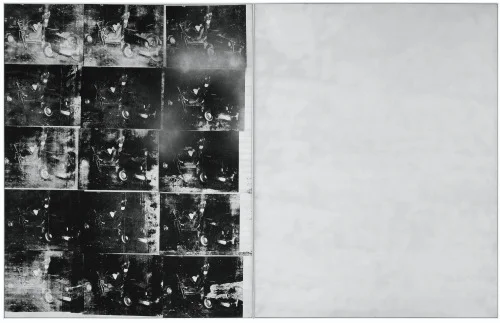
In a Tumblr post today, Welsh revealed an Andy Warhol painting to be the song's main inspiration, saying,

Our song “Silver Car Crash” is named after this painting by Andy Warhol, called “Silver Car Crash (Double Disaster)“. He made it in 1963 as part of a group of paintings that are known as the “Death and Disaster series”.
His paintings can sometimes be very spiritual and preoccupied with an other world, even though their surface makes them seem more innocent. (When I look at these paintings I always imagine that Andy Warhol is asking, “What happens after death?”)
I really like that kind of double meaning, and the way the paintings combine two different preoccupations that are, in life, always mixing together.
I think the song “Silver Car Crash” also has a kind of double meaning and combines emotions which are usually combined in some form anyway.
It was inspired by life but also by Andy Warhol!
Andy Warhol's painting "Silver Car Crash (Double Disaster)"

Andy Warhol's painting "Silver Car Crash (Double Disaster)"

An official statement on the forthcoming LP further explains,

Building off a solidly-laid visual and sonic foundation, the narrative remains – simple yet emotionally forthcoming lyrics showcasing raw vulnerability, backed by sparse instrumentation and minimalist production. [Main songwriter Devon] Welsh delivers melancholic but melody driven vocals echoing off elemental tones, praising love and friendship, commiserating over heartbreak and sadness.

Are You Alone?

  1. Disappeared
  2. Control
  3. Are You Alone?
  4. So Blue
  5. Heavy
  6. Silver Car Crash
  7. Change
  8. If You're Lonely
  9. Downtown
  10. Easier Said Than Done
  11. Game Show
  12. Call On Me

Are You Alone? is due out October 16 via Matador.